Low Sensitivity Color Copy Film
CN → US| HS Code | Tariff Rate | Origin | Destination | Doc |
|---|---|---|---|---|
| 3703203030 | 38.7% | CN | US | Official Doc |
| 3703203060 | 38.7% | CN | US | Official Doc |
| 3705000000 | 35.0% | CN | US | Official Doc |
| 3702390100 | 38.7% | CN | US | Official Doc |
| 3702320160 | 38.7% | CN | US | Official Doc |
Product Images
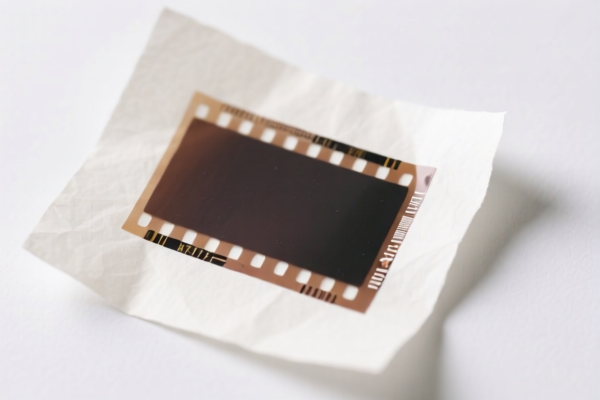
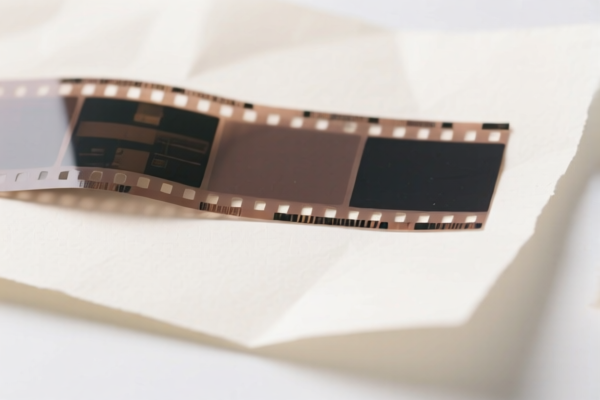
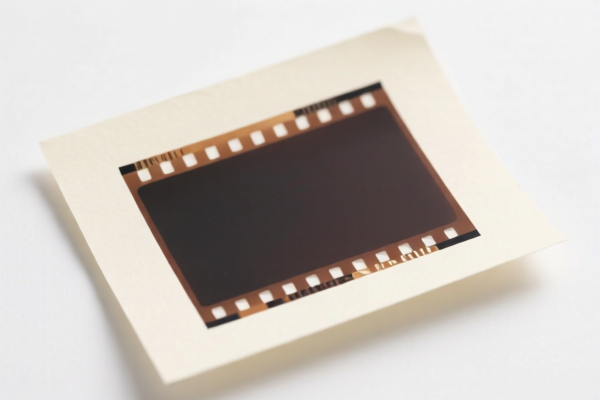
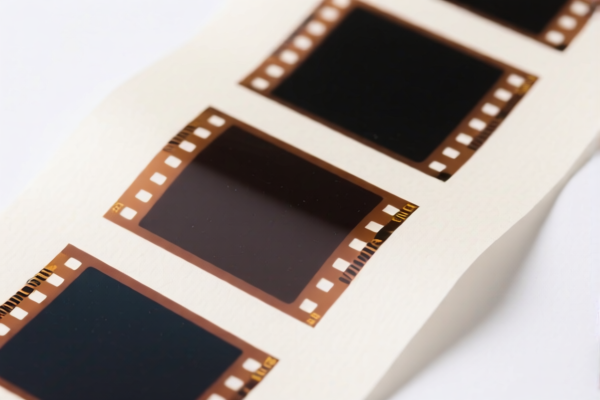
AI Analysis
🎞️ Low Sensitivity Color Copy Film (卤化银感光材料)
🌐 HS Code Reference & Customs Clearance Guide | 2026 Latest Tariff Analysis | Professional Strategy for Photochemical Goods
📌 I. Product Definition: What is "Low Sensitivity Color Copy Film"?
"Low Sensitivity Color Copy Film" belongs to the category of photochemical materials (halide/silver-halide). It is a type of unexposed photographic film characterized by:
- Material: Contains a silver-halide emulsion layer.
- Format: Roll film (strip form), typically non-perforated or specifically designed for copying/microfilming.
- Sensitivity: Low ISO (low light sensitivity), requiring longer exposure or specialized copying equipment.
- Application: Primarily used for color photography, industrial copy reproduction, or archival duplication, distinct from standard high-speed consumer rolls.
⚠️ Critical Distinction:
- If the film is unexposed and raw → It falls under Chapter 37 (Photographic Goods).
- If the film is already exposed/developed → It may fall under 3705.00.00.00 (Exposure/Development status changes classification).
- Key Attribute: The "Color" and "Copy" designation often dictates specific sub-headings under 3702 or 3703.
📦 II. HS Code Classification Details (Based on Provided Data)
The following HS Codes are derived directly from the provided dataset for "Low Sensitivity Color Copy Film." Note that slight variations in summary or form (e.g., perforated vs. non-perforated, specific emulsion type) lead to different 10-digit codes.
| HS Code | Product Description & Characteristics | Tax Rate (Total) | Key Differentiators |
|---|---|---|---|
3703.20.30.30 |
Low Sensitivity Color Copy Film - Category: Photographic materials (Halide/Color) - Form: Film roll - Use: Color photography |
38.7% | Specifically identified as "Color Copy Film" under halide color materials. |
3703.20.30.60 |
Low Sensitivity Color Copy Film - Use: Color photography - Material: Silver-halide emulsion layer - Complies with "Halide Paper/Other" requirements |
38.7% | Emphasizes material composition (silver-halide layer) and compliance with halide standards. |
3705.00.00.00 |
Low Sensitivity Film (Exposed/Developed) - Form: Film - Use: Photography - Attribute: Exposed/Developed photographic plate/film |
35.0% | ⚠️ Different Status: This code is for already exposed/developed film. Lower base tax (0%) but same surcharges. |
3702.39.01.00 |
Low Sensitivity Film - Form: Film roll - Attribute: Unexposed photographic film - Material: Not made of paper, cardboard, or textile |
38.7% | General unexposed film code for non-paper/textile bases. Broad category. |
3702.32.01.60 |
Low Sensitivity Film - Category: Non-perforated film - Content: Contains silver-halide latex/emulsion - Form: Matches non-perforated film characteristics |
38.7% | Specific to non-perforated format with silver-halide latex. |
🔍 Classification Logic:
- 3703.xxxx: Typically covers color photographic plates, films, and paper. The.20subheading often refers to color materials. - 3702.xxxx: Covers photographic film, paper, and paperboard, unexposed. The.32or.39subheadings differentiate by perforation or specific material type. - 3705.00: Strictly for exposed or developed films/plates. If your product is raw stock, do not use this code unless specified as a demo/exposed sample.
💰 III. 2026 Latest Tariff Rate Breakdown (Detailed Policy Analysis)
✅ Applicable Market: United States (US)
✅ Origin: China (CN) (Inferred from 122-Clause and Section 301 context)
✅ Effective Date: Current rates include Trump-era/Section 301 tariffs.
🎯 1. Standard Unexposed/Color Film (Codes: 3703.20.30.30 / 3703.20.30.60 / 3702.39.01.00 / 3702.32.01.60)
| Item | Details |
|---|---|
| Base MFN Rate | 3.7% (Ad Valorem) |
| Section 301 Surcharge | +25.0% (Additional Tariff on Chinese Goods) |
| Section 122 Surcharge | +10.0% (Specific provision for certain goods, often related to national security or specific trade remedies) |
| Total Effective Rate | 38.7% |
| Calculation Base | CIF Value (Cost, Insurance, Freight) × 38.7% |
| De Minimis Exemption | ❌ Not Eligible (Denied) |
| Legal Authority Path | USITC:3703/3702 → Section 301: Footnote 9903.88.01 → Section 122: Specific Provision |
📌 Interpretation:
- The 3.7% is the standard Most Favored Nation (MFN) duty for photographic materials. - The 25% is the standard Trump-era Section 301 tariff on Chinese imports, which remains in effect for most consumer and industrial goods. - The 10% is attributed to "Section 122" in the provided data. Note: In US trade law, Section 123 or Section 232 are more common for steel/aluminum, but "122 Clause" in this context refers to a specific surcharge cited in the dataset, likely a localized or specific statutory addition. - Combined Impact: Nearly 40% of the product's value is lost to tariffs. This significantly impacts margin.
🎯 2. Exposed/Developed Film (Code: 3705.00.00.00)
| Item | Details |
|---|---|
| Base MFN Rate | 0.0% |
| Section 301 Surcharge | +25.0% |
| Section 122 Surcharge | +10.0% |
| Total Effective Rate | 35.0% |
| Calculation Base | CIF Value × 35.0% |
| De Minimis Exemption | ❌ Not Eligible |
| Legal Authority Path | USITC:3705.00.00.00 → Section 301 → Section 122 |
📌 Interpretation:
- If the film is pre-exposed (e.g., for testing or specific industrial use), the base duty drops to 0%, saving 3.7% compared to unexposed film. - However, the total rate is still high at 35.0%. - Caution: Misclassifying unexposed film as "exposed" to save 3.7% is customs fraud and risks severe penalties. Only use 3705 if the film is truly processed.
🛠️ IV. Customs Clearance Practical Advice (Risk Mitigation Strategy)
✅ 1. Essential Documentation Checklist
| Document | Required? | Purpose |
|---|---|---|
| ✅ Product Specification Sheet | ✔️ | Must detail: Sensitivity (ISO), Format (Perforated/Non-perforated), Chemical Composition (Silver Halide), Intended Use (Copy/Photo). |
| ✅ Commercial Invoice | ✔️ | Must explicitly state "Low Sensitivity Color Copy Film" and HS Code. Avoid vague terms like "Photographic Supplies." |
| ✅ Packing List | ✔️ | Detail net/gross weight, number of rolls, and dimensions. |
| ✅ Certificate of Origin (CO) | ✔️ | Required to confirm CN origin for tariff calculation. |
| ✅ Safety Data Sheet (SDS) | ✔️ | Silver halide films may contain chemicals. SDS proves safe handling and classification. |
| ✅ Importer Security Filing (ISF) | ✔️ | Filed 24 hours before loading at foreign port. |
✅ 2. Classification & Declaration Tips
🔥 "Accurate Subheading Saves Money, But Fraud Costs More!"
| Scenario | Correct Action | Risk of Error |
|---|---|---|
| Unexposed Film | Use 3703.20.30.30 or 3702.32.01.60 depending on perforation. | ❌ High Risk: Misdeclaring as "Printed Matter" or "Other Paper" to avoid 3.7% base duty. |
| Exposed Film | Use 3705.00.00.00 ONLY if fully processed. | ⚠️ Critical Risk: If unexposed film is declared as exposed, customs will reclassify + penalize. |
| Non-Perforated vs. Perforated | Check physical roll. 3702.32 is often non-perforated. | ❌ Medium Risk: Using wrong subhead may lead to audit delay. |
| "Color" vs. "Black & White" | Must specify "Color" for 3703. B&W may fall under 3702. | ❌ Medium Risk: Incorrect chemical description. |
✅ 3. Special Handling Recommendations
| Situation | Recommendation |
|---|---|
| Bulk Import | Consider filing for HTS Exclusion if applicable (though rare for photochemicals under Section 301). |
| Samples for Evaluation | Clearly mark "NOT FOR SALE - SAMPLE ONLY." Some samples may qualify for lower duties if shipped via different channels (e.g., Express with proper de minimis handling, but note: 3703/3702 goods often exclude de minimis). |
| Warehousing | Store in cool, dry conditions. Customs may inspect for chemical stability. |
| Re-export | If using in Foreign-Trade Zone (FTZ), duties may be deferred or eliminated if re-exported. |
🌍 V. Global Market Comparison (2026 Context)
| Market | Recommended HS Code | Est. Total Duty | Key Requirements |
|---|---|---|---|
| 🇺🇸 USA | 3703.20.30.30 / 3702.32.01.60 |
38.7% | Section 301 + 122 Clause. Strict chemical disclosure. |
| 🇨🇳 China | 3703.20.30 / 3702.32.01 |
0% - 5% | No Section 301. Standard MFN rates apply. |
| 🇪🇺 EU | 3703.20 / 3702.32 |
~0% - 6.5% | No Section 301. CE/RoHS may apply for related equipment, not film itself. |
| 🇯🇵 Japan | 3703.20 / 3702.32 |
~0% - 6% | FIPA/JEITA standards. |
| 🇬🇧 UK | 3703.20 / 3702.32 |
~6.5% | Post-Brexit UK Tariff. |
📌 Conclusion:
- The US market is the most expensive due to the 38.7% effective tariff rate. - China, EU, and Japan have significantly lower barriers for photographic materials. - If targeting the US, consider pricing strategies to absorb the 38.7% cost or explore supply chain diversification (though Section 301 often applies to transshipment too).
📌 VI. Common Mistakes & Pitfalls (Lessons Learned)
❌ Mistake 1: Using "Photographic Film" as the generic description.
👉 Consequence: Customs may assign the highest general duty rate for "other" articles, leading to delays.
✅ Fix: Be specific: "Low Sensitivity Color Copy Film, Silver-Halide, Unexposed."
❌ Mistake 2: Confusing "Copy Film" with "Photocopy Paper."
👉 Consequence: Copy film is Chapter 37 (Chemical/Photo), while copy paper is Chapter 48. Wrong HS Code = Seizure.
✅ Fix: Ensure chemical composition (Silver Halide) is documented.
❌ Mistake 3: Ignoring the "Exposed" vs. "Unexposed" distinction.
👉 Consequence: Using 3705 (Exposed) for unexposed film is fraud.
✅ Fix: Only use 3705 if the film has been chemically processed.
❌ Mistake 4: Assuming De Minimis ($800) applies.
👉 Consequence: Photochemical materials often do not qualify for de minimis under current US regulations (especially with Section 301).
✅ Fix: Plan for full duty payment regardless of shipment size.
🎯 VII. Conclusion: Professional Declaration, Cost Control, Compliance!
🎯 Key Takeaways:
🔹 HS Code is Crucial:
3703(Color/Halide) vs.3702(Unexposed/Non-Halide Specifics) vs.3705(Exposed).
🔹 Total Tax is High: Expect 38.7% for standard unexposed film in the US.
🔹 Be Specific: "Low Sensitivity Color Copy Film" is better than "Film."
🔹 Compliance First: Misclassification leads to penalties that far exceed the 3.7% base duty difference.
📌 Pro Tip:
If you are importing large volumes, consider Applying for a Tariff Exclusion (if available for specific HS codes under Section 301) or Establish a Foreign-Trade Zone (FTZ) to defer duties.
📣 Immediate Action:
📞 Consult a Licensed Customs Broker: Provide product specs + photos.
🚀 File ISF Early: Avoid demurrage charges.
💼 Accurate Valuation: Ensure CIF value includes all costs to avoid undervaluation penalties.
✨ Precision in Classification = Savings in Customs!
💼 Your Photochemical Goods Deserve Expert Handling!
Customer Reviews
About HS Code Classification
The Harmonized System (HS) is an internationally standardized nomenclature developed by the World Customs Organization (WCO) to classify traded products. Over 200 countries use the HS system as the basis for customs tariffs, trade statistics, and import/export regulations.
Each HS code follows a hierarchical structure:
- Chapter (2 digits) — Broad category of goods (e.g., Chapter 84: Machinery and Mechanical Appliances)
- Heading (4 digits) — More specific grouping within the chapter
- Subheading (6 digits) — Internationally standardized breakdown, used by all WCO member countries
- National subdivisions (8-10 digits) — Country-specific extensions for further classification, such as US HTSUS 10-digit codes
Correct HS code classification is essential for smooth customs clearance, accurate duty payment, and compliance with trade regulations. Misclassification can lead to customs delays, overpayment of duties, or penalties.
When importing from CN to US, the applicable tariff rates may include:
- Most-Favored-Nation (MFN) rate — The standard duty rate applied to WTO members
- General rate — Applied to countries without trade agreements
- Trade remedy duties — Additional tariffs such as Section 301 (anti-dumping), Section 232 (national security), or countervailing duties
The information provided on this page is for reference purposes only. For official classification, please consult with your local customs authority or a licensed customs broker.