Low Sensitivity Film
CN → US| HS Code | Tariff Rate | Origin | Destination | Doc |
|---|---|---|---|---|
| 3919905060 | 40.8% | CN | US | Official Doc |
| 3702390100 | 38.7% | CN | US | Official Doc |
| 3920992000 | 39.2% | CN | US | Official Doc |
| 3702320160 | 38.7% | CN | US | Official Doc |
| 3920991000 | 41.0% | CN | US | Official Doc |
Product Images
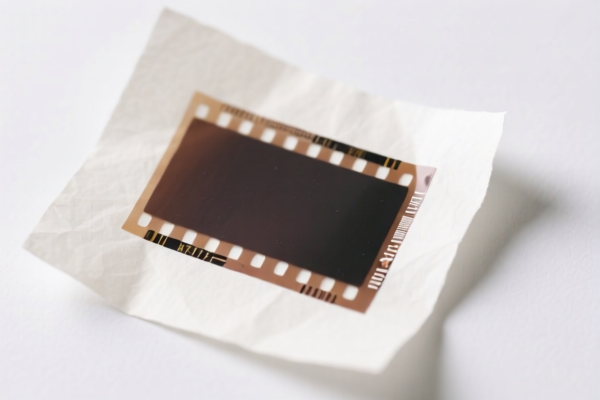
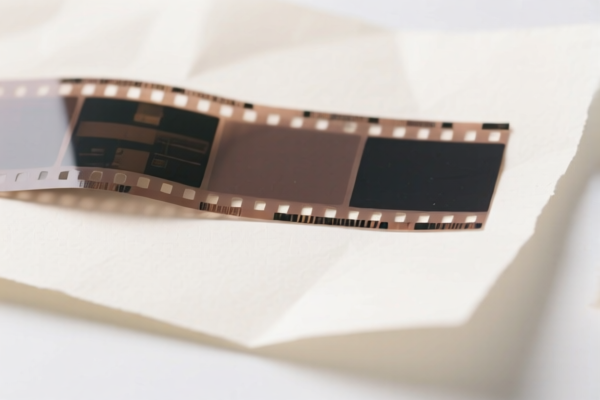
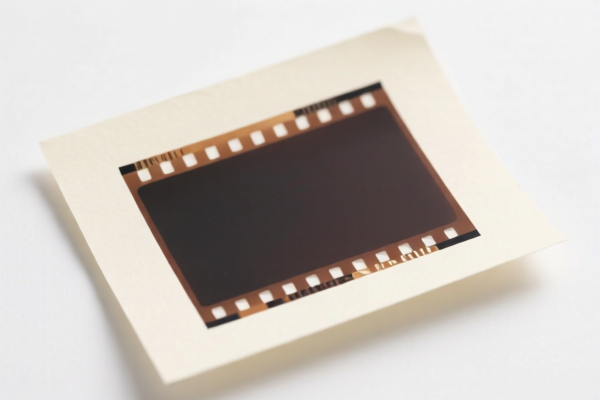
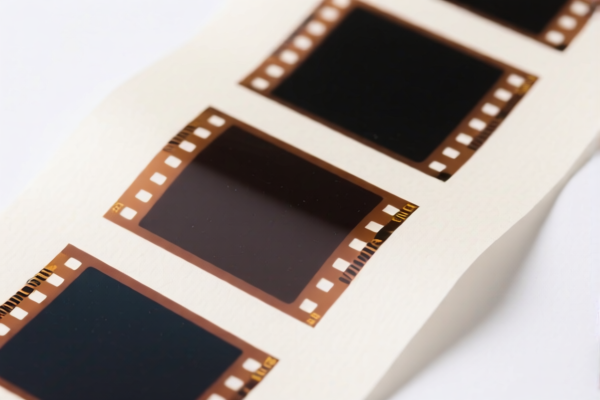
AI Analysis
🎞️ Low Sensitivity Film (Photographic/Sensitized Material)
🌐 HS Code Reference & Customs Clearance Guide | 2026 Latest Tariff Analysis | Professional Level Strategy
📌 I. Product Definition and Classification: Do You Really Understand "Low Sensitivity Film"?
"Low Sensitivity Film" typically refers to photographic film with low ISO sensitivity (e.g., ISO 50, 100, or similar). In international trade, it is primarily classified as sensitized photographic material (often containing silver halide emulsion) or, in some ambiguous cases, as plastic film/polymer sheet if the sensitization layer is not clearly defined or if it is a non-photosensitive substrate.
⚠️ Key Distinction Point:
- If the film contains silver halide emulsion or other photosensitive chemicals for recording images → Classified under Chapter 37 (Photographic or Cinematographic Goods)
- If the film is plain plastic/polymer without photosensitive layers → Classified under Chapter 39 (Plastics and Articles Thereof)
- Crucial: Misclassification can lead to massive tariff differences (e.g., 38.7% vs. 41.0% + potential anti-dumping risks).
📦 II. HS Code Classification Details (2026 Latest Tariff Authoritative Comparison)
Based on the provided data, here are the five possible HS Codes for "Low Sensitivity Film":
| HS Code | Product Description | Application Scenario | Material/Structure |
|---|---|---|---|
3702.39.01.00 |
Sensitized photographic film, other (non-color negative/positive) | General low-sensitivity B&W film, archival film | Contains silver halide emulsion |
3702.32.01.60 |
Sensitized film, containing silver halide, for photographic use | Specific low-sensitivity sensitized film | Silver halide latex/emulsion |
3919.90.50.60 |
Other self-adhesive plastic films (or non-adhesive plastic film) | Plastic wrap, backing film, non-photosensitive polymer sheet | Plastic/Polymer |
3920.99.20.00 |
Other plates, sheets, film, foil and strip, of plastics | General plastic film, organic material film | Plastic or Organic Material |
3920.99.10.00 |
Other plastic films,兜底 (Fallback Category) | Any other plastic film not specified elsewhere | Plastic |
🔍 Key Reminder:
- "Low Sensitivity" does NOT automatically mean Chapter 37. If the film is just a plastic support without photosensitive coating, it must be declared as Chapter 39.
- Chapter 37 codes (3702.39.01.00/3702.32.01.60) apply only if the film is sensitized (i.e., ready for photographic use).
- Chapter 39 codes (3919.90.50.60/3920.99.20.00/3920.99.10.00) apply to non-sensitized plastic films.
💰 III. 2026 Latest Tariff Rate Details (Including Additional Taxes, Policy Add-ons)
✅ Applicable Country: United States (US)
✅ Country of Origin: China (CN)
✅ Effective Time: From November 10, 2025 (and subsequent imports)
🎯 1. 3702.39.01.00 —— Sensitized Photographic Film (Other)
| Item | Content |
|---|---|
| Base Tariff Rate | 3.7% (ad valorem) |
| Section 301 Additional Tariff | +25.0% |
| Section 122 Tariff | +10.0% |
| Total Tariff Rate | 38.7% |
| Tax Calculation | CIF Value × 38.7% |
| De Minimis Exemption Eligible? | ❌ No (deny_de_minimis) |
| Legal Basis Path | Section 301:3702.39.01.00 → Section 122:3702.39.01.00 |
📌 Explanation:
- "Base Tariff 3.7%" is the standard MFN rate for sensitized film;
- "Section 301 Additional Tariff 25%" is applied to Chinese goods under US Trade Law Section 301;
- "Section 122 Tariff 10%" is a specific additional tariff;
- Total 38.7% is a high tariff rate. Must be accounted for in cost structure.
🎯 2. 3702.32.01.60 —— Sensitized Film Containing Silver Halide
| Item | Content |
|---|---|
| Base Tariff Rate | 3.7% |
| Section 301 Additional Tariff | +25.0% |
| Section 122 Tariff | +10.0% |
| Total Tariff Rate | 38.7% |
| Tax Calculation | CIF Value × 38.7% |
| De Minimis Exemption Eligible? | ❌ No |
| Legal Basis Path | Section 301:3702.32.01.60 → Section 122:3702.32.01.60 |
📌 Note:
- Identical tariff rate to3702.39.01.00;
- Applies to films specifically containing silver halide emulsion;
- Common in professional B&W or archival film imports.
🎯 3. 3919.90.50.60 —— Other Plastic Film (Fallback for Plastic)
| Item | Content |
|---|---|
| Base Tariff Rate | 5.8% |
| Section 301 Additional Tariff | +25.0% |
| Section 122 Tariff | +10.0% |
| Total Tariff Rate | 40.8% |
| Tax Calculation | CIF Value × 40.8% |
| De Minimis Exemption Eligible? | ❌ No |
| Legal Basis Path | Section 301:3919.90.50.60 → Section 122:3919.90.50.60 |
📌 Explanation:
- If the product is misclassified as "plastic film" instead of "sensitized film," the base rate is higher (5.8% vs. 3.7%);
- Total 40.8%, which is higher than Chapter 37 codes.
- Risk: If customs determines the film is NOT sensitized, this code will apply.
🎯 4. 3920.99.20.00 —— Other Plastic/Organic Film
| Item | Content |
|---|---|
| Base Tariff Rate | 4.2% |
| Section 301 Additional Tariff | +25.0% |
| Section 122 Tariff | +10.0% |
| Total Tariff Rate | 39.2% |
| Tax Calculation | CIF Value × 39.2% |
| De Minimis Exemption Eligible? | ❌ No |
| Legal Basis Path | Section 301:3920.99.20.00 → Section 122:3920.99.20.00 |
📌 Note:
- Base rate 4.2% is lower than3919.90.50.60, but still higher than Chapter 37;
- Applicable to general plastic films with organic material composition.
🎯 5. 3920.99.10.00 —— Other Plastic Film (Fallback Category)
| Item | Content |
|---|---|
| Base Tariff Rate | 6.0% |
| Section 301 Additional Tariff | +25.0% |
| Section 122 Tariff | +10.0% |
| Total Tariff Rate | 41.0% |
| Tax Calculation | CIF Value × 41.0% |
| De Minimis Exemption Eligible? | ❌ No |
| Legal Basis Path | Section 301:3920.99.10.00 → Section 122:3920.99.10.00 |
📌 Warning:
- Highest tariff rate (41.0%) among all options;
- This is a "catch-all" category for plastic films;
- Avoid this code unless the product is clearly a generic plastic film with no other classification.
🛠️ IV. Customs Clearance Practical Advice (Real-World Pitfall Avoidance Guide)
✅ 1. Document Preparation Checklist (All Required)
| Document | Must Provide | Description |
|---|---|---|
| ✅ Product Specification Sheet | ✔️ | Includes ISO speed, emulsion type, base material, dimensions |
| ✅ Composition Analysis Report | ✔️ | Third-party lab report proving presence/absence of silver halide |
| ✅ Product Photos (Clear) | ✔️ | Shows packaging, label, film structure, emulsion side |
| ✅ Commercial Invoice | ✔️ | Clearly states "Low Sensitivity Photographic Film" or "Plastic Film" |
| ✅ Packing List | ✔️ | Details rolls, quantity, weight, net/gross weight |
| ✅ Certificate of Origin (CO) | ✔️ | If applicable for non-China origin, to claim preferential rates |
✅ 2. Declaration Tips (Key Mnemonic)
🔥 "Sensitized = Ch37, Plastic = Ch39. Emulsion Proof, Tax Drop Half!"
| Scenario | Correct Declaration | Wrong Practice |
|---|---|---|
| Sensitized Film (B&W/Archival) | 3702.39.01.00 or 3702.32.01.60 |
Declared as "Plastic Film" → 40.8% |
| Plain Plastic Film (No Emulsion) | 3920.99.20.00 or 3919.90.50.60 |
Declared as "Photographic Film" → Audit Risk |
| Mixed Package (Film + Developer) | Declare Film Separately | Bundled → Confusion, Delay |
| Unspecified "Film" | Provide Lab Report | Vague Description → Highest Tariff (41.0%) |
✅ 3. Special Case Handling
| Situation | Handling Advice |
|---|---|
| OEM Custom Film | Provide design specs + emulsion formula to prove sensitization |
| Film with Adhesive Backing | If adhesive, may fall under 3919.90.50.60 (self-adhesive), check if sensitized |
| Sample Rolls for Testing | Still subject to full tariff; no de minimis exemption |
| Professional vs. Consumer Grade | Both fall under Chapter 37 if sensitized; grade affects HS sub-code but not total tariff |
🌍 V. Global Market Customs Clearance Comparison (2026 Latest)
| Country/Region | Recommended HS Code | Tariff | Certification Requirement | Remarks |
|---|---|---|---|---|
| 🇺🇸 United States | 3702.39.01.00 / 3702.32.01.60 |
38.7% (CN Origin) | None Specific | High tariff due to 301/122 |
| 🇨🇳 China | 3702.39.01.00 |
5.0% | CCC (if applicable) | Lower base tariff |
| 🇪🇺 EU | 3702.39.00 |
0% (if CE/REACH compliant) | REACH + RoHS | No additional tariffs |
| 🇦🇺 Australia | 3702.39.00 |
5.0% | ACCC | No additional tariffs |
| 🇯🇵 Japan | 3702.39.00 |
0% | JIS | No additional tariffs |
📌 Conclusion:
- The US is the only market with significant additional tariffs (38.7%) for sensitized film from China;
- Chapter 37 (Sensitized Film) is generally cheaper than Chapter 39 (Plastic Film) in the US due to lower base rates;
- Accurate classification is critical: Misclassifying sensitized film as plastic film can result in higher taxes or penalties.
📌 VI. Common Mistakes & Pitfall Guide (Lessons Learned)
❌ Mistake 1: Declaring "Sensitized Film" as "Plastic Film" (3920.99.10.00)
👉 Consequence: Tax jumps from 38.7% to 41.0% + potential anti-fraud audit.
❌ Mistake 2: Declaring "Plastic Film" as "Photographic Film" (3702.39.01.00)
👉 Consequence: Customs requires lab test proof; if failed, retroactive tax + penalty.
❌ Mistake 3: Vague Description "Film" without specifying sensitization
👉 Consequence: Customs assigns fallback code (3920.99.10.00) with 41.0% tax.
❌ Mistake 4: Ignoring Section 122 Tariff
👉 Consequence: Underpayment by 10% → Back taxes + Interest.
✅ Correct Practice:
"Low Sensitivity Silver Halide Photographic Film, ISO 100, Black & White, 35mm, 50ft, Sensitized, Non-Adhesive"
🎯 VII. Conclusion: Precise Classification Saves Money!
🎯 Remember the Mnemonic:
🔹 "Sensitized = Ch37 (38.7%), Plastic = Ch39 (39-41%), Emulsion Proof, Tax Drop!"
🔹 "HS Code Determines Fate, 2.3% Difference Matters, Declare Accurately, Save Thousands!"
📌 Tips:
- If your film is originating from Vietnam, Mexico, Thailand, or Malaysia, you may apply for IEEPA Exemption, reducing tax to 0%~5%;
- Recommend applying for an Advance Ruling (Customs Binding Decision) before shipment to avoid clearance risks.
📣 Take Action Now:
📞 Contact Professional Customs Broker + Provide Product Photos + Apply for HS Code Advance Ruling
🚀 Let Your Film Clear Customs Smoothly, Export Efficiently, Profit Maximize!
✨ Professional Clearance Starts with Accurate Classification!
💼 Every Penny of Your Cost Deserves Precise Calculation!
Customer Reviews
About HS Code Classification
The Harmonized System (HS) is an internationally standardized nomenclature developed by the World Customs Organization (WCO) to classify traded products. Over 200 countries use the HS system as the basis for customs tariffs, trade statistics, and import/export regulations.
Each HS code follows a hierarchical structure:
- Chapter (2 digits) — Broad category of goods (e.g., Chapter 84: Machinery and Mechanical Appliances)
- Heading (4 digits) — More specific grouping within the chapter
- Subheading (6 digits) — Internationally standardized breakdown, used by all WCO member countries
- National subdivisions (8-10 digits) — Country-specific extensions for further classification, such as US HTSUS 10-digit codes
Correct HS code classification is essential for smooth customs clearance, accurate duty payment, and compliance with trade regulations. Misclassification can lead to customs delays, overpayment of duties, or penalties.
When importing from CN to US, the applicable tariff rates may include:
- Most-Favored-Nation (MFN) rate — The standard duty rate applied to WTO members
- General rate — Applied to countries without trade agreements
- Trade remedy duties — Additional tariffs such as Section 301 (anti-dumping), Section 232 (national security), or countervailing duties
The information provided on this page is for reference purposes only. For official classification, please consult with your local customs authority or a licensed customs broker.