Low Sulfur Lubricant Additive
CN → USProduct Images
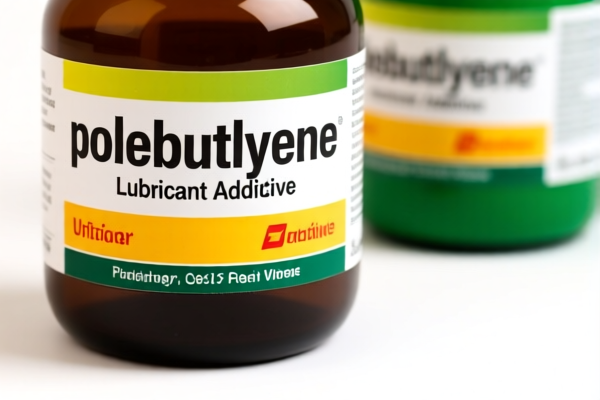
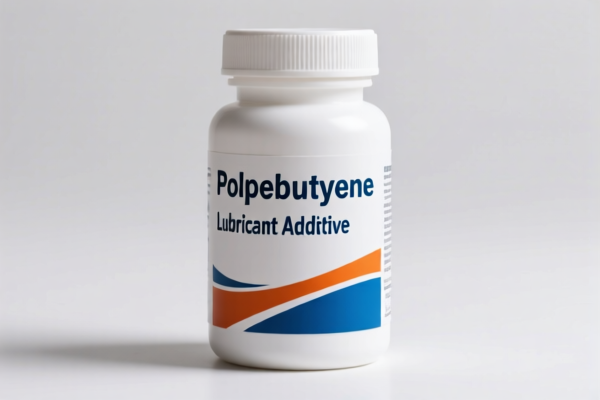
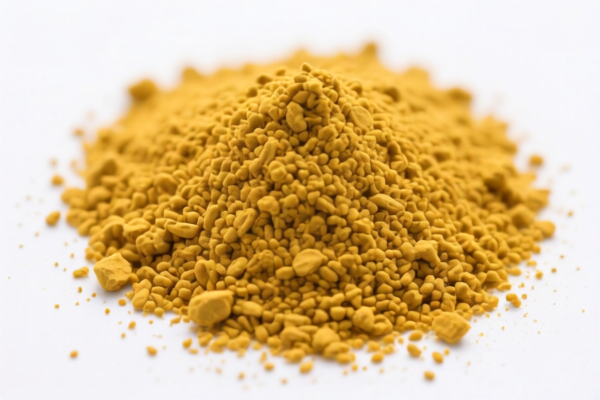
AI Analysis
🛢️ Low Sulfur Lubricant Additive (ZDDP & Zinc-free Alternatives)
🌐 HS Code Reference & Customs Clearance Guide | 2026 Latest Tariff Analysis | Professional Clearance Strategy
📌 I. Product Definition & Classification: What is "Low Sulfur Lubricant Additive"?
Low Sulfur Lubricant Additives are chemical compounds added to base oils and greases to enhance performance, specifically focusing on anti-wear, extreme pressure (EP) protection, and oxidation stability, while minimizing sulfur content to reduce corrosion and meet environmental standards (such as API SN Plus, SP, or ACEA C-series).
Key Components: 1. Zinc Dialkyldithiophosphate (ZDDP): The most common additive. Even "low sulfur" versions contain sulfur, but in controlled amounts. 2. Phosphorus-based Additives: Often paired with ZDDP for anti-wear properties. 3. Sulfur-Phosphorus Compounds: Used for Extreme Pressure (EP) performance. 4. Ashless Dispersants & Friction Modifiers: Organic compounds with minimal sulfur.
⚠️ Critical Distinction:
- Chemical Intermediate (HS 2904/2905): Pure chemical compounds not yet formulated for direct lubricant use.
- Prepared Lubricant Additive (HS 3811): Mixtures of chemical substances prepared for specific industrial applications (e.g., engine oil additives). Most commercial "Low Sulfur Additives" fall here.
- Lubricating Oil (HS 2710): The final blended oil product, NOT the additive itself.
📦 II. HS Code Classification Details (2026 Latest Harmonized System)
| HS Code | Product Description | Application Scenario | Key Classification Criteria |
|---|---|---|---|
| 3811.21.00.00 | Prepared additives containing sulfur derivatives (e.g., ZDDP, S-P compounds) | Engine oil additives, gear oil additives, metalworking fluids | Contains sulfur-based anti-wear/EP agents |
| 3811.29.00.00 | Other prepared lubricant additives (non-sulfur derivatives) | Friction modifiers, ashless dispersants, polymers | Low/No sulfur; anti-oxidants, detergents |
| 2904.10.00.00 | Dialkyldithiophosphates & their salts (ZDDP precursors) | Chemical intermediates, not yet "prepared" for final use | Pure chemical compound, not a mixture |
| 2905.49.80.90 | Other acyclic alcohols (base for additives) | Raw materials for synthesizing additives | Not an additive itself |
| 3811.90.00.00 | Other prepared anti-knocking preparations (if mixed with other fuels) | Rare for lubricants; usually applies to fuel additives | N/A for typical lubricant additives |
🔍 Key Reminder:
- Prepared Mixtures: If the product is a mixture of chemicals specifically designed for lubricants (e.g., a bottle of "ZDDP Additive for Engine Oil"), it belongs to 3811.
- Pure Chemicals: If it is a single chemical compound like pure Zinc Dialkyldithiophosphate sold as a raw material for further formulation, it may be classified under 2904.10.
- "Low Sulfur" does not mean "No Sulfur": If sulfur derivatives are present, 3811.21 is more accurate than 3811.29.
💰 III. 2026 Latest Tariff Rate Breakdown (Including Surcharges, Policy Add-ons)
✅ Applicable Country: United States (US)
✅ Country of Origin: China (CN)
✅ Effective Date: November 10, 2025 onwards (for subsequent imports)
🎯 1. 3811.21.00.00 —— Prepared Lubricant Additives Containing Sulfur Derivatives (e.g., ZDDP)
| Item | Content |
|---|---|
| Base Tariff Rate | 5.6% (ad valorem) |
| USITC Additional Tariff | +25% (Under Section 301, Footnote 9903.88.01) |
| IEEPA Additional Tariff | +10% (Targeting China/HK products, effective Nov 10, 2025) |
| Total Tariff Rate | 40.6% |
| Tax Calculation | CIF Value × 40.6% |
| De Minimis Eligibility | ❌ Not Eligible (deny_de_minimis) |
| Legal Authority Path | IEEPA:9903.01.25 → IEEPA:9903.01.24 → USITC:3811.21.00.00 → FOOTNOTE:9903.88.01 |
📌 Explanation:
- The 25% Section 301 tariff applies to most chemical intermediates and prepared additives from China.
- The 10% IEEPA tariff is a new surcharge targeting specific chemical and industrial goods from China, effective Nov 2025.
- Total 40.6% is a significant cost factor. Proper classification is critical to avoid overpayment or penalties.
🎯 2. 3811.29.00.00 —— Other Prepared Lubricant Additives (Low/No Sulfur)
| Item | Content |
|---|---|
| Base Tariff Rate | 5.6% (ad valorem) |
| USITC Additional Tariff | +25% (Under Section 301) |
| IEEPA Additional Tariff | +10% (Targeting China/HK products) |
| Total Tariff Rate | 40.6% |
| Tax Calculation | CIF Value × 40.6% |
| De Minimis Eligibility | ❌ Not Eligible |
| Legal Authority Path | IEEPA:9901.25 → IEEPA:9903.01.24 → USITC:3811.29.00.00 → FOOTNOTE:9903.88.01 |
📌 Note:
- Even if sulfur content is "low," if the product is still a prepared lubricant additive, it falls under 3811.
- The distinction between 3811.21 (Sulfur) and 3811.29 (Non-Sulfur) is primarily for domestic statistical purposes and customs data reporting, not for tariff rate difference in this case (both attract 40.6%).
- However, correct classification is vital for regulatory compliance (EPA, DOT) and product safety data sheets (SDS).
🛠️ IV. Customs Clearance Practical Advice (Real-World Pitfall Avoidance)
✅ 1. Required Documentation Checklist (Essential)
| Document | Required | Description |
|---|---|---|
| ✅ Product Specification Sheet | ✔️ | Chemical composition, sulfur/phosphorus content (%), viscosity, flash point |
| ✅ Safety Data Sheet (SDS) | ✔️ | Must comply with OSHA/Hazmat standards; identify UN number for shipping |
| ✅ Product Photo (Label & Container) | ✔️ | Clear view of HS Code suggestion, CAS numbers, and hazard warnings |
| ✅ Certificate of Analysis (COA) | ✔️ | Lab report confirming "Low Sulfur" claim (e.g., <0.3% S) |
| ✅ Commercial Invoice | ✔️ | Must specify: "Prepared Lubricant Additive for Engine Oil" |
| ✅ Bill of Lading (B/L) | ✔️ | Ensure proper packaging details (drums, totes, etc.) |
| ✅ Import License (if applicable) | ✔️ | Check EPA/DOT requirements for certain chemical imports |
✅ 2. Declaration Tips (Key Mantras)
🔥 "Prepare Mixture = 3811, Pure Chemical = 2904, Sulfur Matters for Data, Not Always Rate!"
| Scenario | Correct Declaration | Wrong Approach |
|---|---|---|
| Bottle of Engine Oil Additive | 3811.21.00.00 or 3811.29.00.00 |
Misclassified as 2904 (Pure Chemical) → Potential penalty |
| Pure ZDDP Powder (Raw Material) | 2904.10.00.00 |
Misclassified as 3811 → Over-declaration risk |
| Final Blended Motor Oil | 2710.19.85.00 |
Misclassified as 3811 → Wrong HS Code |
| Additive + Detergent Mix | 3811.29.00.00 (if no S) |
Must specify "Ashless" in description |
✅ 3. Special Circumstances Handling
| Situation | Handling Advice |
|---|---|
| Mixed Chemicals | If multiple additives are blended in one drum, classify as 3811 (Prepared Mixture). |
| Hazmat Shipping | Lubricant additives may be Class 9 Miscellaneous Dangerous Goods. Provide MSDS and UN3082 or UN3077 classification. |
| EPA Regulation | Ensure compliance with TSCA (Toxic Substances Control Act) before import. |
| Country of Origin | If synthesized in China but packaged elsewhere, China origin likely applies. Verify Substantial Transformation. |
🌍 V. Global Market Comparison (2026 Latest)
| Country/Region | Recommended HS Code | Tariff (China Origin) | Certification Requirements | Notes |
|---|---|---|---|---|
| 🇺🇸 USA | 3811.21.00.00 |
40.6% | TSCA Compliance | High tariff due to Section 301 + IEEPA |
| 🇨🇳 China | 3811.21.00.00 |
5% | ISO 9001, REACH (if exported to EU) | Low domestic tariff |
| 🇪🇺 EU | 3811.29.00.00 |
6.5% (if >0.1% S) | REACH, CLP, RoHS | Sulfur content affects classification |
| 🇦🇺 Australia | 3811.29.00.00 |
5% | AICIS (Australian Industrial Chemicals Introduction Scheme) | No high surcharges |
| 🇯🇵 Japan | 3811.29.00.00 |
6% | JIS Standards | No major surcharges |
📌 Conclusion:
- USA has the highest total tariff (40.6%) for Chinese-origin lubricant additives.
- EU and Asia have moderate tariffs (5-6.5%) but stricter chemical regulations (REACH, AICIS).
- Cost Efficiency: Consider duty drawback or bonded warehouses if re-exporting from the US.
📌 VI. Common Errors & Pitfall Guide (Lessons Learned)
❌ Mistake 1: Classifying "Prepared Additive" as "Pure Chemical" (2904)
👉 Consequence: Customs may reject the declaration for mismatching description → Delay + Storage Fees
❌ Mistake 2: Ignoring Sulfur Content in Documentation
👉 Consequence: Incorrect statistical reporting (3811.21 vs 3811.29) → Compliance Audit Risk
❌ Mistake 3: Not Declaring Hazmat Status
👉 Consequence: Shipment held at port → Fines + Demurrage Charges
❌ Mistake 4: Assuming "Low Sulfur" = "No Tariff"
👉 Consequence: 40.6% still applies! "Low Sulfur" is a performance claim, not a tariff exemption.
✅ Correct Practice:
"Prepared Lubricant Additive, Zinc Dialkyldithiophosphate (ZDDP) based, Sulfur Content: 0.25%, CAS No. 68937-41-7, For Engine Oil Formulation, UN3082, Class 9"
🎯 VII. Conclusion: Precise Classification, Cost Optimization, Smooth Clearance!
🎯 Remember the Mantras:
🔹 "Prepared Mixture = 3811, Pure Compound = 2904, Sulfur Data for Stats, Not Always Rate!"
🔹 "USA Tariff 40.6%, EU 6.5%, China 5%, Plan Ahead for Cost!"
🔹 "SDS & TSCA Compliance are Non-Negotiable!"
📌 Pro Tip:
If your additive is shipped in bulk drums and used for further formulation, ensure your Customer in the US has a TSCA Inventory listing. For small quantities, consider De Minimis exemptions only if NOT subject to Section 301/IEEPA (which they are).
Consider Advance Ruling from US CBP for complex mixtures.
📣 Immediate Action:
📞 Contact a Customs Broker specializing in Chemicals
📄 Prepare SDS + COA + TSCA Compliance Docs
🚀 Optimize Logistics, Avoid Tariff Traps, Ensure Compliance!
✨ Professional Clearance Starts with Accurate Classification!
💼 Every Percent of Tariff Matters in the Chemical Trade!
Customer Reviews
About HS Code Classification
The Harmonized System (HS) is an internationally standardized nomenclature developed by the World Customs Organization (WCO) to classify traded products. Over 200 countries use the HS system as the basis for customs tariffs, trade statistics, and import/export regulations.
Each HS code follows a hierarchical structure:
- Chapter (2 digits) — Broad category of goods (e.g., Chapter 84: Machinery and Mechanical Appliances)
- Heading (4 digits) — More specific grouping within the chapter
- Subheading (6 digits) — Internationally standardized breakdown, used by all WCO member countries
- National subdivisions (8-10 digits) — Country-specific extensions for further classification, such as US HTSUS 10-digit codes
Correct HS code classification is essential for smooth customs clearance, accurate duty payment, and compliance with trade regulations. Misclassification can lead to customs delays, overpayment of duties, or penalties.
When importing from CN to US, the applicable tariff rates may include:
- Most-Favored-Nation (MFN) rate — The standard duty rate applied to WTO members
- General rate — Applied to countries without trade agreements
- Trade remedy duties — Additional tariffs such as Section 301 (anti-dumping), Section 232 (national security), or countervailing duties
The information provided on this page is for reference purposes only. For official classification, please consult with your local customs authority or a licensed customs broker.