Low Toxicity Disinfectant
CN → US| HS Code | Tariff Rate | Origin | Destination | Doc |
|---|---|---|---|---|
| 3402905050 | 38.7% | CN | US | Official Doc |
| 3402905030 | 38.7% | CN | US | Official Doc |
| 3808945095 | 40.0% | CN | US | Official Doc |
| 3808911500 | 35.0% | CN | US | Official Doc |
| 3808912501 | 41.5% | CN | US | Official Doc |
Product Images
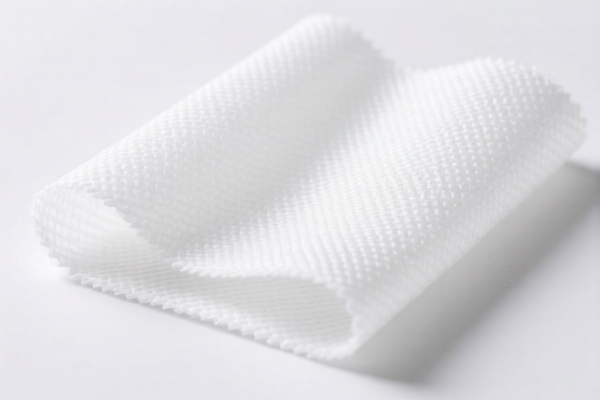

AI Analysis
🧴 Low Toxicity Disinfectant (Chemical Disinfectants & Sanitizers)
🌐 HS Code Reference & Customs Clearance Guide | 2026 Tariff Full Analysis | Professional Clearance Strategy
📌 I. Product Definition & Classification: Do You Really Understand "Low Toxicity Disinfectants"?
A "Low Toxicity Disinfectant" is a chemical product used to destroy or irreversibly inactivate infectious agents on surfaces, instruments, or environments. In international trade, its classification depends heavily on its primary function and chemical composition:
- Cleaning/Preparation Products (Chapter 34): If the product is primarily a detergent, surfactant-based cleaner, or a non-medicated preparation used for general surface cleaning and hygiene maintenance, it falls under Chapter 34.
- Disinfectants & Insecticides (Chapter 38): If the product is chemically formulated specifically to kill pathogens (bacteria, viruses, fungi) or pests, and functions as a biocide, it falls under Chapter 38.
⚠️ Key Distinction Point:
- If it is a general-purpose cleaner with disinfectant properties but marketed as a "preparation for cleaning," it may lean towards 3402.
- If it is a specialized disinfectant (medical, industrial, or agricultural) designed to kill specific organisms, it typically falls under 3808.
- "Low Toxicity" refers to the hazard level, not necessarily the HS code. However, specific subheadings in Chapter 38 may apply to less toxic formulations.
📦 II. HS Code Classification Details (2026 Latest Tariff Authority Comparison)
Based on the provided data, here are the specific HS Codes and their logical justifications for a "Low Toxicity Disinfectant":
| HS Code | Product Description | Justification & Category | Total Tax Rate |
|---|---|---|---|
3402.90.50.50 |
Other Preparations (Non-Irritating Disinfectant) | Categorized under Chapter 34 (Surface-Active Agents; Preparations for Washing). Specifically for "Other" preparations that are non-irritating disinfectants. Fits the chemical preparation category. | 38.7% |
3402.90.50.30 |
Cleaning/Disinfectant Preparation | Also under Chapter 34. The summary explicitly states it falls under the "Cleaning/Disinfectant" scope and conforms to cleaning preparation attributes. | 38.7% |
3808.94.50.95 |
Other Disinfectants | Categorized under Chapter 38 (Insecticides, Rodenticides, Fungicides, etc.). Specifically for "Disinfectants" under subheading 3808.94. Matches the usage perfectly as a disinfectant category. | 40.0% |
3808.91.15.00 |
Low Toxicity Insecticide/Pesticide | Categorized under Chapter 38. Specifically for "Low Toxicity" products in the insecticide/pesticide scope. Note: While labeled "Disinfectant," if the formulation is chemically similar to low-toxicity pesticides or classified under broader biocide rules, it may fall here. | 35.0% |
3808.91.25.01 |
Low Toxicity Insecticide/Pesticide | Another subheading for Low Toxicity products in Chapter 38. Fits the definition of low-toxicity disinfectant/pesticide preparations. | 41.5% |
🔍 Critical Insight:
- Chapter 34 (3402.90.50.x) is generally for cleaning preparations with disinfectant properties.
- Chapter 38 (3808.x) is for chemical disinfectants/pesticides.
- Low Toxicity codes in Chapter 38 (3808.91) often have lower base tariffs (0% or 6.5%) but are subject to specific regulatory scrutiny.
💰 III. 2026 Latest Tariff Rate Details (Including Surtaxes & Policy Add-ons)
✅ Applicable Country: United States (US)
✅ Origin: China (CN)
✅ Effective Date: November 10, 2025 (and subsequent imports)
🎯 1. 3402.90.50.50 & 3402.90.50.30 —— Cleaning/Preparation Category
| Item | Content |
|---|---|
| Base Tariff | 3.7% (ad valorem) |
| USITC Surtax (Section 301) | +25.0% |
| IEEPA Surcharge (Section 122/EO) | +10.0% |
| Total Tax Rate | 38.7% |
| Tax Calculation | CIF Value × 38.7% |
| De Minimis Exemption | ❌ Not Applicable (High tariff volume) |
| Legal Basis Path | Base: 3402.90.50.xx → USITC: 9903.01.25 (25%) → IEEPA: 9903.01.24 (10%) |
📌 Explanation:
- The 25% is from USITC Footnote 9903.88.01 (Section 301 tariffs).
- The 10% is from IEEPA provisions targeting Chinese imports.
- These are cleaning preparations, so they do not qualify for lower "low-toxicity" pesticide exemptions if classified under 3402.
🎯 2. 3808.94.50.95 —— Standard Disinfectant Category
| Item | Content |
|---|---|
| Base Tariff | 5.0% (ad valorem) |
| USITC Surtax (Section 301) | +25.0% |
| IEEPA Surcharge (Section 122/EO) | +10.0% |
| Total Tax Rate | 40.0% |
| Tax Calculation | CIF Value × 40.0% |
| De Minimis Exemption | ❌ Not Applicable |
| Legal Basis Path | Base: 3808.94.50.95 → USITC: 9903.01.25 → IEEPA: 9903.01.24 |
📌 Note:
- This is the highest standard disinfectant rate.
- If the product is strictly a disinfectant (not a cleaner), this is the most accurate classification, but the cost is higher.
🎯 3. 3808.91.15.00 —— Low Toxicity Category (Best Base Rate)
| Item | Content |
|---|---|
| Base Tariff | 0.0% (ad valorem) |
| USITC Surtax (Section 301) | +25.0% |
| IEEPA Surcharge (Section 122/EO) | +10.0% |
| Total Tax Rate | 35.0% |
| Tax Calculation | CIF Value × 35.0% |
| De Minimis Exemption | ❌ Not Applicable |
| Legal Basis Path | Base: 3808.91.15.00 → USITC: 9903.01.25 → IEEPA: 9903.01.24 |
📌 Critical Advantage:
- Base rate is 0%.
- Even with surtaxes, the total is 35%, which is lower than the 38.7% or 40.0% alternatives.
- Condition: Must prove "Low Toxicity" according to US EPA/USITC definitions.
🎯 4. 3808.91.25.01 —— Low Toxicity Category (Higher Base)
| Item | Content |
|---|---|
| Base Tariff | 6.5% (ad valorem) |
| USITC Surtax (Section 301) | +25.0% |
| IEEPA Surcharge (Section 122/EO) | +10.0% |
| Total Tax Rate | 41.5% |
| Tax Calculation | CIF Value × 41.5% |
| De Minimis Exemption | ❌ Not Applicable |
📌 Warning:
- Avoid this code unless necessary. It has a higher base (6.5%) than3808.91.15.00(0%), resulting in a higher total tax.
🛠️ IV. Customs Clearance Practical Advice (Pitfall Avoidance Guide)
✅ 1. Preparation Checklist (Mandatory)
| Document | Required | Description |
|---|---|---|
| ✅ Product Specification Sheet | ✔️ | Must detail chemical composition, active ingredients, and toxicity level (e.g., EPA Registration Number). |
| ✅ EPA Registration Certificate | ✔️ | Critical for Chapter 38. Proves the product is approved as a disinfectant/pesticide in the US. |
| ✅ Safety Data Sheet (SDS) | ✔️ | Must clearly state "Low Toxicity" classification and hazard statements. |
| ✅ Product Photos (Label & Packaging) | ✔️ | Clear view of "Disinfectant" claims, usage instructions, and EPA Reg. No. |
| ✅ Commercial Invoice | ✔️ | Accurate description: "Low Toxicity Disinfectant, Chemical Preparation, EPA Reg. No. XXXX." |
| ✅ Certificate of Origin | ✔️ | To determine origin-based surtaxes. |
✅ 2. Declaration Tips (Key Mnemonics)
🔥 "Low Toxicity = Lower Base, EPA Reg. is King, Chapter 34 is Cleaner, Chapter 38 is Killer!"
| Scenario | Correct HS Code | Error | Consequence |
|---|---|---|---|
| General surface cleaner with disinfectant | 3402.90.50.30 |
Classify as 3808 |
Overpay tax (38.7% vs 35.0%) or face rejection if no EPA Reg. |
| Specific disinfectant (Kill bacteria/viruses) | 3808.94.50.95 |
Classify as 3402 |
Misclassification; may be rejected by EPA/Customs. |
| Proven Low Toxicity Disinfectant | 3808.91.15.00 |
Classify as 3808.94 |
Save 5% tax (35.0% vs 40.0%). |
| Low Toxicity (High Base) | 3808.91.25.01 |
Use 3808.91.15.00 |
Overpay 6.5% unnecessarily. |
✅ 3. Special Handling
| Situation | Recommendation |
|---|---|
| No EPA Registration | Cannot clear as 3808. Must clear as 3402 (Cleaner) if possible, or face seizure. |
| "Natural" or "Essential Oil" Based | May fall under 3402.90.50.50 if not registered as a pesticide/disinfectant by EPA. |
| Industrial vs. Household | Industrial disinfectants often strictly require 3808. Household sanitizers may have more flexibility. |
| Mixed Shipments | If a shipment contains both cleaners (3402) and disinfectants (3808), separate them in customs declaration to avoid delays. |
🌍 V. Global Market Comparison (2026 Latest)
| Country/Region | Recommended HS Code | Tariff | Certification | Notes |
|---|---|---|---|---|
| 🇺🇸 USA | 3808.91.15.00 |
35.0% | EPA Reg. + SDS | Best rate for low-toxicity. |
| 🇨🇳 China | 3808.91.15.00 |
~5-10% | N/A | Lower base rates. |
| 🇪🇺 EU | 3808.94.50 |
6.5% | Biocidal Products Regulation (BPR) | Strict BPR compliance required. |
| 🇯🇵 Japan | 3808.94.50 |
6.5% | PSC (Practical Safety Control) | Registration with MAFF required. |
📌 Conclusion:
- USA is the most complex due to Section 301 and IEEPA surtaxes.
- EPA Registration is non-negotiable for Chapter 38 imports into the US.
- Choosing3808.91.15.00(Low Toxicity) is the most cost-effective if your product qualifies.
📌 VI. Common Mistakes & Pitfall Guide (Blood Lessons)
❌ Mistake 1: Classifying a registered disinfectant as a "Cleaner" (3402) to avoid EPA scrutiny
👉 Consequence: Customs or EPA may reclassify, levy penalties, or seize goods. Misdeclaration is a serious offense.
❌ Mistake 2: Ignoring the "Low Toxicity" classification
👉 Consequence: Paying 40.0% instead of 35.0%. A 5% difference on large volumes is significant.
❌ Mistake 3: Missing EPA Registration Number on the Label/Invoice
👉 Consequence: Entry Rejected. US Customs will not release Chapter 38 goods without EPA Reg. No.
❌ Mistake 4: Confusing "Low Toxicity" with "Non-Hazardous"
👉 Consequence: "Low Toxicity" is a specific USITC classification. If not properly documented, you may be forced into higher base rate categories.
✅ Correct Practice:
"Low Toxicity Disinfectant Solution, EPA Reg. No. 12345-67, Active Ingredient: XXXX, HS Code: 3808.91.15.00, Origin: China"
🎯 VII. Conclusion: Professional Declaration, Save Costs, Ensure Compliance!
🎯 Remember Mnemonics:
🔹 "EPA Reg. for 3808, Cleaner for 3402, Low Toxicity Saves 5%, Don't Guess the Code!"
🔹 "Base Rate Matters, 3808.91.15.00 is Best, 3402 is Clean, 3808.94 is Steep!"
📌 Pro Tip:
If your product is low toxicity but not registered as a pesticide/disinfectant with EPA, consider classifying under 3402.90.50.50 (Cleaning Preparation) if the primary function is cleaning. Always consult with a customs broker and provide EPA documentation to justify Chapter 38 classification.
📣 Immediate Action:
📞 Contact Customs Broker + Provide EPA Registration + Verify "Low Toxicity" Claims
🚀 Ensure smooth clearance, minimize tax burden, and stay compliant!
✨ Professional Clearance Starts with Accurate Classification!
💼 Every Percent of Tax Saved is Pure Profit!
Customer Reviews
About HS Code Classification
The Harmonized System (HS) is an internationally standardized nomenclature developed by the World Customs Organization (WCO) to classify traded products. Over 200 countries use the HS system as the basis for customs tariffs, trade statistics, and import/export regulations.
Each HS code follows a hierarchical structure:
- Chapter (2 digits) — Broad category of goods (e.g., Chapter 84: Machinery and Mechanical Appliances)
- Heading (4 digits) — More specific grouping within the chapter
- Subheading (6 digits) — Internationally standardized breakdown, used by all WCO member countries
- National subdivisions (8-10 digits) — Country-specific extensions for further classification, such as US HTSUS 10-digit codes
Correct HS code classification is essential for smooth customs clearance, accurate duty payment, and compliance with trade regulations. Misclassification can lead to customs delays, overpayment of duties, or penalties.
When importing from CN to US, the applicable tariff rates may include:
- Most-Favored-Nation (MFN) rate — The standard duty rate applied to WTO members
- General rate — Applied to countries without trade agreements
- Trade remedy duties — Additional tariffs such as Section 301 (anti-dumping), Section 232 (national security), or countervailing duties
The information provided on this page is for reference purposes only. For official classification, please consult with your local customs authority or a licensed customs broker.