Low alkali mortar for fireproof boards
CN → US| HS Code | Tariff Rate | Origin | Destination | Doc |
|---|---|---|---|---|
| 6902905020 | 35.0% | CN | US | Official Doc |
| 3816002050 | 38.0% | CN | US | Official Doc |
| 3816002010 | 38.0% | CN | US | Official Doc |
| 6813890050 | 35.0% | CN | US | Official Doc |
Product Images
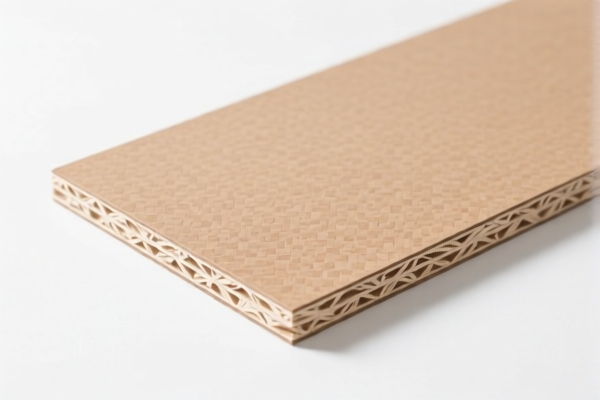
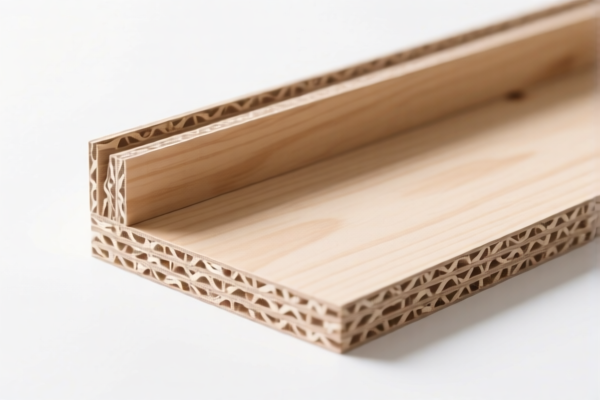
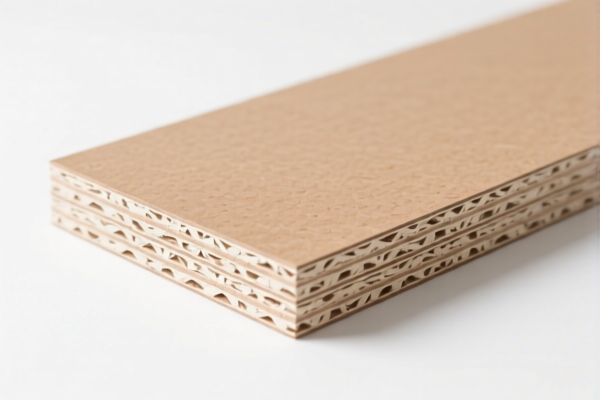
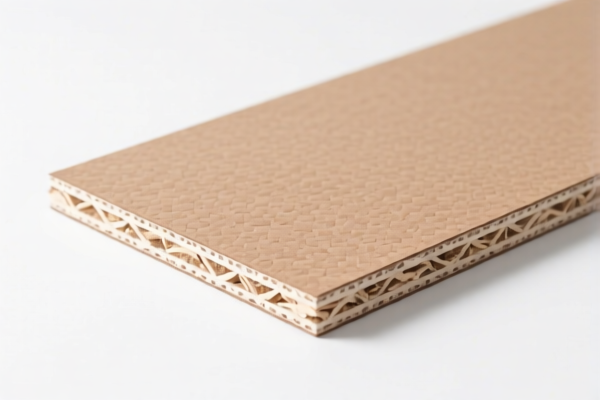
AI Analysis
🧱 Low Alkali Mortar for Fireproof Boards
🌐 HS Code Reference & Customs Clearance Guide | 2026 Latest Tariff Analysis | Professional Clearance Strategy
📌 I. Product Definition & Classification: Do You Truly Understand "Low Alkali Mortar"?
Low Alkali Mortar for Fireproof Boards is a specialized construction auxiliary material used as an adhesive, grout, or backing layer for fire-resistant board systems. It falls under the category of refractory ceramic materials or chemical products based on mineral substances, depending on its specific composition and application.
In international trade, it is primarily classified in two major chapters: 1. Chapter 69 (Ceramic Products): If the mortar is considered a refractory building material similar to fireproof bricks or castables. 2. Chapter 38 (Miscellaneous Chemical Products): If the mortar is viewed as a prepared chemical product or fireproofing preparation based on mineral or chemical components.
⚠️ Key Distinction Point:
- If the product is structurally similar to refractory castables, mortars, or cements used for high-temperature insulation →归入 6902.90.50.20
- If the product is a chemically prepared mixture (e.g., with specific fireproofing additives) →归入 3816.00.20.50 or 3816.00.20.10
- If the product is used as a mineral matrix for friction materials (less common for general fireproof boards, but possible) →归入 6813.89.00.50
📦 II. HS Code Classification Details (2026 Latest Tariff Authority Comparison)
| HS Code | Product Description | Application Scenario | Key Classification Logic |
|---|---|---|---|
6902.90.50.20 |
Refractory bricks, blocks, tiles, and similar refractory ceramic constructions (other) | Fireproof board mortar as a refractory ceramic component for building construction | Classified as refractory ceramic material; used as auxiliary building material |
3816.00.20.50 |
Preparations and charges for soldering, brazing or welding; metal carbides prepared in the form of sheets, powder or similar forms | Chemically prepared mortar based on mineral/chemical components for fireproofing | Name "mortar" directly matches; inferred as other fireproof material based on mineral/chemical composition |
3816.00.20.10 |
Refractory cements, mortars, concretes and similar compositions, other than those of heading 30.02 or 38.24 | Mortar形态 matches refractory cement/mortar; inferred as clay-based or mineral refractory product | Shape and consistency match refractory cement/mortar; inferred as clay/mineral-based refractory product |
6813.89.00.50 |
Friction material and articles thereof (other) | Mineral matrix mortar for friction/fireproof applications | Mortar is mineral-based; fits the mineral matrix characteristic of friction materials; fireproof attribute is reasonable inference |
🔍 Key Reminder:
-6902.90.50.20: Best for ceramic-based refractory mortars used in high-temperature insulation.
-3816.00.20.50&3816.00.20.10: Best for chemically treated or prepared mortars with specific fireproofing additives.
-6813.89.00.50: Niche classification for mineral matrix applications (e.g., if used in friction/fireproof composite materials).
💰 III. 2026 Latest Tariff Rate Details (Including Surcharge, Policy Additions)
✅ Applicable Country: United States (US)
✅ Country of Origin: China (CN)
✅ Effective Date: From November 10, 2025 (including subsequent imports)
🎯 1. 6902.90.50.20 —— Refractory Ceramic Mortar (Building Material)
| Item | Content |
|---|---|
| Base Duty Rate | 0% (ad valorem) |
| USITC Surcharge | +25% (under USITC Footnote 9903.88.01) |
| IEEPA Surcharge | +10% (targeting China/HK products, from Nov 10, 2025) |
| Total Rate | 35% |
| Tax Calculation | CIF Value × 35% |
| De Minimis Eligibility | ❌ Not Eligible (deny_de_minimis) |
| Legal Basis Path | IEEPA:9903.01.25 → IEEPA:9903.01.24 → USITC:6902.90.50.20 → FOOTNOTE:9903.88.01 |
📌 Explanation:
- "25% USITC Surcharge": From Section 301 of the US Trade Act;
- "10% IEEPA Surcharge": From the International Emergency Economic Powers Act against China;
- Total 35%: High tariff burden; must be anticipated in advance!
🎯 2. 3816.00.20.50 —— Chemically Prepared Fireproof Mortar
| Item | Content |
|---|---|
| Base Duty Rate | 3% (ad valorem) |
| USITC Surcharge | +25% |
| IEEPA Surcharge | +10% |
| Total Rate | 38% |
| Tax Calculation | CIF Value × 38% |
| De Minimis Eligibility | ❌ Not Eligible (deny_de_minimis) |
| Legal Basis Path | IEEPA:9903.01.25 → IEEPA:9903.01.24 → USITC:3816.00.20.50 → FOOTNOTE:9903.88.01 |
📌 Note:
- Base rate is 3% (higher than 6902);
- Total rate is 38%, 3% higher than ceramic-based classification;
- Applies to chemically prepared mixtures with specific fireproofing additives.
🎯 3. 3816.00.20.10 —— Refractory Cement/Mortar (Clay/Mineral Based)
| Item | Content |
|---|---|
| Base Duty Rate | 3% (ad valorem) |
| USITC Surcharge | +25% |
| IEEPA Surcharge | +10% |
| Total Rate | 38% |
| Tax Calculation | CIF Value × 38% |
| De Minimis Eligibility | ❌ Not Eligible (deny_de_minimis) |
| Legal Basis Path | IEEPA:9903.01.25 → IEEPA:9903.01.24 → USITC:3816.00.20.10 → FOOTNOTE:9903.88.01 |
📌 Note:
- Same as above (3816.00.20.50);
- Applies to clay-based or mineral-based refractory mortars with specific consistency;
- Total rate 38%; 3% higher than ceramic-based classification.
🎯 4. 6813.89.00.50 —— Mineral Matrix Friction/Fireproof Material
| Item | Content |
|---|---|
| Base Duty Rate | 0% (ad valorem) |
| USITC Surcharge | +25% |
| IEEPA Surcharge | +10% |
| Total Rate | 35% |
| Tax Calculation | CIF Value × 35% |
| De Minimis Eligibility | ❌ Not Eligible (deny_de_minimis) |
| Legal Basis Path | IEEPA:9903.01.25 → IEEPA:9903.01.24 → USITC:6813.89.00.50 → FOOTNOTE:9903.88.01 |
📌 Note:
- Same rate as ceramic-based (6902.90.50.20);
- Niche classification; applies if mortar is used as a mineral matrix for friction/fireproof composites.
🛠️ IV. Customs Clearance Practical Advice (Battle-Tested Pitfall Avoidance Guide)
✅ 1. Required Document Checklist (None Can Be Omitted)
| Document | Mandatory | Description |
|---|---|---|
| ✅ Product Specification Sheet | ✔️ | Includes composition (low alkali content), fireproof rating, usage instructions |
| ✅ Safety Data Sheet (SDS) | ✔️ | For chemical safety; confirms low alkali nature |
| ✅ Product Photos (with Label) | ✔️ | Clear view of brand, model, batch number, and hazard labels |
| ✅ Third-Party Test Report | ✔️ | Fireproof performance test (e.g., ASTM E119, UL 263), chemical composition analysis |
| ✅ Commercial Invoice | ✔️ | Clearly state "Low Alkali Mortar for Fireproof Boards" |
| ✅ Packing List | ✔️ | Detail net/gross weight, dimensions, and packaging type |
| ✅ Certificate of Origin (CO) | ✔️ | If non-China origin, may qualify for preferential rates |
✅ 2. Declaration Tips (Key Mnemonic)
🔥 "Base Rate Matters, Surcharge is Fixed, Name Must Be Precise, Tax Can Be Reduced!"
| Scenario | Correct Declaration | Wrong Practice |
|---|---|---|
| Ceramic-based refractory mortar | 6902.90.50.20 |
Misdeclare as chemical product → 38% |
| Chemically prepared fireproof mortar | 3816.00.20.50 |
Misdeclare as ceramic → 35% (may trigger inspection) |
| Clay/mineral-based refractory mortar | 3816.00.20.10 |
Misdeclare as generic mortar → Potential penalty |
| Mineral matrix for friction materials | 6813.89.00.50 |
Misdeclare as generic construction material → Delayed clearance |
✅ 3. Special Situation Handling
| Situation | Handling Advice |
|---|---|
| OEM Custom Mortar | Provide customer order + formula/design drawing; avoid being classified as "non-standard" |
| Mortar with Special Additives | Provide SDS + test report; clarify if it falls under 3816 (chemical) or 6902 (ceramic) |
| Small Quantity Samples | Still subject to 35%-38% duty; no de minimis exemption |
| Mortar for Non-Building Use | If used in industrial friction pads, consider 6813.89.00.50 |
🌍 V. Global Market Clearance Comparison (2026 Latest)
| Country/Region | Recommended HS Code | Tariff | Certification Requirement | Notes |
|---|---|---|---|---|
| 🇺🇸 USA | 6902.90.50.20 / 3816.00.20.50 |
35%-38% (China origin) | SDS, Fireproof Test Report | High tariff burden |
| 🇨🇳 China | 6902.90.50.20 / 3816.00.20.10 |
0%-3% | CCC (if applicable) | No surcharge |
| 🇪🇺 EU | 6902.90.50.20 / 3816.00.20.50 |
0%-6.5% (if compliant) | CE, REACH | No surcharge |
| 🇦🇺 Australia | 6902.90.50.20 |
5% | RCM | No surcharge |
| 🇯🇵 Japan | 6902.90.50.20 |
0% | JIS | No surcharge |
📌 Conclusion:
- USA is the only market with high surcharge tariffs for Chinese-origin refractory mortars;
- Chinese-origin mortars face high clearance costs in the US; consider supply chain adjustment or tariff engineering in advance.
📌 VI. Common Mistakes & Pitfall Guide (Lessons from Blood & Tears)
❌ Mistake 1: Declaring "chemical mortar" as "ceramic brick"
👉 Consequence: Customs inspection → Delay + Penalty
❌ Mistake 2: Ignoring "low alkali" specification
👉 Consequence: Misclassification → Tax difference of 3% → Additional cost on large volumes
❌ Mistake 3: Using generic name "Building Mortar"
👉 Consequence: Customs cannot determine if it's refractory → Delay for further inquiry
❌ Mistake 4: Assuming de minimis applies
👉 Consequence: Shipment held; no exemption for Section 301/IEEPA surcharges
✅ Correct Practice:
"Low Alkali Refractory Mortar for Fireproof Boards, Chemical/Mineral Based, ASTM E119 Certified, No. XYZ, SDS Provided"
🎯 VII. Conclusion: Professional Declaration Saves Time, Money, and Stress!
🎯 Remember the Mnemonic:
🔹 "Ceramic 35%, Chemical 38%, Name Must Be Precise, Tax Can Be Reduced!"
🔹 "HS Code Determines Destiny, 3% Difference Means Thousands in Cost!"
📌 Pro Tip:
If your mortar originates from Vietnam, Mexico, Thailand, or Malaysia, you may apply for IEEPA Exemption, reducing the rate to 0%-5%;
Apply for Advance Ruling to avoid clearance risks.
📣 Immediate Action:
📞 Contact professional customs broker + Provide product specs + Apply for HS Code Advance Ruling
🚀 Ensure your Low Alkali Mortar clears customs smoothly, boosts efficiency, and maximizes profit!
✨ Professional clearance starts with precise classification!
💼 Every cent of your cost deserves precise calculation!
Customer Reviews
About HS Code Classification
The Harmonized System (HS) is an internationally standardized nomenclature developed by the World Customs Organization (WCO) to classify traded products. Over 200 countries use the HS system as the basis for customs tariffs, trade statistics, and import/export regulations.
Each HS code follows a hierarchical structure:
- Chapter (2 digits) — Broad category of goods (e.g., Chapter 84: Machinery and Mechanical Appliances)
- Heading (4 digits) — More specific grouping within the chapter
- Subheading (6 digits) — Internationally standardized breakdown, used by all WCO member countries
- National subdivisions (8-10 digits) — Country-specific extensions for further classification, such as US HTSUS 10-digit codes
Correct HS code classification is essential for smooth customs clearance, accurate duty payment, and compliance with trade regulations. Misclassification can lead to customs delays, overpayment of duties, or penalties.
When importing from CN to US, the applicable tariff rates may include:
- Most-Favored-Nation (MFN) rate — The standard duty rate applied to WTO members
- General rate — Applied to countries without trade agreements
- Trade remedy duties — Additional tariffs such as Section 301 (anti-dumping), Section 232 (national security), or countervailing duties
The information provided on this page is for reference purposes only. For official classification, please consult with your local customs authority or a licensed customs broker.