Low elongation textile tape containing plant fibers
CN → US| HS Code | Tariff Rate | Origin | Destination | Doc |
|---|---|---|---|---|
| 5311004020 | 35.0% | CN | US | Official Doc |
| 5311004010 | 35.0% | CN | US | Official Doc |
| 5806392000 | 39.9% | CN | US | Official Doc |
| 5806393080 | 35.0% | CN | US | Official Doc |
| 6307909891 | 24.5% | CN | US | Official Doc |
Product Images
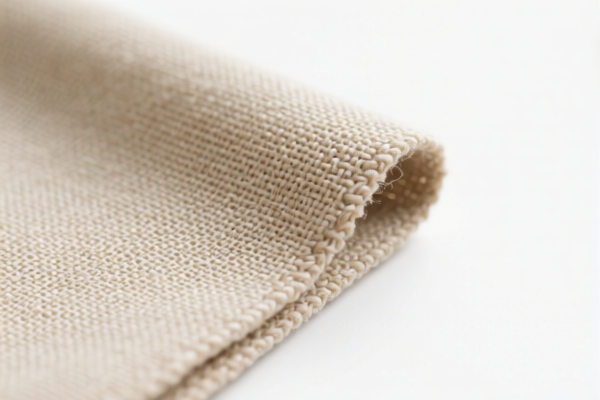
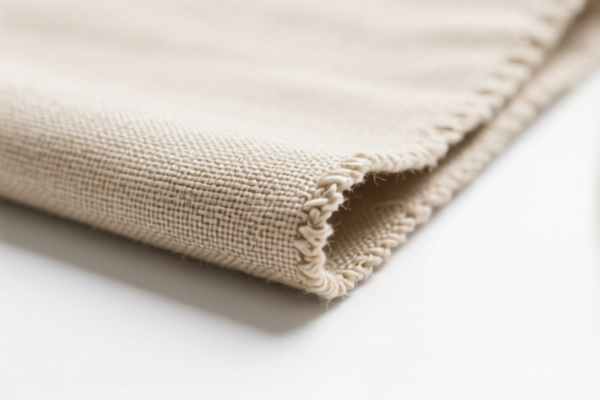
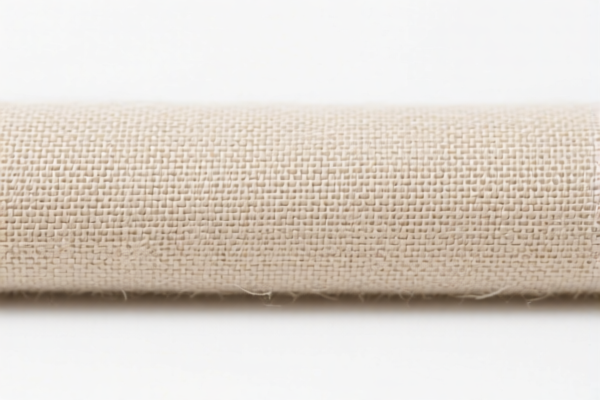
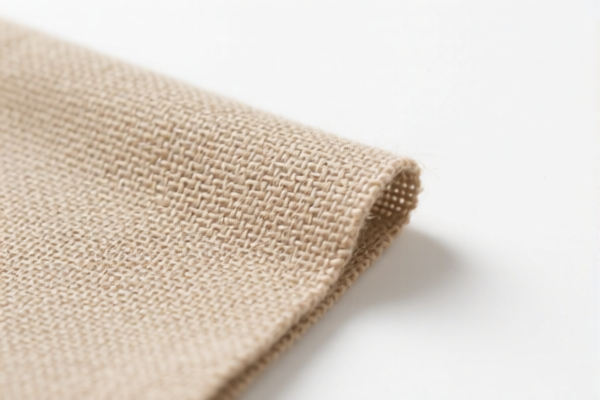
AI Analysis
🎗️ Low Elongation Textile Tape Containing Plant Fibers (植物纤维纺织带)
🌐 HS Code Reference & Customs Clearance Guide | 2026 Latest Tariff Analysis | Professional Clearance Strategy
📌 I. Product Definition & Classification: What is "Low Elongation Plant Fiber Tape"?
"Low elongation textile tape" refers to narrow woven fabrics that exhibit minimal stretch under tension. Unlike elastic bands or knit tapes, these are rigid, stable structural components often used in packaging, reinforcing, garment accessories, or industrial weaving.
The key defining characteristic is "Plant Fibers" (non-cotton, e.g., jute, hemp, sisal, flax, bamboo). This material composition drives the classification complexity, as customs authorities distinguish between "woven fabric," "narrow woven fabric," and "other made-up textile articles."
⚠️ Key Classification Logic:
- If the tape is a simple woven strip of plant fibers → Generally Chapter 53 (Vegetable Fibers).
- If the tape is narrow (<30cm) and made of plant fibers → Potentially Chapter 58 (Special Woven Fabrics).
- If the tape is a finished accessory (e.g., printed, laminated, or specifically shaped) → Potentially Chapter 63 (Other made-up textile articles).
📦 II. HS Code Classification Details (2026 Latest Tariff Cross-Reference)
| HS Code | Product Description | Application Scenario | Material/Structure |
|---|---|---|---|
5311.00.40.20 |
Textile tapes of vegetable fibers; derived from woven structures | General industrial plant fiber tapes; stable, non-stretchy woven strips | ✅ Plant fibers; woven structure derivative |
5311.00.40.10 |
Textile tapes of vegetable fibers; basic plant fiber fabric category | Standard vegetable fiber tapes without specific narrow-weave treatment | ✅ Plant fibers; basic fabric form |
5806.39.20.00 |
Narrow woven fabrics of vegetable fibers (excluding cotton) | Narrow strips (<30cm), high rigidity, used for reinforcement or branding | ✅ Non-cotton plant fibers; narrow width |
5806.39.30.80 |
Narrow woven fabrics of other textile materials (no silk/metal) | Versatile plant fiber tapes that don't fit specific cotton/plant definitions strictly | ✅ Other textile materials; no silk/metalization |
6307.90.98.91 |
Other made-up textile articles (not elsewhere specified) | Finished tapes, branded, laminated, or cut-to-shape plant fiber accessories | ✅ Plant fibers; finished article form |
🔍 Critical Distinction:
- Chapter 53 is for raw woven fabric of vegetable fibers. If your product is a simple, unprocessed woven tape, this is the most likely category.
- Chapter 58 is for narrow woven fabrics. If the width is ≤30cm and it has self-fringed edges or specific narrow-weave construction, this applies.
- Chapter 63 is for finished goods. If the tape is printed, laminated with plastic, or cut into specific shapes for a final product (like a bag handle), it may fall here.
💰 III. 2026 Latest Tariff Rate Breakdown (Including Additional Duties & Policy Surcharges)
✅ Applicable Country: United States (US)
✅ Country of Origin: China (CN)
✅ Effective Time: From November 10, 2025 (including subsequent imports)
🎯 1. 5311.00.40.20 —— Textile Tapes, Vegetable Fibers (Woven Derivative)
| Item | Content |
|---|---|
| Base Rate | 0% (ad valorem) |
| USITC Additional Duty | +25% (Under USITC Footnote 9903.88.01 / Section 301) |
| IEEPA Additional Duty | +10% (Targeting China/HK products, effective Nov 10, 2025) |
| Total Tax Rate | 35.0% |
| Tax Calculation | CIF Value × 35% |
| De Minimis Eligibility | ❌ Not Applicable (deny_de_minimis) |
| Legal Authority Path | IEEPA:9903.01.25 → IEEPA:9903.01.24 → USITC:5311.00.40.20 → FOOTNOTE:9903.88.01 |
📌 Explanation:
- The 25% USITC duty is the standard Section 301 tariff on Chinese textiles.
- The 10% IEEPA duty is an additional surcharge on Chinese textile products under the International Emergency Economic Powers Act.
- Total 35%: This is a high-cost category. Importers must factor this into landed cost calculations.
🎯 2. 5311.00.40.10 —— Textile Tapes, Vegetable Fibers (Basic Fabric)
| Item | Content |
|---|---|
| Base Rate | 0% |
| USITC Additional Duty | +25% |
| IEEPA Additional Duty | +10% |
| Total Tax Rate | 35.0% |
| Tax Calculation | CIF × 35% |
| De Minimis Eligibility | ❌ Not Applicable |
| Legal Authority Path | IEEPA:9901.25 → IEEPA:9903.01.24 → USITC:5311.00.40.10 → FOOTNOTE:9903.88.01 |
📌 Note:
- Identical tariff treatment to5311.00.40.20.
- Even if the tape is wider or less "finished," as long as it is a basic plant fiber textile, it attracts the full 35%.
🎯 3. 5806.39.20.00 —— Narrow Woven Fabrics (Non-Cotton Plant Fibers)
| Item | Content |
|---|---|
| Base Rate | 4.9% |
| USITC Additional Duty | +25% |
| IEEPA Additional Duty | +10% |
| Total Tax Rate | 39.9% |
| Tax Calculation | CIF × 39.9% |
| De Minimis Eligibility | ❌ Not Applicable |
| Legal Authority Path | IEEPA:9903.01.25 → IEEPA:9903.01.24 → USITC:5806.39.20.00 → FOOTNOTE:9903.88.01 |
📌 Warning:
- This is the most expensive category at 39.9%.
- Why? The base rate is 4.9% (unlike 0% for Ch. 53).
- This applies if the tape is narrow (<30cm) and clearly classified as a "special woven fabric" rather than a raw textile. Avoid this if possible unless your product structure demands it.
🎯 4. 5806.39.30.80 —— Narrow Woven Fabrics (Other Textile Materials)
| Item | Content |
|---|---|
| Base Rate | 0% |
| USITC Additional Duty | +25% |
| IEEPA Additional Duty | +10% |
| Total Tax Rate | 35.0% |
| Tax Calculation | CIF × 35% |
| De Minimis Eligibility | ❌ Not Applicable |
| Legal Authority Path | IEEPA:9901.25 → IEEPA:9903.01.24 → USITC:5806.39.30.80 → FOOTNOTE:9903.88.01 |
📌 Note:
- If your plant fiber tape doesn't fit the strict "vegetable fiber" definition in Ch. 53 but is still a narrow woven fabric, it may fall here.
- Tax rate is 35%, same as Ch. 53, but the legal path is different. Ensure your product description aligns with "other textile materials" if you choose this.
🎯 5. 6307.90.98.91 —— Other Made-Up Textile Articles
| Item | Content |
|---|---|
| Base Rate | 7.0% |
| USITC Additional Duty | +7.5% (Note: Lower surcharge for this category) |
| IEEPA Additional Duty | +10% |
| Total Tax Rate | 24.5% |
| Tax Calculation | CIF × 24.5% |
| De Minimis Eligibility | ❌ Not Applicable |
| Legal Authority Path | IEEPA:9901.25 → IEEPA:9903.01.24 → USITC:6307.90.98.91 → FOOTNOTE:9903.88.01 |
📌 Strategic Opportunity:
- Lowest Tax Rate: 24.5%.
- This category applies if the tape is a finished article (e.g., printed with logos, laminated, cut into specific shapes, or used as a handle/strap).
- Recommendation: If your product can be described as a "made-up article" rather than just "woven fabric," aim for this HS Code to save 10.5% in duties.
🛠️ IV. Customs Clearance Practical Advice (Battle-Tested Pitfall Guide)
✅ 1. Documentation Checklist (Non-Negotiable)
| Document | Required? | Explanation |
|---|---|---|
| ✅ Product Specification Sheet | ✔️ | Must detail fiber content (%), width, thickness, weave type, and "low elongation" property. |
| ✅ Technical Data Sheet | ✔️ | Proof of "low elongation" (tensile strength vs. stretch data). |
| ✅ Product Photos | ✔️ | Clear images of the tape, including edges (fringed, cut, or sealed). |
| ✅ Commercial Invoice | ✔️ | Must clearly state "Textile Tape" or "Narrow Woven Fabric" – avoid vague terms like "strap." |
| ✅ Origin Certificate (CO) | ✔️ | If shipped from non-China countries (e.g., Vietnam), may qualify for lower duties. |
| ✅ Packing List | ✔️ | Indicate gross/net weight and dimensions. |
✅ 2. Declaration Tips (Key Mnemonics)
🔥 “Material Defines Chapter, Finish Defines Tax!”
| Scenario | Correct HS Code | Wrong Practice |
|---|---|---|
| Simple, unprinted plant fiber tape | 5311.00.40.10 / 5311.00.40.20 (35%) |
Calling it "made-up article" to force 24.5% → Misclassification Risk |
| Narrow (<30cm), raw plant fiber tape | 5806.39.20.00 (39.9%) |
Calling it "wide tape" → Audit Flag |
| Printed/Laminated/Cut plant fiber strap | 6307.90.98.91 (24.5%) |
Calling it "woven fabric" → Missed Savings |
| Mixed fiber (Plant + Synthetic) | Check if >50% plant | Misidentifying fiber content → Base Rate Error |
✅ 3. Special Case Handling
| Scenario | Handling Advice |
|---|---|
| OEM Custom Printed Tapes | Provide print layout + file. Prove it’s a "finished article" to qualify for 6307.90.98.91 (24.5%). |
| Laminated Plant Fiber Tape | If plastic is <50% by weight, it may still be textile. If >50%, it becomes Chapter 39/59 → Higher duties. Verify. |
| Narrow vs. Wide | Width is critical. If >30cm, it’s likely Chapter 53/58, not Chapter 58 narrow fabrics. Misdeclaration leads to penalties. |
| Plant Fiber Definition | Must be natural (jute, hemp, etc.). Synthetic "plant-like" fibers are polyester → Different HS Code (5407/5408). |
🌍 V. Global Market Clearance Comparison (2026 Latest)
| Country/Region | Recommended HS Code | Tariff | Certification | Notes |
|---|---|---|---|---|
| 🇺🇸 USA | 6307.90.98.91 |
24.5% | None | Lowest rate for made-up articles. 5311 = 35%. |
| 🇨🇳 China | 5311.00.40.20 |
7% | None | Basic textile import duty. |
| 🇪🇺 EU | 5806.32.90 |
6.5% | REACH | No additional tariffs for China. |
| 🇦🇺 Australia | 5311.00.40 |
5% | None | Low base rate, no surcharges. |
| 🇯🇵 Japan | 5806.32.00 |
7% | None | Stable rates. |
📌 Conclusion:
- USA is the most punitive market due to IEEPA + Section 301 surcharges.
- Maximize savings by ensuring your product is classified as a "made-up article" (Ch. 63) if possible, rather than raw fabric.
- For non-US markets, tariffs are significantly lower, but US compliance is complex.
📌 VI. Common Mistakes & Pitfall Guide (Blood & Tears Lessons)
❌ Mistake 1: Calling a "printed strap" a "woven fabric"
👉 Result: You pay 35% instead of 24.5% → Loss of 10.5% profit margin!
❌ Mistake 2: Misdeclaring width (e.g., 28cm as 35cm)
👉 Result: Wrong Chapter (58 vs 53/63) → Audit & Back Taxes.
❌ Mistake 3: Ignoring "Low Elongation" specification
👉 Result: If it stretches, it might be knit (Chapter 60) → Different classification entirely.
❌ Mistake 4: Using "Textile" as a generic description
👉 Result: Customs asks for clarification → Clearance Delay (7-14 days).
✅ Correct Declaration Example:
"Narrow Woven Textile Tape, 100% Jute, Width: 25mm, Low Elongation, Unprinted, for Industrial Use"
HS Code: 5806.39.20.00 (39.9%)
OR
"Finished Plant Fiber Strap, Printed Logo, Cut to Shape, for Bag Handle"
HS Code: 6307.90.98.91 (24.5%)
🎯 VII. Conclusion: Precision Classification, Maximize Savings!
🎯 Key Takeaways:
🔹 "Made-up = 24.5%; Raw Fabric = 35%; Narrow Raw = 39.9%"
🔹 "Width <30cm? Watch Chapter 58!"
🔹 "Printed/Laminated? Argue for Chapter 63!"
📌 Pro Tip:
If your plant fiber tape is shipped from Vietnam, India, or Thailand, check for preferential tariffs (e.g., APTA, ASEAN-Australia FTA). The IEEPA/Section 301 surcharges may not apply if origin is verified correctly!
📣 Immediate Action:
📞 Consult a licensed customs broker.
📄 Submit Product Photos + Specs for Pre-Ruling.
🚀 Optimize your HS Code to 6307.90.98.91 where possible to save 10.5%.
✨ Professional Clearance Starts with Accurate Classification!
💼 Every Percent Saved is Pure Profit!
Customer Reviews
About HS Code Classification
The Harmonized System (HS) is an internationally standardized nomenclature developed by the World Customs Organization (WCO) to classify traded products. Over 200 countries use the HS system as the basis for customs tariffs, trade statistics, and import/export regulations.
Each HS code follows a hierarchical structure:
- Chapter (2 digits) — Broad category of goods (e.g., Chapter 84: Machinery and Mechanical Appliances)
- Heading (4 digits) — More specific grouping within the chapter
- Subheading (6 digits) — Internationally standardized breakdown, used by all WCO member countries
- National subdivisions (8-10 digits) — Country-specific extensions for further classification, such as US HTSUS 10-digit codes
Correct HS code classification is essential for smooth customs clearance, accurate duty payment, and compliance with trade regulations. Misclassification can lead to customs delays, overpayment of duties, or penalties.
When importing from CN to US, the applicable tariff rates may include:
- Most-Favored-Nation (MFN) rate — The standard duty rate applied to WTO members
- General rate — Applied to countries without trade agreements
- Trade remedy duties — Additional tariffs such as Section 301 (anti-dumping), Section 232 (national security), or countervailing duties
The information provided on this page is for reference purposes only. For official classification, please consult with your local customs authority or a licensed customs broker.