Low sensitivity Color Instant Imaging Film
CN → US| HS Code | Tariff Rate | Origin | Destination | Doc |
|---|---|---|---|---|
| 370490 | 0.0% | CN | US | Official Doc |
| 370410 | 0.0% | CN | US | Official Doc |
Product Images
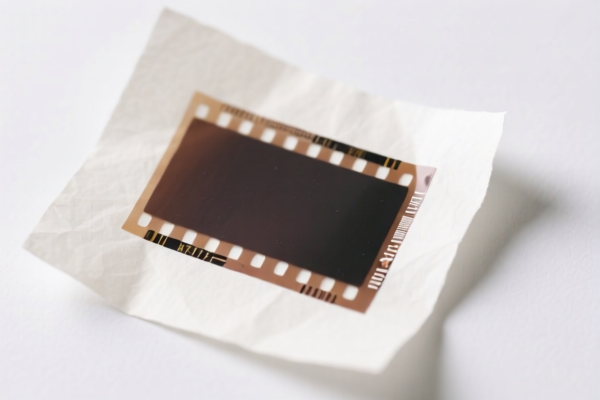
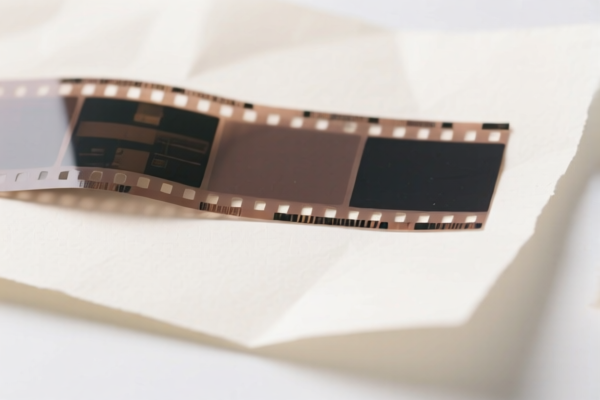
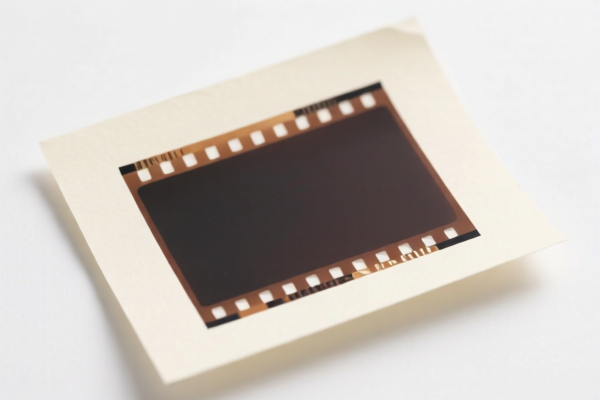
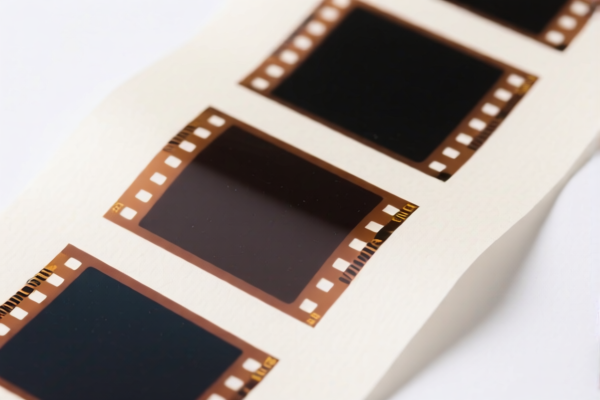
AI Analysis
🎞️ Low Sensitivity Color Instant Imaging Film
🌐 HS Code Reference & Customs Clearance Guide | 2026 Latest Tariff Analysis | Professional-Level Clearance Strategy
📌 1. Product Definition & Classification: What is "Instant Imaging Film"?
"Low Sensitivity Color Instant Imaging Film" refers to unexposed photographic films specifically designed for instant cameras (such as Polaroid or Fujifilm Instax systems). Its defining characteristic is the ability to produce a visible image without chemical development in a darkroom or external processor. The film contains embedded reagent pods and processing layers within the print head mechanism.
Key Classification Distinctions: * Color vs. Black & White: The product is explicitly Color, which places it under specific sub-headings distinct from monochrome instant films. * Low Sensitivity: While "low sensitivity" (typically ISO 60-100) is a technical specification, the primary classifier is the instant imaging function. In the Harmonized System (HS), instant film is categorized by its use and color capability, not primarily by ISO speed, unless it falls outside the specific "instant" definition (which this does not). * Unexposed: The tax codes provided apply to raw, unused film. Exposed film for processing is classified differently (Chapter 37, Section II, or Chapter 49 if developed).
⚠️ Critical Distinction:
- If the film is Color and Instant (no external development) → 3704.10
- If the film is Black & White or Non-Instant (requires external development) → Different codes (e.g., 3702.xxxx)
- Do NOT confuse with general color negative film (3702.3x) or color reversal film (3702.5x) if it is not for instant use.
📦 2. HS Code Classification Details (Based on Provided Data)
The provided data lists two specific HS codes for this product. Here is the breakdown:
| HS Code | Product Description | Key Characteristics | Tax Status in Data |
|---|---|---|---|
3704.10 |
Photographic films, not exposed, of a kind used for instant photography, specifically color films, including low sensitivity variants. | • Color • Instant Imaging System • No external chemical development required • Low sensitivity variants included |
⚠️ Failed to retrieve Total Tax: Error |
3704.90 |
Other photographic films, not exposed, of a kind used for instant photography, including low sensitivity color instant imaging film. | • Instant Photography • Includes Low Sensitivity Color Film • "Other" category (often used when 3704.10 is not specific enough or for regional variations) |
⚠️ Failed to retrieve Total Tax: Error |
🔍 Analysis of the Data Discrepancy:
The provided JSON data contains an error ("tax_detail": "Failed to retrieve tax information"). In standard international HS nomenclature:
- 3704.10 typically covers Color photographic plates, films, paper, paperboard, and other supports.
- 3704.90 typically covers Other photographic plates, films, paper, paperboard, and other supports (often Black & White or non-color instant films).
- However, specific national tariffs may differ. For example, in some jurisdictions, "Color Instant Film" might be split further. The data suggests both codes are potentially relevant, possibly due to regional tariff schedules or specific product sub-types not fully differentiated in the generic description.
- Recommendation: Treat both3704.10and3704.90as high-risk classifications for tax retrieval. You must verify the local customs tariff for the specific country of import.
💰 3. 2026 Latest Tariff Rate Details (Including Surcharges)
✅ Note on Data Limitation:
The provided<DATA>explicitly states:"total_tax": "Error"and"tax_detail": "Failed to retrieve tax information".
Therefore, NO specific tax rates can be provided from this dataset.General Market Insight (Not from Data):
- US (Section 301): Photographic films may be subject to 25% additional duty under Section 301 if of Chinese origin.
- EU: Standard MFN duty for HS 3704 is often 0-3.7%, but check for VAT and specific instant film exemptions.
- China: Import duty for HS 3704 is typically 5-8%, plus 13% VAT.⚠️ CRITICAL ACTION REQUIRED:
Since the tax data is Error, you MUST:
1. Use a local customs broker to retrieve the exact current tariff for your destination country.
2. Verify if Section 301 tariffs (for US imports) apply.
3. Check for anti-dumping duties or special tariffs on instant film products.
🛠️ 4. Customs Clearance Practical Advice (Real-World Pitfall Guide)
✅ 1. Required Documentation Checklist
| Document | Required | Explanation |
|---|---|---|
| ✅ Product Specification Sheet | ✔️ | Must explicitly state "Instant Photography", "Color", "Low Sensitivity", and "No External Chemical Development Required". |
| ✅ Technical Data Sheet | ✔️ | Detail the reagent pod mechanism to prove it is an "instant" system. |
| ✅ Commercial Invoice | ✔️ | Clearly describe the product as "Color Instant Imaging Film" and include HS Code (3704.10 or 3704.90). |
| ✅ Certificate of Origin | ✔️ | Essential for determining applicable tariffs (e.g., US-China trade tensions). |
| ✅ Packaging Photos | ✔️ | Show the film packs, indicating they are unexposed and sealed. |
| ✅ Import License (if applicable) | ✔️ | Some countries restrict photographic chemicals or films for security reasons. |
✅ 2. Declaration Tips (Key Keywords)
🔥 “Clear Description, Instant Type, Color Specific, Tax Verification Needed!”
| Scenario | Correct Declaration | Incorrect Declaration | Consequence |
|---|---|---|---|
| Color Instant Film | 3704.10 - Color Instant Imaging Film |
3702.39 - Color Negative Film |
❌ Misclassification: Higher tax or rejection |
| Low Sensitivity | Mention "Low Sensitivity (ISO 60-100)" in specs | Omit sensitivity | ⚠️ Ambiguity: Customs may ask for clarification |
| Unexposed | Explicitly state "Unexposed" | Omit | ❌ Risk: May be confused with developed film (Chapter 49) |
| Instant System | Describe "Built-in reagent pods" | Describe as "Photographic Film" only | ⚠️ Delay: Customs may doubt the "instant" claim |
✅ 3. Special Cases
| Situation | Handling Advice |
|---|---|
| Mixed Boxes | If a box contains both Color and Black & White instant film, declare separately if possible, or use the higher-risk code. |
| Expired Film | Do not declare as "instant film" if expired; customs may reject or impose waste disposal fees. |
| OEM/Private Label | Provide brand authorization or manufacturing contract to avoid IP issues. |
| Sample Shipment | Mark as "Commercial Sample, No Commercial Value" if applicable, but still pay duties if above de minimis threshold. |
🌍 5. Global Market Customs Comparison (2026)
| Country/Region | Recommended HS Code | Typical Duty Rate | Certification/Remarks |
|---|---|---|---|
| 🇺🇸 USA | 3704.10 or 3704.90 |
Varies (Check Section 301) | FCC not required, but FDA may regulate if chemicals are involved. |
| 🇨🇳 China | 3704.10 |
~5-8% | CCC not required for film, but CIQ inspection may apply. |
| 🇪🇺 EU | 3704.10 |
0-3.7% | CE not required, but REACH compliance for chemicals is critical. |
| 🇯🇵 Japan | 3704.10 |
~5-8% | PSE not required, but Japan Customs may inspect for chemical content. |
📌 Conclusion:
- Tax Data is Incomplete: The provided data shows"Error"for tax. Do not rely on this data for final tax calculation.
- HS Code Precision: Ensure the distinction between Color Instant (3704.10) and Other Instant (3704.90) is clear based on your specific product.
- Chemical Compliance: Since instant film contains chemicals, ensure REACH (EU) or TSCA (US) compliance.
📌 6. Common Errors & Pitfalls (Lessons Learned)
❌ Error 1: Declaring as "Photographic Film" without specifying "Instant"
👉 Consequence: Customs may classify as general film (3702.xxxx), leading to wrong duty rates and delays.
❌ Error 2: Ignoring "Color" vs. "Black & White" distinction
👉 Consequence: 3704.10 (Color) and 3704.90 (Other) have different tariff treatments in some countries. Misclassification leads to underpayment or overpayment.
❌ Error 3: Failing to disclose "Low Sensitivity"
👉 Consequence: While not always a tax driver, it may affect regulatory classification if the film contains specific chemical compositions.
❌ Error 4: Not verifying Tax Data for "Error"
👉 Consequence: Relying on 3704.10 or 3704.90 with no tax info can lead to unexpected duties at customs.
✅ Correct Approach:
"Color Instant Imaging Film, Unexposed, Low Sensitivity (ISO 60), with Built-in Reagent Pods, HS Code 3704.10, Verified with Local Customs Broker for Tax Rate."
🎯 7. Conclusion: Professional Declaration, Risk-Free Clearance
🎯 Remember the Mantra:
🔹 "Instant = 3704, Color = .10, Other = .90, Tax = Check Local!"
🔹 "Error in Data? Verify Before Ship!"
🔹 "Chemicals in Film? REACH/TSCA Compliant!"
📌 Pro Tip:
Since the tax data is Error, contact a local customs broker in the destination country BEFORE shipping. Request a Advance Ruling if possible to lock in the HS code and duty rate.
📣 Immediate Action:
📞 Verify HS Code with local customs.
📞 Confirm Tax Rate for3704.10and3704.90.
📦 Prepare Documentation proving "Instant" and "Color" nature.
🚀 Ensure Smooth Customs Clearance for Instant Film!
✨ Professional Customs Clearance Starts with Accurate Classification!
💼 Your Every Penny of Duty, Worth Precise Calculation!
Customer Reviews
About HS Code Classification
The Harmonized System (HS) is an internationally standardized nomenclature developed by the World Customs Organization (WCO) to classify traded products. Over 200 countries use the HS system as the basis for customs tariffs, trade statistics, and import/export regulations.
Each HS code follows a hierarchical structure:
- Chapter (2 digits) — Broad category of goods (e.g., Chapter 84: Machinery and Mechanical Appliances)
- Heading (4 digits) — More specific grouping within the chapter
- Subheading (6 digits) — Internationally standardized breakdown, used by all WCO member countries
- National subdivisions (8-10 digits) — Country-specific extensions for further classification, such as US HTSUS 10-digit codes
Correct HS code classification is essential for smooth customs clearance, accurate duty payment, and compliance with trade regulations. Misclassification can lead to customs delays, overpayment of duties, or penalties.
When importing from CN to US, the applicable tariff rates may include:
- Most-Favored-Nation (MFN) rate — The standard duty rate applied to WTO members
- General rate — Applied to countries without trade agreements
- Trade remedy duties — Additional tariffs such as Section 301 (anti-dumping), Section 232 (national security), or countervailing duties
The information provided on this page is for reference purposes only. For official classification, please consult with your local customs authority or a licensed customs broker.