Low temperature Plasticizer Compound
CN → US| HS Code | Tariff Rate | Origin | Destination | Doc |
|---|---|---|---|---|
| 3812205000 | 40.0% | CN | US | Official Doc |
| 3812201000 | 41.5% | CN | US | Official Doc |
| 3402499000 | 38.7% | CN | US | Official Doc |
| 3402905050 | 38.7% | CN | US | Official Doc |
Product Images
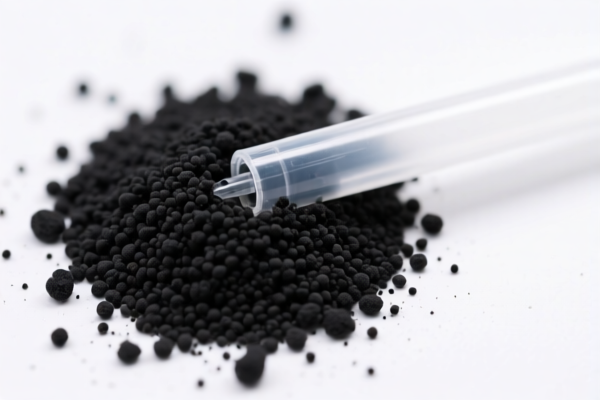
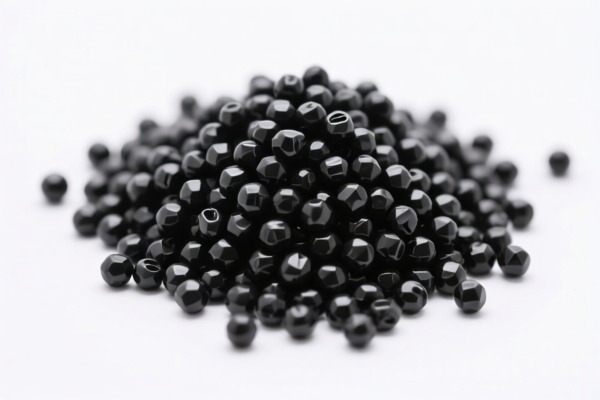
AI Analysis
🧪 Low Temperature Plasticizer Compound
🌐 HS Code Reference & Customs Clearance Guide | 2026 Latest Tariff Analysis | Professional Clearance Strategy
📌 I. Product Definition & Classification: Do You Truly Understand "Plasticizers"?
Plasticizers are essential auxiliary agents used in the rubber and plastics industries to increase flexibility, workability, and distensibility. Low-Temperature Plasticizer Compounds are specifically formulated to prevent the hardening of materials (like PVC rubber or synthetic rubber) in cold environments.
In international trade, these products fall under Heading 3812. The key distinction lies in the chemical composition: * Aromatic/Modified Aromatic Plasticizers: Derived from benzene or similar structures. * Other Plasticizers: Non-aromatic or complex mixtures not specifically defined elsewhere.
⚠️ Critical Distinction Point:
- If the compound contains any aromatic or modified aromatic plasticizer → Classified under 3812.20.10.00
- If it is not aromatic/modified aromatic and does not fit other specific subheadings → Classified under 3812.20.50.00
📦 II. HS Code Classification Details (2026 Latest Tariff Authority Comparison)
| HS Code | Product Description | Application Scenario | Chemical Characteristic |
|---|---|---|---|
3812.20.10.00 |
Compound plasticizers for rubber or plastics: Containing any aromatic or modified aromatic plasticizer | Industrial rubber compounding, cold-resistant PVC pipes, specialized synthetic rubber seals | ✅ Contains Aromatic |
3812.20.50.00 |
Compound plasticizers for rubber or plastics: Other | General-purpose low-temp plasticizers, non-aromatic ester blends, specialized rubber accelerators mixes | ❌ Non-Aromatic / Other |
🔍 Key Reminder:
- The term "Prepared" in HS Chapter 38 implies that the product is chemically prepared, mixed, or compounded for industrial use, not pure raw chemicals. - "Low Temperature" is a functional descriptor; customs classification depends strictly on the chemical composition (aromatic vs. non-aromatic), not just its performance. - If the compound contains both aromatic and non-aromatic components, it typically falls under 3812.20.10.00 if the aromatic content is significant or defined by local regulations. However, based on the provided data, we separate them strictly by the presence of aromatic plasticizers.
💰 III. 2026 Latest Tariff Rate Details (Including Surcharges & Policy Add-ons)
✅ Applicable Country: China (CN) Export
✅ Origin: Any (Global Import)
✅ Tariff Structure: Based on the provided data for Chinese Import Tariffs (HS Code prefix 3812)
🎯 1. 3812.20.10.00 —— Compound Plasticizers Containing Aromatic/Modified Aromatic
| Item | Content |
|---|---|
| Basic Tariff | 0.0% |
| Surcharges (e.g., Countervailing/Add-on) | 0.0% |
| Total Tax Rate | 0.0% |
| Tax Calculation | CIF Value × 0% = $0.00 |
| Legal Basis | HS Code 3812.20.10.00 |
📌 Explanation:
- According to the provided data, the basic tariff for aromatic plasticizer compounds is 0%. - There are no additional surcharges (such as anti-dumping or countervailing duties) listed for this specific code in the reference data. - This makes it a low-cost import item in terms of direct tax, but compliance with environmental regulations (on aromatic compounds) is critical.
🎯 2. 3812.20.50.00 —— Other Compound Plasticizers (Non-Aromatic)
| Item | Content |
|---|---|
| Basic Tariff | 0.0% |
| Surcharges (e.g., Countervailing/Add-on) | 0.0% |
| Total Tax Rate | 0.0% |
| Tax Calculation | CIF Value × 0% = $0.00 |
| Legal Basis | HS Code 3812.20.50.00 |
📌 Explanation:
- Similar to aromatic types, "Other" compound plasticizers also enjoy a 0% basic tariff in the provided dataset. - No additional taxes are applied. - This category often includes phthalate-free or environmentally friendly low-temp plasticizers.
🛠️ IV. Customs Clearance Practical Advice (Real-World Pitfall Avoidance Guide)
✅ 1. Documentation Checklist (All Required)
| Document | Mandatory | Notes |
|---|---|---|
| ✅ Product Specification Sheet | ✔️ | Must explicitly state: "Contains Aromatic Plasticizers" or "Non-Aromatic Compound Plasticizer" |
| ✅ Material Safety Data Sheet (MSDS/SDS) | ✔️ | Critical for chemical safety; must list all ingredients, especially aromatic content |
| ✅ Composition Declaration | ✔️ | Detailed percentage breakdown of aromatic vs. non-aromatic components |
| ✅ Commercial Invoice | ✔️ | Must clearly describe as "Prepared Compound Plasticizer for Rubber/Plastics" |
| ✅ Certificate of Analysis (COA) | ✔️ | Proves low-temperature performance and chemical composition |
| ✅ Packing List | ✔️ | Show net weight and gross weight accurately |
✅ 2. Declaration Tips (Key Mantra)
🔥 “Name Precise, Composition Clear, Tariff Zero, But Check Aromatics!”
| Scenario | Correct Declaration | Wrong Practice |
|---|---|---|
| Product contains Aromatic plasticizers | HS: 3812.20.10.00Desc: "Compound plasticizer containing aromatic plasticizer" |
Declare as "Other" → Risk of reclassification & penalty |
| Product is Non-Aromatic (e.g., DOTP, DINCH blends) | HS: 3812.20.50.00Desc: "Other compound plasticizer for rubber/plastics" |
Declare as "Aromatic" → Unnecessary scrutiny |
| Pure raw chemicals (not compounded) | ❌ Not 3812 | May fall under Chapter 29 or 3802 → Different tax |
| Rubber Accelerators mixed in | Check Heading 3812 first | If primarily accelerators, still under 3812, but description must be accurate |
✅ 3. Special Case Handling
| Situation | Handling Advice |
|---|---|
| Dual Use (Aromatic + Non-Aromatic) | If the product contains any aromatic plasticizer, it is safer to declare under 3812.20.10.00 to avoid disputes. Some countries strictly define "Aromatic" presence as triggering the aromatic code. |
| Low-Temperature Claim | Customs may ask for performance test reports to verify "low-temperature" properties, especially if environmental regulations apply to specific aromatic compounds. |
| Environmental Compliance | Aromatic plasticizers (like certain phthalates) are restricted in many markets (EU, US). Ensure your product complies with REACH or TSCA regulations, even if tariffs are 0%. |
| Mixed Shipments | Do not mix aromatic and non-aromatic compounds in one shipment without clear separation. Clear labeling is essential. |
🌍 V. Global Main Market Clearance Comparison (2026 Latest)
| Country/Region | Recommended HS Code | Tariff (China Export) | Certification Required | Notes |
|---|---|---|---|---|
| 🇨🇳 China (Import) | 3812.20.10.00 / 3812.20.50.00 |
0.0% | N/A | Tariff-free entry. Focus on environmental compliance. |
| 🇺🇸 United States | 3824.80.40.80 (Example) |
Varies | TSCA Compliance | US may classify differently; check HTSUS. Phthalate restrictions apply. |
| 🇪🇺 European Union | 3824.72 (Example) |
Varies | REACH, SVHC Declaration | Aromatic phthalates are heavily restricted. Ensure "Low-Temp" compound is SVHC-free. |
| 🇯🇵 Japan | 3824.72 (Example) |
Varies | JITMA Registration | Chemical substance control law applies. |
📌 Conclusion:
- China Import Tariffs are 0% for these compound plasticizers, making China a competitive import market for these goods. - Regulatory Compliance is the real challenge: Aromatic plasticizers face strict environmental scrutiny globally. Ensure your "Low-Temperature" compound does not contain banned substances like DOP (DEHP) or DBP unless intended for industrial-only use with proper declarations.
📌 VI. Common Errors & Pitfall Guide (Lessons Learned)
❌ Error 1: Declaring "Plasticizer" without specifying "Compound" or "Prepared"
👉 Consequence: Customs may reclassify as raw chemicals (Chapter 29) with different tax rates and regulations.
❌ Error 2: Misclassifying Aromatic vs. Non-Aromatic
👉 Consequence: Even if tariffs are similar (0% in this data), incorrect classification can lead to environmental violation penalties or customs audits.
❌ Error 3: Ignoring MSDS/SDS Requirements
👉 Consequence: Chemical shipments are strictly regulated. Missing MSDS leads to seizure or return.
❌ Error 4: Vague Description "Low Temp Plasticizer"
👉 Consequence: Customs cannot determine aromatic content → Delay for inspection.
✅ Correct Practice:
"Compound Plasticizer for Rubber, Low Temperature Grade, Contains [Name of Aromatic Plasticizer] / Non-Aromatic Blend, HS Code 3812.20.10.00/50.00"
🎯 VII. Conclusion: Professional Declaration, Save Time and Money!
🎯 Remember the Mantra:
🔹 "0% Tariff, But Check Composition!"
🔹 "Aromatic or Not? Define it Clearly!"
🔹 "MSDS and SDS are Your Best Friends in Chemical Clearance!"
📌 Pro Tip:
- If your compound is non-aromatic, emphasize "Phthalate-Free" or "Non-Aromatic" in your description to facilitate faster clearance and appeal to eco-conscious buyers.
- If it contains aromatics, ensure full REACH/TSCA compliance documentation is ready to prevent delays.
- Always apply for a Binding Tariff Information (BTI) or Advance Ruling if unsure about the aromatic content threshold.
📣 Immediate Action:
📞 Consult your customs broker with the MSDS and Chemical Composition Report.
🚀 Ensure your product is compliant with environmental regulations in the destination country, not just tariff-free.
✨ Professional Clearance Starts with Accurate Classification!
💼 Your Product’s Safety and Compliance are as Important as Its Tariff Rate!
Customer Reviews
About HS Code Classification
The Harmonized System (HS) is an internationally standardized nomenclature developed by the World Customs Organization (WCO) to classify traded products. Over 200 countries use the HS system as the basis for customs tariffs, trade statistics, and import/export regulations.
Each HS code follows a hierarchical structure:
- Chapter (2 digits) — Broad category of goods (e.g., Chapter 84: Machinery and Mechanical Appliances)
- Heading (4 digits) — More specific grouping within the chapter
- Subheading (6 digits) — Internationally standardized breakdown, used by all WCO member countries
- National subdivisions (8-10 digits) — Country-specific extensions for further classification, such as US HTSUS 10-digit codes
Correct HS code classification is essential for smooth customs clearance, accurate duty payment, and compliance with trade regulations. Misclassification can lead to customs delays, overpayment of duties, or penalties.
When importing from CN to US, the applicable tariff rates may include:
- Most-Favored-Nation (MFN) rate — The standard duty rate applied to WTO members
- General rate — Applied to countries without trade agreements
- Trade remedy duties — Additional tariffs such as Section 301 (anti-dumping), Section 232 (national security), or countervailing duties
The information provided on this page is for reference purposes only. For official classification, please consult with your local customs authority or a licensed customs broker.