Lubricant Detergent
CN → US| HS Code | Tariff Rate | Origin | Destination | Doc |
|---|---|---|---|---|
| 3402901000 | 38.8% | CN | US | Official Doc |
| 3402905030 | 38.7% | CN | US | Official Doc |
| 3811210000 | 41.5% | CN | US | Official Doc |
| 3811290000 | 41.5% | CN | US | Official Doc |
| 3403191000 | 35.2% | CN | US | Official Doc |
Product Images
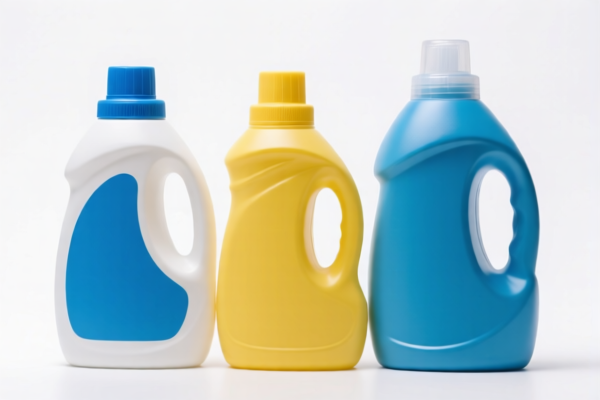
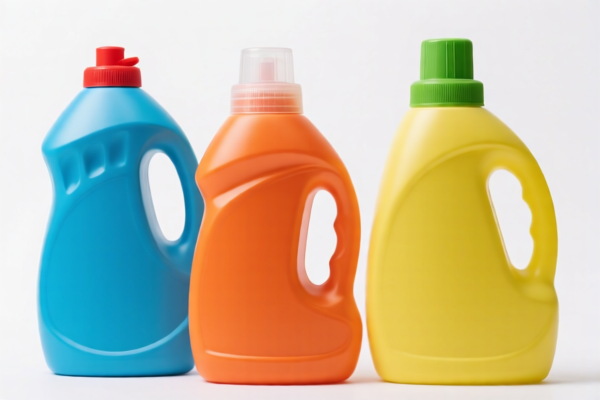


AI Analysis
🛢️ Lubricant Detergent (Lubricant Cleaner/Dispersant)
🌐 HS Code Reference & Customs Clearance Guide | 2026 Latest Tariff Analysis | Professional Clearance Strategy
📌 I. Product Definition & Classification: What Exactly is a "Lubricant Detergent"?
"Lubricant Detergent" is a specialized chemical additive used in the petroleum and industrial sectors. Its primary function is to clean engine components, prevent sludge buildup, and maintain oil viscosity. However, in international trade, it is often misclassified due to ambiguous terminology. It falls into two distinct categories based on its chemical nature and intended use:
- Cleaning Agents/Surfactants: If the product is primarily an organic surfactant or detergent used for cleaning machinery parts or as a standalone cleaning formulation.
- Lubricant Additives: If the product is specifically formulated to be mixed with lubricating oils to provide anti-oxidant, anti-wear, or detergency properties within the lubricant system.
⚠️ Key Distinction Point:
- If it is a standalone cleaning solution or surfactant-based cleaner →归入 Chapter 34 (Soap; Organic Surface-Active Agents)
- If it is a chemical additive for lubricating oils (e.g., anti-oxidant, detergency agent mixed into oil) → 归入 Chapter 38 (Miscellaneous Chemical Products) or Chapter 34 (Lubricant Preparations) depending on specific formulation.
📦 II. HS Code Classification Details (2026 Latest Tariff Authority Comparison)
| HS Code | Product Description | Application Scenario | Key Characteristic |
|---|---|---|---|
3402.90.10.00 |
Organic Surface-Active Agents & Detergents (Other) | Standalone cleaning agents, dispersants, surfactant-based cleaners. | Surfactant-based; classified under "Preparations for Washing". |
3402.90.50.30 |
Liquid/Chemical Cleaning Agents | Liquid detergents, chemical cleaning formulations without specific organic surfactant classification. | Liquid/Chemical; no material/形态 conflict. |
3811.21.00.00 |
Lubricant Additives: Anti-oxidants | Lubricant additives specifically functioning as oxidation inhibitors. | Anti-oxidant; matches "Oxidation Inhibitor" function. |
3811.29.00.00 |
Lubricant Additives: Other (Anti-oxidants/Detergents) | Lubricant additives that are not primarily anti-oxidants but serve detergency/dispersancy functions in oil. | Lubricant Additive; matches "Oxidation Inhibitor" or general additive function. |
3403.19.10.00 |
Lubricating Preparations (Other) | Lubricant preparations containing chemical agents, broadly categorized under lubricants. | Lubricant Preparation; fits "Chemical Preparation" under Lubricant chapter. |
🔍 Critical Reminder:
- Products labeled as "Lubricant Detergent" that are organic surfactants used for cleaning must go to 3402.
- Products designed to be added to motor oil to improve performance (anti-wear, detergency) must go to 3811 (Additives) or 3403 (Lubricant Preparations).
- Misclassification between 3402 (Cleaners) and 3811 (Additives) leads to significant duty differences due to USITC/IEEPA surcharges.
💰 III. 2026 Latest Tariff Rate Details (Including Surcharges & Policy Add-ons)
✅ Applicable Country: United States (US)
✅ Country of Origin: China (CN)
✅ Effective Date: From November 10, 2025 (including subsequent imports)
🎯 1. 3402.90.10.00 —— Organic Surface-Active Agents (Surfactants/Cleaners)
| Item | Content |
|---|---|
| Base Rate | 3.8% (Ad Valorem) |
| USITC Surcharge | +25.0% (Section 301 Tariff) |
| IEEPA Surcharge | +10.0% (China/HK Product, effective Nov 10, 2025) |
| Total Rate | 38.8% |
| Tax Calculation | CIF Value × 38.8% |
| De Minimis Eligibility | ❌ No (deny_de_minimis) |
| Legal Basis Path | IEEPA:9903.01.25 → IEEPA:9903.01.24 → USITC:3402.90.10.00 → FOOTNOTE:9903.88.01 |
📌 Explanation:
- "USITC Surcharge 25%" comes from Section 301 of the U.S. Trade Act;
- "IEEPA 10%" is the additional tariff on Chinese products under the International Emergency Economic Powers Act;
- Total 38.8% is a high tariff, requiring early cost assessment.
🎯 2. 3402.90.50.30 —— Liquid/Chemical Cleaning Agents
| Item | Content |
|---|---|
| Base Rate | 3.7% (Ad Valorem) |
| USITC Surcharge | +25.0% |
| IEEPA Surcharge | +10.0% |
| Total Rate | 38.7% |
| Tax Calculation | CIF Value × 38.7% |
| De Minimis Eligibility | ❌ No |
| Legal Basis Path | IEEPA:9903.01.25 → IEEPA:9903.01.24 → USITC:3402.90.50.30 → FOOTNOTE:9903.88.01 |
📌 Note:
- Slightly lower base rate (3.7%) compared to 3402.90.10.00;
- Applies to liquid chemical cleaners without specific organic surfactant classification.
🎯 3. 3811.21.00.00 & 3811.29.00.00 —— Lubricant Additives (Anti-oxidants/Detergents)
| Item | Content |
|---|---|
| Base Rate | 6.5% (Ad Valorem) |
| USITC Surcharge | +25.0% |
| IEEPA Surcharge | +10.0% |
| Total Rate | 41.5% |
| Tax Calculation | CIF Value × 41.5% |
| De Minimis Eligibility | ❌ No |
| Legal Basis Path | IEEPA:9903.01.25 → IEEPA:9903.01.24 → USITC:3811.21.00.00 / 3811.29.00.00 → FOOTNOTE:9903.88.01 |
📌 Explanation:
- Higher base rate (6.5%) due to classification as "Miscellaneous Chemical Products" (Chapter 38);
- Applies to products specifically formulated as additives for lubricating oils (e.g., engine oil detergents, anti-oxidants);
- Total 41.5% is the highest among the provided codes, so accurate classification is critical.
🎯 4. 3403.19.10.00 —— Lubricating Preparations (Other)
| Item | Content |
|---|---|
| Base Rate | 0.2% (Ad Valorem) |
| USITC Surcharge | +25.0% |
| IEEPA Surcharge | +10.0% |
| Total Rate | 35.2% |
| Tax Calculation | CIF Value × 35.2% |
| De Minimis Eligibility | ❌ No |
| Legal Basis Path | IEEPA:9903.01.25 → IEEPA:9903.01.24 → USITC:3403.19.10.00 → FOOTNOTE:9903.88.01 |
📌 Strategic Insight:
- Lowest Total Rate (35.2%) among all options;
- Applicable if the product is classified as a lubricating preparation rather than a standalone cleaner or additive;
- Requires strong evidence that the product is used as a lubricant or directly integrated into lubrication systems, not just as a cleaning agent.
🛠️ IV. Customs Clearance Practical Advice (Battle-Tested Pitfall Avoidance Guide)
✅ 1. Required Documentation Checklist (Mandatory)
| Document | Must Provide | Description |
|---|---|---|
| ✅ Product Specification Sheet | ✔️ | Detailed composition, CAS numbers, intended use (cleaning vs. additive). |
| ✅ Safety Data Sheet (SDS) | ✔️ | Classifies hazard type; critical for determining if it's a "chemical preparation" or "surfactant." |
| ✅ Product Photos (including Label) | ✔️ | Clear view of usage instructions ("For Engine Oil" vs. "For Machine Cleaning"). |
| ✅ Third-Party Test Report | ✔️ | ASTM D271, D2896, or other relevant standards proving detergency/anti-oxidant properties. |
| ✅ Commercial Invoice | ✔️ | Must specify exact HS Code and product name (e.g., "Lubricant Additive, Detergency Type"). |
| ✅ Certificate of Origin (CO) | ✔️ | If non-Chinese origin, may qualify for preferential rates (though limited for US). |
| ✅ Packing List | ✔️ | Clarifies if packaging contains pure product or mixed formulations. |
✅ 2. Declaration Tips (Key Mnemonic)
🔥 "Use Defines Code, Additive is 38, Cleaner is 34, Base Rate Dictates Duty!"
| Scenario | Correct Declaration | Wrong Practice |
|---|---|---|
| Product is a surfactant cleaner | 3402.90.10.00 or 3402.90.50.30 |
Misdeclare as 3811 → Higher duty (41.5%) |
| Product is an engine oil additive | 3811.21.00.00 / 3811.29.00.00 |
Misdeclare as 3403 → Lower base rate but risky if not a prep |
| Product is a lubricant preparation | 3403.19.10.00 |
Misdeclare as 3402 → Slightly higher duty (38.8% vs 35.2%) |
| Product is mixed with oil before shipping | 3403.19.10.00 |
Declare as raw additive → Incorrect classification |
✅ 3. Special Case Handling
| Situation | Handling Advice |
|---|---|
| OEM Custom Lubricant Additives | Provide customer orders + technical data sheets to prove specific "additive" function. |
| Multi-Function Products (Clean + Lubricate) | Analyze primary purpose. If cleaning is primary → 3402. If lubrication enhancement is primary → 3403 or 3811. |
| Liquid vs. Powder Form | Liquid detergents often fall under 3402.90.50.30; powders may vary. Ensure SDS reflects physical state. |
| Intended for Industrial Machinery Cleaning | Must prove it is not an "additive for lubricants" → Use 3402. |
🌍 V. Global Market Customs Clearance Comparison (2026 Latest)
| Country/Region | Recommended HS Code | Duty Rate | Certification Requirements | Remarks |
|---|---|---|---|---|
| 🇺🇸 United States | 3402.90.10.00 / 3811.29.00.00 |
38.8% - 41.5% (China Origin) | SDS, ASTM Tests | High additional tariffs; accurate classification vital. |
| 🇨🇳 China | 3402.90.10.00 / 3811.29.00.00 |
5% - 8% | CCC (if applicable) | No additional surcharges. |
| 🇪🇺 European Union | 3402.90.90 / 3811.10 |
6.5% - 12% | REACH, SDS | No Section 301-style surcharges. |
| 🇦🇺 Australia | 3402.90.00 / 3811.10 |
5% | ADR, SDS | Standard rates. |
| 🇯🇵 Japan | 3402.90 / 3811.10 |
0% - 3% | JIS Standards | Low duty, strict chemical registration (Chemical Substances Control Law). |
📌 Conclusion:
- US is the only market with significant additional tariffs (35-41.5%);
- Accurate classification between "Cleaner" (3402) and "Additive" (3811) is crucial to save 2-3% in base duty;
- China-origin products face high barriers in the US market; consider supply chain diversification if volume is large.
📌 VI. Common Errors & Pitfall Avoidance Guide (Blood & Tears Lessons)
❌ Error 1: Declaring "Lubricant Detergent" as 3811 when it is actually a surfactant cleaner
👉 Consequence: Base rate 6.5% vs 3.8% → Overpaying duty + potential customs penalty for misdeclaration.
❌ Error 2: Declaring a standalone cleaner as 3403 (Lubricant Preparation) to save duty
👉 Consequence: Customs audit reveals it's not a lubricant → Retrospective tax + fines + shipment delay.
❌ Error 3: Failing to provide SDS (Safety Data Sheet)
👉 Consequence: Customs cannot verify chemical composition → Hold for inspection or return.
❌ Error 4: Using vague descriptions like "Chemical Agent"
👉 Consequence: Customs assigns arbitrary code → Highest possible duty rate.
✅ Correct Practice:
"Lubricant Additive, Detergency Type, For Engine Oil, Contains Calcium Sulfonate, CAS No. XXXXX, SDS Attached"
OR
"Industrial Cleaning Agent, Surfactant-Based, Liquid Form, For Machine Parts Cleaning, Not for Lubricant Mixing"
🎯 VII. Conclusion: Professional Declaration Saves Money and Time!
🎯 Remember the Mnemonic:
🔹 "Use Defines Code: Cleaner is 34, Additive is 38, Base Rate Matters!"
🔹 "HS Code Determines Duty, 2.7% Difference, Wrong Declaration Costs Thousands!"
📌 Pro Tip:
If your product is originally produced in Vietnam, Mexico, Thailand, or Malaysia, you may apply for IEEPA Exemption, reducing the total tariff to 0%-5%;
Strongly recommend applying for an Advance Ruling (Provisional Classification) before shipment to mitigate customs risk.
📣 Immediate Action Required:
📞 Contact Professional Customs Broker + Provide SDS + Product Photos + Apply for HS Code Advance Ruling
🚀 Let your Lubricant Detergent clear customs smoothly, boost efficiency, and maximize profits!
✨ Professional Customs Clearance Starts with Accurate Classification!
💼 Every Cent of Your Cost Deserves Precise Calculation!
Customer Reviews
About HS Code Classification
The Harmonized System (HS) is an internationally standardized nomenclature developed by the World Customs Organization (WCO) to classify traded products. Over 200 countries use the HS system as the basis for customs tariffs, trade statistics, and import/export regulations.
Each HS code follows a hierarchical structure:
- Chapter (2 digits) — Broad category of goods (e.g., Chapter 84: Machinery and Mechanical Appliances)
- Heading (4 digits) — More specific grouping within the chapter
- Subheading (6 digits) — Internationally standardized breakdown, used by all WCO member countries
- National subdivisions (8-10 digits) — Country-specific extensions for further classification, such as US HTSUS 10-digit codes
Correct HS code classification is essential for smooth customs clearance, accurate duty payment, and compliance with trade regulations. Misclassification can lead to customs delays, overpayment of duties, or penalties.
When importing from CN to US, the applicable tariff rates may include:
- Most-Favored-Nation (MFN) rate — The standard duty rate applied to WTO members
- General rate — Applied to countries without trade agreements
- Trade remedy duties — Additional tariffs such as Section 301 (anti-dumping), Section 232 (national security), or countervailing duties
The information provided on this page is for reference purposes only. For official classification, please consult with your local customs authority or a licensed customs broker.