Lubricating Oil Pour Point Inhibitor
CN → US| HS Code | Tariff Rate | Origin | Destination | Doc |
|---|---|---|---|---|
| 3811290000 | 41.5% | CN | US | Official Doc |
| 3811210000 | 41.5% | CN | US | Official Doc |
| 3403191000 | 35.2% | CN | US | Official Doc |
| 2710193020 | 0.0% | CN | US | Official Doc |
| 3811900000 | 41.5% | CN | US | Official Doc |
Product Images
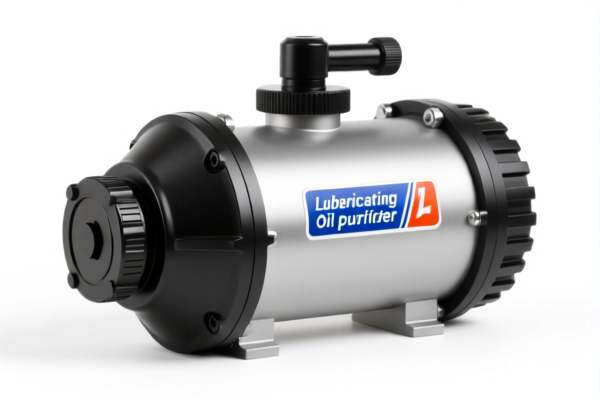
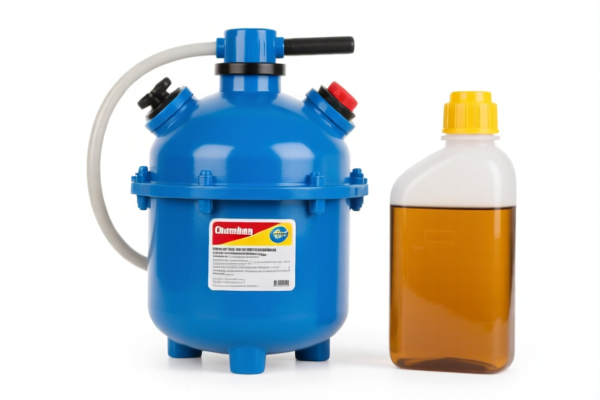
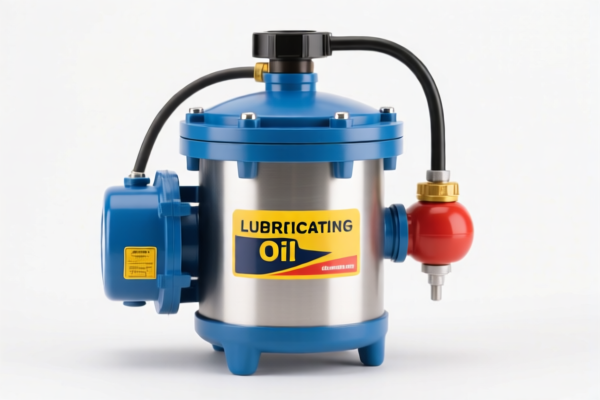

AI Analysis
🛢️ Lubricating Oil Pour Point Inhibitor (降凝剂)
🌐 HS Code Reference & Customs Clearance Guide | 2026 Latest Tariff Analysis | Strategic Entry Protocol
📌 I. Product Definition & Classification: What Exactly is a Pour Point Inhibitor?
A Lubricating Oil Pour Point Inhibitor (also known as a Pour Point Depressant) is a specialized chemical additive used to lower the temperature at which lubricating oils cease to flow (the "pour point). It prevents the crystallization of wax in base oils, ensuring smooth operation in cold environments.
In international trade, these additives are typically classified based on their chemical composition, physical state, and intended use. They generally fall under two main chapters: 1. Chapter 38 (Miscellaneous Chemical Products): Specifically heading 3811 for prepared additives. 2. Chapter 34 (Soap, Organic Surface-Active Agents, Washing Preparations, Lubricating Preparations): Heading 3403 for lubricating preparations containing petroleum oils. 3. Chapter 27 (Mineral Fuels, Oils): In rare cases where it is considered a simple refined petroleum product, though less common for specialized chemical additives.
⚠️ Key Distinction:
- If the product is a chemically formulated additive specifically designed to modify the properties of other oils → Chapter 38 (3811) or Chapter 34 (3403).
- If the product is a bulk petroleum derivative used as a base or component → Chapter 27.
- Crucial Note: The presence of specific chemical modifiers usually pushes classification toward 3811 or 3403, depending on whether it's viewed primarily as an "additive" or a "lubricating preparation."
📦 II. HS Code Classification Details (2026 Latest Tariff Authority Reference)
Based on the provided data, here are the specific HS Codes, their summaries, and the rationale for classification.
| HS Code | Product Description & Summary | Applicable Scenario / Rationale |
|---|---|---|
3811.29.00.00 |
Other Prepared Additives: Lubricant additives, function is to depress pour point, classified as "Other prepared additives". | Used when the product is a general-purpose chemical additive not specifically categorized under "Varnish Resistants" or "Anti-Oxidants" (which might be 3811.21). This is a broad category for specialized chemical modifiers. |
3811.21.00.00 |
Prepared Additives: Pour point depressants classified as prepared additives, material is petroleum-based or chemically synthesized. | Specific classification for additives derived from or synthesized specifically for petroleum lubricants. If the manufacturer highlights "Petroleum-based" or "Chemical Synthesis" as the primary identity, this code is often preferred for precision. |
3403.19.10.00 |
Lubricating Preparations: Pour point depressants as additives comply with their use as lubricant preparations. | Classified here if the product is viewed as a "Preparation containing petroleum oils" rather than just a raw chemical additive. This is common if the product is a pre-mixed solution or heavily marketed as a lubricant component. |
2710.19.30.20 |
Petroleum Oils (Other than Crude): Pour point depressants as a component of lubricant preparations. | Least common for pure additives. Used if the substance is primarily a refined petroleum fraction with limited chemical modification, acting as a base oil or diluent for the depressant. |
3811.90.00.00 |
Mineral Oil Preparations: Pour point depressants in liquid or chemically prepared form. | A broader "Other" category in Chapter 38. Used when the product is a liquid chemical preparation for mineral oils but doesn't fit the specific sub-headings of 3811.21 or 39. |
🔍 Priority Analysis:
-3811.21.00.00and3811.29.00.00are the most technically accurate for chemical additives.
-3403.19.10.00is a strong alternative if the product is considered a "Preparation" (mixed formulation) rather than a pure chemical.
-2710.19.30.20is risky unless the product is clearly a petroleum oil derivative with minor additives.
💰 III. 2026 Latest Tariff Rate Breakdown (Including Surtaxes, Policy Add-ons)
✅ Applicable Country: United States (US)
✅ Origin: China (CN)
✅ Effective Date: November 10, 2025 (and subsequent imports)
All listed HS Codes from the DATA source are subject to the same complex tariff structure due to US trade policies against Chinese goods.
🎯 1. 3811.29.00.00 – Other Prepared Additives
| Item | Detail |
|---|---|
| Base Tariff | 6.5% (Ad Valorem) |
| Section 301 Surtax | +25.0% |
| Section 122 Tariff | +10.0% |
| Total Tariff Rate | 41.5% |
| Calculation | CIF Value × 41.5% |
| De Minimis Exemption | ❌ Not Eligible (deny_de_minimis) |
| Legal Basis Path | Base: 6.5% → S301: 25.0% → S122: 10.0% → Total: 41.5% |
📌 Explanation:
- Base 6.5%: Standard Most Favored Nation (MFN) rate for prepared additives.
- 25% Surcharge: Applies to Chinese goods under US Trade Law Section 301.
- 10% Surcharge: Specific tariff under Section 122 (often related to national security or specific trade remedies).
- Result: A heavy 41.5% tariff significantly impacts profitability.
🎯 2. 3811.21.00.00 – Prepared Additives (Petroleum-based/Chemical)
| Item | Detail |
|---|---|
| Base Tariff | 6.5% |
| Section 301 Surtax | +25.0% |
| Section 122 Tariff | +10.0% |
| Total Tariff Rate | 41.5% |
| Calculation | CIF Value × 41.5% |
| De Minimis Exemption | ❌ Not Eligible |
| Legal Basis Path | Same as above: Base 6.5% + S301 25% + S122 10% |
📌 Note:
- Same tariff structure as3811.29.00.00.
- The distinction between.21and.29is technical; the cost impact is identical.
🎯 3. 3403.19.10.00 – Lubricating Preparations
| Item | Detail |
|---|---|
| Base Tariff | 0.2% |
| Section 301 Surtax | +25.0% |
| Section 122 Tariff | +10.0% |
| Total Tariff Rate | 35.2% |
| Calculation | CIF Value × 35.2% |
| De Minimis Exemption | ❌ Not Eligible |
| Legal Basis Path | Base 0.2% + S301 25% + S122 10% |
📌 Advantage:
- 35.2% is 6.3% lower than the 41.5% rate for Chapter 38 codes.
- This makes3403.19.10.00a cost-optimal choice IF the product's formulation and marketing justify it as a "Lubricating Preparation" rather than a pure "Chemical Additive."
🎯 4. 2710.19.30.20 – Petroleum Oils
| Item | Detail |
|---|---|
| Base Tariff | 84¢/bbl (Specific Duty) |
| Section 301 Surtax | +25.0% (Ad Valorem on value) |
| Section 122 Tariff | +10.0% (Ad Valorem on value) |
| Total Tariff Structure | 84¢/bbl + 35.0% (Ad Valorem) |
| De Minimis Exemption | ❌ Not Eligible |
📌 Risk:
- The combination of a specific duty (84 cents per barrel) AND ad valorem taxes (35%) is complex to calculate for small shipments.
- Generally, not recommended for pure chemical additives unless the product is primarily a refined oil.
🎯 5. 3811.90.00.00 – Other Mineral Oil Preparations
| Item | Detail |
|---|---|
| Base Tariff | 6.5% |
| Section 301 Surtax | +25.0% |
| Section 122 Tariff | +10.0% |
| Total Tariff Rate | 41.5% |
| De Minimis Exemption | ❌ Not Eligible |
📌 Note:
- Same high tariff as other Chapter 38 additive codes.
🛠️ IV. Customs Clearance Practical Advice (Battle-Tested Pitfall Guide)
✅ 1. Required Documentation Checklist (Non-Negotiable)
| Document | Mandatory? | Explanation |
|---|---|---|
| ✅ Product Specification Sheet | ✔️ | Must detail chemical composition, function (pour point depressant), and base oil compatibility. |
| ✅ Safety Data Sheet (SDS) | ✔️ | Critical for determining hazard class and proper handling. Must be compliant with US OSHA/GHS standards. |
| ✅ Commercial Invoice | ✔️ | Must clearly state "Lubricating Oil Pour Point Inhibitor" and HS Code. Avoid vague terms like "Chemical Mix". |
| ✅ Certificate of Origin (CO) | ✔️ | Essential for proving Chinese origin to apply surcharges correctly (or verify exemptions if applicable). |
| ✅ Formula Disclosure | ✔️ | May be required by CBP if the HS code classification is challenged (e.g., 3811 vs 3403). |
| ✅ Labeling | ✔️ | Labels must match invoice and SDS. Include batch number, expiry date, and hazard symbols. |
✅ 2. Declaration Strategies (Key Mnemonic)
🔥 “Classify by Function, Declare by Composition, Avoid Vague Terms!”
| Scenario | Correct Declaration | Wrong Practice |
|---|---|---|
| Pure Chemical Additive | 3811.21.00.00 or 3811.29.00.00 |
Declaring as "Oil" → Risk of misclassification. |
| Pre-mixed Lubricant Component | 3403.19.10.00 |
Declaring as "Chemical" → Higher tax (41.5% vs 35.2%). |
| Bulk Refined Oil Base | 2710.19.30.20 |
Declaring as "Additive" → Complex specific duty calculation. |
📌 Optimization Tip:
- If your product is a chemical formulation (e.g., polymer-based depressant) dissolved in a solvent,3403.19.10.00(35.2%) is often cheaper than3811(41.5%) IF you can argue it is a "Lubricating Preparation."
- Consult a Customs Broker to determine if your product's formulation fits the legal definition of "Preparation" under HTS 3403.
✅ 3. Special Circumstances Handling
| Situation | Handling Advice |
|---|---|
| OEM Custom Blends | Provide the specific formula to the broker. Small changes in chemical base can shift HS code and tax rate. |
| Mixed Shipments | DO NOT mix "Additives" with "Finished Lubricants" on one invoice unless clearly separated. Each item needs its own HS code. |
| Origin Evasion Attempts | NEVER misdeclare origin (e.g., labeling China-made goods as Vietnam). Section 122 and 301 tariffs are strictly enforced. Penalties include seizure and fines. |
| De Minimis (Section 321) | ❌ Not Available. All items listed have deny_de_minimis. Even small samples are subject to full duties. |
🌍 V. Global Market Comparison (2026 Latest)
| Country/Region | Recommended HS Code | Tariff (China Origin) | Certification | Notes |
|---|---|---|---|---|
| 🇺🇸 USA | 3403.19.10.00 (Optimal) |
35.2% (Base 0.2% + 35%) | EPA Safer Choice (Optional) | Highest cost due to 301/122 tariffs. Try 3403 to save 6.3%. |
| 🇺🇸 USA | 3811.29.00.00 |
41.5% (Base 6.5% + 35%) | - | Standard for pure chemical additives. |
| 🇨🇳 China | 3811.29.00.00 |
5-6.5% | - | No surtaxes. Low entry barrier. |
| 🇪🇺 EU | 3811.29.00.00 |
4-6% (Varies by member) | REACH Registration | No US-style surtaxes. REACH compliance is critical. |
| 🇯🇵 Japan | 3811.29.00.00 |
3-5% | - | Generally low tariffs. No surtaxes. |
📌 Conclusion:
- The US market is the most expensive due to the 35-41.5% combined tariff burden.
- Strategy: To minimize costs, argue for classification under3403.19.10.00(35.2%) instead of3811(41.5%) if your product's formulation allows.
- Alternative: Consider sourcing from or assembling in a country not subject to Section 301/122 tariffs (e.g., Vietnam, Mexico) to avoid these surcharges entirely.
📌 VI. Common Errors & Pitfalls (Blood Lessons)
❌ Error 1: Declaring a chemical additive as "General Chemical"
👉 Consequence: CBP may reclassify to a higher duty rate or seize goods for inaccurate declaration.
❌ Error 2: Ignoring Section 122 Tariff
👉 Consequence: Underpayment of 10% → Fines + Interest + Back Taxes.
❌ Error 3: Using "Pour Point Depressant" without specifying composition
👉 Consequence: CBP asks for additional info → Customs Hold (Delay) → Storage fees at port.
❌ Error 4: Assuming De Minimis applies
👉 Consequence: Package seized at border. All items are taxed.
✅ Correct Practice:
"Lubricating Oil Pour Point Inhibitor, Chemical Formulation, For Industrial Use, HS Code 3403.19.10.00, Origin: China"
🎯 VII. Conclusion: Professional Declaration, Cost Savings, Risk Mitigation
🎯 Remember the Mantra:
🔹 "Function First, Composition Second, Tariff Optimization Third."
🔹 "3403 saves 6%, 3811 is safer but costlier. Choose wisely!"
🔹 "No De Minimis, No Excuses. Pay your dues."
📌 Pro Tip:
If your product is polymer-based, it might even qualify for different chemical headings.
Recommendation:
1. Request a Binding Ruling from US CBP if shipment volume is high.
2. Compare Formulations: Can you adjust the base solvent to fit3403(35.2%) instead of3811(41.5%)?
3. Supply Chain Shift: Consider non-China origins to escape the 35% surcharge entirely.
📣 Immediate Action:
📞 Contact a Licensed Customs Broker + Provide SDS & Formula + Apply for HS Code Binding Ruling.
🚀 Let your Pour Point Inhibitors clear smoothly, legally, and profitably!
✨ Professional Customs Clearance Starts with Accurate Classification!
💼 Every Percent of Duty Saved is Pure Profit!
Customer Reviews
About HS Code Classification
The Harmonized System (HS) is an internationally standardized nomenclature developed by the World Customs Organization (WCO) to classify traded products. Over 200 countries use the HS system as the basis for customs tariffs, trade statistics, and import/export regulations.
Each HS code follows a hierarchical structure:
- Chapter (2 digits) — Broad category of goods (e.g., Chapter 84: Machinery and Mechanical Appliances)
- Heading (4 digits) — More specific grouping within the chapter
- Subheading (6 digits) — Internationally standardized breakdown, used by all WCO member countries
- National subdivisions (8-10 digits) — Country-specific extensions for further classification, such as US HTSUS 10-digit codes
Correct HS code classification is essential for smooth customs clearance, accurate duty payment, and compliance with trade regulations. Misclassification can lead to customs delays, overpayment of duties, or penalties.
When importing from CN to US, the applicable tariff rates may include:
- Most-Favored-Nation (MFN) rate — The standard duty rate applied to WTO members
- General rate — Applied to countries without trade agreements
- Trade remedy duties — Additional tariffs such as Section 301 (anti-dumping), Section 232 (national security), or countervailing duties
The information provided on this page is for reference purposes only. For official classification, please consult with your local customs authority or a licensed customs broker.