Luffa Decoration
CN → US| HS Code | Tariff Rate | Origin | Destination | Doc |
|---|---|---|---|---|
| 4421999880 | 38.3% | CN | US | Official Doc |
| 4421919880 | 38.3% | CN | US | Official Doc |
| 3926400010 | 15.3% | CN | US | Official Doc |
| 3926400090 | 15.3% | CN | US | Official Doc |
Product Images
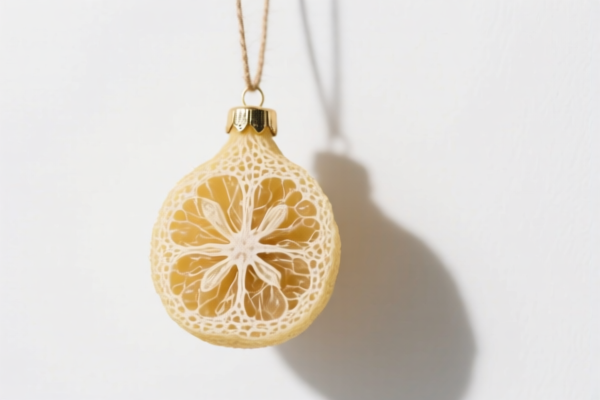
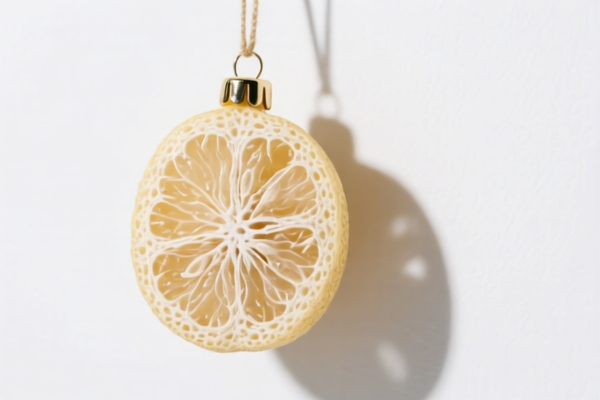
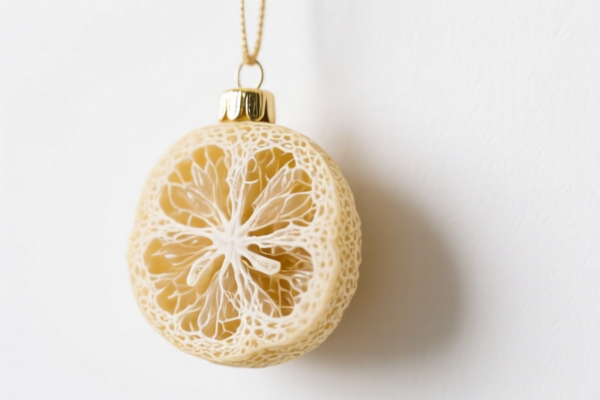
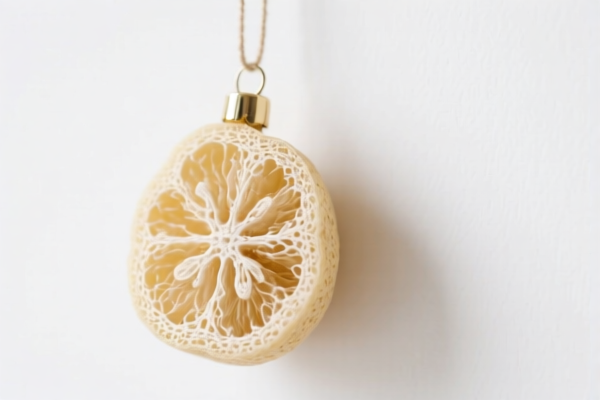
AI Analysis
🌿 Luffa Decoration (Biodegradable Natural Sponge Decor)
🌐 HS Code Reference & Customs Clearance Guide | 2026 Latest Tariff Analysis | Professional Clearance Strategy for Natural Plant Decor
📌 I. Product Definition & Classification: Do You Really Understand "Luffa Decor"?
Luffa decorations, often made from dried luffa fibers (plant fibers) or synthetic imitations, are popular eco-friendly home decor items. In international trade, their classification depends heavily on the material composition and primary function. They generally fall into two broad categories:
1. Wood/Plant Fiber Products (Natural Luffa): If the decoration is made from natural plant fibers (like luffa sponge, wood chips, or other botanical materials), it is classified under Chapter 44 (Wood and articles of wood; wood charcoal). 2. Plastic/Artificial Products (Synthetic Luffa): If the decoration is made from plastic, resin, or synthetic fibers that mimic the look of luffa, it is classified under Chapter 39 (Plastics and articles thereof).
⚠️ Key Distinction Point:
- If the material is 100% natural plant fiber/wood →归入 Chapter 44
- If the material is plastic/synthetic → 归入 Chapter 39
- Note: The "Luffa" shape alone does not determine the HS code; the material does!
📦 II. HS Code Classification Details (2026 Latest Tariff Authority Comparison)
| HS Code | Product Description | Applicable Scenario | Material Composition |
|---|---|---|---|
4421.99.98.80 |
Other wood articles (including decorative items made of wood/wood fiber) | Natural luffa decorations, wooden wall hangings, botanical fiber crafts | ✅ Plant/Wood Fiber |
4421.91.98.80 |
Other wood articles (including sponges and similar materials) | Specifically inferred as Luffa (plant fiber), categorized under other plant-based products | ✅ Plant Fiber (Luffa) |
3926.40.00.10 |
Other plastic articles: Statuettes and other ornaments | Plastic imitations of luffa, resin-based decorative items | ✅ Plastic/Synthetic |
3926.40.00.90 |
Other plastic articles: Other statues and ornaments | General plastic decorative items, including synthetic luffa shapes | ✅ Plastic/Synthetic |
🔍 Key Reminder:
- Natural Luffa must be declared as wood/plant fiber products (Chapter 44) to avoid misclassification penalties.
- Synthetic Luffa must be declared as plastic articles (Chapter 39).
- Do NOT mix materials in one HS code declaration. If the product has mixed materials, the principal material determines the classification.
💰 III. 2026 Latest Tariff Rate Breakdown (Including Surcharges & Policy Add-ons)
✅ Applicable Country: United States (US)
✅ Country of Origin: China (CN)
✅ Effective Date: From November 10, 2025 onwards (including subsequent imports)
🎯 1. 4421.99.98.80 & 4421.91.98.80 —— Natural Luffa / Wood Fiber Decorations
| Item | Content |
|---|---|
| Base Tariff | 3.3% (ad valorem) |
| USITC Surtax (Section 301) | +25.0% |
| IEEPA Surtax (Section 122) | +10.0% |
| Total Tax Rate | 38.3% |
| Tax Calculation | CIF Value × 38.3% |
| De Minimis Eligibility | ❌ No (Deny de minimis for China-origin goods under these surcharges) |
| Legal Basis Path | IEEPA:9903.01.24 → USITC:4421.99.98.80 / 4421.91.98.80 → FOOTNOTE:9903.88.01 |
📌 Explanation:
- "Base Tariff 3.3%": Standard MFN rate for wood/plant fiber articles.
- "USITC Surtax 25%": Applied under Section 301 of the Trade Act for most Chinese goods.
- "IEEPA Surtax 10%": Applied under the International Emergency Economic Powers Act for Chinese-origin goods (effective Nov 2025).
- Total 38.3%: This is a high tariff burden. Ensure your pricing model accounts for this.
🎯 2. 3926.40.00.10 & 3926.40.00.90 —— Plastic Luffa / Synthetic Decorations
| Item | Content |
|---|---|
| Base Tariff | 5.3% (ad valorem) |
| USITC Surtax (Section 301) | +0.0% (Exempt or lower rate for this specific plastic category) |
| IEEPA Surtax (Section 122) | +10.0% |
| Total Tax Rate | 15.3% |
| Tax Calculation | CIF Value × 15.3% |
| De Minimis Eligibility | ❌ No (Deny de minimis for China-origin goods under these surcharges) |
| Legal Basis Path | IEEPA:9903.01.24 → USITC:3926.40.00.10 / 3926.40.00.90 → FOOTNOTE:9903.88.01 |
📌 Explanation:
- "Base Tariff 5.3%": Standard MFN rate for plastic articles.
- "USITC Surtax 0%": Certain plastic decorative items may be exempt from the 25% Section 301 tariff, but this varies. Please verify with the latest USITC exclusion list.
- "IEEPA Surtax 10%": Still applies.
- Total 15.3%: Significantly lower than natural fiber products. If your product can be legally classified as plastic (e.g., resin luffa), this may be a cost-saving strategy, but material authenticity must be proven.
🛠️ IV. Customs Clearance Practical Advice (Battle-Tested Pitfall Guide)
✅ 1. Required Documentation Checklist (Non-negotiable)
| Document | Required | Description |
|---|---|---|
| ✅ Product Spec Sheet | ✔️ | Must clearly state material composition (e.g., "100% Natural Luffa Fiber" vs. "Polyresin") |
| ✅ Material Certificate | ✔️ | Lab test report proving if the product is natural plant fiber or synthetic plastic |
| ✅ Product Photos | ✔️ | Clear images showing texture, label, and origin mark |
| ✅ Commercial Invoice | ✔️ | Must explicitly state "Luffa Decoration" or "Plastic Ornament" based on HS code |
| ✅ Packing List | ✔️ | Detail contents to avoid confusion with other goods |
| ✅ Origin Declaration | ✔️ | Confirm China origin to apply correct surcharges |
✅ 2. Declaration Tips (Key Mnemonic)
🔥 "Material First, Shape Second! Natural = Ch 44, Plastic = Ch 39!"
| Scenario | Correct Declaration | Wrong Practice |
|---|---|---|
| Real Luffa Sponge | HS 4421.91.98.80 |
Misdeclare as plastic → 15.3% (Risk of penalty) |
| Resin/Plastic Luffa | HS 3926.40.00.10 |
Misdeclare as wood → 38.3% (Overpaying) |
| Mixed Materials | Determine principal material | Vague description → Customs holds shipment |
| "Biodegradable" | Specify if it's natural luffa | Using "eco-friendly" without material proof → Delays |
✅ 3. Special Case Handling
| Situation | Handling Advice |
|---|---|
| OEM Custom Decor | Provide design files + material proof to customs |
| Plastic Imitation of Luffa | Declare as Plastic Article (Ch 39) if >50% plastic content |
| Natural Luffa with Plastic Base | If plastic is minor, may still be Ch 44, but declare clearly |
| "Eco-Friendly" Marketing | Do not use "Eco-friendly" as a material descriptor; use 100% Natural Luffa |
🌍 V. Global Market Clearance Comparison (2026 Latest)
| Country/Region | Recommended HS Code | Tariff (China Origin) | Certification Requirements | Notes |
|---|---|---|---|---|
| 🇺🇸 USA | 4421.91.98.80 (Natural) / 3926.40.00.90 (Plastic) |
38.3% (Natural) / 15.3% (Plastic) | No specific cert, but material proof essential | High surcharges apply |
| 🇨🇳 China | 4421.99.98 / 3926.40.00 |
5%-10% (Export not taxed, Import taxed) | N/A | No surcharges |
| 🇪🇺 EU | 4421.99 / 3926.90 |
~4-6% | REACH, FSC (if wood) | No US-style surcharges |
| 🇬🇧 UK | 4421.99 / 3926.90 |
~4-6% | UKCA (if applicable) | Post-Brexit rules apply |
| 🇨🇦 Canada | 4421.99 / 3926.90 |
~5-10% | None specific | CUSMA may offer benefits if not China |
📌 Conclusion:
- USA is the most expensive market for luffa decorations due to Section 301 + IEEPA surcharges.
- Natural Luffa (Ch 44) faces 38.3% total tariff, while Plastic Luffa (Ch 39) faces 15.3%.
- Strategic Tip: If your product is synthetic, ensure it is correctly classified as plastic to save 23% in tariffs. However, do not misdeclare natural luffa as plastic – customs may seize goods and impose fines.
📌 VI. Common Errors & Pitfall Guide (Lessons Learned)
❌ Error 1: Declaring natural luffa as "Plastic Ornament"
👉 Consequence: Customs discovers material mismatch → Seizure, fines, and blacklisting.
❌ Error 2: Using "Luffa" without specifying material
👉 Consequence: Customs cannot classify → Delays, storage fees, and potential re-export.
❌ Error 3: Assuming all "eco-friendly" products are exempt from surcharges
👉 Consequence: No exemption for China-origin natural or plastic decor under current IEEPA/301 rules.
❌ Error 4: Mixing natural and synthetic luffa in one shipment
👉 Consequence: Must be separated or declared with principal material → Complex clearance.
✅ Correct Practice:
"Natural Luffa Sponge Decoration, 100% Plant Fiber, No Plastic Components, Model XYZ, Origin: China"
OR
"Resin Luffa Ornament, Synthetic Plastic Material, Model ABC, Origin: China"
🎯 VII. Conclusion: Professional Declaration, Time-Saving, Cost-Efficient!
🎯 Remember the Mnemonic:
🔹 "Natural = 38.3%, Plastic = 15.3%!"
🔹 "Material Proof is King! Misdeclaration is Death!"
🔹 "HS Code decides your cost, declare accurately, save thousands!"
📌 Pro Tip:
If your luffa decorations are originating from Vietnam, Thailand, or Malaysia (not China), you may qualify for IEEPA exemptions or lower tariffs.
Recommendation: Apply for an Advance Ruling from US Customs (CBP) before shipment to confirm the correct HS code and tariff rate.
📣 Immediate Action:
📞 Contact a professional customs broker + Provide material lab test reports + Apply for HS Code pre-ruling
🚀 Let your luffa decorations clear customs smoothly, maximize profits, and grow your business!
✨ Professional clearance starts with accurate classification!
💼 Every cent of your cost deserves precise calculation!
Customer Reviews
About HS Code Classification
The Harmonized System (HS) is an internationally standardized nomenclature developed by the World Customs Organization (WCO) to classify traded products. Over 200 countries use the HS system as the basis for customs tariffs, trade statistics, and import/export regulations.
Each HS code follows a hierarchical structure:
- Chapter (2 digits) — Broad category of goods (e.g., Chapter 84: Machinery and Mechanical Appliances)
- Heading (4 digits) — More specific grouping within the chapter
- Subheading (6 digits) — Internationally standardized breakdown, used by all WCO member countries
- National subdivisions (8-10 digits) — Country-specific extensions for further classification, such as US HTSUS 10-digit codes
Correct HS code classification is essential for smooth customs clearance, accurate duty payment, and compliance with trade regulations. Misclassification can lead to customs delays, overpayment of duties, or penalties.
When importing from CN to US, the applicable tariff rates may include:
- Most-Favored-Nation (MFN) rate — The standard duty rate applied to WTO members
- General rate — Applied to countries without trade agreements
- Trade remedy duties — Additional tariffs such as Section 301 (anti-dumping), Section 232 (national security), or countervailing duties
The information provided on this page is for reference purposes only. For official classification, please consult with your local customs authority or a licensed customs broker.