Luffa Kitchen Utensil
CN → US| HS Code | Tariff Rate | Origin | Destination | Doc |
|---|---|---|---|---|
| 3924905650 | 20.9% | CN | US | Official Doc |
| 3924901050 | 13.3% | CN | US | Official Doc |
| 4602110700 | 35.0% | CN | US | Official Doc |
| 4602198000 | 37.3% | CN | US | Official Doc |
Product Images
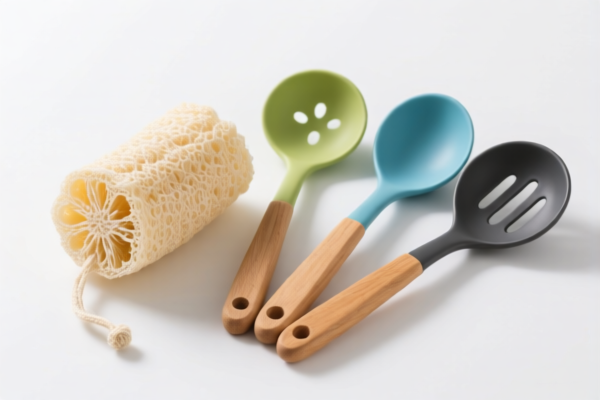
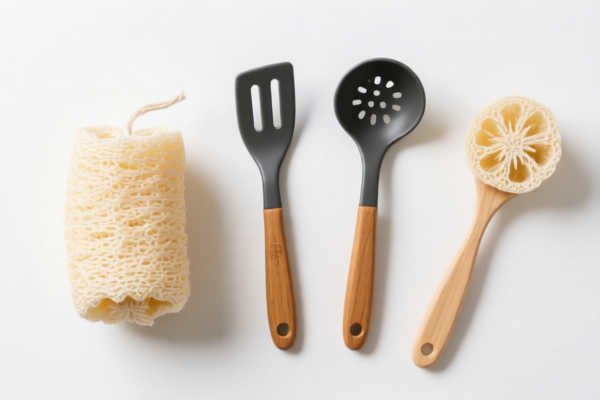
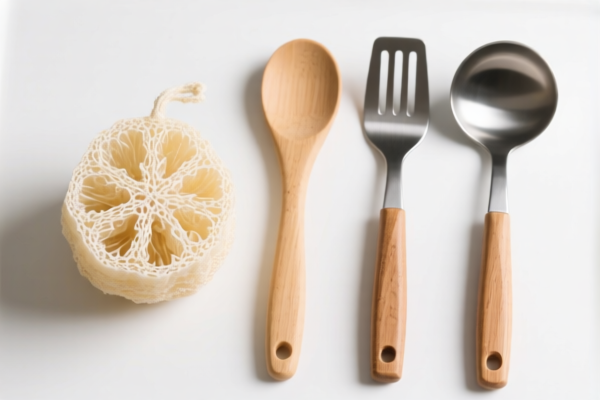
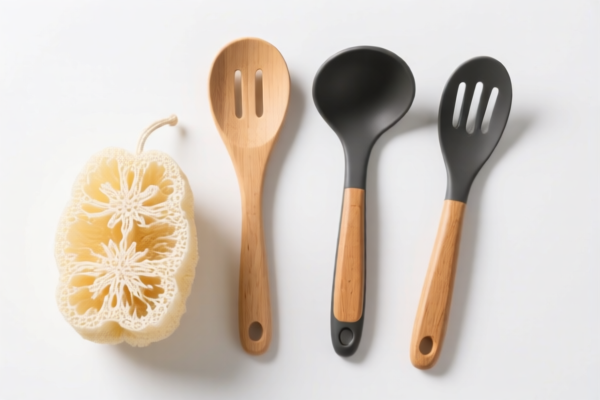
AI Analysis
🎋 Luffa Kitchen Utensils (Loofah Sponges & Scrubbers)
🌐 HS Code Reference & Customs Clearance Guide | 2026 Latest Tariff Analysis | Professional通关 Strategy
📌 I. Product Definition & Classification: What Exactly is "Luffa"?
Luffa (also known as Loofah or Sponge Gourd) kitchen utensils are natural, plant-based cleaning tools made from the fibrous interior of the Luffa cylindrica fruit. In international trade, they are distinct from synthetic sponges or plastic cleaning pads. They fall under Chapter 46 (Basketwork, wickerwork and other articles of plaiting materials), specifically classified as "articles of loofah."
⚠️ Critical Distinction:
- If the product is made from real, dried, processed loofah fiber → It belongs to Heading 4601/4602.
- If it is a synthetic sponge (polyurethane) or plastic scouring pad → It belongs to Chapter 39 (Plastics) or Chapter 40 (Rubber).
- Do not confuse natural loofah with "sponge" in the general sense. Customs will scrutinize the material composition. Misclassification can lead to significant duty differences (0% vs. 10.9%+).
📦 II. HS Code Classification Details (2026 Latest Tariff Alignment)
Based on the provided data, natural loofah kitchen utensils fall under Heading 4602. The specific classification depends on the type of vegetable material.
| HS Code | Product Description | Material Type | Key Characteristics |
|---|---|---|---|
| 4602.19.80.00 | Articles of loofah | Vegetable materials (Non-bamboo) | General loofah sponges, scrubbers, brushes made from dried gourd fibers. Most common for kitchen utensils. |
| 4602.11.07.00 | Baskets and bags... Of bamboo... Wickerwork | Vegetable materials (Bamboo) | Note: This code is for BAMBOO wickerwork, NOT loofah. If your product is bamboo, use this. If it is strictly loofah fiber, use 4602.19.80.00. |
🔍 Important Note on Data Alignment:
- 4602.19.80.00: Explicitly covers "Articles of loofah." This is the correct HS Code for natural loofah kitchen scrubbers/sponges.
- 4602.11.07.00: Covers bamboo wickerwork. Do not use this for pure loofah unless the product is a composite bamboo/loofah item where bamboo is the primary structural material. For pure loofah sponges, this code is incorrect.
- 3924.90.56.50 / 3924.90.10.50: These are for PLASTIC tableware/kitchenware. If your "luffa" product is actually a plastic scrubber marketed as "luffa-like," it falls here. But if it is natural, it is NOT plastic.
💰 III. 2026 Latest Tariff Rate Breakdown (USA Import)
✅ Applicable Country: United States (US)
✅ Country of Origin: China (CN)
✅ Effective Date: 2025/2026 (Current Trade Regime)
🎯 1. 4602.19.80.00 — Articles of Loofah (Natural Vegetable Fiber)
| Item | Detail |
|---|---|
| Base Duty Rate | 0.0% (Free under general USMF rates) |
| Section 301 Additional Duty | 0.0% |
| Total Tariff Rate | 0.0% |
| De Minimis Eligibility | ✅ Yes (If shipped under $800 via Section 321) |
| Legal Basis Path | USITC:4602.19.80.00 → General Rate of Duty |
📌 Explanation:
- Natural loofah products are classified as "articles of vegetable materials" but are not subject to Section 301 tariffs (which often target plastics, electronics, and certain manufactured goods).
- Key Benefit: 0% duty for direct imports.
- De Minimis Advantage: If shipped as a small package (e.g., single sponges) via USPS/UPS/FedEx under $800, they may enter duty-free under Section 321 with minimal documentation.
⚠️ 2. 4602.11.07.00 — Bamboo Wickerwork (If Misclassified)
| Item | Detail |
|---|---|
| Base Duty Rate | 0.0% |
| Section 301 Additional Duty | +25.0% |
| Total Tariff Rate | 25.0% |
| De Minimis Eligibility | ❌ No (Section 301 duties apply regardless of value) |
📌 Warning:
- If your product is bamboo (not loofah), it falls here.
- Even though the base rate is 0%, the 25% Section 301 tariff applies.
- Do not mislabel bamboo products as "loofah" to avoid 25% duty. Customs officers check material composition.
❌ 3. 3924.90.56.50 — Plastic Kitchenware (If Misclassified)
| Item | Detail |
|---|---|
| Base Duty Rate | 3.4% |
| Section 301 Additional Duty | +7.5% |
| Total Tariff Rate | 10.9% |
| De Minimis Eligibility | ❌ No (Section 301 applies) |
📌 Risk:
- If you declare a natural loofah sponge as "plastic kitchenware" (3924.90.56.50), you pay 10.9% instead of 0%.
- Worse, if you declare a plastic scrubber as "loofah" (4602.19.80.00), you face fraud penalties, seizure, and back duties.
🛠️ IV. Customs Clearance Practical Advice (Avoiding Pitfalls)
✅ 1. Documentation Checklist
| Document | Required? | Notes |
|---|---|---|
| Commercial Invoice | ✅ Yes | Clearly state: "Natural Loofah Kitchen Sponge, Vegetable Origin, Non-Plastic" |
| Product Photos | ✅ Yes | Show texture, packaging, and material close-up. |
| Material Composition Statement | ✅ Yes | "100% Natural Luffa Cylindrica Fiber, No Synthetic Coating" |
| HS Code Declaration | ✅ Yes | Specify 4602.19.80.00 for pure loofah. |
| Fumigation Certificate | ⚠️ Conditional | If shipped in wood pallets, phytosanitary cert may be needed. |
✅ 2. Declaration Tips (Key Mnemonics)
🔥 "Natural Loofah is Veggie, Not Plastic; 4602 is Key, 0% Duty is the Prize!"
| Scenario | Correct HS Code | Duty | Common Mistake |
|---|---|---|---|
| Pure natural loofah sponge | 4602.19.80.00 |
0% | Declaring as plastic (10.9%) or bamboo (25%) |
| Bamboo + Loofab combo brush | 4602.11.07.00 (if bamboo primary) |
25% | Ignoring bamboo content |
| Synthetic "loofa-like" scrubber | 3924.90.56.50 |
10.9% | Calling it "natural" |
| Plastic sponge with loofah print | 3924.90.56.50 |
10.9% | Misleading description |
✅ 3. Special Considerations
| Situation | Recommendation |
|---|---|
| Small E-commerce Shipments (<$800) | Use Section 321 De Minimis. Declare 4602.19.80.00 for 0% duty. Fast clearance. |
| Large Container Shipments | Ensure phytosanitary certification if required by USDA. Natural plant fibers may attract agricultural inspection. |
| Hybrid Products (Loofah + Wooden Handle) | Check if the handle makes it a "wooden article" (Chapter 44). Usually, if loofah is the main cleaning component, 4602.19.80.00 still applies. |
| Dyed/Colored Loofah | Still qualifies as natural if no synthetic binding agent is added. Declare as "Natural Loofah, Dyed." |
🌍 V. Global Market Comparison (2026)
| Country/Region | Recommended HS Code | Tariff | Notes |
|---|---|---|---|
| 🇺🇸 USA | 4602.19.80.00 |
0% | Best market for natural loofah. No Section 301. |
| 🇨🇳 China | 4602.19.80.00 |
5-8% | Import duty for re-export. |
| 🇪🇺 EU | 4602.19.80.00 |
0-6% | Varies by member state. Low duty generally. |
| 🇬🇧 UK | 4602.19.80.00 |
0% | Post-Brexit tariff schedules favor natural fibers. |
| 🇨🇦 Canada | 4602.19.80.00 |
0% | CUSMA preferential if Canadian origin, otherwise MFN 0%. |
📌 Conclusion:
- USA is the most favorable market for natural loofah kitchenware due to 0% duty and no Section 301 penalties.
- Avoid misclassification into plastic or bamboo categories to prevent unexpected costs or compliance issues.
📌 VI. Common Errors & Pitfalls (Lessons Learned)
❌ Mistake 1: Calling "synthetic loofa-like sponges" natural.
👉 Result: Customs inspection reveals polyester/polyurethane → Back duty (10.9%) + penalties.
❌ Mistake 2: Using 4602.11.07.00 for pure loofah.
👉 Result: Incorrect code, possible 25% duty assessment if linked to bamboo rules, or rejection for mismatched description.
❌ Mistake 3: Not declaring "Vegetable Origin" on invoice.
👉 Result: Customs may assume synthetic → Delay for material verification → Demurrage charges.
❌ Mistake 4: Combining plastic handles with loofah heads and declaring as "Plastic Kitchenware."
👉 Result: Higher duty (10.9%) than necessary. Should be classified as composite article, potentially still under 4602 if loofah is essential.
✅ Correct Approach:
"Natural Loofah Kitchen Sponge, 100% Vegetable Fiber, No Plastic, Model XYZ, HS Code 4602.19.80.00"
🎯 VII. Conclusion: Maximize Profit with Accurate Classification
🎯 Remember:
🔹 "Loofah is Nature, Not Plastic; 4602 brings 0% Duty magic."
🔹 "Check material, not just name; avoid 10% or 25% penalty shame."
📌 Pro Tip:
For e-commerce sellers, leverage Section 321 De Minimis for small packages. Declare clearly as "Natural Loofah" with HS Code 4602.19.80.00 to ensure zero duty and fast clearance. For bulk imports, request a Binding Ruling from CBP to confirm classification and avoid audits.
📣 Take Action:
📞 Consult a customs broker for hybrid products.
📸 Provide clear material photos during declaration.
🚀 Ship smart, pay less, sell more!
✨ Precision Classification, Maximum Savings!
💼 Your Natural Loofah Deserves the 0% Rate!
Customer Reviews
About HS Code Classification
The Harmonized System (HS) is an internationally standardized nomenclature developed by the World Customs Organization (WCO) to classify traded products. Over 200 countries use the HS system as the basis for customs tariffs, trade statistics, and import/export regulations.
Each HS code follows a hierarchical structure:
- Chapter (2 digits) — Broad category of goods (e.g., Chapter 84: Machinery and Mechanical Appliances)
- Heading (4 digits) — More specific grouping within the chapter
- Subheading (6 digits) — Internationally standardized breakdown, used by all WCO member countries
- National subdivisions (8-10 digits) — Country-specific extensions for further classification, such as US HTSUS 10-digit codes
Correct HS code classification is essential for smooth customs clearance, accurate duty payment, and compliance with trade regulations. Misclassification can lead to customs delays, overpayment of duties, or penalties.
When importing from CN to US, the applicable tariff rates may include:
- Most-Favored-Nation (MFN) rate — The standard duty rate applied to WTO members
- General rate — Applied to countries without trade agreements
- Trade remedy duties — Additional tariffs such as Section 301 (anti-dumping), Section 232 (national security), or countervailing duties
The information provided on this page is for reference purposes only. For official classification, please consult with your local customs authority or a licensed customs broker.