Luffa Sponge Decoration
CN → US| HS Code | Tariff Rate | Origin | Destination | Doc |
|---|---|---|---|---|
| 4602198000 | 37.3% | CN | US | Official Doc |
| 4602900000 | 38.5% | CN | US | Official Doc |
| 4601944000 | 35.0% | CN | US | Official Doc |
| 4601999000 | 38.3% | CN | US | Official Doc |
Product Images
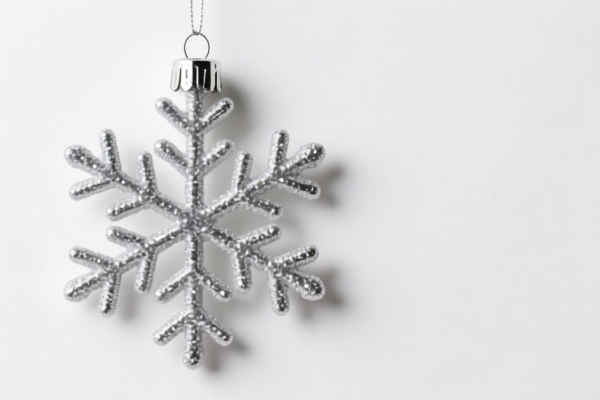
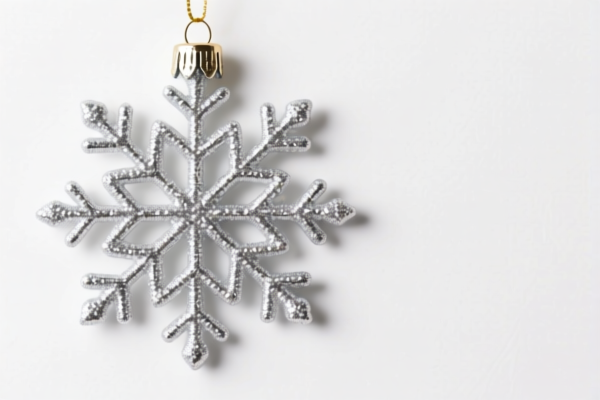
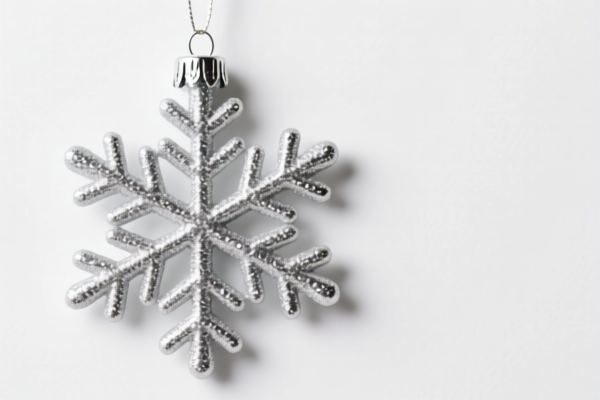
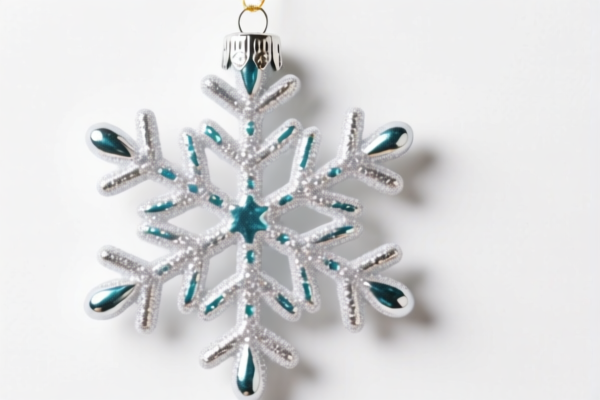
AI Analysis
🌿 Luffa Sponge Decoration (Plant Fiber Ornaments)
🌐 HS Code Reference & Customs Clearance Guide | 2026 Latest Tariff Analysis | Professional Level通关 Strategy
📌 1. Product Definition & Classification: Do You Really Understand "Luffa Sponges"?
Luffa sponges, derived from the fibrous interior of the Luffa plant, are natural plant fibers. When processed into decorations (ornaments/hanging ornaments), they fall under the category of basketry, woven goods, and similar products.
In international trade, the classification depends on the specific form and processing depth: * Woven/Braided Mats or Mats-like Goods: If the luffa fibers are woven into mats, mats, or mat-like structures. * Other Woven Goods: If formed into specific decorative shapes (hanging ornaments) that do not fit the standard "mat" definition but are still made of woven plant fibers. * Miscellaneous Woven Articles: For other formed woven articles made of plant fibers that do not fit specific sub-headings.
⚠️ Key Distinction:
- If the product is essentially a woven mat or mat-like structure used for decoration → 4602.19 or 4601.94
- If it is a formed decorative item (not a mat) made of woven luffa fibers → 4602.90
- If it is considered a generic woven article without specific use definition → 4601.99
📦 2. HS Code Classification Details (2026 Latest Tariff Authority Comparison)
| HS Code | Product Description | Application Scenario | Woven/Braided? |
|---|---|---|---|
4602.19.80.00 |
Woven basketware and other articles of braiding materials or of materials made up of strips of vegetable products | Luffa woven into mat-like decorative panels or basket-like ornaments | ✅ Yes (Braided/Woven) |
4602.90.00.00 |
Other basketware and other articles of braiding materials or of materials made up of strips of vegetable products | Luffa formed into specific decorative shapes (not mats/baskets) | ✅ Yes (Formed) |
4601.94.40.00 |
Mats, matting and gratings of vegetable materials | Luffa woven into flat mats or mat-like decorative pieces | ✅ Yes (Mat-like) |
4601.99.90.00 |
Other mats, matting, gratings and grating of vegetable materials | Other woven luffa products not fitting specific mat categories | ✅ Yes (Woven) |
🔍 Key Reminder:
- All woven or braided luffa products fall under Chapter 46 (Articles of basketry, wickerwork and other plaiting materials).
- If the luffa is not woven but merely cut/formed, it may fall under Chapter 46.01 (Unwoven) or even Chapter 12 (Seeds/Fibers), but decorations are typically woven/braided.
- Do not misclassify as "plastic decorations" or "wooden decorations" – the material is vegetable fiber.
💰 3. 2026 Latest Tariff Rate Breakdown (Including Additional Taxes, Policy Add-ons)
✅ Applicable Country: United States (US)
✅ Country of Origin: China (CN)
✅ Effective Date: From November 10, 2025 (including subsequent imports)
🎯 1. 4601.94.40.00 —— Mats, Matting of Vegetable Materials (Lowest Base Tariff)
| Item | Content |
|---|---|
| Base Tariff | 0.0% (ad valorem) |
| USITC Additional Tax | +25.0% (Under USITC Footnote 9903.88.01 / Section 301) |
| IEEPA Additional Tax | +10.0% (Against China/Hong Kong products, from Nov 10, 2025) |
| Total Tax Rate | 35.0% |
| Tax Calculation | CIF Value × 35.0% |
| De Minimis Eligibility | ❌ No (deny_de_minimis) |
| Legal Basis Path | IEEPA:9903.01.25 → IEEPA:9903.01.24 → USITC:4601.94.40.00 → FOOTNOTE:9903.88.01 |
📌 Explanation:
- "Base Tariff 0%": This is the most advantageous base rate among the four options.
- "USITC 25%": From the Section 301 investigation on Chinese goods.
- "IEEPA 10%": Additional tariff under the International Emergency Economic Powers Act.
- Total 35%: Lowest total tariff among the four HS codes, making this the optimal classification if the product can be reasonably described as a "mat or mat-like woven product."
🎯 2. 4602.19.80.00 —— Woven Basketware of Other Materials
| Item | Content |
|---|---|
| Base Tariff | 2.3% |
| USITC Additional Tax | +25.0% |
| IEEPA Additional Tax | +10.0% |
| Total Tax Rate | 37.3% |
| Tax Calculation | CIF × 37.3% |
| De Minimis Eligibility | ❌ No |
| Legal Basis Path | IEEPA:9903.01.25 → IEEPA:9903.01.24 → USITC:4602.19.80.00 → FOOTNOTE:9903.88.01 |
📌 Note:
- Applicable if the luffa decoration is woven into a basket-like or mat-like structure.
- 2.3% base rate is slightly higher than 0%, but still competitive.
- Suitable for mats, wall hangings, or woven decorative panels.
🎯 3. 4601.99.90.00 —— Other Mats/Matting of Vegetable Materials
| Item | Content |
|---|---|
| Base Tariff | 3.3% |
| USITC Additional Tax | +25.0% |
| IEEPA Additional Tax | +10.0% |
| Total Tax Rate | 38.3% |
| Tax Calculation | CIF × 38.3% |
| De Minimis Eligibility | ❌ No |
| Legal Basis Path | IEEPA:9903.01.25 → IEEPA:9903.01.24 → USITC:4601.99.90.00 → FOOTNOTE:9903.88.01 |
📌 Note:
- For woven luffa products that do not fit specific sub-headings (e.g., irregular woven shapes).
- 3.3% base rate is slightly higher than4602.19.
🎯 4. 4602.90.00.00 —— Other Basketware/Articles
| Item | Content |
|---|---|
| Base Tariff | 3.5% |
| USITC Additional Tax | +25.0% |
| IEEPA Additional Tax | +10.0% |
| Total Tax Rate | 38.5% |
| Tax Calculation | CIF × 38.5% |
| De Minimis Eligibility | ❌ No |
| Legal Basis Path | IEEPA:9903.01.25 → IEEPA:9903.01.24 → USITC:4602.90.00.00 → FOOTNOTE:9903.88.01 |
📌 Note:
- For formed luffa ornaments that are not mats or baskets (e.g., hanging stars, balls, shaped decorations).
- Highest total tariff among the four options.
- Use only if the product cannot be reasonably described as a mat or basket.
🛠️ 4. Customs Clearance Practical Advice (Battlefield Pit-Avoidance Guide)
✅ 1. Document Checklist (All Required)
| Document | Required | Explanation |
|---|---|---|
| ✅ Product Specification Sheet | ✔️ | Include dimensions, material composition (100% natural luffa), weaving method |
| ✅ Product Photos | ✔️ | Clear images of the decoration, showing woven texture, tags, and packaging |
| ✅ Commercial Invoice | ✔️ | Explicitly state: "Woven Luffa Sponge Decoration / Ornament" |
| ✅ Packing List | ✔️ | Detail item count, weight, and dimensions |
| ✅ Certificate of Origin (CO) | ✔️ | If non-China origin, claim preferential tariffs |
| ✅ Third-Party Test Report | ✔️ | If applicable, FDA or USDA reports for natural fibers |
✅ 2. Declaration Tips (Key Mantras)
🔥 "Weaving Defines It, Matting Lowers Tax, Shape Matters, Don’t Misclassify!"
| Scenario | Correct Declaration | Wrong Practice |
|---|---|---|
| Luffa woven into flat panels/wall hangings | 4601.94.40.00 (0% base) |
Misdeclare as "Plastic Ornament" → High tariff + Penalty |
| Luffa formed into 3D ornaments (balls, stars) | 4602.90.00.00 (3.5% base) |
Misdeclare as "Mat" → Risk of rejection if not mat-like |
| Luffa woven into basket-like shapes | 4602.19.80.00 (2.3% base) |
Misdeclare as "Wood Ornament" → Misclassification |
| Mixed materials (luffa + metal hooks) | Declare as Luffa Ornament | Split declaration → Complex, high risk |
✅ 3. Special Situations Handling
| Situation | Handling Advice |
|---|---|
| OEM Custom Luffa Ornaments | Provide customer orders + design sketches to confirm weaving method |
| Luffa + Non-Woven Parts (e.g., string, hooks) | Declare as Luffa Ornament, include string/hooks in main item, do not split |
| Natural Fiber vs. Synthetic | Ensure product is 100% natural luffa or clearly labeled as such to avoid misclassification as plastic |
| Low-Value Shipments | ❌ No De Minimis Exemption – Even under $800, Section 301 and IEEPA taxes apply |
🌍 5. Global Market Clearance Comparison (2026 Latest)
| Country/Region | Recommended HS Code | Tariff | Certification Requirements | Notes |
|---|---|---|---|---|
| 🇺🇸 United States | 4601.94.40.00 |
35.0% | None specific for natural fibers | 35% total is the lowest; avoid 4602.90 (38.5%) |
| 🇨🇳 China | 4601.94.40.00 |
~5-10% | None | No additional Section 301/IEEPA taxes |
| 🇪🇺 European Union | 4601.94.40.00 |
0-2.5% | CE (if applicable), REACH | No additional tariffs |
| 🇦🇺 Australia | 4601.94.40.00 |
5% | None | No additional tariffs |
| 🇯🇵 Japan | 4601.94.40.00 |
0-3% | JIS (if applicable) | No additional tariffs |
📌 Conclusion:
- The US is the only market imposing additional Section 301 and IEEPA tariffs on Chinese luffa products.
- China-produced luffa decorations face 35-38.5% total tariffs in the US.
- Strategic Recommendation:
- If possible, classify as4601.94.40.00(mats/matting) to achieve the lowest 35% total rate.
- Provide clear product descriptions emphasizing "woven," "mat-like," or "plaited" to support this classification.
- For 3D ornaments, accept the 38.5% rate under4602.90.00.00.
- Avoid misclassification as "plastic" or "wood" – this risks penalties and delays.
📌 6. Common Mistakes & Pitfalls (Blood & Tears Lessons)
❌ Mistake 1: Declaring 3D luffa balls as "mats" to get lower tax
👉 Consequence: Customs may reject the classification if not mat-like → Delay or Rejection
❌ Mistake 2: Not declaring material as "natural plant fiber"
👉 Consequence: Misclassification as plastic/wood → Higher tariffs + Penalties
❌ Mistake 3: Assuming de minimis exemption for low-value shipments
👉 Consequence: No exemption for Section 301/IEEPA taxes → Unexpected costs
❌ Mistake 4: Splitting declaration for luffa + hooks/strings
👉 Consequence: Complex clearance, high risk of misclassification → Delays
✅ Correct Practice:
"Woven Luffa Sponge Decoration, Natural Plant Fiber, Mat-like/Ornament, Model ABC, 100% Vegetable Material"
🎯 7. Conclusion: Professional Declaration, Save Time, Reduce Costs!
🎯 Remember the Mantra:
🔹 "Weaving Defines It, Matting Lowers Tax!"
🔹 "HS Code Determines Life, 3.5% vs 0% Base, Declare Correctly, Save Thousands!"
🔹 "No De Minimis for US, Taxes Are 35-38.5%, Plan Ahead!"
📌 Tips:
- If your luffa sponges are originally from Vietnam, Thailand, or Indonesia, claim preferential tariffs under applicable FTAs.
- Apply for Advance Rulings from US Customs to confirm HS Code classification before shipment.
- Work with experienced customs brokers who specialize in natural fiber products.
📣 Immediate Action:
📞 Contact Professional Customs Brokers + Provide Product Photos + Apply for HS Code Advance Ruling
🚀 Let your luffa decorations Clear Customs Smoothly, Export Efficiently, Maximize Profits!
✨ Professional Clearance, Starts with Accurate Classification!
💼 Every Cent of Your Cost Deserves Precise Calculation!
Customer Reviews
About HS Code Classification
The Harmonized System (HS) is an internationally standardized nomenclature developed by the World Customs Organization (WCO) to classify traded products. Over 200 countries use the HS system as the basis for customs tariffs, trade statistics, and import/export regulations.
Each HS code follows a hierarchical structure:
- Chapter (2 digits) — Broad category of goods (e.g., Chapter 84: Machinery and Mechanical Appliances)
- Heading (4 digits) — More specific grouping within the chapter
- Subheading (6 digits) — Internationally standardized breakdown, used by all WCO member countries
- National subdivisions (8-10 digits) — Country-specific extensions for further classification, such as US HTSUS 10-digit codes
Correct HS code classification is essential for smooth customs clearance, accurate duty payment, and compliance with trade regulations. Misclassification can lead to customs delays, overpayment of duties, or penalties.
When importing from CN to US, the applicable tariff rates may include:
- Most-Favored-Nation (MFN) rate — The standard duty rate applied to WTO members
- General rate — Applied to countries without trade agreements
- Trade remedy duties — Additional tariffs such as Section 301 (anti-dumping), Section 232 (national security), or countervailing duties
The information provided on this page is for reference purposes only. For official classification, please consult with your local customs authority or a licensed customs broker.