Luggage
CN → US| HS Code | Tariff Rate | Origin | Destination | Doc |
|---|---|---|---|---|
| 4202122120 | 55.0% | CN | US | Official Doc |
| 3923109000 | 38.0% | CN | US | Official Doc |
| 3923900080 | 38.0% | CN | US | Official Doc |
| 4202122150 | 55.0% | CN | US | Official Doc |
| 4202999000 | 55.0% | CN | US | Official Doc |
Product Images


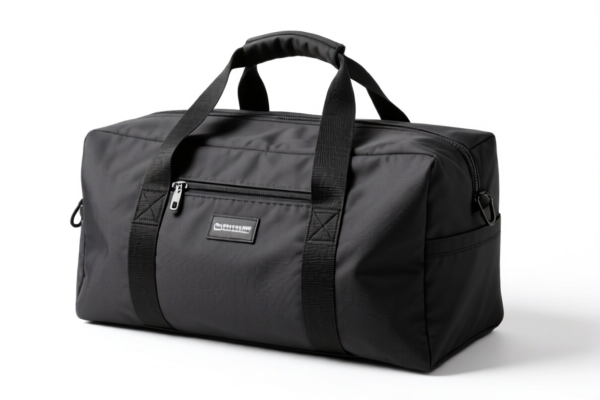
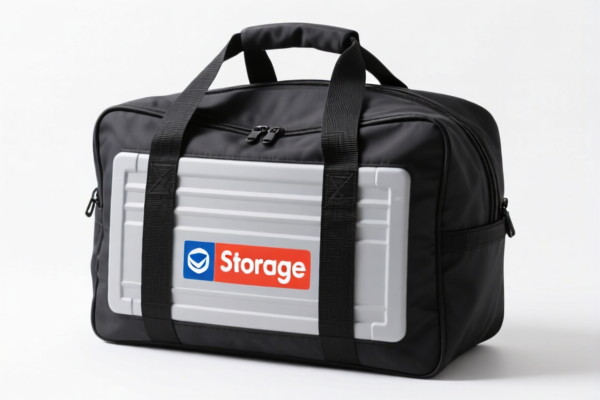
AI Analysis
🧳 Luggage (Suitcases, Trunks, and Storage Boxes)
🌐 HS Code Masterclass & Customs Clearance Strategy | 2026 Tariff Edition | Professional Logistics Protocol
📌 I. Product Definition: What Exactly Are We Exporting?
Luggage is a broad category encompassing portable containers used for transporting personal belongings, goods, or cargo. In international trade, the material composition and specific form factor are the decisive factors that dictate the HS Code and, consequently, the tariff burden.
The data provided highlights four distinct scenarios:
- Standard Travel Cases: Rigid or semi-rigid cases designed for human travel (Trunks/Suitcases).
- Plastic Containers: Cases where the primary characteristic is the plastic material (Chapter 39).
- Cargo/Packaging Boxes: Containers primarily used for goods transport rather than personal travel.
- Miscellaneous Storage: General storage boxes that do not fit the "suitcase" definition perfectly.
⚠️ The Critical Distinction:
- Chapter 42 (Leather/Textile/Synthetic Leather): If the luggage is made of or dominated by leather, plastic-coated leather, or textile materials treated as "suitcases," tax is 55%.
- Chapter 39 (Plastic): If the luggage is made of pure plastic, resin, or plastic-coated materials intended as "boxes/cases," tax is 38%.
Misclassification here can cost you 17% extra on the CIF value!
📦 II. HS Code Classification Breakdown (Based on Provided Data)
| HS Code | Product Description | Material Logic | Applicable Scenario |
|---|---|---|---|
| 4202.12.21.20 | Traveling Trunks / Suitcases | Plastic or Leather containers | Standard hard-shell or soft-shell suitcases made of plastic-coated material or leather-like synthetics. |
| 3923.10.90.00 | Boxes, Cases, Frames (Plastic) | Plastic or Plastic-coated | Rigid plastic cases, hard-shell luggage where the material is purely plastic. |
| 3923.90.00.80 | Other Containers (Plastic) | Plastic | Luggage used primarily for cargo transport or general packaging, not standard personal travel. |
| 4202.12.21.50 | Trunks / Suitcases (Variants) | Plastic, Leather, or Textile | Alternative sub-categories for suitcases, often differing in specific textile/leather lining or form. |
| 4202.99.90.00 | Other Containers (Misc) | Plastic, Textile, or Cardboard | General storage boxes or luggage that doesn't fit the specific "suitcase" mold. |
🔍 Key Insight:
- Chapter 42 Codes (4202...) generally incur Higher Taxes (55%) due to the "Travel" classification and specific material definitions.
- Chapter 39 Codes (3923...) generally incur Lower Taxes (38%) as they are classified under "Plastic Manufactures" rather than "Travel Goods."
Strategy Tip: If the product is 100% plastic without leather/textile lining, pushing for a 3923 classification can save significant duties.
💰 III. 2026 Tariff Rate Deep Dive (Comprehensive Tax Breakdown)
✅ Applicable Market: United States (US)
✅ Origin: China (CN)
✅ Structure: Base Duty + Section 301 Tariff + Section 122 Tariff
🎯 Scenario A: High-Tax Path (Chapter 42 - Suitcases)
Codes: 4202.12.21.20, 4202.12.21.50, 4202.99.90.00
Total Tax: 55.0%
| Tax Component | Rate | Legal Basis / Description |
|---|---|---|
| Base Duty (MFN) | 20.0% | Standard US Most Favored Nation tariff for "Travel Goods." |
| Section 301 (Added Tariff) | 25.0% | Trump-era/Biden-era Section 301 tariffs on Chinese goods (List 3A/4A). |
| Section 122 (Specific) | 10.0% | Additional duties often applied under specific trade remedies or "Section 122" related clauses for certain consumer goods. |
| Total Effective Rate | 55.0% | $1,000 CIF Value = $550 Duty Paid |
📌 Explanation:
The 55% rate is a penalty-tier tax. It assumes the product is a "Suitcase" (Chapter 42) made of leather/synthetic leather/textile composites. This is the "default" high-risk classification for standard luggage.
🎯 Scenario B: Lower-Tax Path (Chapter 39 - Plastic)
Codes: 3923.10.90.00, 3923.90.00.80
Total Tax: 38.0%
| Tax Component | Rate | Legal Basis / Description |
|---|---|---|
| Base Duty (MFN) | 3.0% | Standard tariff for "Plastic Articles" (Chapter 39). |
| Section 301 (Added Tariff) | 25.0% | Applied to Chinese plastic goods. |
| Section 122 (Specific) | 10.0% | Applied to specific plastic packaging/container categories. |
| Total Effective Rate | 38.0% | $1,000 CIF Value = $380 Duty Paid |
📌 Explanation:
By proving the product is a "Plastic Box/Case" rather than a "Leather/Synthetic Suitcase," you reduce the Base Duty from 20% to 3%.
Savings: 17% on the total CIF value (approx. $170 per $1,000 shipment).
Note: This still includes heavy Section 301 and 122 penalties, but the base rate makes it significantly cheaper.
🛠️ IV. Customs Clearance Strategy & Action Plan
✅ 1. Material Verification (The Golden Rule)
Action: Before shipping, conduct a rigorous Material Composition Analysis. - If the shell is >90% Plastic: Push for 3923 codes. - If the shell has Leather, Textile Lining, or is "Leather-like": Must use 4202 codes. - Warning: Do not attempt to claim 3923 for a suitcase that looks like a classic travel trunk with leather trim. Customs will reject it as "Misclassification" and impose fines.
✅ 2. Functional Description for Entry
When drafting the Commercial Invoice and Packing List: - For 3923: Use terms like "Rigid Plastic Storage Container," "Molded Plastic Case," "Cargo Box." Avoid words like "Suitcase," "Trunk," or "Travel." - For 4202: Use "Leather-bound Suitcase," "Textile Travel Bag," or "Synthetic Leather Trunk." Be explicit about the material to match the 20% base duty logic.
✅ 3. Documentation Checklist
| Document | Purpose | Critical Detail |
|---|---|---|
| Product Spec Sheet | Material Proof | Clearly state: "100% ABS Plastic Shell" OR "Top Grain Leather with Textile Lining." |
| Photographs | Visual Evidence | Show the material texture close-up. Show the interior lining. |
| Bill of Materials (BOM) | HS Code Defense | Itemize the shell, lining, and handle materials separately. |
| Importer of Record (IOR) | Liability | Ensure the IOR understands the 55% vs 38% risk. |
🛑 V. Common Pitfalls & Risk Alerts
❌ Pitfall 1: The "Looks Like Leather" Trap
Scenario: A plastic suitcase is painted or textured to look like leather.
Consequence: Customs may classify it as 4202 (55%) because the appearance triggers the "leather/travel" definition.
Fix: If it is plastic, emphasize the plastic nature in the description, not the texture.
❌ Pitfall 2: Mixed Material Confusion
Scenario: A suitcase has a plastic shell but heavy textile lining.
Consequence: Likely falls under 4202 (55%) because the textile/leather content defines the "Travel Good" status.
Fix: Ensure the plastic content is dominant for the 3923 argument, or accept the 55% rate.
❌ Pitfall 3: Ignoring Section 122
Scenario: Only calculating Base + 301 Tariff.
Consequence: Underpayment of 10% Section 122 tariff.
Result: 65% Tax (instead of 55%) or penalties. Always include the 10% "122条款" (Section 122) in your cost model.
🌍 VI. Strategic Summary & Recommendation
| Strategy | Best For | Target HS Code | Expected Tax |
|---|---|---|---|
| Cost-Optimization | Pure Plastic Products | 3923.10.90.00 / 3923.90.00.80 |
38.0% |
| Compliance (Standard) | Leather/Textile Suitcases | 4202.12.21.20 / 4202.12.21.50 |
55.0% |
| General Storage | Non-Travel Boxes | 4202.99.90.00 |
55.0% |
💡 Final Verdict:
If your product is 100% plastic, aggressively pursue 3923 codes to save 17% in duties.
If your product contains textile or leather, prepare for the 55% tax bracket.
Never split the shipment to hide value; Customs AI will flag it. Be precise, be transparent, and calculate your Section 122 costs accurately.
🚀 Pro Tip:
Apply for a Binding Ruling from US Customs (CBP) before shipping if you are unsure whether your "plastic-looking" suitcase qualifies for 3923. The upfront cost is negligible compared to the $170 per $1,000 savings.
✨ Clear the Path. Classify Correctly. Maximize Margins. ✨
Customer Reviews
About HS Code Classification
The Harmonized System (HS) is an internationally standardized nomenclature developed by the World Customs Organization (WCO) to classify traded products. Over 200 countries use the HS system as the basis for customs tariffs, trade statistics, and import/export regulations.
Each HS code follows a hierarchical structure:
- Chapter (2 digits) — Broad category of goods (e.g., Chapter 84: Machinery and Mechanical Appliances)
- Heading (4 digits) — More specific grouping within the chapter
- Subheading (6 digits) — Internationally standardized breakdown, used by all WCO member countries
- National subdivisions (8-10 digits) — Country-specific extensions for further classification, such as US HTSUS 10-digit codes
Correct HS code classification is essential for smooth customs clearance, accurate duty payment, and compliance with trade regulations. Misclassification can lead to customs delays, overpayment of duties, or penalties.
When importing from CN to US, the applicable tariff rates may include:
- Most-Favored-Nation (MFN) rate — The standard duty rate applied to WTO members
- General rate — Applied to countries without trade agreements
- Trade remedy duties — Additional tariffs such as Section 301 (anti-dumping), Section 232 (national security), or countervailing duties
The information provided on this page is for reference purposes only. For official classification, please consult with your local customs authority or a licensed customs broker.