Luggage Dust Cover
CN → US| HS Code | Tariff Rate | Origin | Destination | Doc |
|---|---|---|---|---|
| 4016996050 | 37.5% | CN | US | Official Doc |
| 5603120070 | 35.0% | CN | US | Official Doc |
| 4016990500 | 20.9% | CN | US | Official Doc |
| 5603110070 | 35.0% | CN | US | Official Doc |
| 3926909989 | 22.8% | CN | US | Official Doc |
Product Images
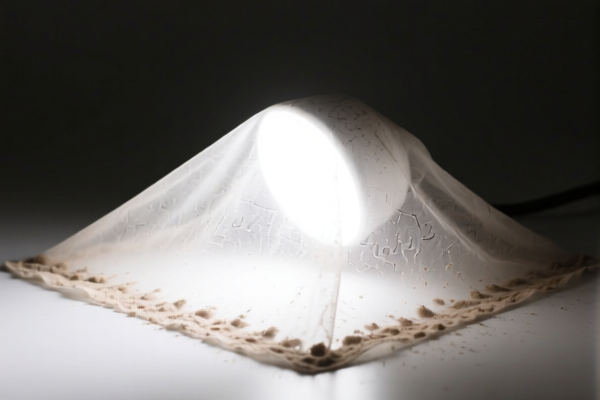


AI Analysis
🧳 Luggage Dust Cover (Protective Covers)
🌐 HS Code Reference & Customs Clearance Guide | 2026 Latest Tariff Analysis | Professional Clearance Strategy
📌 I. Product Definition & Classification: What Exactly is a "Luggage Dust Cover"?
A Luggage Dust Cover is a protective accessory designed to shield suitcases, bags, and trunks from dust, scratches, moisture, and minor abrasions during storage, transit, or travel. In international trade, these items are strictly classified based on their material composition, not just their function.
Two Primary Categories:
- Textile/Non-Woven Covers: Made from fabrics, non-woven materials, or woven textiles. These are flexible, breathable, and often reusable or disposable.
- Rubber/Plastic Covers: Made from synthetic rubber, PVC, TPU, or other plastics. These are waterproof, durable, and often used for heavy-duty protection or outdoor storage.
⚠️ Critical Distinction:
- If the cover is made of fabric/non-woven material → It falls under Chapter 56 (Non-wovens) or Chapter 63 (Other made-up articles).
- If the cover is made of rubber/plastic → It falls under Chapter 40 (Rubber) or Chapter 39 (Plastics).
- Do NOT classify under "Parts of Luggage" (e.g., 4202) unless it is an integral part of the luggage itself. A separate "dust cover" is an accessory.
📦 II. HS Code Classification Details (Based on Provided Data)
| HS Code | Product Description | Material Inference | Application Scenario | Total Tax Rate (US/CN) |
|---|---|---|---|---|
4016.99.60.50 |
Other articles of vulcanized rubber (not hard rubber) | Rubber | Heavy-duty rubber protection; industrial or outdoor use | 37.5% |
5603.12.00.70 |
Non-woven fabrics, of synthetic fibers, weight >70g/m² | Non-woven Fabric | Disposable or lightweight fabric covers; standard travel protection | 35.0% |
4016.99.05.00 |
Other vulcanized rubber articles | Rubber | Common household/industrial rubber covers; general protection | 20.9% |
5603.11.00.70 |
Non-woven fabrics, of synthetic fibers, weight ≤70g/m² | Non-woven Fabric | Lightweight, thin non-woven covers; disposable type | 35.0% |
3926.90.99.89 |
Other articles of plastics | Plastic | Rigid or semi-rigid plastic dust boxes/covers; shell-like protection | 22.8% |
🔍 Key Note:
- The tax rates above include Base Tariff + Section 301 Tariff (25%) + Section 122 Tariff (10%).
- Section 301 (25%) applies to most Chinese-origin goods under these headings.
- Section 122 (10%) applies specifically to certain rubber/plastic articles from China.
- Always verify the exact material weight (for non-wovens) and hardness (for rubber) to avoid misclassification.
💰 III. 2026 Latest Tariff Rate Breakdown (With Surcharges)
✅ Applicable Country: United States (US)
✅ Country of Origin: China (CN)
✅ Effective Date: Rates apply to imports after 2025-11-10
🎯 1. 4016.99.60.50 —— Rubber Dust Cover (Heavy-Duty)
| Item | Details |
|---|---|
| Base Tariff | 2.5% |
| Section 301 Surcharge | +25.0% |
| Section 122 Surcharge | +10.0% |
| Total Effective Rate | 37.5% |
| Calculation | CIF Value × 37.5% |
| De Minimis Exemption | ❌ Not Eligible |
| Legal Basis | USITC:4016.99.60.50 → Section 301: Footnote 9903.88.01 → Section 122 |
📌 Explanation:
- High tariff due to Section 122 targeting specific rubber articles from China.
- Section 301 (25%) adds significant cost.
- Total 37.5% is a major cost driver. Consider alternative materials if possible.
🎯 2. 5603.12.00.70 & 5603.11.00.70 —— Non-Woven Fabric Dust Covers
| Item | Details |
|---|---|
| Base Tariff | 0.0% |
| Section 301 Surcharge | +25.0% |
| Section 122 Surcharge | +10.0% |
| Total Effective Rate | 35.0% |
| Calculation | CIF Value × 35.0% |
| De Minimis Exemption | ❌ Not Eligible |
| Legal Basis | USITC:5603.xx.xx.xx → Section 301: Footnote 9903.88.01 → Section 122 |
📌 Explanation:
- Even though the base tariff is 0%, the 35% total rate makes it expensive.
- Section 122 (10%) applies to non-woven fabrics made from synthetic fibers from China.
- Difference between 5603.12 (heavy) and 5603.11 (light): Only weight matters for classification, but tax rate is identical.
🎯 3. 4016.99.05.00 —— General Rubber Dust Cover
| Item | Details |
|---|---|
| Base Tariff | 3.4% |
| Section 301 Surcharge | +7.5% |
| Section 122 Surcharge | +10.0% |
| Total Effective Rate | 20.9% |
| Calculation | CIF Value × 20.9% |
| De Minimis Exemption | ❌ Not Eligible |
| Legal Basis | USITC:4016.99.05.00 → Section 301: Footnote 9903.88.01 → Section 122 |
📌 Explanation:
- This is the lowest tax rate among the rubber options.
- Section 301 surcharge is only 7.5% (vs. 25% for other rubber articles), likely due to a specific exclusion or different categorization under "other vulcanized rubber articles."
- Best option for rubber covers if compliance allows.
🎯 4. 3926.90.99.89 —— Plastic Dust Box/Cover
| Item | Details |
|---|---|
| Base Tariff | 5.3% |
| Section 301 Surcharge | +7.5% |
| Section 122 Surcharge | +10.0% |
| Total Effective Rate | 22.8% |
| Calculation | CIF Value × 22.8% |
| De Minimis Exemption | ❌ Not Eligible |
| Legal Basis | USITC:3926.90.99.89 → Section 301: Footnote 9903.88.01 → Section 122 |
📌 Explanation:
- Similar to4016.99.05.00, the Section 301 surcharge is only 7.5%.
- Ideal for rigid or semi-rigid plastic covers (e.g., hard-shell dust boxes).
- Lower risk of misclassification compared to fabric items.
🛠️ IV. Customs Clearance Practical Advice (Avoid Pitfalls)
✅ 1. Required Documentation Checklist (Must-Have)
| Document | Mandatory? | Purpose |
|---|---|---|
| ✅ Product Specification Sheet | ✔️ | Details material, dimensions, weight per unit |
| ✅ Material Declaration | ✔️ | Explicitly state: "100% Polyester Non-Woven" or "TPU Plastic" |
| ✅ Product Photos | ✔️ | Show texture, transparency, and any labels |
| ✅ Commercial Invoice | ✔️ | Must specify "Dust Cover for Luggage" and HS Code |
| ✅ Packing List | ✔️ | Show quantity and gross/net weight |
| ✅ Certificate of Origin (CO) | ✔️ | Required for Section 122 verification |
| ✅ Third-Party Test Report | Optional | If claiming fire-retardant or eco-friendly features |
✅ 2. Declaration Tips (Key Mnemonic)
🔥 "Material First, Function Second, Name Precise, Tax Lower!"
| Scenario | Correct Declaration | Wrong Practice |
|---|---|---|
| Non-Woven Cover | Non-woven Polyester Dust Cover, 70g/m² |
"Fabric Cover" → Ambiguous, may be audited |
| Rubber Cover | Vulcanized Rubber Luggage Protector |
"Plastic Cover" → Misclassification, high penalty |
| Plastic Box | Hard Plastic Dust Box for Suitcases |
"Luggage Part" → Incorrect chapter, wrong tax |
| Mixed Material | Split declaration or choose dominant material | "Textile & Plastic" → Complex classification |
✅ 3. Special Cases
| Situation | Recommendation |
|---|---|
| OEM Custom Covers | Provide client design specs to prove material composition |
| Disposable vs. Reusable | Declare as "Non-woven" regardless; tax is same |
| With Elastic Bands | If elastic is <5% of cost, still classify by main material |
| Labeled "Luggage Accessory" | Use precise term: "Dust Cover" not "Accessory" |
🌍 V. Global Market Comparison (2026)
| Country/Region | Recommended HS Code | Tariff (CN Origin) | Certification | Notes |
|---|---|---|---|---|
| 🇺🇸 USA | 4016.99.05.00 (Best) |
20.9% (Rubber) / 22.8% (Plastic) / 35-37.5% (Fabric) | None | High tariffs due to Section 301/122 |
| 🇨🇳 China | 5603.12.00.70 |
0% Base + VAT 13% | None | Lowest base rate |
| 🇪🇺 EU | 5603.12.00 |
0% Base | CE (if applicable) | No Section 122 equivalent |
| 🇬🇧 UK | 5603.12.00 |
0% Base | UKCA | Post-Brexit rules apply |
| 🇦🇺 Australia | 5603.12.00 |
5% Base | RCM | Lower than US |
📌 Conclusion:
- USA is the most expensive market due to Section 301 & 122.
- EU/UK have no such surcharges for non-wovens.
- Consider supply chain diversification (e.g., source from Vietnam) for US-bound goods.
📌 VI. Common Errors & Pitfalls (Lessons Learned)
❌ Error 1: Classifying non-woven covers under 6307.90 (Other made-up articles)
👉 Result: Higher base tariff (6.5%+) and potential audit for incorrect material declaration.
❌ Error 2: Using "Luggage Part" for a separate dust cover
👉 Result: Misclassification under Chapter 42, leading to penalties and delays.
❌ Error 3: Ignoring Section 122 for rubber/plastic goods
👉 Result: Unexpected 10% surcharge, increasing total cost to 37.5% for heavy-duty rubber.
❌ Error 4: Vague product name "Cover"
👉 Result: Customs may apply highest default rate or request additional info, causing delays.
✅ Correct Practice:
"Non-woven Polyester Dust Cover for Luggage, 60g/m², Model XYZ, Made in China"
🎯 VII. Conclusion: Smart Classification Saves Money!
🎯 Remember:
🔹 "Check Material First, Then Tax!"
🔹 "Rubber/Plastic: 20-23% | Non-Woven: 35% | Hard Rubber: 37.5%"
🔹 "Section 122 is the Silent Killer for Rubber/Plastic from China!"
📌 Pro Tip:
If your luggage dust covers are shipped from Vietnam or Mexico, you may avoid Section 301 & 122 surcharges, reducing tax to 0-5%.
Consider pre-ruling application with US CBP to confirm HS Code for complex cases.
📣 Act Now:
📞 Consult a licensed customs broker + Provide material specs + Apply for Advance Ruling
🚀 Smooth Clearance, Lower Costs, Faster Profit!
✨ Professional Customs Clearance Starts with Accurate Classification!
💼 Every Cent Counts in Global Trade!
Customer Reviews
About HS Code Classification
The Harmonized System (HS) is an internationally standardized nomenclature developed by the World Customs Organization (WCO) to classify traded products. Over 200 countries use the HS system as the basis for customs tariffs, trade statistics, and import/export regulations.
Each HS code follows a hierarchical structure:
- Chapter (2 digits) — Broad category of goods (e.g., Chapter 84: Machinery and Mechanical Appliances)
- Heading (4 digits) — More specific grouping within the chapter
- Subheading (6 digits) — Internationally standardized breakdown, used by all WCO member countries
- National subdivisions (8-10 digits) — Country-specific extensions for further classification, such as US HTSUS 10-digit codes
Correct HS code classification is essential for smooth customs clearance, accurate duty payment, and compliance with trade regulations. Misclassification can lead to customs delays, overpayment of duties, or penalties.
When importing from CN to US, the applicable tariff rates may include:
- Most-Favored-Nation (MFN) rate — The standard duty rate applied to WTO members
- General rate — Applied to countries without trade agreements
- Trade remedy duties — Additional tariffs such as Section 301 (anti-dumping), Section 232 (national security), or countervailing duties
The information provided on this page is for reference purposes only. For official classification, please consult with your local customs authority or a licensed customs broker.