Luggage Protective Cover
CN → US| HS Code | Tariff Rate | Origin | Destination | Doc |
|---|---|---|---|---|
| 6307909891 | 24.5% | CN | US | Official Doc |
| 6307909887 | 24.5% | CN | US | Official Doc |
| 4202929336 | 52.6% | CN | US | Official Doc |
| 4202929700 | 52.6% | CN | US | Official Doc |
| 8517790000 | 67.5% | CN | US | Official Doc |
Product Images
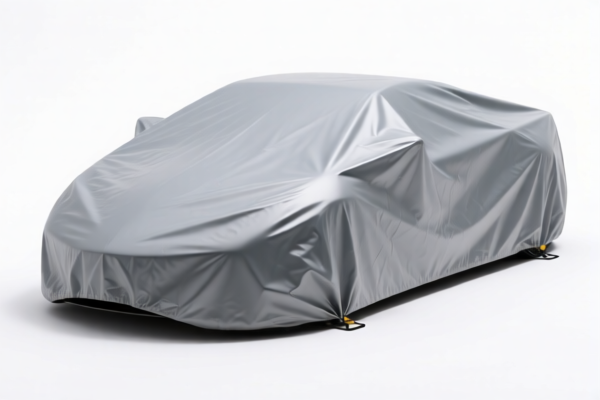
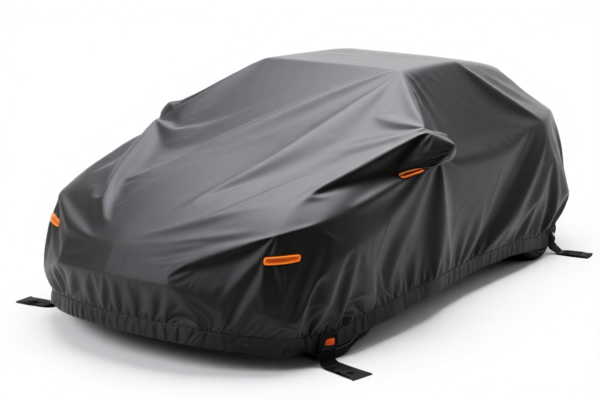
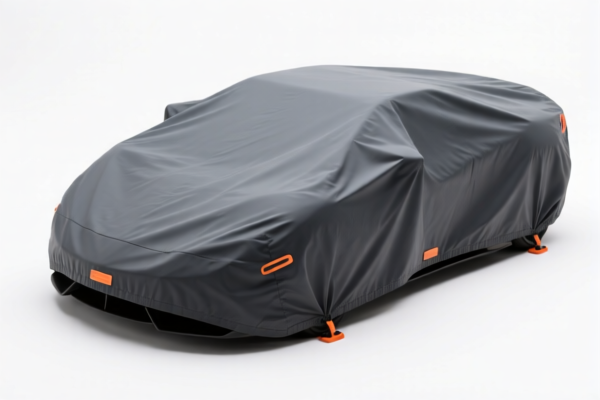
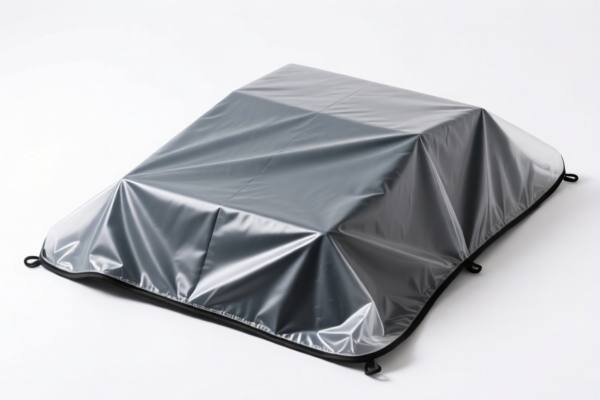
AI Analysis
🧳 Luggage Protective Cover (Travel Suitcase Protector)
🌐 HS Code Reference & Customs Clearance Guide | 2026 Latest Tariff Analysis | Professional Tier-1 Clearance Strategy
📌 I. Product Definition & Classification: What Exactly is a "Luggage Protective Cover"?
A Luggage Protective Cover is an accessory designed to shield suitcases and travel bags from scratches, dirt, rain, and minor impacts during transit. In international trade, its classification is not straightforward because it depends heavily on the material and specific form of the product.
It generally falls into two main categories: 1. Textile/Plastic Protective Sheaths: Often classified under Chapter 63 (Other made-up textile articles) or Chapter 42 (Articles of leather/travel goods), depending on whether it is seen as a "protective mat" or a "travel accessory." 2. Integrated Travel Accessories: If it is structurally part of a travel bag (e.g., a zippered extension pocket), it may be classified under Chapter 42 as part of the travel good.
⚠️ Critical Distinction Point:
- If the product is a loose-fitting cover made of fabric/plastic, used solely for protection → Likely Chapter 63 (Lower Duty).
- If the product is considered a component of a travel bag or made of plastic sheeting used as a container/holder → Likely Chapter 42 (Higher Duty).
- Misclassification Risk: Declaring a high-duty Chapter 42 item as Chapter 63 can lead to severe penalties and back-taxes.
📦 II. HS Code Classification Details (2026 Latest Tariff Authority Mapping)
| HS Code | Product Description | Applicable Scenario | Material/Form |
|---|---|---|---|
6307.90.98.91 |
Other made-up articles, incl. dress patterns, protective covers for luggage/travel goods | Loose-fitting protective sleeves, usually made of fabric or plastic-coated fabric | ✅ Textile/Plastic Composite |
6307.90.98.87 |
Other made-up articles, protective mats/pads/holders (non-textile specific) | Rigid or semi-rigid protective shells, foam-lined covers | ✅ Non-Textile/Composite |
4202.92.93.36 |
Articles of travel, handbag, or similar containers, external surface of plastic sheeting or textile materials | Covers that are structurally integrated into travel goods, or treated as "accessories to travel goods" | ✅ Plastic/Textile Surface |
4202.92.97.00 |
Other articles of travel, handbag, or similar containers, external surface of textile materials or plastic sheeting | Similar to above, but different specific textile/plastic composition nuances | ✅ Textile/Plastic Surface |
8517.79.00.00 |
ERROR/OUTLIER: Parts of apparatus for line telephony/telegraphy, NOT applicable to luggage covers | Do not use. This code is for communication equipment parts. | ❌ Incorrect |
🔍 Key Insight:
- Codes6307.90.98.91and6307.90.98.87are typically the correct classifications for standalone luggage covers. They fall under "Other made-up articles" and attract a lower base tariff. - Codes4202.92.93.36and4202.92.97.00are for Chapter 42 items. If U.S. Customs determines your cover is an "accessory to a travel bag" rather than a general protective article, they may force this higher-duty classification. - Code8517.79.00.00is completely irrelevant for luggage covers. It belongs to telecommunications. Exclude this from your declaration immediately.
💰 III. 2026 Latest Tariff Rate Breakdown (Including Surtaxes & Policy Add-ons)
✅ Applicable Country: United States (US)
✅ Origin: China (CN)
✅ Effective Date: From November 10, 2025 (Including subsequent imports)
🎯 1. 6307.90.98.91 & 6307.90.98.87 —— Luggage Protective Covers (Standalone Articles)
This is the preferred classification for most standard protective covers.
| Item | Content |
|---|---|
| Base Tariff Rate | 7.0% (ad valorem) |
| Section 301 Surcharge (Add-on Tariff) | +7.5% |
| IEEPA Section 122 Surcharge | +10.0% |
| Total Effective Tariff Rate | 24.5% |
| Tax Calculation | CIF Value × 24.5% |
| De Minimis Eligibility | ❌ No (Deny de minimis for China-origin goods under these surtaxes) |
| Legal Basis Path | HTSUS:6307.90.98.91 → USITC:301:7.5% → IEEPA:122:10% |
📌 Explanation:
- Base Tariff (7.0%): Standard duty for other made-up textile/plastic articles. - Section 301 (7.5%): Part of the ongoing trade war tariffs on specific Chinese goods. - IEEPA 122 Clause (10%): A significant additional surtax applied to many Chinese imports to address unfair trade practices. - Total: 24.5%: This is the realistic landed cost impact. It is moderate compared to electronics, but still substantial.
🎯 2. 4202.92.93.36 & 4202.92.97.00 —— Travel Accessories/Containers (Higher Duty Category)
If Customs classifies your cover as a "travel accessory" rather than a general protective article, the tax burden more than doubles.
| Item | Content |
|---|---|
| Base Tariff Rate | 17.6% (ad valorem) |
| Section 301 Surcharge (Add-on Tariff) | +25.0% |
| IEEPA Section 122 Surcharge | +10.0% |
| Total Effective Tariff Rate | 52.6% |
| Tax Calculation | CIF Value × 52.6% |
| De Minimis Eligibility | ❌ No |
| Legal Basis Path | HTSUS:4202.92.93.36 → USITC:301:25% → IEEPA:122:10% |
📌 Warning:
- Base Tariff (17.6%): Significantly higher than Chapter 63. - Section 301 (25%): Maximum rate applied to many consumer goods from China under Section 301. - IEEPA 122 Clause (10%): Same as above. - Total: 52.6%: This is a very high tariff. A $100 cover could result in $52.60 in duties. Avoid this classification if possible.
🎯 3. 8517.79.00.00 —— IRRELEVANT
| Item | Content |
|---|---|
| Base Tariff Rate | 0.0% |
| Section 301 Surcharge | +7.5% (General) or +50% (for Steel/Aluminum/Copper products) |
| IEEPA Section 122 Surcharge | +10.0% |
| Total Effective Tariff Rate | 67.5% (or 70%+) |
| Tax Calculation | CIF Value × 67.5% |
| De Minimis Eligibility | ❌ No |
🚫 DO NOT USE: This code is for telecommunications parts. Applying this to a luggage cover is a customs fraud risk. It results in the highest potential penalty and incorrect declaration.
🛠️ IV. Customs Clearance Practical Advice (Battle-Tested Pitfall Avoidance Guide)
✅ 1. Documentation Checklist (Non-negotiable)
| Document | Required | Explanation |
|---|---|---|
| ✅ Product Specifications | ✔️ | Must clearly state: "Luggage Protective Cover," Material (e.g., 100% Polyester, PVC), Function (Scratch Protection). |
| ✅ Product Photos | ✔️ | Show the cover loose and empty (to prove it's a standalone article, not part of a bag). Show size relative to a suitcase. |
| ✅ Bill of Materials (BOM) | ✔️ | Detail fabric/plastic composition. Essential to prove Chapter 63 eligibility (Textile/Other made-up) vs. Chapter 42. |
| ✅ Commercial Invoice | ✔️ | Description must match HS Code. Use "Textile Luggage Cover" not just "Cover." |
| ✅ Packing List | ✔️ | Clearly separate items. Do not pack covers inside suitcases if declaring separately. |
✅ 2. Declaration Strategy (Key Mnemonic)
🔥 "Cover is Loose, Not a Bag; Chapter 63, Not 42; Save 28%, Don't Lag!"
| Scenario | Correct Declaration | Wrong Declaration | Result |
|---|---|---|---|
| Standalone Fabric/Plastic Cover | 6307.90.98.91 |
4202.92.97.00 |
Save 28.1% (24.5% vs 52.6%) |
| Rigid/Protected Shell Cover | 6307.90.98.87 |
4202.92.93.36 |
Save 28.1% (24.5% vs 52.6%) |
| Cover with Integrated Straps/Handles | Still 6307.90.98.91 (if protective intent dominates) |
4202.92.97.00 |
Risk of audit, but defensible if "accessory" definition is weak |
| Telecom Part (Wrong Code) | N/A | 8517.79.00.00 |
Penalty, Seizure, Legal Risk |
✅ 3. Special Case Handling
| Case | Handling Advice |
|---|---|
| OEM Custom Covers | Provide design specs. If it has a unique shape but no structural integration with a bag, it remains 6307. |
| Transparent PVC Covers | Still 6307.90.98.87 (Other made-up articles). Do not classify as plastic sheeting (Chapter 39) if it is a "made-up" article. |
| Sets (Cover + Handle) | If the cover is sold as a set with a hard-shell case, declare as the case (HS 4202.12/4202.22). If sold separately, declare the cover. |
| Origin Marking | Must clearly state "Made in China" on the cover or packaging to trigger accurate tariff application. |
🌍 V. Global Market Customs Comparison (2026 Latest)
| Country/Region | Recommended HS Code | Tariff (China Origin) | Certification | Notes |
|---|---|---|---|---|
| 🇺🇸 USA | 6307.90.98.91 |
24.5% | None specific | High risk of reclassification to 4202; document heavily. |
| 🇨🇳 China | 6307.90.98.91 |
5% - 10% | None | Lower entry barrier for domestic sales. |
| 🇪🇺 EU | 6307.90.90 |
4% - 12% | CE (if applicable) | No Section 301/IEEPA surcharges. |
| 🇬🇧 UK | 6307.90.90 |
4% - 12% | UKCA | Post-Brexit rules apply; generally stable. |
| 🇦🇺 Australia | 6307.90.90 |
5% | GMS | No significant surcharges. |
📌 Conclusion:
- The USA is the most challenging market for luggage covers due to the 24.5% effective tariff (Base 7% + 301 7.5% + IEEPA 10%). - Chapter 42 classification (52.6%) is a financial disaster. Prove it is a "protective article" (Chapter 63), not a "travel accessory" (Chapter 42). - Do not use Chapter 85 codes. It is a critical error.
📌 VI. Common Mistakes & Pitfall Guide (Blood Lessons)
❌ Mistake 1: Declaring a luggage cover as 4202.92.97.00 without justification.
👉 Consequence: You pay 52.6% instead of 24.5%. Overpay by 28.1% per unit!
❌ Mistake 2: Using 8517.79.00.00 for a luggage cover.
👉 Consequence: Customs flags the shipment for fraud/misdeclaration. Seizure, fines, and potential legal action.
❌ Mistake 3: Not providing material composition.
👉 Consequence: Customs cannot determine if it is Chapter 63 (Textile/Other) or Chapter 42 (Leather/Plastic). They may apply the highest duty rate (52.6%) by default.
❌ Mistake 4: Packing covers inside suitcases and declaring as "Used Suitcase."
👉 Consequence: Misdeclaration. Used goods have different rules. Declare as New Luggage Covers.
✅ Correct Action:
"Luggage Protective Cover, Made of 100% Polyester Fabric, Designed to Protect Suitcases from Scratches, Model XYZ, Made in China"
🎯 VII. Conclusion: Professional Declaration, Cost Optimization!
🎯 Remember the Mnemonic:
🔹 "Loose Cover = Chapter 63 (24.5%)"
🔹 "Bag Accessory = Chapter 42 (52.6%)"
🔹 "Telecom Part = Chapter 85 (DO NOT USE)"
🔹 "Save 28% by Getting the Chapter Right!"
📌 Pro Tip:
- Pre-Ruling: If importing large volumes, apply for a Customs Ruling Letter with CBP to officially confirm the 6307.90.98.91 classification. This provides legal protection against future audits.
- Supply Chain: Consider if the 24.5% tariff can be absorbed. If not, evaluate non-China origins (Vietnam, Thailand) to potentially avoid Section 301/IEEPA surcharges (check for Transshipment Rules).
📣 Immediate Action:
📞 Contact your Customs Broker: Provide photos and material specs.
📝 Request HS Code Verification: Confirm6307.90.98.91or6307.90.98.87.
🚀 Optimize Your Landed Cost: Avoid the 52.6% trap!
✨ Professional Customs Clearance Starts with Precise Classification!
💼 Every Percent Matters in Global Trade!
Customer Reviews
About HS Code Classification
The Harmonized System (HS) is an internationally standardized nomenclature developed by the World Customs Organization (WCO) to classify traded products. Over 200 countries use the HS system as the basis for customs tariffs, trade statistics, and import/export regulations.
Each HS code follows a hierarchical structure:
- Chapter (2 digits) — Broad category of goods (e.g., Chapter 84: Machinery and Mechanical Appliances)
- Heading (4 digits) — More specific grouping within the chapter
- Subheading (6 digits) — Internationally standardized breakdown, used by all WCO member countries
- National subdivisions (8-10 digits) — Country-specific extensions for further classification, such as US HTSUS 10-digit codes
Correct HS code classification is essential for smooth customs clearance, accurate duty payment, and compliance with trade regulations. Misclassification can lead to customs delays, overpayment of duties, or penalties.
When importing from CN to US, the applicable tariff rates may include:
- Most-Favored-Nation (MFN) rate — The standard duty rate applied to WTO members
- General rate — Applied to countries without trade agreements
- Trade remedy duties — Additional tariffs such as Section 301 (anti-dumping), Section 232 (national security), or countervailing duties
The information provided on this page is for reference purposes only. For official classification, please consult with your local customs authority or a licensed customs broker.