Luggage Rack
CN → US| HS Code | Tariff Rate | Origin | Destination | Doc |
|---|---|---|---|---|
| 7326908630 | 87.9% | CN | US | Official Doc |
| 7326908688 | 87.9% | CN | US | Official Doc |
| 3926305000 | 22.8% | CN | US | Official Doc |
| 3926909989 | 22.8% | CN | US | Official Doc |
| 8708295160 | 0.0% | CN | US | Official Doc |
| 8708295110 | 0.0% | CN | US | Official Doc |
Product Images
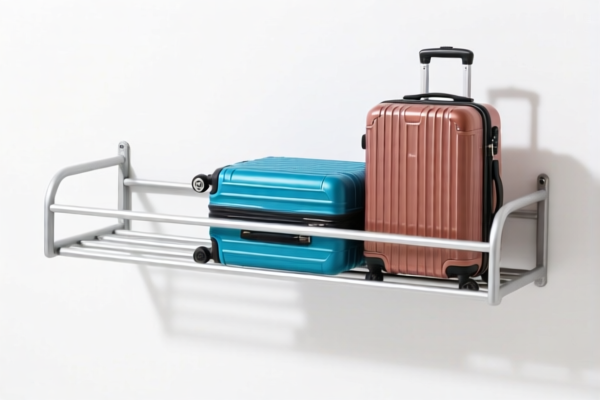
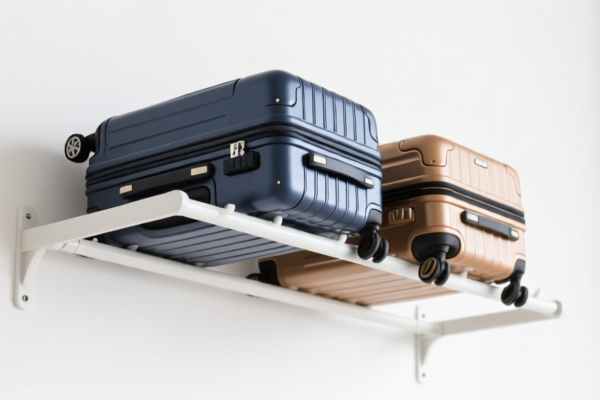
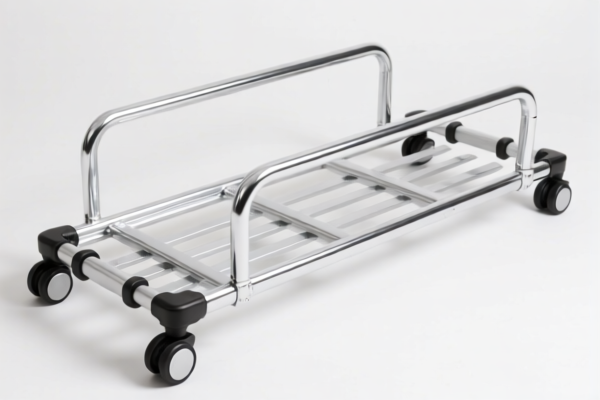
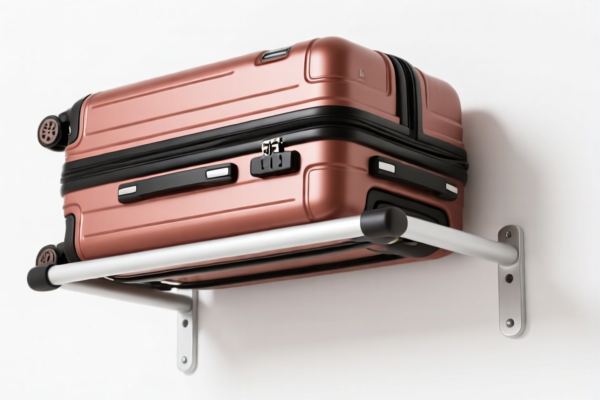
AI Analysis
🚙 Luggage Rack (Roof Rack & Cargo Carrier)
🌐 HS Code Reference & Clearance Guide | 2026 Latest Tariff Analysis | Professional Entry Strategy
📌 I. Product Definition & Classification: What Exactly is a "Luggage Rack"?
In international trade, a "Luggage Rack" is a broad term that can refer to different types of support or fixing structures. The correct classification depends heavily on its material composition and primary function. It is generally categorized into three main areas: 1. Iron/Steel Supports: Treated as general metal structures (like pipes/tubes supports). 2. Plastic/Metal Composites: Treated as general plastic or miscellaneous articles. 3. Vehicle Parts: Treated specifically as attachments/accessories for motor vehicles.
⚠️ Key Distinction Point:
- If the item is primarily structural metal (iron/steel) used for support → Likely 7326.
- If the item is primarily plastic or composite → Likely 3926.
- If the item is clearly a vehicle accessory (e.g., roof rack for a car) → Likely 8708.
📦 II. HS Code Classification Details (2026 Latest Tariff Authority Cross-Reference)
| HS Code | Product Description | Application Scenario | Key Material/Function |
|---|---|---|---|
7326.90.86.30 |
Supports or fixing apparatus for pipes/tubes | Metal roof racks, pipe-like structural supports | ✅ Iron/Steel Structural |
7326.90.86.88 |
Other articles of iron or steel | Non-specific iron/steel products, general metal racks | ✅ Iron/Steel General |
3926.30.50.00 |
Other articles of plastics | Plastic roof rails, plastic connectors/hardware | ✅ Plastic |
3926.90.99.89 |
Other made up articles | Plastic/metal composite, catch-all for plastics | ✅ Plastic/Composite |
8708.29.51.60 |
Other parts and accessories of motor vehicles | Car roof racks, luggage carriers for vehicles | ✅ Vehicle Accessory |
🔍 Important Reminder:
-8708is typically the most favorable for purpose-built vehicle accessories (like roof racks), but only if customs agrees it is a "part/accessory."
-7326applies if the item is deemed a general metal structure rather than a specific vehicle part.
-3926applies if the item is largely plastic.
💰 III. 2026 Latest Tariff Rate Breakdown (Including Additional Taxes, Policy Add-ons)
✅ Applicable Country: United States (US)
✅ Origin: China (CN)
✅ Effective Time: Includes all imports from China subject to Section 301 and IEEPA tariffs.
🎯 1. 7326.90.86.30 & 7326.90.86.88 —— Iron/Steel Supports & Articles
| Item | Content |
|---|---|
| Base Tariff | 2.9% (Ad Valorem) |
| Section 301 Tariff | +25.0% |
| Section 232 Tariff (Steel/Aluminum/Copper) | +50.0% |
| IEEPA Tariff | +10.0% |
| Total Effective Rate | 87.9% |
| Tax Calculation | CIF Value × 87.9% |
| De Minimis Exemption | ❌ Not Eligible (High tariff threshold) |
| Legal Basis Path | Section 232: Steel/Aluminum → Section 301: Footnote 9903.88.01 → IEEPA: 10% |
📌 Explanation:
- This category is extremely high-cost due to the combination of Section 232 (Steel) and Section 301 (China) tariffs.
- Total 87.9% is punitive. Importers must carefully consider if declaring as a "metal support" is necessary, or if it can be classified as a vehicle part (8708) to avoid the Section 232 steel tariff.
🎯 2. 3926.30.50.00 & 3926.90.99.89 —— Plastic & Composite Articles
| Item | Content |
|---|---|
| Base Tariff | 5.3% (Ad Valorem) |
| Section 301 Tariff | +7.5% |
| IEEPA Tariff | +10.0% |
| Total Effective Rate | 22.8% |
| Tax Calculation | CIF Value × 22.8% |
| De Minimis Exemption | ❌ Not Eligible |
| Legal Basis Path | Section 301: Footnote 9903.88.01 → IEEPA: 10% |
📌 Note:
- If the luggage rack is made of plastic or has significant plastic components, this rate is significantly lower (22.8%) compared to steel (87.9%).
- However, if customs determines it is a vehicle part,8708may be even lower.
🎯 3. 8708.29.51.60 —— Vehicle Parts & Accessories (Roof Rack)
| Item | Content |
|---|---|
| Base Tariff | 2.5% (Ad Valorem) |
| Section 301 Tariff | +25.0% |
| Section 232 Tariff (Steel/Aluminum) | +50.0% |
| IEEPA Tariff | +10.0% |
| Total Effective Rate | 87.9% ⚠️ Wait, check details |
| Tax Calculation | CIF Value × 87.9% |
| De Minimis Exemption | ❌ Not Eligible |
| Legal Basis Path | Section 232: Steel/Aluminum → Section 301 → IEEPA: 10% |
📌 Critical Clarification:
- According to the provided data,8708.29.51.60also carries the Section 232 Steel/Aluminum tariff (50%) because it is a "steel/aluminum product."
- Therefore, even though it is a "vehicle part," the base rate is low (2.5%), but the additional steel tariff (50%) pushes the total to 87.9%.
- This means there is NO significant tariff advantage for classifying a steel roof rack as a vehicle part vs. a steel support, due to Section 232.
- Strategy: If the product is plastic, use3926(22.8%) for huge savings. If it is steel, the cost is high regardless of classification.
🛠️ IV. Clearance Practical Advice (Battle-Tested Pitfall Avoidance)
✅ 1. Preparation Checklist (Non-Negotiable)
| Document | Must Provide | Reason |
|---|---|---|
| ✅ Product Specifications | ✔️ | Material composition (Iron vs. Plastic), dimensions, load capacity |
| ✅ Material Declaration | ✔️ | Critical for determining Section 232 applicability |
| ✅ Product Photos | ✔️ | Clear view of installation method (vehicle-specific?) |
| ✅ Commercial Invoice | ✔️ | Must clearly describe as "Roof Rack" or "Luggage Carrier" |
| ✅ Packing List | ✔️ | Show components (bars, feet, clamps) to prove assembly |
| ✅ Origin Certificate | ✔️ | To confirm China origin (triggering IEEPA/Section 301) |
✅ 2. Declaration Tips (Key Mantra)
🔥 “Material Matters, Section 232 Hits Steel, Plastic Saves 65%!”
| Scenario | Correct Classification | Wrong Practice | Result |
|---|---|---|---|
| Steel Roof Rack | 7326 or 8708 (both ~87.9%) |
Declare as Plastic | Customs audit → Penalty + Back Taxes |
| Plastic Roof Rack | 3926 (22.8%) |
Declare as Steel | Unnecessary high tariff |
| Mixed Material | Based on essential character | Split shipment | Complex clearance, higher risk |
| Vehicle Accessory | 8708.29.51.60 |
Declare as "General Metal" | Missed opportunity for lower base rate (though total is same due to Sec 232) |
📌 Important Note:
- Since both Steel Support (7326) and Steel Vehicle Part (8708) incur the Section 232 50% tariff, the total tax burden is identical (87.9%) for steel products.
- Focus on Material: If you can use plastic or composite materials, you can save 65% in taxes (22.8% vs 87.9%).
✅ 3. Special Cases Handling
| Situation | Handling Advice |
|---|---|
| OEM Custom Racks | Provide design specs to prove vehicle compatibility |
| Aluminum Racks | Subject to Section 232 (50%) → Same high tax as steel |
| Plastic/Metal Mix | Argue for 3926 if plastic is the essential character |
| Non-Vehicle Use | If used for shipping containers/storage, classify under 7326 |
🌍 V. Global Market Clearance Comparison (2026 Latest)
| Country/Region | Recommended HS Code | Tariff (China Origin) | Certification | Notes |
|---|---|---|---|---|
| 🇺🇸 USA | 7326 / 8708 (Steel) |
87.9% | NHTSA (if vehicle part) | High due to Sec 232 & 301 |
| 🇺🇸 USA | 3926 (Plastic) |
22.8% | NHTSA (if vehicle part) | Best option for plastic |
| 🇨🇳 China | 7326 / 8708 |
~10-13% | CCC (if vehicle part) | No Section 232/301 |
| 🇪🇺 EU | 7326 / 8708 |
0-5% | CE/E-mark | No retaliatory tariffs |
| 🇬🇧 UK | 7326 / 8708 |
0-5% | UKCA | No retaliatory tariffs |
📌 Conclusion:
- USA is the most challenging market for steel luggage racks due to the combined Section 232 (50%) + Section 301 (25%) + IEEPA (10%) = 87.9%.
- Plastic alternatives offer a 65% tax saving in the US.
- Non-US markets (EU, UK, China) have much lower tariffs, making them more attractive for steel products.
📌 VI. Common Errors & Pitfall Avoidance (Lessons Learned)
❌ Error 1: Declaring a Steel Roof Rack as Plastic to avoid taxes
👉 Consequence: Customs inspection reveals steel → Penalty + Back Taxes + Legal Risk.
❌ Error 2: Ignoring Section 232 for Aluminum Racks
👉 Consequence: Aluminum is also subject to 50% tariff → Unexpected 87.9% total tax.
❌ Error 3: Splitting Shipment to Avoid De Minimis
👉 Consequence: If total value > $800, de minimis doesn't apply. Small shipments are safer but logistically costly.
❌ Error 4: Not Disclosing Material Composition
👉 Consequence: Customs may classify under highest duty rate or delay shipment for inspection.
✅ Correct Approach:
"Roof Luggage Rack, Model XYZ, 50% Aluminum/Steel Frame, 50% Plastic Coating, for SUV Use. Declare accurately under 8708.29.51.60."
🎯 VII. Conclusion: Smart Classification Saves Money!
🎯 Remember the Mantra:
🔹 “Steel = 87.9% (Ouch!), Plastic = 22.8% (Sweet!), Don’t Lie!”
🔹 “Section 232 hits Steel & Aluminum, so if you use metal, expect high tax.”
📌 Pro Tip:
If your product is steel, consider supply chain diversification (e.g., producing in Vietnam/Mexico) to avoid Section 301/IEEPA tariffs.
If your product is plastic, leverage the 22.8% rate for competitive pricing in the US.
Always consult a customs broker for a Pre-Ruling if you are unsure about Section 232 applicability.
📣 Immediate Action:
📞 Contact Customs Broker + Provide Material Specs + Request Section 232/301 Impact Analysis
🚀 Clear Customs Smoothly, Minimize Tax Burden, Maximize Profit!
✨ Professional Clearance Starts with Accurate Classification!
💼 Every Percent Saved is Pure Profit!
Customer Reviews
About HS Code Classification
The Harmonized System (HS) is an internationally standardized nomenclature developed by the World Customs Organization (WCO) to classify traded products. Over 200 countries use the HS system as the basis for customs tariffs, trade statistics, and import/export regulations.
Each HS code follows a hierarchical structure:
- Chapter (2 digits) — Broad category of goods (e.g., Chapter 84: Machinery and Mechanical Appliances)
- Heading (4 digits) — More specific grouping within the chapter
- Subheading (6 digits) — Internationally standardized breakdown, used by all WCO member countries
- National subdivisions (8-10 digits) — Country-specific extensions for further classification, such as US HTSUS 10-digit codes
Correct HS code classification is essential for smooth customs clearance, accurate duty payment, and compliance with trade regulations. Misclassification can lead to customs delays, overpayment of duties, or penalties.
When importing from CN to US, the applicable tariff rates may include:
- Most-Favored-Nation (MFN) rate — The standard duty rate applied to WTO members
- General rate — Applied to countries without trade agreements
- Trade remedy duties — Additional tariffs such as Section 301 (anti-dumping), Section 232 (national security), or countervailing duties
The information provided on this page is for reference purposes only. For official classification, please consult with your local customs authority or a licensed customs broker.