Luggage Scale
CN → US| HS Code | Tariff Rate | Origin | Destination | Doc |
|---|---|---|---|---|
| 8423100060 | 10.0% | CN | US | Official Doc |
| 8423100010 | 10.0% | CN | US | Official Doc |
| 9016006000 | 38.3% | CN | US | Official Doc |
| 9031808085 | 35.0% | CN | US | Official Doc |
| 9031499000 | 35.0% | CN | US | Official Doc |
Product Images
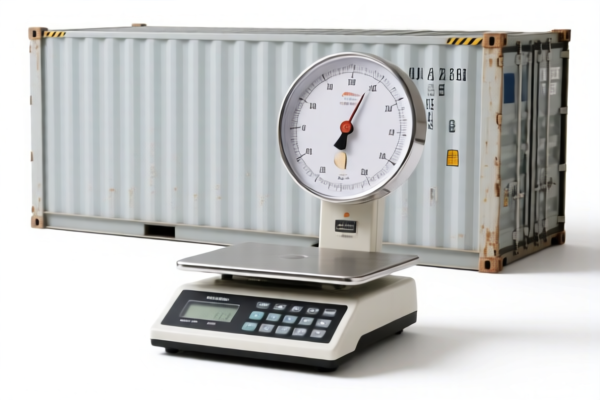
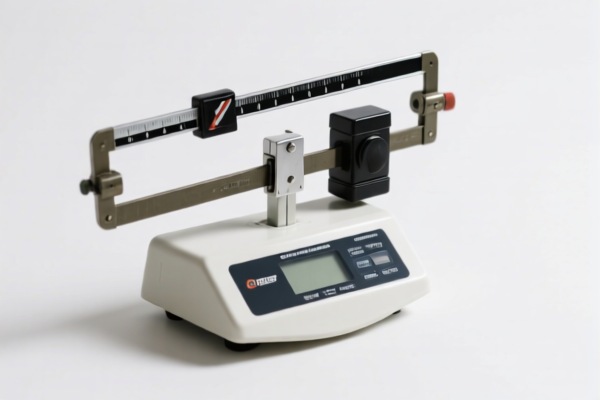
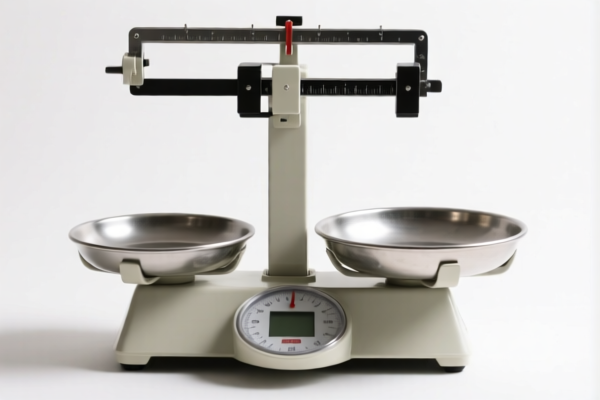
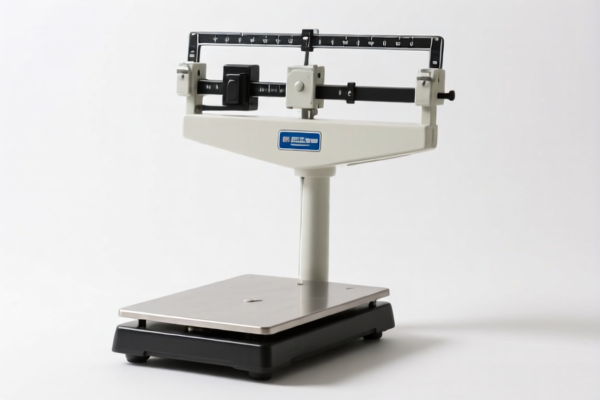
AI Analysis
🧳 Luggage Scale (Weight Scale)
🌐 HS Code Reference & Customs Clearance Guide | 2026 Latest Tariff Analysis | Professional Strategy for Smooth Clearance
📌 I. Product Definition & Classification: Do You Truly Understand the "Luggage Scale"?
A luggage scale is a portable weighing device designed to measure the weight of suitcases, bags, and other cargo before travel or shipping. In international trade, it is often classified under broader categories depending on its mechanical or electronic nature. The following analysis breaks down the potential HS Codes based on the provided data, highlighting the significant tariff implications for each classification.
⚠️ Key Distinction:
- Is it considered a Mechanical Balance/Spring Scale (often grouped with weighing instruments)? → Higher tariff risk (38.3%).
- Is it considered a Personal/Home Electronic Scale (digital readout, household use)? → Lower tariff risk (10.0%).
- Is it considered a General Measurement Instrument? → High tariff risk (35.0%).
📦 II. HS Code Classification Details (2026 Latest Tariff Authority Comparison)
| HS Code | Product Description | Application Scenario | Total Tax Rate |
|---|---|---|---|
9016.00.60.00 |
Weight scale; falls under balances/scales. Fits the functional match for balances in this code. | Mechanical spring scales, basic digital hanging scales. | 38.3% |
8423.10.00.60 |
Personal weighing machine / Home scale. Fits the usage and form factor of personal scales. | Digital personal/home scales, high-precision luggage scales. | 10.0% |
9031.80.80.85 |
Measurement instrument; fits other measurement or inspection instruments/devices. | Industrial-grade or specialized measurement tools. | 35.0% |
8423.10.00.10 |
Weighing equipment for personal use; fits the home scale usage description. | Personal digital scales, household luggage scales. | 10.0% |
9031.49.90.00 |
Measurement instrument; fits other optical instruments/devices related to measurement/inspection. | High-tech measurement devices (less common for basic luggage scales). | 35.0% |
🔍 Key Reminder:
-8423.10codes (10.0% Total) are generally the most favorable for electronic luggage scales that function as personal weighing devices.
-9016.00.60(38.3%) and9031codes (35.0%) carry significantly higher burdens due to additional punitive tariffs.
- Misclassification can lead to overpaying up to 28.3% in taxes.
💰 III. Detailed Breakdown of 2026 Latest Tariff Rates (Including Additional Taxes & Policy Surcharges)
✅ Applicable Country: United States (US)
✅ Origin: China (CN)
✅ Effective Date: From November 10, 2025 (including subsequent imports)
🎯 1. 9016.00.60.00 —— Weight Scale (Balances Category)
| Item | Content |
|---|---|
| Base Duty Rate | 3.3% (Ad Valorem) |
| Section 301 Additional Duty | +25.0% (Based on USITC Footnote for Chinese goods) |
| IEEPA Additional Duty | +10.0% (Targeting China/HK products, effective from Nov 10, 2025) |
| Total Effective Rate | 38.3% |
| Tax Calculation | CIF Value × 38.3% |
| De Minimis Eligibility | ❌ Not Eligible (High duty rate triggers scrutiny) |
| Legal Basis Path | IEEPA:9903.01.25 → USITC:9016.00.60.00 → FOOTNOTE:Section 301 |
📌 Explanation:
- The 38.3% rate is punitive. It combines the standard base duty with both the Section 301 tariff (25%) and the IEEPA surcharge (10%).
- This classification treats the luggage scale as a generic "balance" or non-specific instrument, attracting the highest penalties.
🎯 2. 8423.10.00.60 —— Personal/Home Scale
| Item | Content |
|---|---|
| Base Duty Rate | 0.0% |
| Section 301 Additional Duty | 0.0% (Exempt or lower category) |
| IEEPA Additional Duty | +10.0% (Targeting China/HK products) |
| Total Effective Rate | 10.0% |
| Tax Calculation | CIF Value × 10.0% |
| De Minimis Eligibility | ⚠️ Check Specific Limits (Though 10% is low, origin matters) |
| Legal Basis Path | IEEPA:9901.25 → USITC:8423.10.00.60 |
📌 Explanation:
- The 10.0% rate is significantly more competitive.
- The base duty is 0%, and there is no Section 301 additional duty (0%). Only the 10% IEEPA surcharge applies.
- This is the preferred classification for most digital luggage scales, provided they are marketed as "personal weighing devices."
🎯 3. 9031.80.80.85 & 9031.49.90.00 —— Other Measurement Instruments
| Item | Content |
|---|---|
| Base Duty Rate | 0.0% |
| Section 301 Additional Duty | +25.0% |
| IEEPA Additional Duty | +10.0% |
| Total Effective Rate | 35.0% |
| Tax Calculation | CIF Value × 35.0% |
| De Minimis Eligibility | ❌ Not Eligible |
| Legal Basis Path | IEEPA:9903.01.24 → USITC:9031.80.80.85 / 9031.49.90.00 |
📌 Explanation:
- These codes are for "other measurement instruments." While the base duty is 0%, the 25% Section 301 and 10% IEEPA add up to a steep 35% total.
- This classification is less optimal than8423.10because it attracts the full Section 301 penalty.
🎯 4. 8423.10.00.10 —— Personal Weighing Equipment (Home Scale)
| Item | Content |
|---|---|
| Base Duty Rate | 0.0% |
| Section 301 Additional Duty | 0.0% |
| IEEPA Additional Duty | +10.0% |
| Total Effective Rate | 10.0% |
| Tax Calculation | CIF Value × 10.0% |
| De Minimis Eligibility | ⚠️ Check Specific Limits |
| Legal Basis Path | IEEPA:9901.25 → USITC:8423.10.00.10 |
📌 Explanation:
- Identical tax rate to8423.10.00.60(10.0%).
- This code explicitly mentions "Personal Weighing," making it a very strong candidate for luggage scales marketed for travel/home use.
🛠️ IV. Customs Clearance Practical Advice (Pitfall Avoidance Guide)
✅ 1. Document Checklist (Essential for Clearance)
| Document | Required | Explanation |
|---|---|---|
| ✅ Product Specification Sheet | ✔️ | Must detail: Max capacity, unit (lbs/kg), power source (battery/USB), display type. |
| ✅ Product Photos (Including Label) | ✔️ | Show brand, model number, and input voltage/current. |
| ✅ Commercial Invoice | ✔️ | Clear description: "Electronic Luggage Scale, Personal Use, Model XYZ" |
| ✅ Packing List | ✔️ | Specify if batteries are included (UN38.3 compliance for lithium batteries is critical). |
| ✅ FCC Certificate | ✔️ | Mandatory for electronic devices sold in the US. |
| ✅ FDA Registration | ⚠️ | If marketed as a "Health/Weight Monitoring Device," FDA may apply. If strictly "Travel Luggage Scale," usually not required, but clarify usage. |
✅ 2. Declaration Strategy (Key Mantra)
🔥 "Classify as Home Scale (8423), Avoid Balance (9016), Save 28% Tax!"
| Scenario | Correct Declaration | Incorrect Action |
|---|---|---|
| Digital Luggage Scale | 8423.10.00.10 or .60 (10%) |
Declare as 9016.00.60.00 (38.3%) → Overpay 28% |
| Mechanical Spring Scale | 9016.00.60.00 (38.3%) |
Try to force 8423 → Rejection/Inspection |
| Scale with Battery | Ensure UN38.3 Doc | Ship with battery without declaration → Confiscation |
✅ 3. Special Case Handling
| Situation | Handling Advice |
|---|---|
| Lithium Battery Included | Must declare battery separately or provide UN38.3 test report. Lithium-ion batteries trigger extra scrutiny and safety fees. |
| OEM Custom Scale | Provide customer order + design specs. Avoid generic "Scale" in description; use "Personal Digital Luggage Scale." |
| "Smart" Scale with App | If it connects to Bluetooth/Wi-Fi, ensure FCC ID is listed. May be scrutinized as data-collecting device, but duty remains 10% if classified as 8423. |
| Industrial Hanging Scale | If used for cargo/freight (not personal luggage), it may fall under 9031 (35%). Ensure marketing emphasizes personal/travel use. |
🌍 V. Global Market Clearance Comparison (2026 Latest)
| Country/Region | Recommended HS Code | Tariff | Certification | Notes |
|---|---|---|---|---|
| 🇺🇸 USA | 8423.10.00.10 / .60 |
10% | FCC + UN38.3 | Avoid 9016 (38.3%). High risk for Section 301 if misclassified. |
| 🇨🇳 China | 8423.10.00.00 |
5% | CCC (if applicable) | No additional punitive tariffs. |
| 🇪🇺 EU | 8423.10.00.00 |
0% | CE + RoHS | No additional surcharges. Easy clearance. |
| 🇬🇧 UK | 8423.10.00.00 |
0% | UKCA + RoHS | Post-Brexit standards apply. |
| 🇦🇺 Australia | 8423.10.00.00 |
5% | RCM | No additional surcharges. |
📌 Conclusion:
- The USA is the most critical market for HS Code precision. A 28% difference exists between8423(10%) and9016(38.3%).
- EU/UK/Australia are stable with standard rates.
- China remains low-cost for domestic sales.
📌 VI. Common Errors & Pitfall Guide (Lessons Learned)
❌ Error 1: Declaring a digital luggage scale as a "Mechanical Balance" (9016.00.60.00)
👉 Consequence: Tax jumps from 10% to 38.3%. Loss of competitiveness.
❌ Error 2: Shipping lithium batteries without UN38.3 documentation
👉 Consequence: Shipment held, fined, or returned at carrier’s expense.
❌ Error 3: Using vague descriptions like "Weighing Machine"
👉 Consequence: Customs officer may interpret it as industrial (9031 → 35%) or balance (9016 → 38.3%).
👉 Fix: Use "Personal Digital Luggage Scale for Travel Use".
❌ Error 4: Ignoring Section 301 impact
👉 Consequence: Underestimating landed cost by 25% if classified incorrectly.
✅ Correct Practice:
"Electronic Personal Luggage Scale, 50kg Capacity, LCD Display, Battery Operated, Model XYZ, FCC Certified"
🎯 VII. Conclusion: Precise Classification Saves Money!
🎯 Remember the Mantra:
🔹 "Personal Use = 8423 (10%). Industrial/Balance = 9016 (38.3%)."
🔹 "One HS Code Change = 28% Tax Savings."
🔹 "Always Include FCC & Battery Docs for US Entry."
📌 Pro Tip:
If your luggage scale is manufactured in Vietnam, Mexico, or Thailand, you may exempt the IEEPA/Section 301 tariffs, potentially reducing the US duty to 0%~5%.
Recommend pre-ruling (Advance Ruling) from CBP to confirm 8423.10 classification before bulk shipment.
📣 Immediate Action:
📞 Contact Professional Broker + Provide Product Photos + Confirm US Origin/Sub-assembly
🚀 Ensure Smooth Clearance, Maximize Profit, Avoid Surprise Taxes!
✨ Professional Customs Clearance Starts with Precise Classification!
💼 Every Percent of Tax Saved is Pure Profit!
Customer Reviews
About HS Code Classification
The Harmonized System (HS) is an internationally standardized nomenclature developed by the World Customs Organization (WCO) to classify traded products. Over 200 countries use the HS system as the basis for customs tariffs, trade statistics, and import/export regulations.
Each HS code follows a hierarchical structure:
- Chapter (2 digits) — Broad category of goods (e.g., Chapter 84: Machinery and Mechanical Appliances)
- Heading (4 digits) — More specific grouping within the chapter
- Subheading (6 digits) — Internationally standardized breakdown, used by all WCO member countries
- National subdivisions (8-10 digits) — Country-specific extensions for further classification, such as US HTSUS 10-digit codes
Correct HS code classification is essential for smooth customs clearance, accurate duty payment, and compliance with trade regulations. Misclassification can lead to customs delays, overpayment of duties, or penalties.
When importing from CN to US, the applicable tariff rates may include:
- Most-Favored-Nation (MFN) rate — The standard duty rate applied to WTO members
- General rate — Applied to countries without trade agreements
- Trade remedy duties — Additional tariffs such as Section 301 (anti-dumping), Section 232 (national security), or countervailing duties
The information provided on this page is for reference purposes only. For official classification, please consult with your local customs authority or a licensed customs broker.