Luggage Strap Set
CN → US| HS Code | Tariff Rate | Origin | Destination | Doc |
|---|---|---|---|---|
| 6307905010 | 17.5% | CN | US | Official Doc |
| 6307905020 | 17.5% | CN | US | Official Doc |
| 3926909989 | 22.8% | CN | US | Official Doc |
| 3926909905 | 22.8% | CN | US | Official Doc |
Product Images
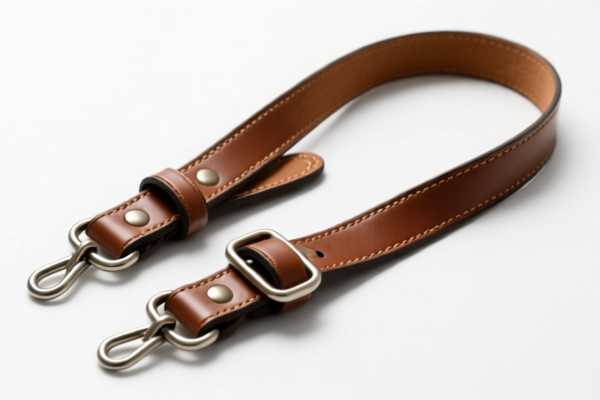
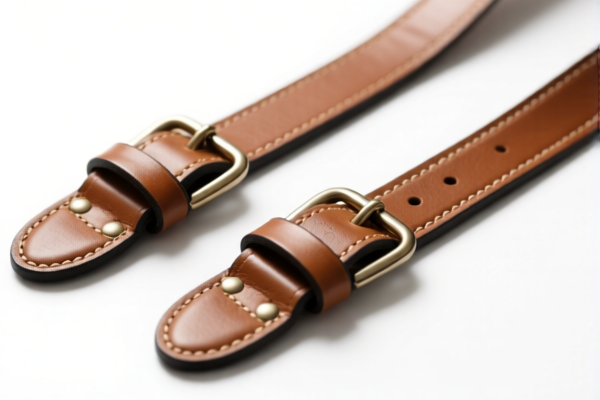
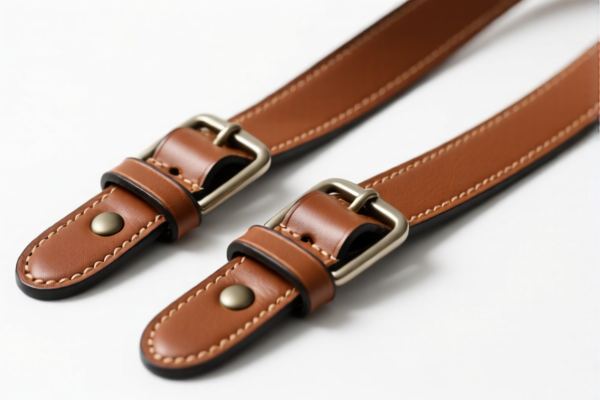
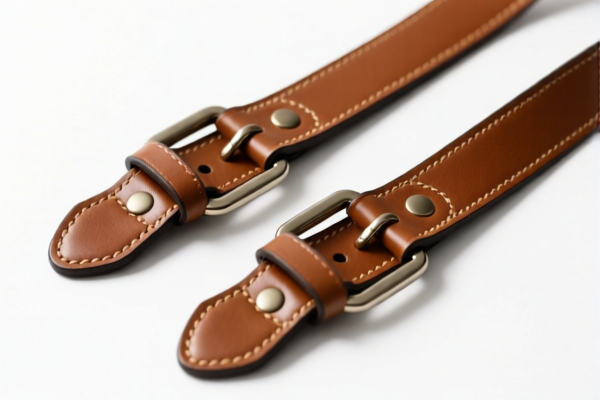
AI Analysis
🧳 Luggage Strap Set
[HS Code Classification & US Customs Clearance Guide | 2026 Tax Rules]
🌐 HS Code Reference & Clearance Strategy | Latest 2026 Tariff Breakdown | Professional Compliance
Luggage straps are essential travel accessories designed to secure soft-sided luggage, expandable bags, or suitcases. In international trade, their classification depends heavily on material composition (Textile vs. Plastic) and finish level (Finished Article vs. Raw Material).
⚠️ Key Distinction: Textile vs. Plastic
- Textile Straps (Nylon/Polyester): If the strap is woven, knitted, or braided fabric, it falls under Heading 6307 ("Other made-up articles").
- Plastic Straps (PP/PET): If the strap is extruded plastic film or tape, it falls under Heading 3926 ("Other articles of plastic").
Critical Note: Misclassifying a plastic strap as a textile (or vice versa) can lead to significant duty discrepancies and customs delays. Below is the detailed breakdown based on the provided data.
📦 HS Code Classification Details (2026 Latest Tariff Ref)
Based on the provided data, there are four primary HS Codes relevant to Luggage Straps. Please identify your product's material to select the correct code.
| HS Code | Product Description & Inference | Material Basis | Finished State |
|---|---|---|---|
| 6307.90.50.10 | Luggage Straps (Textile) Considered a "made-up article." Typically made of Nylon or Polyester fiber. Fits the category of other finished textile goods. |
Textile (Nylon/Polyester) |
✅ Finished Product |
| 6307.90.50.20 | Luggage Straps (Generic/Bottom-Line) Form factor is a "strap." As a residual category, it infers the material is non-cotton (e.g., Polyester or Nylon). |
Non-Cotton Textile (Polyester/Nylon) |
✅ Finished Product |
| 3926.90.99.89 | Luggage Straps (Plastic) Inferred material is Plastic (Polypropylene/PP or Polyester/PET). Fits the classification for other plastic articles. |
Plastic (PP/PET) |
✅ Finished Product |
| 3926.90.99.05 | Elastic/Plastic Straps Based on usage, the form is "strip-like." Fits elastic tape characteristics, leaning towards plastic material other articles. |
Plastic (Elastic/PET) |
✅ Finished Product |
🔍 Clarification: * Codes 6307.xx apply to fabric/textile straps. * Codes 3926.xx apply to plastic/synthetic straps. * Ensure your commercial invoice clearly states the material (e.g., "100% Nylon Webbing" vs. "Polypropylene Plastic Strap") to match the HS Code.
💰 2026 Latest Tariff Rate Breakdown (US Market)
✅ Applicable Country: United States (US) ✅ Origin: China (CN) (Note: Base rates are generic, but "Additional" and "122" clauses typically target China) ✅ Effective Date: Current Policy
🎯 1. Textile Category (HS: 6307.90.50.10 & 6307.90.50.20)
| Item | Detail |
|---|---|
| Total Tax Rate | 17.5% |
| Base Tariff | 0.0% |
| Additional Tariff (Section 301) | 7.5% |
| 122 Clauses Tariff | 10.0% |
| Tax Calculation | CIF Value × 17.5% |
| Legal Path | Base Rate (0%) + Section 301 (7.5%) + 122 Clauses (10%) |
📌 Explanation: * Textile luggage straps benefit from a 0% base tariff under the HTSUS. * However, due to ongoing trade policies, they are subject to a 7.5% Section 301 additional duty and a 10% "122 Clauses" tariff. * Total Effective Rate: 17.5%.
🎯 2. Plastic Category (HS: 3926.90.99.89 & 3926.90.99.05)
| Item | Detail |
|---|---|
| Total Tax Rate | 22.8% |
| Base Tariff | 5.3% |
| Additional Tariff (Section 301) | 7.5% |
| 122 Clauses Tariff | 10.0% |
| Tax Calculation | CIF Value × 22.8% |
| Legal Path | Base Rate (5.3%) + Section 301 (7.5%) + 122 Clauses (10%) |
📌 Explanation: * Plastic straps have a higher base tariff of 5.3%. * They are also subject to the 7.5% Section 301 additional duty and 10% "122 Clauses" tariff. * Total Effective Rate: 22.8% (5.3% + 7.5% + 10%).
🛠️ Practical Clearance Advice (Avoiding Pitfalls)
✅ 1. Material Declaration is Key
Customs officers will verify if your strap is Textile or Plastic. * For Textile (6307): Clearly state "100% Nylon Woven Strap" or "Polyester Webbing." * For Plastic (3926): Clearly state "Polypropylene (PP) Plastic Strap" or "PET Plastic Elastic Strap." * Risk: If you declare "Textile" but the product contains plastic buckles or the strap itself is plastic, you may face reclassification and penalties.
✅ 2. Packaging & Labeling
- Ensure the inner packaging or the product itself has a clear Country of Origin Marking ("Made in China").
- The commercial invoice must match the HS Code selected. If you claim 17.5% (Textile) but ship plastic straps, you will owe the difference (22.8%) plus potential penalties.
✅ 3. Bundle vs. Single Unit
- If selling a "Set" (Straps + Buckles + Instructions), the classification usually follows the essential character of the set. For luggage straps, the strap itself is the essential component.
- Do not separate the straps from the buckles in the invoice if they are sold as a single kit; classify the whole kit based on the main component (the strap material).
✅ 4. Duty Mitigation Strategy
- Cost Comparison: Plastic straps incur a 5.3% higher base duty than textile straps. If margins are thin, consider sourcing or labeling as Textile (Nylon/Polyester) if structurally possible, as this results in a 17.5% total rate vs. 22.8%.
- Note: Both categories are subject to the same 17.5% additional/122 tariffs, so the saving comes solely from the 0% vs 5.3% base rate.
🌍 Global Market Comparison (Quick Reference)
| Market | Likely HS Code | Est. Duty (China Origin) | Notes |
|---|---|---|---|
| 🇺🇸 USA | 6307.90.50.xx 3926.90.99.xx |
17.5% (Textile) 22.8% (Plastic) |
Includes 7.5% Sec 301 + 10% 122 Clauses. High compliance risk. |
| 🇨🇳 China | 6307.90.90.xx 3926.90.90.xx |
~5-10% (Import) | Domestic production dominates. Import duties are lower than US tariffs. |
| 🇪🇺 EU | 6307.90.98 3926.90.97 |
~5-6% | No Section 301 or 122 clauses. Generally more favorable for plastic. |
📌 Conclusion: The US market is the most expensive for luggage strap imports due to the layered additional tariffs (Section 301 + 122 Clauses). * Textile Straps: Lower total duty (17.5%). * Plastic Straps: Higher total duty (22.8%).
📌 Common Mistakes & Pitfalls
❌ Mistake 1: Declaring "Luggage Accessory" without specifying material. 👉 Result: Customs may default to the highest duty rate or request additional documentation, causing delays.
❌ Mistake 2: Using HS 3926 for Textile Straps to "save" on documentation. 👉 Result: If the physical product is textile, this is misclassification. You will pay the difference in duty (0% base vs 5.3% base) + penalties.
❌ Mistake 3: Ignoring the "122 Clauses" (10%). 👉 Result: Many importers forget to budget for this 10% layer, underestimating the landed cost by up to 10%.
✅ Correct Practice:
"Luggage Straps, 100% Nylon Webbing, Finished, with Plastic Buckles. HS Code: 6307.90.50.10."
"Plastic Luggage Straps, PP Material, Extruded. HS Code: 3926.90.99.89."
🎯 Final Summary: Professional Clearance Checklist
- Identify Material: Is it Nylon/Polyester (Textile) or PP/PET (Plastic)?
- Select HS Code:
- Textile → 6307.90.50.10 or 6307.90.50.20 (17.5% Total)
- Plastic → 3926.90.99.89 or 3926.90.99.05 (22.8% Total)
- Calculate Landed Cost: Add 17.5% or 22.8% to your CIF value.
- Document Precisely: Ensure invoices explicitly state the material to match the HS Code.
- Consult a Broker: For large volumes, request a US Customs Ruling to confirm the specific classification.
✨ Expert Tip:
"Material is King, Declaration is Queen." A clear, accurate material description prevents customs audits and ensures you pay the correct rate, not the maximum potential rate.
💼 Your Profit Margin Depends on Precision!
Customer Reviews
About HS Code Classification
The Harmonized System (HS) is an internationally standardized nomenclature developed by the World Customs Organization (WCO) to classify traded products. Over 200 countries use the HS system as the basis for customs tariffs, trade statistics, and import/export regulations.
Each HS code follows a hierarchical structure:
- Chapter (2 digits) — Broad category of goods (e.g., Chapter 84: Machinery and Mechanical Appliances)
- Heading (4 digits) — More specific grouping within the chapter
- Subheading (6 digits) — Internationally standardized breakdown, used by all WCO member countries
- National subdivisions (8-10 digits) — Country-specific extensions for further classification, such as US HTSUS 10-digit codes
Correct HS code classification is essential for smooth customs clearance, accurate duty payment, and compliance with trade regulations. Misclassification can lead to customs delays, overpayment of duties, or penalties.
When importing from CN to US, the applicable tariff rates may include:
- Most-Favored-Nation (MFN) rate — The standard duty rate applied to WTO members
- General rate — Applied to countries without trade agreements
- Trade remedy duties — Additional tariffs such as Section 301 (anti-dumping), Section 232 (national security), or countervailing duties
The information provided on this page is for reference purposes only. For official classification, please consult with your local customs authority or a licensed customs broker.