Luggage and Bags
CN → USProduct Images
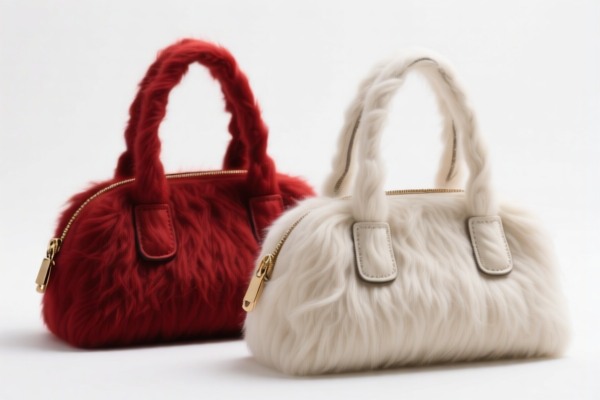
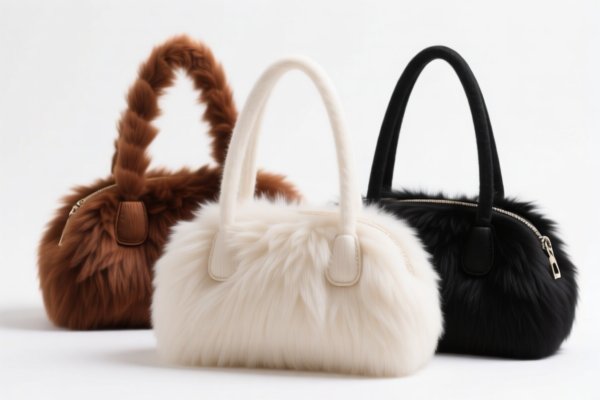
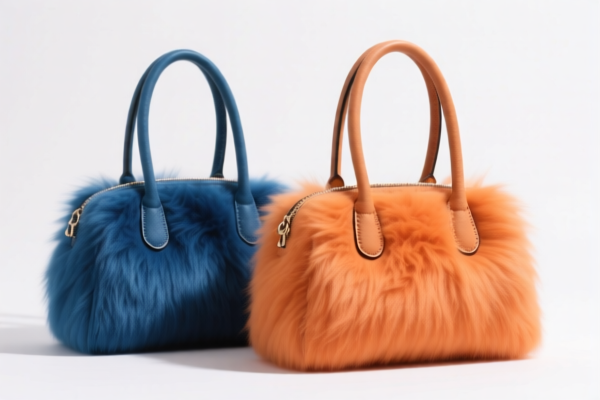
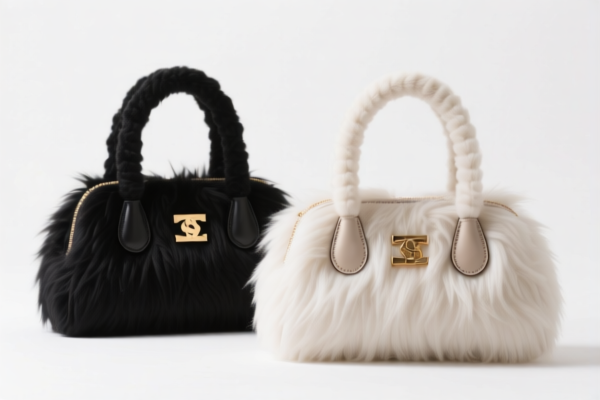
AI Analysis
🧳 Luggage and Bags (Travel Goods & Handbags)
🌐 HS Code Reference & Customs Clearance Guide | 2026 Latest Tariff Analysis | Professional Clearance Strategy
📌 Part I: Product Definition & Classification: Do You Really Know "Luggage and Bags"?
In international trade, the term "Luggage and Bags" is a broad category encompassing travel goods, suitcases, handbags, backpacks, and various containers. The core distinction for classification lies in the material composition and function:
1. Travel Goods, Handbags & Suitcases (General) * Materials: Primarily made of leather, plastic sheeting, textile materials, or other materials. * Function: Designed to carry personal items, travel essentials, or commercial goods. * Key Distinction: If the primary material is leather or plastic, specific chapters apply. If textile, Chapter 42 often applies.
2. Backpacks & Schoolbags * Materials: Often textile-based. * Function: Specifically designed for carrying books, laptops, and daily use items on the back. * Note: Distinguished from general handbags by their specific design and intended use (e.g., ergonomic straps, volume).
⚠️ Critical Distinction Point: * If it is a suitcase/travel bag made of leather/plastic → Chapter 42 (Travel Goods). * If it is a handbag made of leather/plastic → Chapter 42. * If it is a backpack/schoolbag → Chapter 42 (usually subheading 4202.12 or 4202.22 depending on material). * If it is made wholly of textile materials but not travel goods/handbags (e.g., tote bags, shopping bags) → Chapter 63 (Textile Products) or Chapter 42 if it meets the definition of a travel good/handbag. * Important: Chapter 42 covers travel goods, handbags, and similar containers, regardless of material, provided they meet the functional definition. However, Chapter 42 explicitly excludes certain items like umbrellas (Chapter 66) or footwear (Chapter 64).
📦 Part II: HS Code Classification Details (2026 Latest Tariff Authority Comparison)
| HS Code | Product Description | Application Scenario | Primary Material | Contains Hard Shell? |
|---|---|---|---|---|
4202.11.00.00 |
Trunks, suitcases, vanity cases, etc. with outer surface of leather or composition leather | High-end leather suitcases, designer handbags, clutch bags | Leather / Comp. Leather | Often Yes |
4202.12.00.00 |
Trunks, suitcases, vanity cases, etc. with outer surface of plastic sheeting or textile materials | Nylon suitcases, polyester backpacks, canvas tote bags | Plastic / Textile | Yes (Trunks/Suitcases) |
4202.21.00.00 |
Handbags with outer surface of leather or composition leather | Women's handbags, purses, shoulder bags | Leather / Comp. Leather | No |
4202.22.00.00 |
Handbags with outer surface of plastic sheeting or textile materials | Nylon totes, canvas crossbody bags, fabric clutches | Plastic / Textile | No |
4202.31.00.00 |
Articles of apparel and clothing accessories, pocketbooks, wallets, etc. with outer surface of leather | Wallets, keyholders, cardholders | Leather / Comp. Leather | N/A |
4202.32.00.00 |
Articles of apparel and clothing accessories, pocketbooks, wallets, etc. with outer surface of plastic sheeting or textile materials | Fabric wallets, PU leather wallets | Plastic / Textile | N/A |
🔍 Key Reminder: * Suitcases vs. Handbags: If the item is designed to be carried on a handle or wheels for travel, it is generally a "travel good" (4202.11 or 4202.12). If it is designed to be held in hand or over the shoulder for personal accessories, it is a "handbag" (4202.21 or 4202.22). * Material Dominance: The classification depends on the outer surface material. If a bag has multiple materials, the outer surface material determines the code. * Backpacks: Typically fall under 4202.12 (if hard-sided or travel-oriented) or 4202.22/4202.32 depending on exact design and capacity. Schoolbags are specifically noted in heading 4202.
💰 Part III: 2026 Latest Tariff Rate Details (Including Additional Taxes, Policy Add-ons)
✅ Applicable Country: United States (US) ✅ Origin: China (CN) ✅ Effective Time: November 10, 2025 onwards (for subsequent imports)
🎯 1. 4202.11.00.00 & 4202.12.00.00 — Travel Goods (Suitcases, Trunks)
| Item | Content |
|---|---|
| Base Rate | 0% – 4.8% (ad valorem, depending on specific sub-type) |
| USITC Additional Tariff | +25% (From USITC Footnote 9903.88.01) |
| IEEPA Additional Tariff | +10% (For China/HK products, from Nov 10, 2025) |
| Total Rate | 35% – 39.8% |
| Tax Calculation | CIF Value × Total Rate |
| De Minimis Exemption | ❌ Not Eligible (deny_de_minimis) |
| Legal Basis Path | IEEPA:9903.01.25 → IEEPA:9903.01.24 → USITC:4202.11.00.00 / 4202.12.00.00 → FOOTNOTE:9903.88.01 |
📌 Explanation: * "USITC Additional Tariff 25%" comes from the "Additional Tariffs" under Section 301 of the US Trade Act. * "IEEPA 10%" is the tariff imposed on Chinese goods under the International Emergency Economic Powers Act. * Total 35%-39.8%, which is a very high tariff. Must be anticipated in advance!
🎯 2. 4202.21.00.00 & 4202.22.00.00 — Handbags & Totes
| Item | Content |
|---|---|
| Base Rate | 0% – 12% (ad valorem) |
| USITC Additional Tariff | +25% (From USITC Footnote 9903.88.01) |
| IEEPA Additional Tariff | +10% (For China/HK products, from Nov 10, 2025) |
| Total Rate | 35% – 47% |
| Tax Calculation | CIF Value × Total Rate |
| De Minimis Exemption | ❌ Not Eligible (deny_de_minimis) |
| Legal Basis Path | IEEPA:9903.01.25 → IEEPA:9903.01.24 → USITC:4202.21.00.00 / 4202.22.00.00 → FOOTNOTE:9903.88.01 |
📌 Note: * High-end leather handbags often have higher base rates (up to 12%) plus the 35% additional tariffs, totaling ~47%. * Fabric/plastic handbags may have lower base rates (e.g., 0-4.8%) but still face the full 35% additional tariffs.
🛠️ Part IV: Customs Clearance Practical Advice (Battle-Tested Pitfall Avoidance Guide)
✅ 1. Document Checklist (None can be missing)
| Document | Mandatory | Explanation |
|---|---|---|
| ✅ Product Specifications | ✔️ | Includes material composition (outer surface), dimensions, weight, closure type |
| ✅ Product Photos (Including Labels) | ✔️ | Clear shots of brand, model, label, and overall structure |
| ✅ Composition Statement | ✔️ | Explicitly state % of leather, plastic, textile for outer surface |
| ✅ Commercial Invoice | ✔️ | Clearly state "Travel Bag" or "Handbag" with HS Code |
| ✅ Packing List | ✔️ | Show how items are packed (e.g., one per box, with dust bags) |
| ✅ Third-Party Test Reports | ✔️ | REACH, Prop 65, CPSIA (if applicable for children's bags) |
✅ 2. Declaration Tips (Key Mnemonic)
🔥 "Outer Material Rules, Function Defines Category, Leather vs. Fabric Matters, Don't Mix Up Handbags and Travel Bags!"
| Scenario | Correct Declaration | Wrong Practice |
|---|---|---|
| Leather Suitcase | 4202.11.00.00 |
Misclassified as fabric bag → Incorrect Tax |
| Nylon Backpack | 4202.12.00.00 or 4202.22.00.00 |
Misclassified as clothing accessory |
| Leather Handbag | 4202.21.00.00 |
Misclassified as suitcases |
| Fabric Tote Bag | 4202.22.00.00 |
If it fits definition of handbag; otherwise check Ch. 63 |
✅ 3. Special Cases Handling
| Situation | Handling Advice |
|---|---|
| Mixed Material Bags | Declare based on the outer surface material. If multiple layers, the outermost layer determines the HS Code. |
| Bags with Metal Parts | Do not misclassify as metal articles. If the outer surface is textile/leather/plastic, it remains in Chapter 42. |
| Children's Schoolbags | Ensure they meet the specific design criteria for "schoolbags" under 4202.12/4202.22. |
| Custom/Embroidered Bags | Provide detailed photos and descriptions. Embroidery does not change the base HS Code unless it constitutes a work of art (Chapter 97), which is rare for commercial bags. |
🌍 Part V: Global Main Markets Clearance Comparison (2026 Latest)
| Country/Region | Recommended HS Code | Tariff | Certification Requirements | Remarks |
|---|---|---|---|---|
| 🇺🇸 USA | 4202.12.00.00 |
~35-47% (CN Origin) | Prop 65, CPSIA (if applicable) | High additional tariffs apply |
| 🇨🇳 China | 4202.12.00.00 |
10-12% | No special certification | Import duty applies |
| 🇪🇺 EU | 4202.12.00.00 |
4% (Most Favored Nation) | REACH, RoHS (if electronic components) | No additional tariffs for general bags |
| 🇦🇺 Australia | 4202.12.00.00 |
5% | No special certification | Standard MFN rate |
| 🇯🇵 Japan | 4202.12.00.00 |
8-10% | No special certification | Depends on material |
📌 Conclusion: * USA imposes significant additional tariffs on Chinese-origin luggage and bags. * EU and Japan have standard MFN rates without additional penalties. * Consider supply chain diversification if exporting to the US to mitigate tariff risks.
📌 Part VI: Common Errors & Pitfall Avoidance (Lessons Learned)
❌ Error 1: Classifying a leather suitcase as 6307.90 (Other Made-up Articles)
👉 Consequence: Incorrect classification, potential penalties and delays.
❌ Error 2: Ignoring material composition for mixed-material bags 👉 Consequence: Customs may reclassify based on their assessment, leading to different duty rates.
❌ Error 3: Not declaring Prop 65 compliance for bags sold in California 👉 Consequence: Legal risks and fines in the US market.
❌ Error 4: Mislabeling children's schoolbags as adult handbags 👉 Consequence: May violate CPSIA requirements, leading to product rejection.
✅ Correct Practice:
"Travel Bag, Nylon, Hard Shell, 24-inch, with Wheels and Handle, Model XYZ, Prop 65 Compliant"
🎯 Part VII: Conclusion: Professional Declaration, Time and Cost Saving!
🎯 Remember the Mnemonic:
🔹 "Outer Surface Determines HS, Function Defines Category, Leather vs. Fabric Matters, High Tariffs in USA!" 🔹 "Accurate HS Code Saves Money, Incorrect Declaration Costs Thousands!"
📌 Tips:
If your bags are originating from Vietnam, Mexico, Thailand, Malaysia, you may apply for IEEPA Exemption, with rates as low as 0%-5%. Recommend applying for Advance Rulings to avoid clearance risks.
📣 Immediate Action:
📞 Contact professional customs brokers + Provide product photos + Apply for HS Code Advance Ruling 🚀 Let your luggage and bags clear customs smoothly, export efficiently, and double your profits!
✨ Professional Clearance Starts with Accurate Classification! 💼 Every penny of your cost deserves to be calculated precisely!
Customer Reviews
About HS Code Classification
The Harmonized System (HS) is an internationally standardized nomenclature developed by the World Customs Organization (WCO) to classify traded products. Over 200 countries use the HS system as the basis for customs tariffs, trade statistics, and import/export regulations.
Each HS code follows a hierarchical structure:
- Chapter (2 digits) — Broad category of goods (e.g., Chapter 84: Machinery and Mechanical Appliances)
- Heading (4 digits) — More specific grouping within the chapter
- Subheading (6 digits) — Internationally standardized breakdown, used by all WCO member countries
- National subdivisions (8-10 digits) — Country-specific extensions for further classification, such as US HTSUS 10-digit codes
Correct HS code classification is essential for smooth customs clearance, accurate duty payment, and compliance with trade regulations. Misclassification can lead to customs delays, overpayment of duties, or penalties.
When importing from CN to US, the applicable tariff rates may include:
- Most-Favored-Nation (MFN) rate — The standard duty rate applied to WTO members
- General rate — Applied to countries without trade agreements
- Trade remedy duties — Additional tariffs such as Section 301 (anti-dumping), Section 232 (national security), or countervailing duties
The information provided on this page is for reference purposes only. For official classification, please consult with your local customs authority or a licensed customs broker.