Lumber
CN → US| HS Code | Tariff Rate | Origin | Destination | Doc |
|---|---|---|---|---|
| 4407110053 | 35.0% | CN | US | Official Doc |
| 4407990295 | 35.0% | CN | US | Official Doc |
| 4409109040 | 35.0% | CN | US | Official Doc |
| 4403210130 | 35.0% | CN | US | Official Doc |
| 4403260164 | 35.0% | CN | US | Official Doc |
| 4409299100 | 35.0% | CN | US | Official Doc |
Product Images
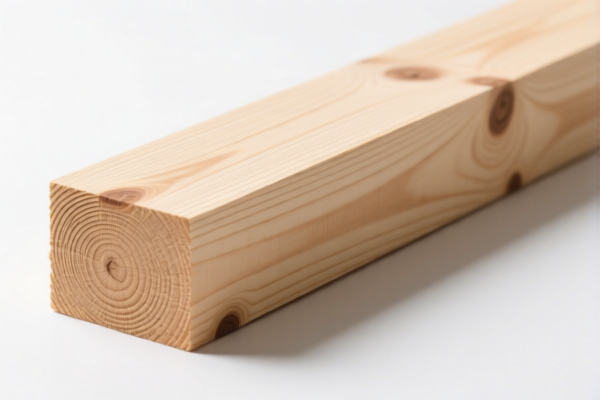
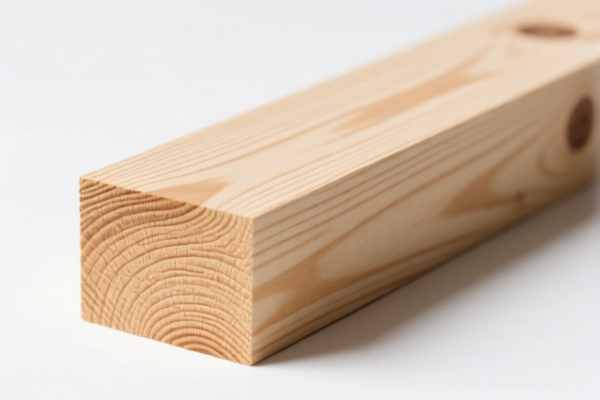
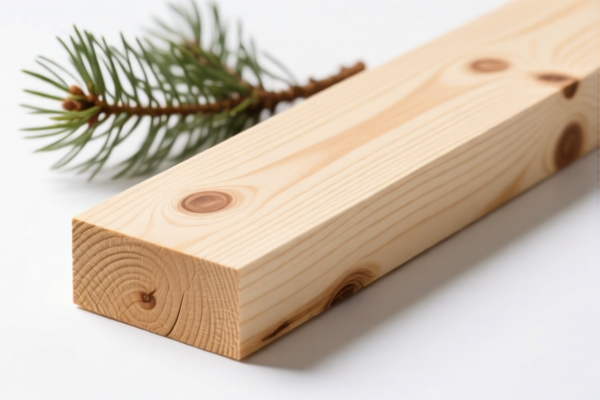
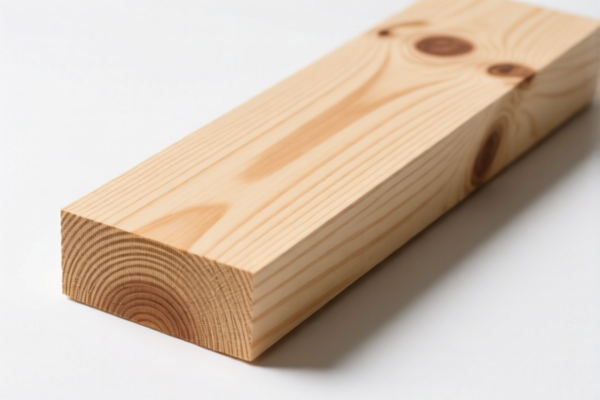
AI Analysis
🌲 Lumber (Wood & Timber Products)
🌐 HS Code Reference & Customs Clearance Guide | 2026 Latest Tariff Analysis | Professional Entry Strategy
📌 I. Product Definition & Classification: Do You Really Understand "Lumber"?
In international trade, "Lumber" is not a single homogeneous product. It is broadly categorized by wood type (Coniferous vs. Non-Coniferous), processing level (Raw Logs vs. Sawed/Chipped), and end-use. Misclassification is the #1 cause of customs delays for wood products.
Key Distinctions:
- Logs/Timbers (Raw): Unprocessed or merely debarked/squared, intended for further processing. → Usually Chapter 4403.
- Sawn Wood (Semi-finished): Planks, beams, squared timber, processed for structural use. → Usually Chapter 4407.
- Profiled Wood (Finished/Semi-finished): Tongue-and-groove, molded, or shaped edges for carpentry/flooring. → Usually Chapter 4409.
⚠️ Critical Differentiator:
- If the wood is squared off and used for construction/beams → 4407 or 4403.
- If the wood has special profiles (grooves, tongues) for assembly → 4409.
- If it is raw logs (cylindrical/rough) → 4403.
📦 II. HS Code Classification Details (2026 Latest Tariff Authoritative Comparison)
| HS Code | Product Description | Applicable Scenario | Processing Level | Wood Type |
|---|---|---|---|---|
4407.11.00.53 |
Wood sawed or chipped lengthwise, sliced or peeled, whether or not planed, sanded or finger-jointed, of a thickness exceeding 6 mm | Coniferous Pines (e.g., Southern Yellow Pine, Spruce) used in construction framing, pallets, or basic carpentry. | Semi-finished (Sawed) | Coniferous |
4407.99.02.95 |
Other wood sawed or chipped lengthwise, sliced or peeled... | Non-Coniferous Hardwoods (e.g., Oak, Maple, Walnut) for furniture, flooring, or veneers. | Semi-finished (Sawed) | Non-Coniferous |
4409.10.90.40 |
Wood continuously shaped (tongued, grooved, etc.) along any of its edges... | Profiled Coniferous Wood (e.g., Pine tongue-and-groove paneling, molding). | Finished/Semi-finished (Profiled) | Coniferous |
4403.21.01.30 |
Wood treated with paint, stain, creosote, or other preservatives; coniferous species | Treated Logs/Timbers (e.g., Pressure-treated pine posts, railroad ties). | Raw/Treated | Coniferous |
4403.26.01.64 |
Other wood, impregnated, coated, or covered with paint, stain, creosote, or other preservatives; non-coniferous | Treated Hardwoods (e.g., Pressure-treated oak beams). | Raw/Treated | Non-Coniferous |
4409.29.91.00 |
Wood continuously shaped along any of its edges... of non-coniferous wood | Profiled Hardwoods (e.g., Walnut or Oak flooring with tongue-and-groove). | Finished/Semi-finished (Profiled) | Non-Coniferous |
🔍 Key Reminder:
- Chapter 4403 is for Logs/Raw Timber (often treated).
- Chapter 4407 is for Sawn Wood (planks/beams).
- Chapter 4409 is for Profiled Wood (moldings/flooring).
- Coniferous (Softwood) vs. Non-Coniferous (Hardwood) determines the specific subheading.
💰 III. 2026 Latest Tariff Rate Breakdown (Including Additional Duties & Policy Surcharges)
✅ Applicable Country: United States (US)
✅ Country of Origin: China (CN)
✅ Effective Date: 2025 November 10 onwards (including subsequent imports)
🎯 1. General Tariff Structure for Wood Products (All HS Codes Above)
| Item | Content |
|---|---|
| Base Tariff Rate | 0% (Most wood products from China enter with 0% MFN base rate) |
| Section 301 Additional Duty | +25% (Imposed by USITC under Trade Act Section 301) |
| IEEPA Additional Duty | +10% (Imposed under International Emergency Economic Powers Act, targeting specific Chinese goods) |
| Total Effective Tax Rate | 35.0% |
| Tax Calculation | CIF Value × 35% |
| De Minimis Exemption Eligible | ❌ NO (deny_de_minimis) |
| Legal Authority Path | IEEPA:9903.01.25 → USITC:440x.xx.xx.xx → FOOTNOTE:9903.88.01 |
📌 Explanation:
- "Base 0%": Standard MFN (Most Favored Nation) tariff for wood products is typically low or zero.
- "25% Section 301 Duty": This is the heavy hitter. It applies to almost all wood products originating from China due to trade war tariffs.
- "10% IEEPA Duty": An additional surcharge specifically targeting Chinese goods under emergency economic powers.
- "Total 35%": The combined burden is extremely high. Profit margins must account for this 35% cost immediately.
- No De Minimis: Packages under $800 (Section 321) do NOT apply. All wood imports are scrutinized and taxed fully.
🛠️ IV. Customs Clearance Practical Advice (Battle-Tested Pitfall Avoidance Guide)
✅ 1. Required Documentation List (Mandatory)
| Document | Must Provide | Explanation |
|---|---|---|
| ✅ Commercial Invoice | ✔️ | Must clearly state "Wood/Lumber," species (e.g., Pine/Oak), dimensions, and treatment status. |
| ✅ Packing List | ✔️ | Detailed breakdown of pallets, crates, and units. |
| ✅ Phytosanitary Certificate | ✔️ | Crucial for wood! Issued by origin country’s agricultural authority, certifying pest-free status. |
| ✅ Fumigation Certificate | ✔️ | Proof that wood has been treated against pests (ISPM 15 standard). |
| ✅ Species Declaration | ✔️ | Legal requirement to specify tree species (Coniferous vs. Non-Coniferous). |
| ✅ Treatment Records | ✔️ | If treated (4403.2x), provide proof of preservative use (e.g., Creosote, CCA). |
✅ 2. Declaration Tips (Key Mantra)
🔥 “Species First, Treatment Clear, Profile Defined, Code Accurate!”
| Scenario | Correct Declaration | Wrong Practice |
|---|---|---|
| Untreated Pine Planks | 4407.11.00.53 (Sawed, Coniferous) |
Declaring as "Logs" (4403) → Inspection Delay |
| Treated Railroad Ties | 4403.21.01.30 (Treated Coniferous) |
Forgetting to declare "Treated" → Quarantine/Rejection |
| Oak Flooring (Tongue & Groove) | 4409.29.91.00 (Profiled Non-Coniferous) |
Declaring as "Sawed Wood" (4407) → Wrong Code |
| Pallets (ISPM 15) | Declare separately or as "Wood Packaging" | Ignoring phytosanitary rules → Whole Shipment Quarantined |
✅ 3. Special Case Handling
| Scenario | Handling Advice |
|---|---|
| Wood Packaging (Pallets/Crates) | Must bear IPPC Stamp (ISPM 15). If missing, entire shipment may be rejected or re-exported. |
| Treated Wood (Pressure-Treated) | Must declare the type of preservative (e.g., CCA, ACQ). Some chemicals have additional environmental restrictions. |
| Mixed Species Loads | If a single container contains both Pine and Oak, split the HS codes and declare separately to avoid penalties. |
| Raw Logs vs. Sawn | Ensure the physical product matches the description. "Logs" that are actually "Sawn" will be reclassified and penalized. |
🌍 V. Global Market Comparison for Lumber (2026 Latest)
| Country/Region | Recommended HS Code | Base Tariff | Additional Duty (China Origin) | Notes |
|---|---|---|---|---|
| 🇺🇸 USA | 4407.11.00.53 etc. |
0% | 35% (25% + 10%) | Highest cost. Strict Phytosanitary rules. |
| 🇨🇳 China | 4407.11.00.53 |
5-15% | None | Import duty applies, but no US-style surcharges. |
| 🇪🇺 EU | 4407.11.00.53 |
2-4% | None (unless EU Carbon Border Tax applies) | Strict EUTR (EU Timber Regulation) due diligence required. |
| 🇨🇦 Canada | 4407.11.00.53 |
0% (CUSMA) | None | CUSMA preference if North American origin. |
| 🇯🇵 Japan | 4407.11.00.53 |
3.2% | None | JAS (Japanese Agricultural Standard) certification helpful. |
📌 Conclusion:
- USA is the most expensive and regulated market for Chinese lumber due to the 35% combined tariff.
- EU requires strict legal sourcing documentation (EUTR).
- Canada offers tariff advantages under CUSMA for North American wood.
📌 VI. Common Errors & Pitfall Guide (Lessons Learned the Hard Way)
❌ Error 1: Failing to declare Treatment (e.g., Creosote)
👉 Consequence: Customs cannot determine environmental safety → Shipment Held for Chemical Inspection → Delays + Storage Fees.
❌ Error 2: Missing Phytosanitary Certificate or IPPC Stamp on pallets
👉 Consequence: Immediate Quarantine. The entire container may be fumigated at your expense or returned.
❌ Error 3: Misclassifying Profiled Wood as Sawed Wood
👉 Consequence: Wrong HS Code → Incorrect Duty Payment → Audit Risk + Penalties.
❌ Error 4: Assuming De Minimis ($800) applies to wood
👉 Consequence: No Exemption. All wood imports, regardless of value, are subject to the 35% tariff and full inspection.
✅ Correct Approach:
"Southern Yellow Pine Lumber, 2x4x8, Unfinished, Sawn Lengthwise, for Construction Use. Origin: China. Treated: Yes/No."
🎯 VII. Conclusion: Professional Clearance Saves Money!
🎯 Remember the Mantra:
🔹 "35% Tax is Real (25% + 10%), No De Minimis!"
🔹 "Phytosanitary Certificate is Mandatory, No Stamp = No Entry!"
🔹 "Coniferous vs. Non-Coniferous Determines the Code, Mistake = Audit!"
📌 Pro Tip:
- For large volumes, consider Advance Rulings from US CBP to confirm HS Code stability.
- Ensure your supplier provides ISPM 15 marked pallets – this is non-negotiable for US entry.
- If possible, explore third-country manufacturing (e.g., Vietnam, Thailand) for lower tariff exposure (0-5%), though Rules of Origin must be strictly met.
📣 Immediate Action:
📞 Contact a licensed customs broker specialized in wood products.
📋 Prepare Phytosanitary Certificates and Treatment Records before shipping.
🚀 Clear Customs Smoothly, Avoid Quarantine, Protect Your Margins!
✨ Professional Classification, Starting with Accuracy!
💼 Your Wood Products Are Valuable; Don’t Let 35% Tax and Quarantine Ruin Them!
Customer Reviews
About HS Code Classification
The Harmonized System (HS) is an internationally standardized nomenclature developed by the World Customs Organization (WCO) to classify traded products. Over 200 countries use the HS system as the basis for customs tariffs, trade statistics, and import/export regulations.
Each HS code follows a hierarchical structure:
- Chapter (2 digits) — Broad category of goods (e.g., Chapter 84: Machinery and Mechanical Appliances)
- Heading (4 digits) — More specific grouping within the chapter
- Subheading (6 digits) — Internationally standardized breakdown, used by all WCO member countries
- National subdivisions (8-10 digits) — Country-specific extensions for further classification, such as US HTSUS 10-digit codes
Correct HS code classification is essential for smooth customs clearance, accurate duty payment, and compliance with trade regulations. Misclassification can lead to customs delays, overpayment of duties, or penalties.
When importing from CN to US, the applicable tariff rates may include:
- Most-Favored-Nation (MFN) rate — The standard duty rate applied to WTO members
- General rate — Applied to countries without trade agreements
- Trade remedy duties — Additional tariffs such as Section 301 (anti-dumping), Section 232 (national security), or countervailing duties
The information provided on this page is for reference purposes only. For official classification, please consult with your local customs authority or a licensed customs broker.