Luminescent Glass Beads and Reflective Plastic Sheets
CN → US| HS Code | Tariff Rate | Origin | Destination | Doc |
|---|---|---|---|---|
| 3919901000 | 41.5% | CN | US | Official Doc |
| 3919101050 | 41.5% | CN | US | Official Doc |
| 3920992000 | 39.2% | CN | US | Official Doc |
| 3920991000 | 41.0% | CN | US | Official Doc |
| 3926909925 | 22.8% | CN | US | Official Doc |
Product Images
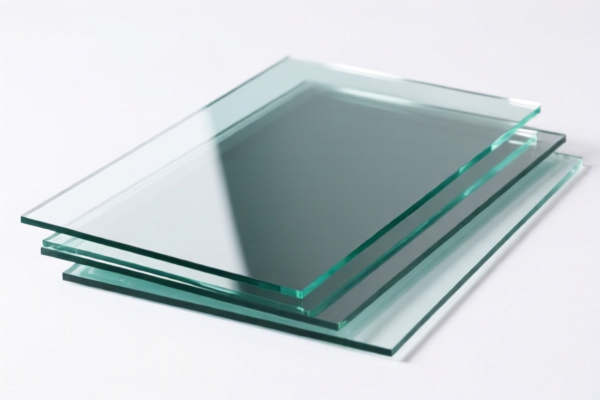
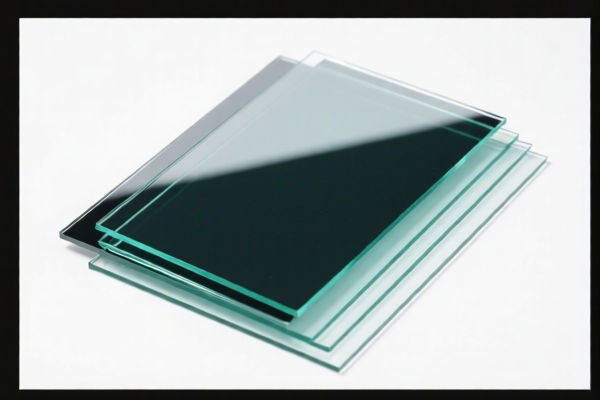
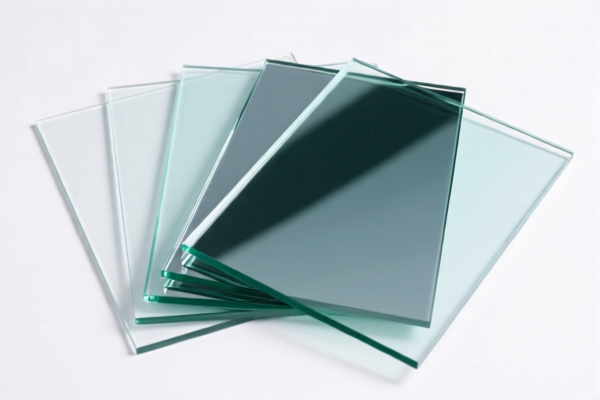
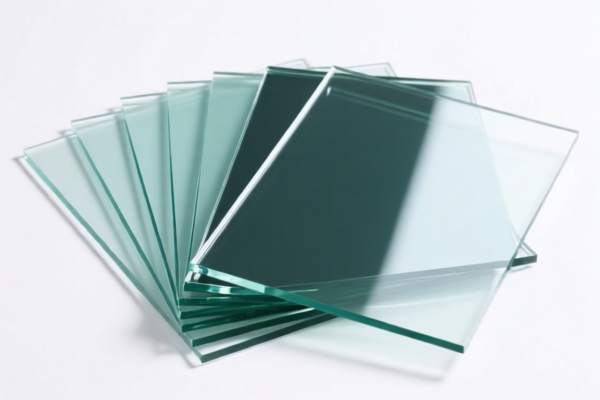
AI Analysis
💡 Luminescent Glass Beads & Reflective Plastic Sheets (The "Night Owl" Tech)
🌐 HS Code Reference & Customs Clearance Guide | 2026 Latest Tariff Analysis | Professional-Level Clearance Strategy
📌 I. Product Definition & Classification: Do You Really Understand "Reflective Films"?
Luminescent glass beads embedded in reflective plastic sheets are high-tech optical materials used primarily for traffic safety, high-visibility clothing, and industrial markings. They work by refracting light back to its source (retro-reflection).
In international trade, these products are categorized based on their physical form, material composition, and processing stage:
- Repetitive Sheets (3919 Series): Pre-cut rolls or sheets, self-adhesive or rigid, ready for application.
- Plastic Plates, Sheets, Film, Foil, and Strip (3920 Series): Non-adhesive, flexible plastic substrates containing the beads.
- Articles of Plastics (3926 Series): Semi-finished products, raw materials for specific reflective applications, or non-standard forms.
⚠️ Key Distinction Point:
- If the product is pre-cut, ready-to-use, or adhesive-backed → Likely 3919 or 3920.
- If it is a semi-finished component or specialized article → Likely 3926.
- The presence of glass beads alone does not change the HS code from plastic chapters; the form dictates the classification.
📦 II. HS Code Classification Details (2026 Latest Tariff Authority Comparison)
| HS Code | Product Description | Application Scenario | Tax Rate (Total) |
|---|---|---|---|
3919.90.10.00 |
Glass bead reflective plastic film (Plastic material, Film form, Reflective properties) | Self-adhesive reflective tapes, pre-cut reflective sheets for safety gear | 41.5% |
3919.10.10.50 |
Glass bead reflective plastic film (Plastic material, Film form, Contains glass beads) | Adhesive-backed reflective films, specific bead-containing adhesive tapes | 41.5% |
3920.99.20.00 |
Glass bead reflective plastic film (Plastic material, Sheet/Film form, Other category) | Non-adhesive flexible plastic sheets with beads, generic reflective films | 39.2% |
3920.99.10.00 |
Glass bead reflective plastic film (Plastic material, Film form, Composite material) | Multi-layer composite reflective sheets, plastic-based reflective laminates | 41.0% |
3926.90.99.25 |
Glass bead reflective plastic film (Plastic material, Semi-finished, Reflective use) | Semi-finished reflective components, raw plastic articles with beads for further processing | 22.8% |
🔍 Key Reminder:
- 3919 codes generally apply to adhesive or self-adhesive products.
- 3920 codes apply to non-adhesive plastic sheets/films.
- 3926 is a "catch-all" for semi-finished or specialized plastic articles not fitting the sheet/film definitions precisely, often resulting in lower base tariffs but requiring strict justification.
💰 III. 2026 Latest Tariff Rate Breakdown (Including Additional Taxes & Policy Surcharges)
✅ Applicable Country: United States (US)
✅ Origin: China (CN)
✅ Effective Date: From November 10, 2025 (including subsequent imports)
🎯 1. 3919.90.10.00 & 3919.10.10.50 — Reflective Plastic Films (Adhesive/Film Form)
| Item | Content |
|---|---|
| Base Tariff | 6.5% (Ad valorem) |
| Section 301 Additional Tariff | +25.0% (USITC Footnote 9903.88.01 / 301 List 3/4) |
| Section 122 Tariff | +10.0% (Specific provision for certain Chinese imports) |
| Total Tariff | 41.5% |
| Tax Calculation | CIF Value × 41.5% |
| De Minimis Eligibility | ❌ No (deny_de_minimis applies) |
| Legal Basis Path | Base Tariff: 6.5% → Section 301: +25% → Section 122: +10% |
📌 Explanation:
- The 6.5% base rate is standard for plastic films/sheets under 3919.
- The 25% additional tariff is imposed under Section 301 of the Trade Act of 1974 for Chinese goods.
- The 10% Section 122 tariff is an additional surcharge under specific US trade provisions.
- Total 41.5% is a high-cost category. Importers must factor this into pricing strategies.
🎯 2. 3920.99.20.00 — Reflective Plastic Films (Non-Adhesive, Other)
| Item | Content |
|---|---|
| Base Tariff | 4.2% (Ad valorem) |
| Section 301 Additional Tariff | +25.0% |
| Section 122 Tariff | +10.0% |
| Total Tariff | 39.2% |
| Tax Calculation | CIF Value × 39.2% |
| De Minimis Eligibility | ❌ No (deny_de_minimis applies) |
| Legal Basis Path | Base Tariff: 4.2% → Section 301: +25% → Section 122: +10% |
📌 Note:
- Slightly lower than 3919 due to the lower base rate (4.2% vs 6.5%).
- Applies to non-adhesive reflective plastic sheets.
- Still subject to full Section 301 and 122 surcharges.
🎯 3. 3920.99.10.00 — Reflective Composite Plastic Films
| Item | Content |
|---|---|
| Base Tariff | 6.0% (Ad valorem) |
| Section 301 Additional Tariff | +25.0% |
| Section 122 Tariff | +10.0% |
| Total Tariff | 41.0% |
| Tax Calculation | CIF Value × 41.0% |
| De Minimis Eligibility | ❌ No (deny_de_minimis applies) |
| Legal Basis Path | Base Tariff: 6.0% → Section 301: +25% → Section 122: +10% |
📌 Note:
- Classified as a composite material.
- Base rate is 6.0%, leading to a 41.0% total.
- Distinction from 3919 is crucial: Non-adhesive but composite structure.
🎯 4. 3926.90.99.25 — Semi-finished Reflective Plastic Articles
| Item | Content |
|---|---|
| Base Tariff | 5.3% (Ad valorem) |
| Section 301 Additional Tariff | +7.5% (Note: Different Section 301 rate applies here) |
| Section 122 Tariff | +10.0% |
| Total Tariff | 22.8% |
| Tax Calculation | CIF Value × 22.8% |
| De Minimis Eligibility | ❌ No (deny_de_minimis applies) |
| Legal Basis Path | Base Tariff: 5.3% → Section 301: +7.5% → Section 122: +10% |
📌 Crucial Distinction:
- This is a significant savings opportunity (22.8% vs ~41%).
- Applies only to semi-finished products or articles not fitting the "film/plate" definition of 3920/3919.
- Risk: Customs may reclassify as 3920/3919 if the product is deemed a finished film. Strict documentation is required to prove "semi-finished" status.
🛠️ IV. Customs Clearance Practical Advice (Battle-Tested Pitfall Guide)
✅ 1. Documentation Checklist (Essential for Smooth Clearance)
| Document | Must Provide | Explanation |
|---|---|---|
| ✅ Product Specification Sheet | ✔️ | Must detail: Material (e.g., PET, PVC), Bead type, Reflectivity class, Thickness. |
| ✅ Technical Data Sheet (TDS) | ✔️ | Proves optical properties and composition. |
| ✅ Product Photos | ✔️ | Clear images showing form (roll, sheet, cut piece) and labeling. |
| ✅ Commercial Invoice | ✔️ | Must clearly describe product as "Reflective Plastic Sheet/Film" or "Semi-finished Plastic Article." |
| ✅ Packing List | ✔️ | Details weight, dimensions, and packaging type. |
| ✅ Origin Certificate (CO) | ✔️ | Required to verify China origin for Section 301/122 application. |
| ✅ Test Report | ✔️ | Reflectivity test reports (e.g., EN 12899, ASTM D4956) to support classification. |
✅ 2. Declaration Tips (Critical Mnemonics)
🔥 "Form Defines Code, Beads Don't Dictate, Semi-Finished Saves Cash, Adhesive Goes to 3919!"
| Scenario | Correct Declaration | Error to Avoid |
|---|---|---|
| Adhesive-backed reflective tape/sheet | 3919.90.10.00 or 3919.10.10.50 |
Declare as 3920 → Audit risk & back taxes |
| Non-adhesive reflective plastic sheet | 3920.99.20.00 |
Declare as 3919 → Higher tax (41.5% vs 39.2%) |
| Composite reflective plastic film | 3920.99.10.00 |
Declare as 3926 → Risk of reclassification to 3920 |
| Semi-finished reflective plastic component | 3926.90.99.25 |
Declare as 3920 → Missed savings (22.8% vs 41%) |
| Final reflective sign/board | Check if it's an article vs film | Misdeclaring finished sign as film → Classification error |
✅ 3. Special Cases & Handling
| Scenario | Handling Advice |
|---|---|
| OEM Custom Reflective Films | Provide client design specs + material breakdown to prove composite nature if claiming 3920.99.10.00. |
| Rolled vs. Cut Sheets | Rolls are typically 3920.99; cut pieces may be argued as 3926 if semi-finished, but risky. |
| High-Performance Microprismatic | Still classified under plastic films if bead-based. Ensure description distinguishes between "glass bead" and "microprismatic" if relevant, though HS may still group them under plastic films. |
| Semi-finished Goods | Must provide evidence of further processing required (e.g., cutting, laminating, assembling) to justify 3926 classification. |
🌍 V. Global Market Clearance Comparison (2026 Latest)
| Country/Region | Recommended HS Code | Tariff (China Origin) | Certification Requirements | Notes |
|---|---|---|---|---|
| 🇺🇸 USA | 3919.90.10.00 / 3920.99.20.00 |
39.2% - 41.5% | None specific, but must comply with 301/122 | High tariffs due to Section 301 & 122 |
| 🇨🇳 China | 3919.90.10.00 |
6.5% | None | Low base rate |
| 🇪🇺 EU | 3920.99.20.00 |
3.7% | REACH, RoHS | No Section 301 equivalent |
| 🇬🇧 UK | 3920.99.20.00 |
3.7% | UKCA, RECH | Post-Brexit alignment with EU |
| 🇦🇺 Australia | 3920.99.20.00 |
5.0% | None | FTAs may apply |
📌 Conclusion:
- USA is the highest-cost market due to Section 301 (25%) and Section 122 (10%) surcharges.
- EU and UK offer significantly lower base rates (3.7%).
- Supply Chain Strategy: Consider sourcing from non-China origins (e.g., Vietnam, Thailand) if shipping to the US to avoid 301/122 tariffs.
📌 VI. Common Errors & Pitfall Guide (Lessons Learned)
❌ Error 1: Declaring adhesive films as 3920 (non-adhesive)
👉 Consequence: Customs may reclassify to 3919 with higher base rate, or penalize for misdeclaration.
❌ Error 2: Declaring finished reflective signs as 3926 semi-finished goods
👉 Consequence: Rejected entry, delays, and potential fines. Finished articles may fall under 3926.90.99.25 only if truly semi-finished; otherwise, they may be 7013 (glass) or 3926 (other plastic articles) with different tax implications.
❌ Error 3: Ignoring Section 122 in calculations
👉 Consequence: Unexpected tax bill at customs. 10% is not optional for eligible Chinese goods.
❌ Error 4: Using vague descriptions like "Reflective Material"
👉 Consequence: Customs holds shipment for classification review. Be specific: "Polyester film with embedded glass beads, non-adhesive."
✅ Correct Approach:
"Reflective Plastic Sheet, Polyester Base, Glass Bead Coated, Non-Adhesive, 0.5mm Thick, For Traffic Safety Use, HS 3920.99.20.00"
🎯 VII. Conclusion: Precision in Classification, Savings in Tariffs
🎯 Remember the Mnemonic:
🔹 "Adhesive = 3919 (High Base), Non-Adhesive = 3920 (Med Base), Semi-Finished = 3926 (Low Base)."
🔹 "Section 301 + Section 122 = ~35-40% Extra Tax."
🔹 "Prove Semi-Finished Status to Save 18%!"
📌 Pro Tip:
If your reflective plastic sheets are originally manufactured in Vietnam, Mexico, Thailand, or Malaysia, you may be exempt from Section 301 and 122 tariffs, reducing total duty to 4.2% - 6.5%.
Recommendation: Apply for Advance Ruling from US Customs (CBP) to confirm HS Code classification and avoid post-import audits.
📣 Take Action Now:
📞 Consult with a Licensed Customs Broker + Provide Detailed Product Specs + Request CBP Advance Ruling
🚀 Ensure Smooth Clearance, Minimize Duties, and Maximize Profit Margins!
✨ Professional Customs Clearance Starts with Accurate Classification!
💼 Every Percentage Point of Tariff Matters!
Customer Reviews
About HS Code Classification
The Harmonized System (HS) is an internationally standardized nomenclature developed by the World Customs Organization (WCO) to classify traded products. Over 200 countries use the HS system as the basis for customs tariffs, trade statistics, and import/export regulations.
Each HS code follows a hierarchical structure:
- Chapter (2 digits) — Broad category of goods (e.g., Chapter 84: Machinery and Mechanical Appliances)
- Heading (4 digits) — More specific grouping within the chapter
- Subheading (6 digits) — Internationally standardized breakdown, used by all WCO member countries
- National subdivisions (8-10 digits) — Country-specific extensions for further classification, such as US HTSUS 10-digit codes
Correct HS code classification is essential for smooth customs clearance, accurate duty payment, and compliance with trade regulations. Misclassification can lead to customs delays, overpayment of duties, or penalties.
When importing from CN to US, the applicable tariff rates may include:
- Most-Favored-Nation (MFN) rate — The standard duty rate applied to WTO members
- General rate — Applied to countries without trade agreements
- Trade remedy duties — Additional tariffs such as Section 301 (anti-dumping), Section 232 (national security), or countervailing duties
The information provided on this page is for reference purposes only. For official classification, please consult with your local customs authority or a licensed customs broker.