Luminous Stone
CN → US| HS Code | Tariff Rate | Origin | Destination | Doc |
|---|---|---|---|---|
| 6815994110 | 35.0% | CN | US | Official Doc |
| 6815994170 | 35.0% | CN | US | Official Doc |
Product Images
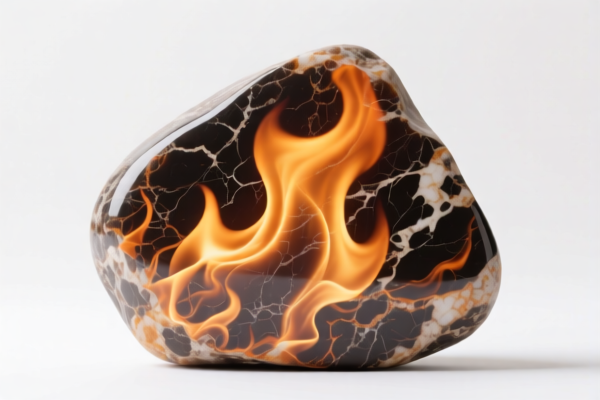
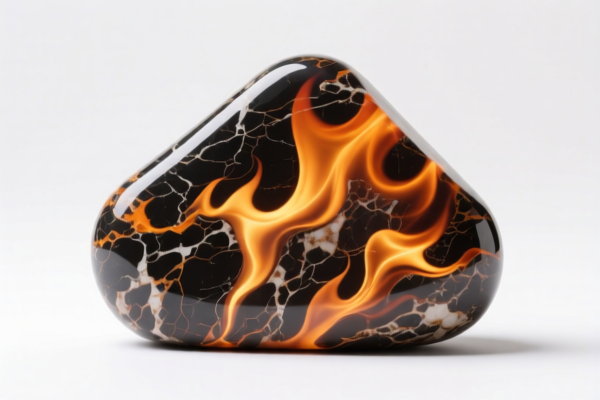
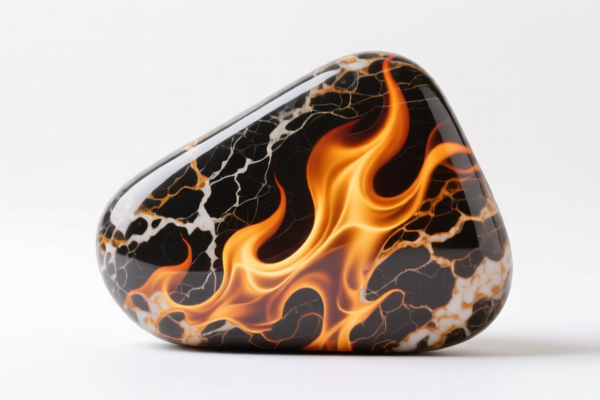
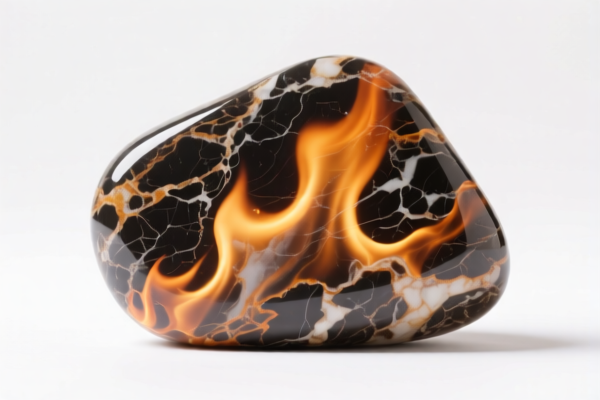
AI Analysis
🌌 Luminous Stone (Artificial Fluorescent/Glow-in-the-Dark Stone Products)
🌐 HS Code Reference & Clearance Guide | 2026 Latest Tariff Analysis | Professional-Level Customs Strategy
📌 I. Product Definition & Classification: What Exactly is "Luminous Stone"?
"Luminous Stone" is not a natural geological term but a commercial term for mineral-based articles containing phosphorescent or fluorescent materials (often Strontium Aluminate, Zinc Sulfide, or similar compounds) bonded within a stone-like matrix (epoxy, resin, pitch, or cement).
In international trade, these are NOT classified as "Natural Stones" (Chapter 68 does not cover natural stones with special functional coatings unless the coating is integral to the classification). Instead, they are classified under Chapter 68: Articles of Stone or of Other Mineral Substances.
Key Distinction: - Artificial/Luminous Stone: Contains mineral substances (like quartz powder, calcium carbonate, or magnesium oxide) bonded with organic binders (resin/pitch) and luminous pigments. - Natural Glow Stone: Naturally occurring radioactive or fluorescent minerals (e.g., Fluorite, Uraninite) – Rare, often restricted, and classified differently.
⚠️ Critical Classification Point:
Most commercial "luminous stone" products (countertops, tiles, decorative aggregates) are composite articles. The determining factor for HS Code is the chemical composition of the mineral content (specifically Magnesia/MgO vs. Silica) and the binding agent.
📦 II. HS Code Classification Details (2026 Latest Tariff Authority)
Based on the provided data, the classification depends strictly on the Magnesium Oxide (MgO) content.
| HS Code | Product Description | Applicable Scenario | Key Classification Criteria |
|---|---|---|---|
| 6815.99.41.10 | Articles of stone/mineral substances: Containing by weight >70% Magnesia (MgO) | Magnesia-based refractory stones, high-MgO luminous tiles, industrial abrasives with glow agents | ✅ MgO > 70% (by weight) ✅ Carbon content: Trace to <30% ✅ Bonded by Resin/Pitch |
| 6815.99.41.70 | Articles of stone/mineral substances: Other | Silica-based, Quartz-based, or mixed mineral luminous stones (where MgO ≤ 70%) | ❌ MgO ≤ 70% or different mineral composition ✅ Carbon content: Trace to <30% ✅ Bonded by Resin/Pitch |
🔍 Important Note on Carbon Content:
Both codes require the article to contain carbon ranging from trace amounts to less than 30%. If the carbon content exceeds 30%, it may fall under different headings (e.g., carbon articles). However, standard "luminous stone" products typically use inorganic phosphors and mineral aggregates, keeping carbon low.📌 Why Not Other Codes?
- 9014/9013 (Optical/Scientific Instruments): Luminous stones are decorative/industrial, not measuring instruments.
- 3926 (Plastic Articles): If the mineral content is dominant (>50% by weight), Chapter 68 prevails over Chapter 39.
- 7019 (Glass): Not glass; it’s a mineral composite.
💰 III. 2026 Latest Tariff Rate Details (US Market)
✅ Applicable Country: United States (US)
✅ Origin: China (CN)
✅ Effective Date: 2025-11-10 onwards (including subsequent imports)
🎯 1. 6815.99.41.10 — High Magnesia Luminous Stone Articles (>70% MgO)
| Item | Detail |
|---|---|
| Base Tariff | 0.0% (Ad Valorem) |
| Section 301 / USITC Additional Tariff | +25.0% |
| IEEPA Additional Tariff | Not explicitly listed in provided data for this specific HS, but typically applies to Chinese origins in Chapter 68. Based on provided data, only 25% is shown. |
| Total Tariff Rate | 25.0% |
| Tax Calculation | CIF Value × 25% |
| De Minimis Exemption | ❌ Not Applicable (Section 301 goods are excluded from de minimis) |
| Legal Basis Path | USITC:6815.99.41.10 → FOOTNOTE:301 → Total: 25% |
📌 Explanation:
- The 0% base rate reflects the general duty for non-strategic mineral articles.
- The 25% additional tariff is a Section 301 duty imposed on specific Chinese-origin mineral articles.
- Total Cost Impact: Importers pay 25% of the CIF value in duties alone.
🎯 2. 6815.99.41.70 — Other Luminous Stone Articles (MgO ≤ 70% or Non-Magnesia)
| Item | Detail |
|---|---|
| Base Tariff | 0.0% (Ad Valorem) |
| Section 301 / USITC Additional Tariff | +25.0% |
| IEEPA Additional Tariff | Not explicitly listed in provided data for this specific HS. |
| Total Tariff Rate | 25.0% |
| Tax Calculation | CIF Value × 25% |
| De Minimis Exemption | ❌ Not Applicable |
| Legal Basis Path | USITC:6815.99.41.70 → FOOTNOTE:301 → Total: 25% |
📌 Explanation:
- Despite being "Other" (non-magnesia), it falls under the same Section 301 list as high-MgO articles.
- Total Cost Impact: 25% duty on CIF value.
🛠️ IV. Customs Clearance Practical Advice (Real-World Pitfall Guide)
✅ 1. Required Documentation (Mandatory)
| Document | Must Provide | Reason |
|---|---|---|
| ✅ Product Specification Sheet | ✔️ | Must explicitly state MgO percentage (by weight) to distinguish between .41.10 and .41.70. |
| ✅ Bill of Materials (BOM) | ✔️ | Lists mineral aggregates, binding resin, and luminous pigments. |
| ✅ Certificate of Composition | ✔️ | Third-party lab report confirming >70% MgO (for .10) or ≤70% MgO (for .70). |
| ✅ Commercial Invoice | ✔️ | Clearly describe as "Luminous Stone Article" or "Mineral Composite Tile," NOT "Natural Stone." |
| ✅ Packing List | ✔️ | Detail weight/volume for CIF calculation. |
⚠️ Critical Warning:
- If you cannot prove the MgO content, Customs may default to the general "Other" category (6815.99.41.70) or even misclassify it as a generic plastic/composite article, leading to penalties or delays.
- Do not claim "De Minimis" (under $800) for these items; Section 301 duties apply regardless of value.
✅ 2. Declaration Tips (Key Mnemonic)
🔥 "Check MgO First, Then Resin, Then Carbon!"
| Scenario | Correct HS Code | Risk if Wrong |
|---|---|---|
| High-MgO (>70%) + Resin Bond | 6815.99.41.10 |
25% Duty |
| Low-MgO/Quartz + Resin Bond | 6815.99.41.70 |
25% Duty |
| No Mineral Content (>50% Plastic) | Misclassified as 3926 |
Potential 25%+ Duty + Misdeclaration Fine |
| Natural Fluorite (Unprocessed) | Misclassified as 2529 |
Different Tariff, Potential Export Restriction |
📌 Declaration Language Example:
"Artificial Luminous Stone Tiles, Composition: 72% Magnesia (MgO), 20% Resin Binder, 8% Luminous Pigments, Carbon Content <1%, for Decorative Flooring, Model LS-2026"
✅ 3. Special Cases & Handling
| Case | Handling Advice |
|---|---|
| Mixed Shipments (MgO >70% & <70%) | Split Declaration! Do not combine under one HS Code. Separate lots are required. |
| Carbon Content High (>30%) | Re-evaluate HS Code. If Carbon >30%, it may be classified under Carbon Articles (different chapter), changing duty rates. |
| Resin vs. Pitch Binding | Both codes specify "chemically bonded by resin or pitch." Ensure your technical sheet mentions the binder type. |
| Pre-Cut vs. Raw | Both codes cover "articles," so pre-cut tiles are included. Raw blocks might differ, but "luminous stone" usually implies finished articles. |
🌍 V. Global Market Comparison (2026)
| Country/Region | Recommended HS Code | Tariff Rate (China Origin) | Certification | Notes |
|---|---|---|---|---|
| 🇺🇸 USA | 6815.99.41.10 / .70 |
25% (Total) | None Specific | Section 301 applies to both. High duty cost. |
| 🇨🇳 China | 6815.99.41.10 / .70 |
0% - 5% | CE/CCC (if electrical) | No import duty on domestic sales. |
| 🇪🇺 EU | 6815.99.80 (General) |
0% - 2.5% | REACH | No Section 301 equivalent. |
| 🇦🇺 Australia | 6815.99.00 |
5% | N/A | Standard MFN rate. |
📌 Conclusion:
- The USA is the only major market imposing a 25% additional tariff on these specific mineral articles.
- For non-US markets, the duty is minimal or zero.
- Supply Chain Strategy: If targeting the US, consider Duty Entitlements or Foreign Trade Zones (FTZs) to mitigate the 25% cost.
📌 VI. Common Mistakes & Pitfall Guide (Lessons Learned)
❌ Mistake 1: Declaring "Luminous Stone" as "Natural Stone" (2517.10)
👉 Consequence: False declaration, 10% penalty, and possible seizure. Luminous stones are composite, not natural.
❌ Mistake 2: Ignoring MgO Content
👉 Consequence: If you declare .41.10 but lab tests show 60% MgO, Customs will reclassify to .41.70 (same duty here, but record discrepancy). If duties differed, you’d face back-taxes.
❌ Mistake 3: Claiming "De Minimis" for Luminous Stone under $800
👉 Consequence: Seizure or Return. Section 301 goods are not exempt from de minimis.
❌ Mistake 4: Vague Description "Stone Tiles"
👉 Consequence: Customs will request clarification, causing delay of 7-14 days. Always specify "Mineral Composite" and "Binding Agent."
✅ Correct Approach:
"Artificial Luminous Stone Aggregate, 72% MgO, Resin-Bonded, Carbon <30%, for Industrial Flooring"
🎯 VII. Conclusion: Precision Classifies, Savings Save!
🎯 Remember the Mnemonic:
🔹 "High MgO (70%+) is .10, Low MgO is .70, Both 25% in the US!"
🔹 "Resin or Pitch Bond is Key, Carbon Below 30% Set Free!"
🔹 "No De Minimis for Section 301, Plan Your CIF Cost Clearly!"
📌 Pro Tip:
- For US Imports, calculate the 25% duty into your pricing model immediately.
- Consider pre-clearance with a customs broker if the MgO content is borderline (e.g., 68-72%).
- Keep Lab Test Reports ready for every shipment, as CBP often requests proof of composition for Chapter 68 entries.
📣 Immediate Action:
📞 Contact your Customs Broker with the exact MgO percentage and Carbon content.
🚀 Apply for an Advance Ruling if importing large volumes to secure HS Code stability.
✨ Professional Clearance Starts with Accurate Classification!
💼 Every Percent of Duty Saved is Pure Profit!
Customer Reviews
About HS Code Classification
The Harmonized System (HS) is an internationally standardized nomenclature developed by the World Customs Organization (WCO) to classify traded products. Over 200 countries use the HS system as the basis for customs tariffs, trade statistics, and import/export regulations.
Each HS code follows a hierarchical structure:
- Chapter (2 digits) — Broad category of goods (e.g., Chapter 84: Machinery and Mechanical Appliances)
- Heading (4 digits) — More specific grouping within the chapter
- Subheading (6 digits) — Internationally standardized breakdown, used by all WCO member countries
- National subdivisions (8-10 digits) — Country-specific extensions for further classification, such as US HTSUS 10-digit codes
Correct HS code classification is essential for smooth customs clearance, accurate duty payment, and compliance with trade regulations. Misclassification can lead to customs delays, overpayment of duties, or penalties.
When importing from CN to US, the applicable tariff rates may include:
- Most-Favored-Nation (MFN) rate — The standard duty rate applied to WTO members
- General rate — Applied to countries without trade agreements
- Trade remedy duties — Additional tariffs such as Section 301 (anti-dumping), Section 232 (national security), or countervailing duties
The information provided on this page is for reference purposes only. For official classification, please consult with your local customs authority or a licensed customs broker.