Lunch Bag
CN → US| HS Code | Tariff Rate | Origin | Destination | Doc |
|---|---|---|---|---|
| 4823690040 | 35.0% | CN | US | Official Doc |
| 4823610020 | 35.0% | CN | US | Official Doc |
| 4819100020 | 35.0% | CN | US | Official Doc |
| 4819200020 | 35.0% | CN | US | Official Doc |
Product Images
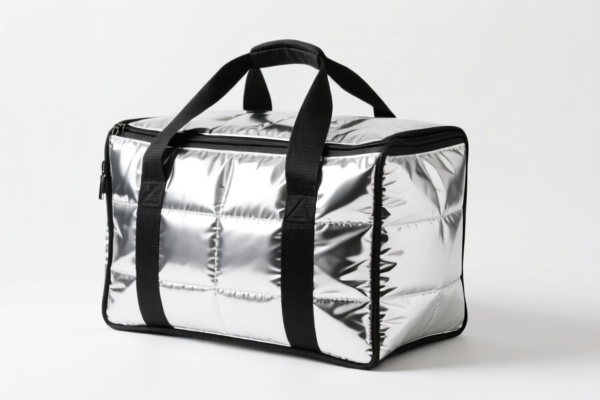
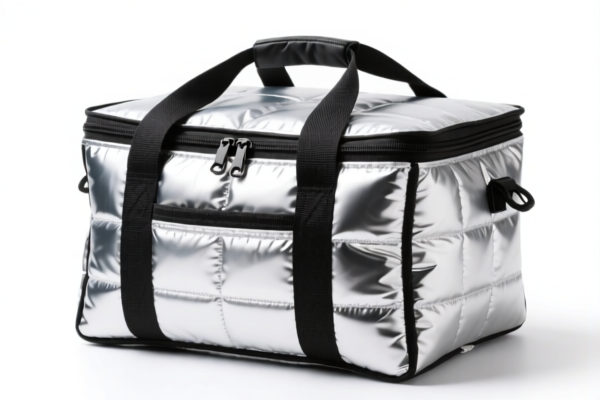
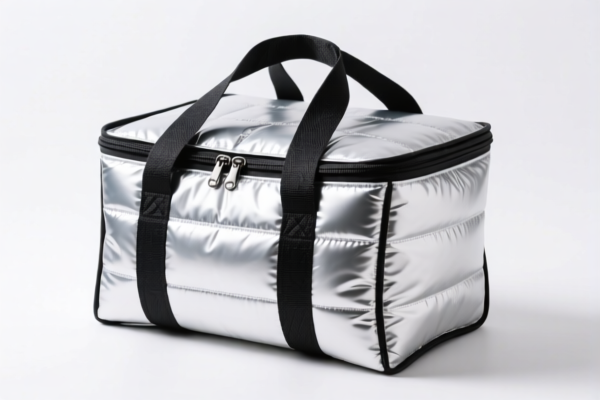

AI Analysis
🥗 Lunch Box (Paper-Based)
🌐 HS Code Reference & Customs Clearance Guide | 2026 Latest Tariff Analysis | Professional Entry Strategy
📌 I. Product Definition & Classification: Do You Really Understand "Paper Lunch Boxes"?
Paper lunch boxes are essential packaging for the food service industry, designed to hold meals securely while maintaining hygiene. In international trade, they are classified based on their material structure and manufacturing process. Misclassification can lead to significant tariff discrepancies or customs delays.
⚠️ Key Classification Logic:
- If the box is a tray, dish, or plate made of paper pulp or molded paper → 4823.69.00.40
- If it is a container (general food container) made of paper → 4823.61.00.20
- If it is made of corrugated board (strong, ribbed paper) → 4819.10.00.20
- If it is a folding carton/box made of non-corrugated paper → 4819.20.00.20
📦 II. HS Code Classification Details (2026 Latest Tariff Authority Comparison)
| HS Code | Product Description | Key Characteristics | Typical Use Case |
|---|---|---|---|
4823.69.00.40 |
Paper lunch boxes; material: paper; form: trays, dishes, plates, and similar articles | Molded paper pulp; rigid, shaped like a plate or tray | Disposable party plates, molded pulp trays |
4823.61.00.20 |
Paper lunch boxes; material: paper; form: containers; use: food containers | General paper containers; not specifically corrugated or folded cartons | Simple paper cups, bowls, or basic food carriers |
4819.10.00.20 |
Paper lunch boxes; material: corrugated paper/board | Uses corrugated material (fluted layer between liners); high strength | Takeout boxes, insulated food containers, heavy-duty carriers |
4819.20.00.20 |
Paper lunch boxes; material: non-corrugated paper/board; form: folding cartons/boxes | Foldable boxes made from solid board or kraft paper (no fluting) | Standard pizza boxes, burger boxes, cereal-style cartons |
🔍 Critical Reminder:
- Corrugated vs. Non-Corrugated: If the paper has a wavy internal layer for cushioning, it is 4819.10. If it is solid or folded flat, it is likely 4819.20 or 4823.61.
- Form Factor: "Trays/Dishes" (molded) go to 4823.69. "Foldable Boxes" go to 4819.20.
- All codes above carry a TOTAL TAX RATE of 35.0% for Chinese-origin goods entering the US.
💰 III. 2026 Latest Tariff Rate Breakdown (Including Surtaxes & Policy Add-ons)
✅ Applicable Country: United States (US)
✅ Origin: China (CN)
✅ Effective Time: Since November 10, 2025 (and subsequent imports)
🎯 1. Universal Tariff Structure for Paper Lunch Boxes
| Item | Detail |
|---|---|
| Base Tariff Rate | 0.0% (ad valorem) |
| Section 301 Surcharge | +25.0% (under USITC Footnote 9903.88.01 / Trade Act of 1974) |
| IEEPA Surcharge (Section 122) | +10.0% (under International Emergency Economic Powers Act, targeting specific Chinese goods) |
| Total Effective Tariff Rate | 35.0% |
| Tax Calculation Basis | CIF Value × 35% |
| De Minimis Exemption Available? | ❌ NO (deny_de_minimis) |
| Legal Basis Path | IEEPA:9903.01.25 → USITC:4823.69.00.40 / 4823.61.00.20 / 4819.10.00.20 / 4819.20.00.20 → FOOTNOTE:9903.88.01 |
📌 Explanation:
- "Section 301 Surtax 25%": This is the primary punitive tariff added under US trade policy against China.
- "Section 122 Tariff 10%": This is an additional surcharge applied under Section 122 of the Trade Expansion Act (often used for national security or balance of payments reasons, currently applied here per the provided data).
- Combined Total: 35% is the final rate. This is a high-cost import category. Cost calculation must include this full 35% burden.
🛠️ IV. Customs Clearance Practical Advice (Operational Pitfall Guide)
✅ 1. Required Documentation Checklist (Mandatory)
| Document | Must Provide | Purpose |
|---|---|---|
| ✅ Product Specification Sheet | ✔️ | Detail: Material (Corrugated vs. Solid), Weight, Dimensions, Food-Grade Certification |
| ✅ Material Composition Proof | ✔️ | Critical to distinguish between 4819 (Corrugated) and 4823 (Pulp/Molded) |
| ✅ Product Photos (Labeled) | ✔️ | Show structure: Is it folded? Is it molded? Does it have fluting? |
| ✅ Food Contact Safety Certificate | ✔️ | FDA Compliance (USA) or equivalent; proves food-safe usage |
| ✅ Commercial Invoice | ✔️ | Must clearly state: "Paper Lunch Box, [Material Type], For Food Use" |
| ✅ Packing List | ✔️ | Ensure gross/net weight matches invoice; avoid partial shipment confusion |
✅ 2. Declaration Strategy (Key Mantra)
🔥 "Material Determines Code, Form Determines Subheading, Name Must Be Precise!"
| Scenario | Correct Declaration | Common Error |
|---|---|---|
| Molded Pulp Tray/Dish | 4823.69.00.40 |
Calling it a "Box" → May trigger inspection |
| Foldable Cardboard Box | 4819.20.00.20 |
Calling it "Corrugated" → Wrong code |
| Corrugated Takeout Box | 4819.10.00.20 |
Calling it "Paper Container" → Risk of re-classification |
| Simple Paper Bowl/Cup | 4823.61.00.20 |
No major risk, but ensure it's not a "package" (4819) |
✅ 3. Special Situations Handling
| Situation | Handling Advice |
|---|---|
| Composite Packaging (e.g., Paper Box + Plastic Window) | If plastic window is >10% or integral, Customs may reclassify under Chapter 39 (Plastics). Declare "Paper" as primary material. |
| Laminated Paper | If coated with wax or plastic for grease resistance, still generally 4819 or 4823, but disclose coating to avoid "Imitated Paper" classification issues. |
| Private Label / OEM | Provide end-user contract or PO. Helps prove "For Food Use" and proper HS alignment. |
| Returns / Defective Goods | If returning defective lunch boxes, apply for Duty Drawback within 3 years of export. |
🌍 V. Global Market Customs Comparison (2026 Latest)
| Country/Region | Recommended HS Code | Base Tariff | Surtaxes/Notes | Remarks |
|---|---|---|---|---|
| 🇺🇸 USA | 4819.10.00.20 etc. |
0% | +35% (Total) | Highest cost market due to 301 + 122 clauses. |
| 🇨🇳 China | 4819.10.00.00 |
10-14% | None | Domestic production is cheaper; imports are for specialized types. |
| 🇪🇺 EU | 4819.20.00.00 |
0% | None | No anti-dumping or high surtaxes on paper packaging. |
| 🇬🇧 UK | 4819.20.00.00 |
0% | None | Post-Brexit tariffs align closely with EU for paper products. |
| 🇦🇺 Australia | 4819.20.00.00 |
5% | None | Moderate tariff, no punitive surtaxes. |
📌 Conclusion:
- The US market is uniquely punitive for Chinese paper products due to the combination of 301 tariffs (25%) and 122 Clause tariffs (10%).
- EU/UK/Australia offer much more favorable tariff structures (0-5%).
- If exporting to the US, cost modeling must include the full 35% tariff; margin compression is significant.
📌 VI. Common Mistakes & Pitfall Guide (Lessons Learned)
❌ Mistake 1: Calling a Corrugated Box a "Paper Container" (4823)
👉 Consequence: Incorrect classification. Customs will reclassify to 4819 (Corrugated), potentially causing delays. While tax rate is same (35%), accuracy is vital for compliance audits.
❌ Mistake 2: Ignoring the IEEPA 10% Surcharge
👉 Consequence: Underpaying duties. If you only account for 25% (301 tariff), you are underpaying by 10%. This leads to penalties and interest upon audit.
❌ Mistake 3: Using vague descriptions like "Food Packaging"
👉 Consequence: Customs may assign a higher duty rate or demand excessive documentation to determine the exact material.
✅ Correct Description: "Paper Lunch Box, Corrugated Board, Folding Type, Food Grade, No Plastic Lamination"
❌ Mistake 4: Assuming De Minimis ($800) exemption applies
👉 Consequence: It does not apply. The data explicitly states deny_de_minimis. Even small shipments are subject to the 35% tariff. Do not bundle shipments to hide value.
🎯 VII. Conclusion: Precise Classification Saves Costs!
🎯 Remember the Mantra:
🔹 "Corrugated is 4819, Molded is 4823, Non-Corrugated Folded is 4819."
🔹 "Total Tax is 35%: 0% Base + 25% 301 + 10% 122."
🔹 "No De Minimis Exemption! Every box is taxed."
📌 Pro Tip:
If your paper lunch boxes are made from 100% Recycled Material or have special eco-certifications, this does not reduce the 35% tariff in the US. However, it may help with marketing and buyer preference in EU/UK markets where tariffs are lower.
📣 Immediate Action:
📞 Verify Material Structure: Is it corrugated? Molded? Folded?
📊 Calculate Landed Cost: CIF + 35% Tariff + Freight + Insurance + Handling.
📝 Declare Accurately: Use specific HS codes from the table above to avoid customs holds.
✨ Professional Clearance Starts with Accurate Classification!
💼 Your Cost is Defined by the HS Code, Not Just the Product Name!
Customer Reviews
About HS Code Classification
The Harmonized System (HS) is an internationally standardized nomenclature developed by the World Customs Organization (WCO) to classify traded products. Over 200 countries use the HS system as the basis for customs tariffs, trade statistics, and import/export regulations.
Each HS code follows a hierarchical structure:
- Chapter (2 digits) — Broad category of goods (e.g., Chapter 84: Machinery and Mechanical Appliances)
- Heading (4 digits) — More specific grouping within the chapter
- Subheading (6 digits) — Internationally standardized breakdown, used by all WCO member countries
- National subdivisions (8-10 digits) — Country-specific extensions for further classification, such as US HTSUS 10-digit codes
Correct HS code classification is essential for smooth customs clearance, accurate duty payment, and compliance with trade regulations. Misclassification can lead to customs delays, overpayment of duties, or penalties.
When importing from CN to US, the applicable tariff rates may include:
- Most-Favored-Nation (MFN) rate — The standard duty rate applied to WTO members
- General rate — Applied to countries without trade agreements
- Trade remedy duties — Additional tariffs such as Section 301 (anti-dumping), Section 232 (national security), or countervailing duties
The information provided on this page is for reference purposes only. For official classification, please consult with your local customs authority or a licensed customs broker.