Luxury Radial Tire Rim
CN → US| HS Code | Tariff Rate | Origin | Destination | Doc |
|---|---|---|---|---|
| 4012118000 | 38.4% | CN | US | Official Doc |
| 4011105000 | 38.4% | CN | US | Official Doc |
| 4011101070 | 39.0% | CN | US | Official Doc |
| 4013100010 | 38.7% | CN | US | Official Doc |
| 4012114000 | 39.0% | CN | US | Official Doc |
Product Images
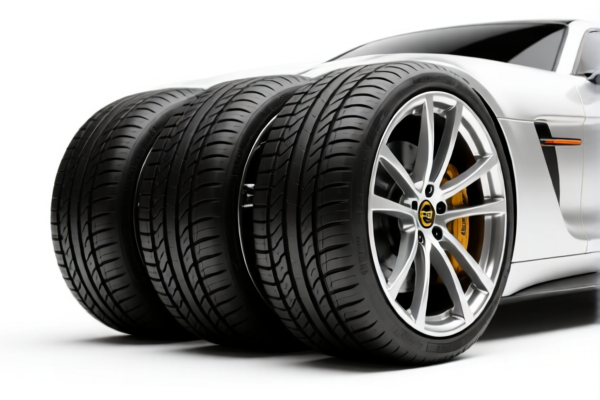
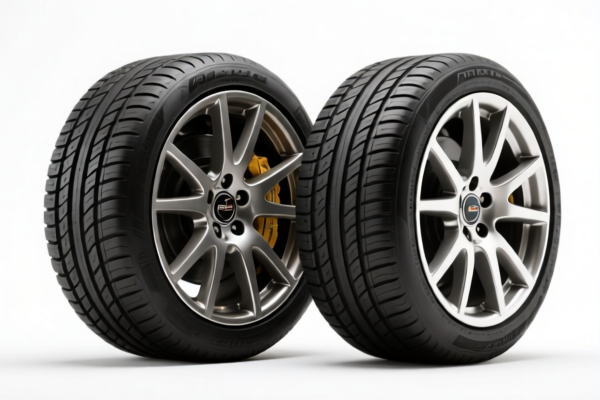
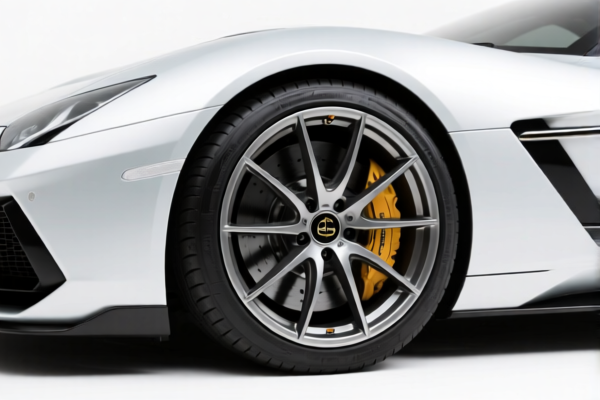
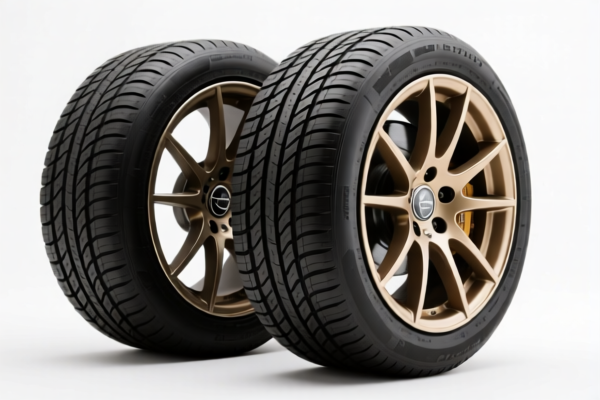
AI Analysis
🚗 Luxury Radial Tire Rim (Rim Diameter > 18 Inches)
🌐 HS Code Reference & Customs Clearance Guide | 2026 Latest Tariff Analysis | Professional Entry Strategy
📌 Part 1: Product Definition and Classification
Luxury Radial Tires (Rim Diameter > 18 Inches)
Are high-end automotive consumables designed for premium vehicles, performance cars, and luxury SUVs. In international trade, tires are classified primarily by their type (radial/non-radial), vehicle usage (passenger/commercial), and size specifications.
⚠️ Critical Distinction:
- The key identifier here is "Radial" (structural type) and "Rim Diameter > 18 Inches" (size specification).
- These tires are intended for passenger vehicles (luxury sedans, sports cars, high-end SUVs).
- Material: Rubber (Finished rubber products).
📦 Part 2: HS Code Classification Details (2026 Latest Tariff Authority)
| HS Code | Product Description | Application Scenario | Total Tax Rate | Tax Details Breakdown |
|---|---|---|---|---|
4012.11.80.00 |
Luxury Radial Tires (Rim Diameter > 18 Inches), Material: Rubber, Form: Tires, Use: Automobile | High-end passenger cars, performance vehicles | 38.4% | Base Tariff: 3.4%, Section 301 Tariff: 25.0%, Section 122 Tariff: 10% |
4011.10.50.00 |
Luxury Radial Tires (Rim Diameter > 18 Inches), Category: Tires, Material: Rubber, Use: Passenger Cars | General luxury passenger vehicle replacement | 38.4% | Base Tariff: 3.4%, Section 301 Tariff: 25.0%, Section 122 Tariff: 10% |
4011.10.10.70 |
Luxury Radial Tires (Rim Diameter > 18 Inches), Form/Use/Specs Match Classification, Material: Rubber | Specific size/spec match for luxury brands | 39.0% | Base Tariff: 4.0%, Section 301 Tariff: 25.0%, Section 122 Tariff: 10% |
4013.10.00.10 |
Luxury Radial Tires (Rim Diameter > 18 Inches), Corresponds to Passenger Vehicle Use, Tire: Rubber Finished Product | Passenger car tires, rubber finished goods | 38.7% | Base Tariff: 3.7%, Section 301 Tariff: 25.0%, Section 122 Tariff: 10% |
4012.11.40.00 |
Luxury Radial Tires (Rim Diameter > 18 Inches), Material: Rubber, Form: Radial Tires, Use: Automobile | Standard radial tire classification for luxury autos | 39.0% | Base Tariff: 4.0%, Section 301 Tariff: 25.0%, Section 122 Tariff: 10% |
🔍 Key Reminder:
- All these HS codes apply to Radial Tires for Passenger Vehicles with a Rim Diameter > 18 Inches.
- The slight variation in tax rates (38.4% ~ 39.0%) depends on the specific sub-heading precision and base tariff adjustments.
- Material: Must be declared as Rubber.
- Form: Must be declared as Tire (not raw rubber or parts).
💰 Part 3: 2026 Latest Tariff Rate Breakdown (Including Additional Taxes & Policy Add-ons)
✅ Applicable Country: United States (US)
✅ Origin: China (CN)
✅ Effective Date: 2025 November 10 onwards (including subsequent imports)
🎯 1. 4012.11.80.00 & 4011.10.50.00 —— Luxury Radial Tires (Rim > 18")
| Item | Content |
|---|---|
| Base Tariff Rate | 3.4% (ad valorem) |
| Section 301 Tariff | +25.0% (USITC Footnote 9903.88.01) |
| Section 122 Tariff | +10.0% (Additional surcharge for specific Chinese goods) |
| Total Tax Rate | 38.4% |
| Tax Calculation | CIF Value × 38.4% |
| De Minimis Eligibility | ❌ No (deny_de_minimis) |
| Legal Basis Path | USITC:4012.11.80.00 → USITC:4011.10.50.00 → FOOTNOTE:9903.88.01 |
📌 Explanation:
- "Base Tariff 3.4%": Standard Most Favored Nation (MFN) rate for passenger car tires.
- "Section 301 Tariff 25%": Imposed under US Trade Act Section 301 on Chinese imports.
- "Section 122 Tariff 10%": Additional surcharge targeting specific categories of Chinese goods.
- Combined 38.4%: This is a high-cost category. Accurate classification is critical to avoid penalties.
🎯 2. 4011.10.10.70 & 4012.11.40.00 —— High-Precision Classifications
| Item | Content |
|---|---|
| Base Tariff Rate | 4.0% |
| Section 301 Tariff | +25.0% |
| Section 122 Tariff | +10.0% |
| Total Tax Rate | 39.0% |
| Tax Calculation | CIF Value × 39.0% |
| De Minimis Eligibility | ❌ No |
| Legal Basis Path | USITC:4011.10.10.70 / USITC:4012.11.40.00 → FOOTNOTE:9903.88.01 |
📌 Note:
- These HS codes have a slightly higher base tariff (4.0% vs 3.4%) due to more specific sub-heading requirements.
- The total tax rate is 39.0%, which is the highest among the listed options.
- Use only if the product’s specs (size, type) precisely match the sub-heading definition.
🎯 3. 4013.10.00.10 —— Passenger Vehicle Rubber Finished Product
| Item | Content |
|---|---|
| Base Tariff Rate | 3.7% |
| Section 301 Tariff | +25.0% |
| Section 122 Tariff | +10.0% |
| Total Tax Rate | 38.7% |
| Tax Calculation | CIF Value × 38.7% |
| De Minimis Eligibility | ❌ No |
| Legal Basis Path | USITC:4013.10.00.10 → FOOTNOTE:9903.88.01 |
📌 Note:
- This classification focuses on the finished rubber product aspect for passenger vehicles.
- Tax rate is 38.7%, intermediate between the other categories.
- Ensure the description clearly states "Passenger Vehicle Use" and "Rubber Finished Product".
🛠️ Part 4: Customs Clearance Practical Advice (Real-World Pitfall Guide)
✅ 1. Required Documents Checklist (All Mandatory)
| Document | Required | Description |
|---|---|---|
| ✅ Product Spec Sheet | ✔️ | Include size (e.g., 275/35R20), load index, speed rating, radial construction |
| ✅ Product Photos (with Label) | ✔️ | Clear view of sidewall markings, brand, model, and "RADIAL" text |
| ✅ Commercial Invoice | ✔️ | Must explicitly state "Luxury Radial Tire", "Rim Diameter > 18 Inches", "Rubber Material" |
| ✅ Packing List | ✔️ | Detail package dimensions, weight, and quantity |
| ✅ Certificate of Origin (CO) | ✔️ | If not from China, may qualify for preferential rates |
| ✅ Third-Party Test Report | ✔️ | DOT, ECE, or other relevant safety certifications |
✅ 2. Declaration Tips (Key Mantra)
🔥 "Radial Must Be Declared, Rim Size > 18, Material Rubber, Tax 38.4%!"
| Scenario | Correct Declaration | Wrong Practice |
|---|---|---|
| Luxury Radial Tire (Rim > 18") | 4012.11.80.00 or 4011.10.50.00 |
Misdeclare as "Car Parts" → 89.5% |
| Non-Radial Bias Tire | 4011.10.50.00 (if applicable) |
Misdeclare as "Radial" → Classification Error |
| Tire with Rim Attached | Separate declaration | Bundle tire + rim → Complex classification |
| Raw Rubber Sheets | 4001.xxxx.xxxx |
Misdeclare as "Tire" → 38.4% |
✅ 3. Special Cases Handling
| Scenario | Handling Advice |
|---|---|
| OEM Custom Tires | Provide customer order + design specs to avoid "non-standard" classification |
| Tires with New Technology (e.g., Run-Flat) | Still classified under radial tire codes, but add technical notes |
| Tires for Electric Vehicles | Same classification, but highlight "EV Compatible" if applicable |
| Tires for Commercial Vehicles | Different HS code (4011.20 etc.), do not mix with passenger tires |
🌍 Part 5: Global Market Comparison (2026 Latest)
| Country/Region | Recommended HS Code | Tariff | Certification Requirements | Notes |
|---|---|---|---|---|
| 🇺🇸 USA | 4012.11.80.00 / 4011.10.50.00 |
38.4% - 39.0% (China Origin) | DOT, EPA | High tax due to Section 301 & 122 |
| 🇨🇳 China | 4011.10.50.00 |
~5-10% (Import) | CCC (if applicable) | Lower tax, domestic production |
| 🇪🇺 EU | 4011.10.50.00 |
0-4% (if no trade barriers) | ECE, R117 | No Section 301/122 |
| 🇦🇺 Australia | 4011.10.50.00 |
5% | SAA | Moderate tax |
| 🇯🇵 Japan | 4011.10.50.00 |
0-5% | JIS | Low tax |
📌 Conclusion:
- USA imposes the highest tariffs on Chinese luxury radial tires due to Section 301 (25%) and Section 122 (10%).
- EU and Japan have significantly lower tariffs, making them more competitive markets for Chinese tire exporters.
- Cost Optimization: Consider supply chain adjustments or origin shifting to avoid US tariffs.
📌 Part 6: Common Errors & Pitfalls (Lessons Learned)
❌ Error 1: Declaring "Radial Tire" without specifying "Rim Diameter > 18 Inches"
👉 Consequence: Incorrect HS code → 38.4% vs 5% difference → Large tax discrepancy.
❌ Error 2: Misdeclaring "Bias Tire" as "Radial Tire"
👉 Consequence: Classification error → Penalties + Delay.
❌ Error 3: Failing to declare "Material: Rubber" clearly
👉 Consequence: Customs may classify as "Rubber Parts" → Different tax rate.
❌ Error 4: Using "Tire" as the only product description
👉 Consequence: Ambiguity → Customs Inspection + Delay.
✅ Correct Practice:
"Luxury Radial Tire, Rim Diameter > 18 Inches, Material: Rubber, for Passenger Cars, Model XYZ, DOT Certified"
🎯 Part 7: Conclusion: Professional Declaration, Cost Saving, Efficiency!
🎯 Remember the Mantra:
🔹 "Radial + Rim > 18 + Rubber = 38.4% Tax in USA"
🔹 "HS Code Determines Tax Rate, 1% Difference = Thousands of Dollars!"
📌 Tips:
- If your tires are originated from Vietnam, Mexico, Thailand, or Malaysia, you may apply for IEEPA Exemptions or lower tariffs.
- Recommend Advance Ruling Application before shipment to avoid clearance risks.
📣 Immediate Action:
📞 Contact Professional Customs Broker + Provide Product Images + Apply for HS Code Advance Ruling
🚀 Ensure Your Tires Clear Customs Smoothly, Export Efficiently, Profit Doubled!
✨ Professional Clearance Starts with Accurate Classification!
💼 Every Cent of Your Cost Deserves Precise Calculation!
Customer Reviews
About HS Code Classification
The Harmonized System (HS) is an internationally standardized nomenclature developed by the World Customs Organization (WCO) to classify traded products. Over 200 countries use the HS system as the basis for customs tariffs, trade statistics, and import/export regulations.
Each HS code follows a hierarchical structure:
- Chapter (2 digits) — Broad category of goods (e.g., Chapter 84: Machinery and Mechanical Appliances)
- Heading (4 digits) — More specific grouping within the chapter
- Subheading (6 digits) — Internationally standardized breakdown, used by all WCO member countries
- National subdivisions (8-10 digits) — Country-specific extensions for further classification, such as US HTSUS 10-digit codes
Correct HS code classification is essential for smooth customs clearance, accurate duty payment, and compliance with trade regulations. Misclassification can lead to customs delays, overpayment of duties, or penalties.
When importing from CN to US, the applicable tariff rates may include:
- Most-Favored-Nation (MFN) rate — The standard duty rate applied to WTO members
- General rate — Applied to countries without trade agreements
- Trade remedy duties — Additional tariffs such as Section 301 (anti-dumping), Section 232 (national security), or countervailing duties
The information provided on this page is for reference purposes only. For official classification, please consult with your local customs authority or a licensed customs broker.