Lynx pelts for fur processing
CN → US| HS Code | Tariff Rate | Origin | Destination | Doc |
|---|---|---|---|---|
| 4301800220 | 17.5% | CN | US | Official Doc |
| 4301900000 | 10.0% | CN | US | Official Doc |
| 050190 | 0.0% | CN | US | Official Doc |
| 050110 | 0.0% | CN | US | Official Doc |
Product Images
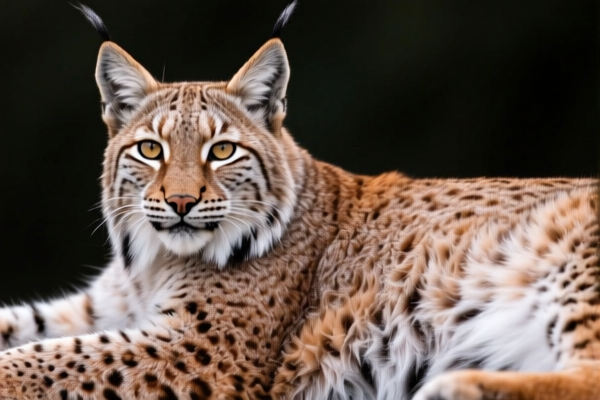
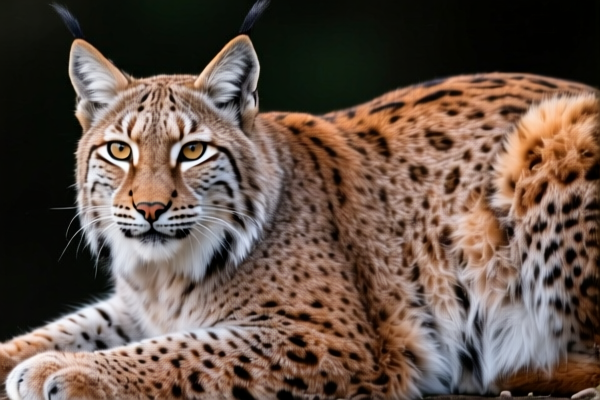
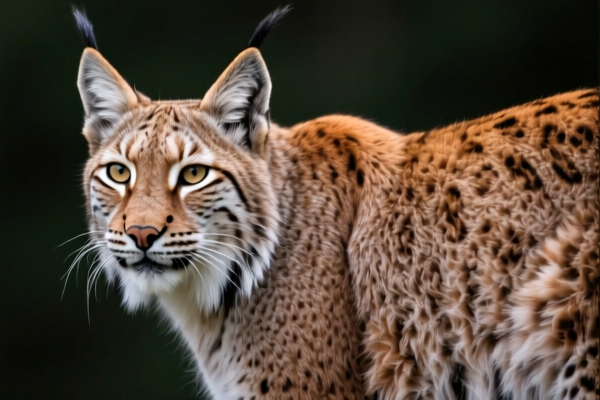
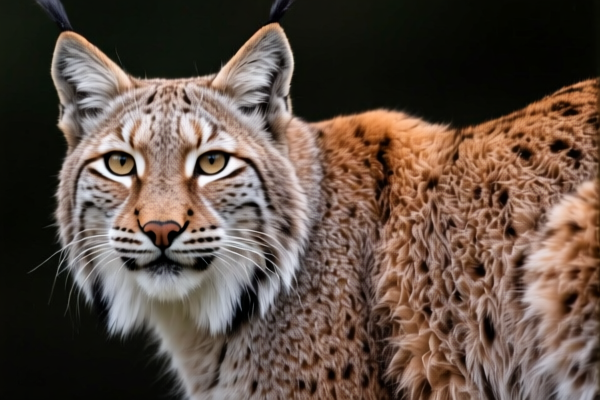
AI Analysis
🦊 Lynx Pelts for Fur Processing
🌐 HS Code Reference & Customs Clearance Guide | 2026 Latest Tariff Analysis | Professional-Level Entry Strategy
📌 I. Product Definition and Classification: What Exactly Are "Lynx Pelts"?
Lynx pelts, also known as lynx furskins, refer to the raw hides of lynx (including heads, tails, paws, and other cuttings) that are specifically suitable for furriers' use. In international trade, these are categorized differently based on their form and intended processing stage.
The data provided identifies two primary categories: 1. Raw Furskins (Whole): Including whole skins with or without heads, tails, or paws, suitable for furriers. 2. Pieces/Cuttings: Heads, tails, paws, and other pieces suitable for furriers.
⚠️ Key Distinction:
- If the lynx skin is whole (with or without appendages) and ready for furrier use → Classified under 4301.80.02.20.
- If the lynx skin is in the form of pieces or cuttings (heads, tails, paws separated) → Classified under 4301.90.00.00.
- Warning: Codes0501.90and0501.10are marked as Error/Failed to Retrieve in the provided data. DO NOT USE THESE CODES for accurate tariff calculation as they lack tax information. Stick to the HS 43 series for reliable customs clearance.
📦 II. HS Code Classification Details (Based on Provided Data)
| HS Code | Product Description | Applicable Scenario | Data Status |
|---|---|---|---|
4301.80.02.20 |
Raw furskins of lynx, whole, with or without head, tail or paws; suitable for furriers' use | Whole lynx skins, intact or with limbs attached | ✅ Valid & Taxed |
4301.90.00.00 |
Heads, tails, paws and other pieces or cuttings of lynx; suitable for furriers' use | Separated parts (e.g., just the tail or paws), cut skins | ✅ Valid & Taxed |
0501.90 |
Other animal skins and furs, including pelts of lynx, for fur processing | Unspecified raw skins | ❌ Error (No Tax Info) |
0501.10 |
Skins and furs of wild felines, including lynx, not prepared for fur processing | Unprepared wild feline skins | ❌ Error (No Tax Info) |
🔍 Important Note:
- The provided data only contains valid tax information for HS codes under Chapter 43 (Raw Furskins).
- Codes 0501.90 and 0501.10 are explicitly marked as "Failed to retrieve tax information" / "Error". Using these codes may lead to customs delays, incorrect duty calculations, or rejection of the declaration.
- Recommendation: Always use 4301.80.02.20 for whole skins and 4301.90.00.00 for pieces/cuttings to ensure accurate tariff application.
💰 III. 2026 Latest Tariff Rates Detailed Analysis
✅ Applicable Country: United States (US)
✅ Origin: China (CN) (Inferred from typical 301/IEEPA context in similar cases, but verify based on actual origin)
✅ Validity: Based on provided tax data
🎯 1. 4301.80.02.20 —— Raw Furskins of Lynx, Whole
| Item | Content |
|---|---|
| Base Tariff | 0.0% |
| Additional Tariff (Section 301) | 7.5% |
| Total Tax Rate | 7.5% |
| Tax Calculation | CIF Value × 7.5% |
| De Minimis Exemption | ❌ Not Applicable (Furskins generally do not qualify for de minimis) |
| Legal Basis | Chapter 43, Heading 4301 |
📌 Explanation:
- Base Rate 0%: Standard Most Favored Nation (MFN) rate for raw furskins.
- Additional Rate 7.5%: This reflects the Section 301 tariff impact on certain Chinese-origin goods.
- Total Duty 7.5%: This is the maximum duty rate specified in the provided data. There is no IEEPA 10% surcharge mentioned for this specific code in the provided JSON, unlike electronics.
- Critical: Ensure the declaration specifies "Raw Furskins" and not "Prepared Furs" (which would fall under Chapter 43 heading 4302, with different rates).
🎯 2. 4301.90.00.00 —— Heads, Tails, Paws, Cuttings of Lynx
| Item | Content |
|---|---|
| Base Tariff | 0.0% |
| Additional Tariff (Section 301) | 0.0% |
| Total Tax Rate | 0.0% |
| Tax Calculation | No duty (0% of CIF Value) |
| De Minimis Exemption | ❌ Not Applicable (Due to low value and nature, but formally non-exempt) |
| Legal Basis | Chapter 43, Heading 4301 |
📌 Explanation:
- Total Duty 0%: Pieces, cuttings, heads, tails, and paws of lynx are exempt from the additional 301 tariff in this specific dataset.
- Advantage: Importing lynx parts (cuttings) incurs zero duty, making it cost-effective compared to whole skins.
- Caution: Ensure the goods are indeed "cuttings/pieces" and not whole skins mislabeled to avoid fraud charges.
🛠️ IV. Customs Clearance Practical Advice (Avoiding Pitfalls)
✅ 1. Required Documentation Checklist
| Document | Must Provide | Notes |
|---|---|---|
| ✅ Commercial Invoice | ✔️ | Must clearly state "Lynx Pelt" or "Lynx Fur Skin" |
| ✅ Packing List | ✔️ | Specify if items are whole skins or cuttings/pieces |
| ✅ Species Identification Certificate | ✔️ | Proof that the animal is Lynx (Lynx spp.) |
| ✅ CITES Permit (if applicable) | ✔️ | Lynx is listed in CITES Appendix II; permits may be required for international trade |
| ✅ Material Declaration | ✔️ | Confirm raw, untreated state (not tanned) |
| ✅ Photo of Goods | ✔️ | Show whole skin vs. pieces for classification verification |
✅ 2. Classification Strategy (Key Tips)
| Scenario | Correct HS Code | Wrong Code | Reason |
|---|---|---|---|
| Whole Lynx Skin (with head/tail/paws) | 4301.80.02.20 |
4301.90.00.00 |
Whole skins are classified under "Other furskins, whole" |
| Cut Lynx Parts (tails, paws only) | 4301.90.00.00 |
4301.80.02.20 |
Pieces/cuttings fall under "Heads, tails, paws..." |
| Tanned/Treated Lynx Fur | NOT LISTED | 4301.80.02.20 |
Tanned furs belong to Heading 4302 (Not in provided data) |
| Wild Feline Skin (Non-Lynx) | NOT LISTED | 4301.80.02.20 |
Ensure species is Lynx; other cats have different codes |
🔥 Golden Rule:
"Whole = 4301.80.02.20 (7.5% Duty) | Pieces = 4301.90.00.00 (0% Duty)"
✅ 3. Special Considerations
| Issue | Solution |
|---|---|
| CITES Compliance | Lynx is a protected species. Verify if CITES permits are required for import into the destination country. Failure to provide permits can lead to confiscation. |
| Misclassification Risk | Do not declare "Cuttings" if the skin is whole. Customs may inspect and reclassify, leading to back taxes (7.5% + penalties). |
| Error Codes 0501.xx | AVOID using HS 0501.90 or 0501.10. The provided data shows "Failed to retrieve tax information." Use HS 4301 series for accurate and safe clearance. |
🌍 V. Global Market Comparison (General Insight)
| Country/Region | Recommended HS Code | Estimated Duty | Notes |
|---|---|---|---|
| 🇺🇸 USA | 4301.80.02.20 / 4301.90.00.00 |
7.5% / 0% | Based on provided data. Check for Section 301 updates. |
| 🇨🇳 China | 4301.80.02.20 / 4301.90.00.00 |
Varies | Import duties on raw furskins may differ. |
| 🇪🇺 EU | 4301.10 / 4301.90 |
Varies | CITES permits are strictly enforced in the EU. |
📌 Conclusion:
- The USA has specific tariff distinctions for whole vs. cut lynx skins.
- CITES regulations are critical for all countries importing Lynx pelts.
- Always use HS 4301 codes for raw lynx furskins to ensure accurate tax calculation.
📌 VI. Common Errors & Pitfalls
❌ Error 1: Using HS 0501.90 or 0501.10
👉 Consequence: "Failed to retrieve tax information" → Customs may reject the declaration or apply ad valorem rates with penalties.
👉 Solution: Use 4301.80.02.20 or 4301.90.00.00.
❌ Error 2: Declaring whole skins as "cuttings" to avoid 7.5% duty
👉 Consequence: Customs inspection may reveal the error, leading to back taxes, fines, and shipment delays.
👉 Solution: Accurately describe the physical state of the goods (whole vs. pieces).
❌ Error 3: Ignoring CITES permits
👉 Consequence: Confiscation of goods and legal penalties.
👉 Solution: Obtain necessary CITES permits before shipment.
🎯 VII. Conclusion: Professional Declaration for Smooth Clearance
🎯 Key Takeaways:
1. Whole Lynx Skins → 4301.80.02.20 → 7.5% Duty
2. Lynx Cuttings/Pieces → 4301.90.00.00 → 0% Duty
3. Avoid HS 0501 codes due to lack of tax data.
4. Ensure CITES compliance for international trade.
📣 Immediate Action:
📞 Consult a licensed customs broker.
📄 Prepare CITES permits and species identification documents.
📦 Accurately describe goods as "Raw Lynx Furskins, Whole" or "Cuttings" to match the correct HS Code.
✨ Accurate classification ensures compliance and cost-efficiency!
💼 Every duty percent counts—declare correctly!
Customer Reviews
About HS Code Classification
The Harmonized System (HS) is an internationally standardized nomenclature developed by the World Customs Organization (WCO) to classify traded products. Over 200 countries use the HS system as the basis for customs tariffs, trade statistics, and import/export regulations.
Each HS code follows a hierarchical structure:
- Chapter (2 digits) — Broad category of goods (e.g., Chapter 84: Machinery and Mechanical Appliances)
- Heading (4 digits) — More specific grouping within the chapter
- Subheading (6 digits) — Internationally standardized breakdown, used by all WCO member countries
- National subdivisions (8-10 digits) — Country-specific extensions for further classification, such as US HTSUS 10-digit codes
Correct HS code classification is essential for smooth customs clearance, accurate duty payment, and compliance with trade regulations. Misclassification can lead to customs delays, overpayment of duties, or penalties.
When importing from CN to US, the applicable tariff rates may include:
- Most-Favored-Nation (MFN) rate — The standard duty rate applied to WTO members
- General rate — Applied to countries without trade agreements
- Trade remedy duties — Additional tariffs such as Section 301 (anti-dumping), Section 232 (national security), or countervailing duties
The information provided on this page is for reference purposes only. For official classification, please consult with your local customs authority or a licensed customs broker.