MDF Decorative Sample
CN → US| HS Code | Tariff Rate | Origin | Destination | Doc |
|---|---|---|---|---|
| 4421999870 | 38.3% | CN | US | Official Doc |
| 4911914040 | 17.5% | CN | US | Official Doc |
| 4411122000 | 0.0% | CN | US | Official Doc |
| 4421999880 | 38.3% | CN | US | Official Doc |
| 4911998000 | 17.5% | CN | US | Official Doc |
| 4411129090 | 38.9% | CN | US | Official Doc |
Product Images
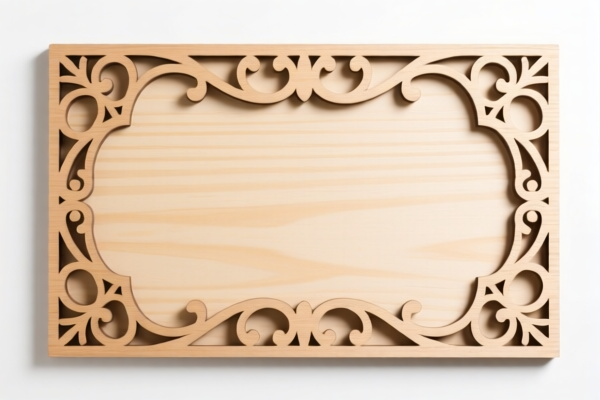
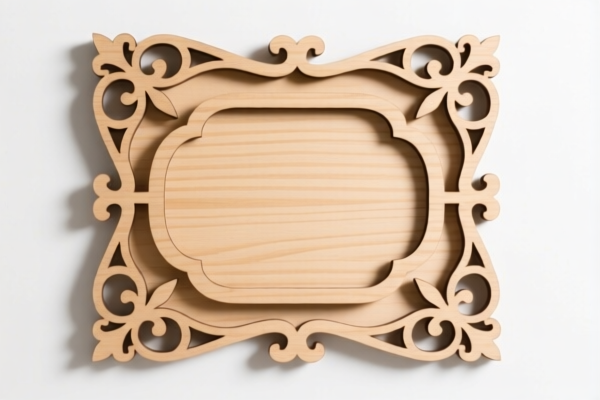
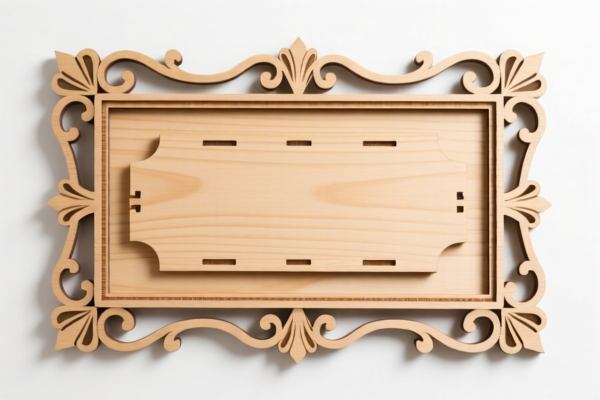
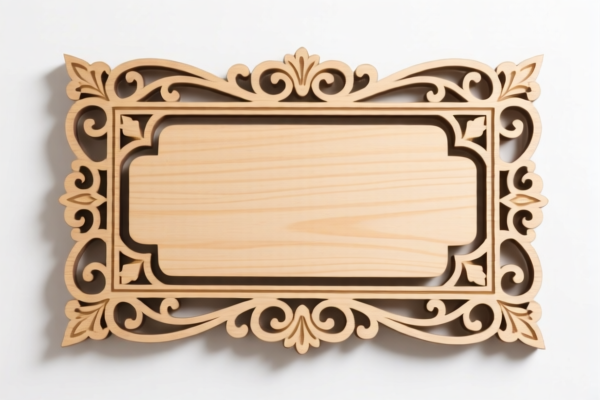
AI Analysis
🪵 MDF Decorative Sample (Decorative Wood Samples)
🌐 HS Code Reference & Customs Clearance Guide | 2026 Latest Tariff Analysis | Professional Clearance Strategy
📌 I. Product Definition & Classification: What is an "MDF Decorative Sample"?
MDF (Medium Density Fiberboard) decorative samples are small-scale representations of engineered wood products, typically used for interior design, furniture manufacturing, and architectural showcasing. In international trade, these samples can be classified differently depending on their physical state, intended use, and presentation format.
They fall into two main categories:
1. Physical Wood Product (Structural Material):
Samples that are essentially small pieces of MDF board with a decorative surface (laminate, veneer, or paint), representing a building material or furniture component.
2. Printed/Paper Sample (Marketing Material):
Samples that are primarily paper-based or printed representations of MDF surfaces, used for cataloging, sales presentations, or aesthetic comparison, where the MDF aspect is secondary or merely illustrative.
⚠️ Key Distinction Point:
- If the sample is a solid piece of MDF board (even small) intended to show material texture/thickness → Classified under Chapter 44 (Wood and Wood Products).
- If the sample is a printed paper/cardboard cutout showing an MDF pattern, or a thin veneer on paper → Classified under Chapter 49 (Printed Books, Newspapers, Pictures, etc.).
📦 II. HS Code Classification Details (2026 Latest Tariff Authority Comparison)
| HS Code | Product Description | Application Scenario | Material Nature |
|---|---|---|---|
4421.99.98.70 |
Other wooden articles (decorative wood samples) | Solid MDF samples with decorative finish, showing material grain/texture | ✅ Solid Wood/Engineered Wood |
4911.91.40.40 |
Other printed matter (decorative wood samples) | Printed paper/cardboard samples illustrating MDF looks, used for sales/catalogs | ✅ Paper/Printed Material |
4411.12.20.00 |
MDF (Medium Density Fiberboard) | Solid MDF boards, even as samples, classified as structural paneling | ✅ Solid MDF Board |
4421.99.98.80 |
Other wooden articles (decorative wood samples) | Alternative classification for solid wood decorative items | ✅ Solid Wood/Engineered Wood |
4911.99.80.00 |
Other printed matter (decorative wood samples) | Printed display samples, not specifically described elsewhere, used for exhibition | ✅ Paper/Printed Material |
4411.12.90.90 |
Other MDF articles (decorative samples) | Specific form of MDF display, not falling under standard board classification | ✅ Solid MDF Board |
🔍 Key Reminder:
- Solid MDF pieces (even cut into small squares for samples) must be classified under Chapter 44 (Wood).
- Paper/Cardboard prints that merely depict MDF patterns should be classified under Chapter 49 (Printed Materials).
- Misclassification can lead to significant tariff differences due to Section 301 and IEEPA surcharges.
💰 III. 2026 Latest Tariff Rate Details (Including Additional Taxes, Policy Surcharges)
✅ Applicable Country: United States (US)
✅ Origin: China (CN)
✅ Effective Date: From November 10, 2025 (including subsequent imports)
🎯 1. 4421.99.98.70 & 4421.99.98.80 —— Other Wooden Articles (Decorative Wood Samples)
| Item | Content |
|---|---|
| Base Tariff | 3.3% (ad valorem) |
| Section 301 Surcharge | +25.0% (USITC Footnote 9903.88.01) |
| IEEPA Surcharge | +10.0% (Against China/HK products, from Nov 10, 2025) |
| Total Tax Rate | 38.3% |
| Tax Calculation | CIF Value × 38.3% |
| De Minimis Exemption? | ❌ Not Eligible (deny_de_minimis) |
| Legal Basis Path | IEEPA:9903.01.25 → IEEPA:9903.01.24 → USITC:4421.99.98.70/80 → FOOTNOTE:9903.88.01 |
📌 Explanation:
- "Section 301 Surcharge 25%" is added under US Trade Law Section 301;
- "IEEPA 10%" is the additional tariff against Chinese products under the International Emergency Economic Powers Act;
- Total 38.3%, considered a high tariff, must be anticipated in advance!
🎯 2. 4911.91.40.40 & 4911.99.80.00 —— Other Printed Matter (Decorative Wood Samples)
| Item | Content |
|---|---|
| Base Tariff | 0.0% |
| Section 301 Surcharge | +7.5% (USITC Footnote 9903.88.01) |
| IEEPA Surcharge | +10.0% (Against China/HK products, from Nov 10, 2025) |
| Total Tax Rate | 17.5% |
| Tax Calculation | CIF Value × 17.5% |
| De Minimis Exemption? | ❌ Not Eligible (deny_de_minimis) |
| Legal Basis Path | IEEPA:9901.25 → IEEPA:9903.01.24 → USITC:4911.91.40.40/4911.99.80.00 → FOOTNOTE:9903.88.01 |
📌 Note:
- Lower base rate due to paper/printing classification;
- However, still subject to both Section 301 and IEEPA surcharges;
- Suitable for catalog samples, brochures, or printed swatches that do not contain substantial wood material.
🎯 3. 4411.12.20.00 & 4411.12.90.90 —— MDF (Medium Density Fiberboard)
| Item | Content |
|---|---|
| Base Tariff | 1.9¢/kg + 1.5% (ad valorem) for 4411.12.20.00; 3.9% for 4411.12.90.90 |
| Section 301 Surcharge | +25.0% (USITC Footnote 9903.88.01) |
| IEEPA Surcharge | +10.0% (Against China/HK products, from Nov 10, 2025) |
| Total Tax Rate | 1.9¢/kg + 1.5% + 35.0% (for 4411.12.20.00); 38.9% (for 4411.12.90.90) |
| Tax Calculation | Weight-based + Ad Valorem × 35% + IEEPA 10% |
| De Minimis Exemption? | ❌ Not Eligible (deny_de_minimis) |
| Legal Basis Path | IEEPA:9903.01.25 → IEEPA:9903.01.24 → USITC:4411.12.20.00/4411.12.90.90 → FOOTNOTE:9903.88.01 |
📌 Note:
- If classified as pure MDF (even small samples), the base tariff includes a per-kg component (1.9¢/kg);
- This can significantly impact cost for heavier samples;
- Total effective rate can reach ~38.9% depending on specific subheading.
🛠️ IV. Customs Clearance Practical Advice (Battle-tested Pitfall Avoidance Guide)
✅ 1. Required Documentation Checklist (Non-negotiable)
| Document | Mandatory | Description |
|---|---|---|
| ✅ Product Specification Sheet | ✔️ | Dimensions, weight, surface treatment, material composition |
| ✅ Material Declaration | ✔️ | Clearly state if it’s solid MDF or printed paper sample |
| ✅ Product Photos (Including Label) | ✔️ | Clear images showing front, back, and any markings |
| ✅ Commercial Invoice | ✔️ | Must accurately describe item as "MDF Decorative Sample" or "Printed Sample" |
| ✅ Packing List | ✔️ | Detail each item’s weight and dimensions |
| ✅ Proof of Origin (if applicable) | ✔️ | For non-China origins, to claim preferential rates |
✅ 2. Declaration Tips (Key Mantra)
🔥 “Solid MDF = Chapter 44; Printed Sample = Chapter 49; Name accurately, tariff may drop!”
| Situation | Correct Declaration | Wrong Approach |
|---|---|---|
| Solid MDF board sample (small piece) | 4411.12.20.00 or 4421.99.98.70 |
Misdeclare as "Paper Sample" → Penalty for misclassification |
| Printed paper swatch showing MDF pattern | 4911.91.40.40 or 4911.99.80.00 |
Misdeclare as "Wood Product" → Higher tariff (38.3% vs 17.5%) |
| Hybrid (wood veneer on paper) | Consult customs broker | Ambiguous description → Customs delay or reclassification |
✅ 3. Special Cases Handling
| Situation | Handling Advice |
|---|---|
| Samples with both wood and paper | Declare based on essential character (primary material); if wood dominates, use Chapter 44 |
| Samples included with bulk shipments | Separate HS Code declaration for samples to avoid confusion |
| Free samples for advertising | Still subject to tariffs; De Minimis ($800) does NOT apply to China-origin goods under current rules |
| Samples with heavy wood content | Ensure accurate weight declaration; per-kg tax (4411.12.20.00) can add up |
🌍 V. Global Market Customs Comparison (2026 Latest)
| Country/Region | Recommended HS Code | Tariff (China Origin) | Certification Requirements | Notes |
|---|---|---|---|---|
| 🇺🇸 USA | 4421.99.98.70 (Solid) / 4911.91.40.40 (Printed) |
38.3% (Solid) / 17.5% (Printed) | None specific for samples | High tariffs due to Section 301 + IEEPA |
| 🇨🇳 China | 4411.12.20.00 |
3.3% | None | No additional surcharges for domestic trade |
| 🇪🇺 EU | 4421.99.98.70 |
Varies by country (avg. 3-5%) | FSC Certification preferred | No Section 301 equivalent |
| 🇦🇺 Australia | 4421.99.98.70 |
5% | None | Lower base tariffs |
| 🇯🇵 Japan | 4421.99.98.70 |
3.5% | None | Low base tariffs |
📌 Conclusion:
- USA imposes the highest effective tariff on wood products from China due to combined Section 301 and IEEPA;
- Paper-based samples enjoy lower tariffs (17.5%) compared to solid wood (38.3%);
- Non-US markets have significantly lower tariffs, offering cost advantages for exporters.
📌 VI. Common Errors & Pitfall Avoidance (Lessons from Blood and Tears)
❌ Error 1: Declaring solid MDF samples as "Paper Samples"
👉 Consequence: Customs detects wood content → Misclassification Penalty + Back Taxes!
❌ Error 2: Using vague description like "Wooden Piece"
👉 Consequence: Customs uncertain → Delay in Clearance + Additional Inspection Fees
❌ Error 3: Assuming De Minimis ($800) applies to samples
👉 Consequence: No exemption for China-origin goods under current IEEPA rules → Full Tax Charged!
❌ Error 4: Ignoring per-kg tariff component in 4411.12.20.00
👉 Consequence: Underestimation of duties for heavy samples → Budget Shortfall
✅ Correct Practice:
"MDF Decorative Sample, Solid Wood, 10x10cm, Laminate Finish, For Interior Design Presentation, Model XYZ"
🎯 VII. Conclusion: Precise Classification Saves Money!
🎯 Remember the Mantra:
🔹 “Solid MDF = 38.3%; Printed Paper = 17.5%; No De Minimis for China!”
🔹 “HS Code determines tax; misclassification costs thousands!”
📌 Pro Tip:
If your samples are printed paper that only illustrate MDF, use Chapter 49 to save ~20.8% in tariffs.
If they are solid wood, consider pre-ruling (Advance Ruling) to confirm classification and avoid surprises.
📣 Immediate Action:
📞 Contact a licensed customs broker + Provide product photos + Apply for HS Code Advance Ruling
🚀 Ensure smooth clearance, minimize tax burden, maximize profit!
✨ Professional Clearance Starts with Accurate Classification!
💼 Every cent of cost deserves precise calculation!
Customer Reviews
About HS Code Classification
The Harmonized System (HS) is an internationally standardized nomenclature developed by the World Customs Organization (WCO) to classify traded products. Over 200 countries use the HS system as the basis for customs tariffs, trade statistics, and import/export regulations.
Each HS code follows a hierarchical structure:
- Chapter (2 digits) — Broad category of goods (e.g., Chapter 84: Machinery and Mechanical Appliances)
- Heading (4 digits) — More specific grouping within the chapter
- Subheading (6 digits) — Internationally standardized breakdown, used by all WCO member countries
- National subdivisions (8-10 digits) — Country-specific extensions for further classification, such as US HTSUS 10-digit codes
Correct HS code classification is essential for smooth customs clearance, accurate duty payment, and compliance with trade regulations. Misclassification can lead to customs delays, overpayment of duties, or penalties.
When importing from CN to US, the applicable tariff rates may include:
- Most-Favored-Nation (MFN) rate — The standard duty rate applied to WTO members
- General rate — Applied to countries without trade agreements
- Trade remedy duties — Additional tariffs such as Section 301 (anti-dumping), Section 232 (national security), or countervailing duties
The information provided on this page is for reference purposes only. For official classification, please consult with your local customs authority or a licensed customs broker.