MENS COTTON VEST
CN → US| HS Code | Tariff Rate | Origin | Destination | Doc |
|---|---|---|---|---|
| 6110202030 | 34.0% | CN | US | Official Doc |
| 6110201022 | 22.5% | CN | US | Official Doc |
Product Images
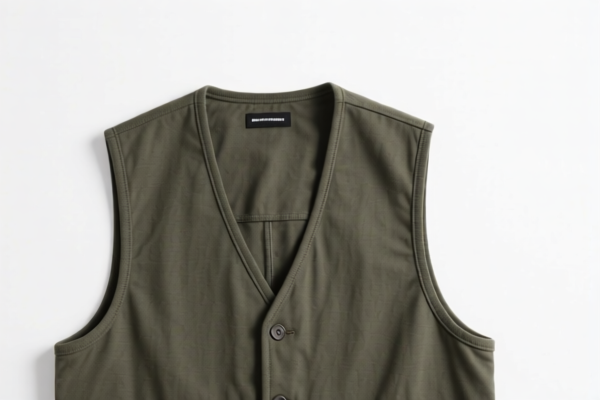
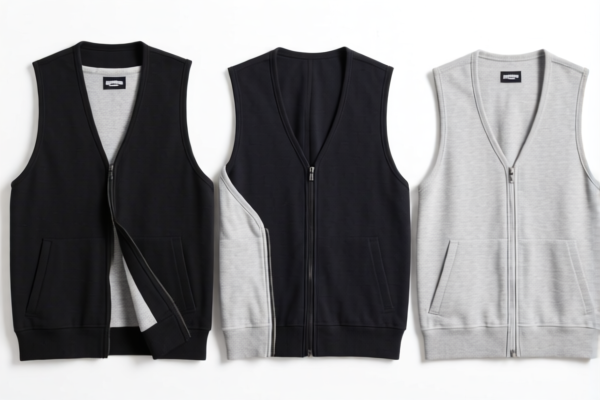
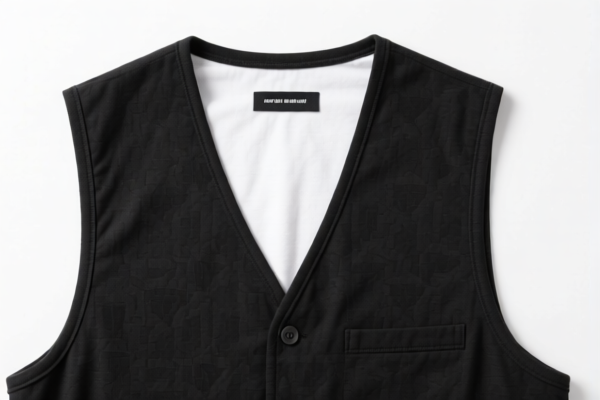
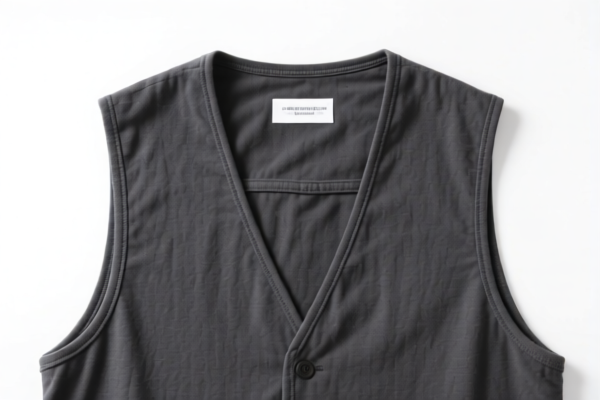
AI Analysis
👕 Men's Cotton Vest (Knitted/Crocheted Waistcoats)
🌐 HS Code Reference & Customs Clearance Guide | 2024/2025 Latest Tariff Analysis | Professional Entry Strategy
📌 I. Product Definition & Classification: Do You Really Know a "Men's Cotton Vest"?
In international trade, the term "Men's Cotton Vest" often leads to classification errors because it conflates material, function, and construction method. The key distinction lies in whether the garment is knitted/crocheted (Chapter 61) or woven (Chapter 62). Additionally, "Vest" in customs terminology usually refers to a waistcoat (a sleeveless outer garment), distinct from an undershirt or tank top.
Key Distinction Points: * Construction: Must be knitted or crocheted to fall under Chapter 61. Woven vests go to Chapter 62. * Material: Must be 100% Cotton or a cotton blend to fall under subheading 6110.20. * Type: Must be a Waistcoat (Vest), not a "Sweater Vest" (which often implies a thicker, cardigan-style, or specific knit structure). * Gender: Must be for Men's or Boys'.
⚠️ Critical Warning:
- If the vest is woven (e.g., a formal suit waistcoat made of woven fabric), it belongs in Chapter 62, NOT the codes below.
- If the vest is an undershirt/tank top (thin, often with straps), it may belong in 6109 or 6108, NOT 6110.
- The codes below only apply to knitted/crocheted waistcoats made of cotton.
📦 II. HS Code Classification Details (2024/2025 Latest Tariff Authority)
Based strictly on the provided <DATA>, there are two specific HS codes for Men's Cotton Knitted Vests, differentiated by fiber content.
| HS Code | Product Description | Applicable Scenario | Fiber Composition Requirement |
|---|---|---|---|
6110.20.20.30 |
Sweaters, pullovers, sweatshirts, waistcoats (vests)... Of cotton: Other: Vests, other than sweater vests: Men's or boys' | Standard knitted/crocheted waistcoats; casual knit vests; crew neck or V-neck knit vests | Of Cotton (Typically ≥50% or pure cotton, but not containing ≥36% flax) |
6110.20.10.22 |
Sweaters, pullovers, sweatshirts, waistcoats (vests)... Of cotton: Containing 36% or more by weight of flax fibers: Vests other than sweater vests: Men's or boys' | Knitted vests made of Cotton-Linen blends | Contains ≥36% by weight of Flax (Linen) fibers mixed with cotton |
🔍 Key Clarification:
- Code6110.20.20.30is for pure cotton or cotton blends where flax is <36%.
- Code6110.20.10.22is for cotton-linen blends where flax is ≥36%.
- Both exclude "sweater vests" (which often fall under different sub-headings if they resemble pullovers/cardigans).
- Both codes are classified as "Of Cotton" in the heading, but the sub-classification hinges on the flax content.
💰 III. Tariff Rate Details (2024/2025 Latest)
✅ Applicable Country: United States (US)
✅ Origin: China (CN) (Assumed based on typical trade context for such queries; verify if origin differs)
✅ Effective Date: Current 2024/2025 Tariff Schedule
🎯 1. 6110.20.20.30 —— Men's Knitted Cotton Vest (Standard)
| Item | Content |
|---|---|
| Base Tariff Rate | 0.0% |
| Additional Tariffs (Section 301/Other) | 0.0% |
| Total Tax Rate | 0.0% |
| Tax Detail | Base Tariff: 0.0%, Additional Tariffs: 0.0% |
| Calculation | No duty applied on CIF value. |
📌 Explanation:
- This code benefits from a 0% duty rate under the current US Harmonized Tariff Schedule (HTSUS) for men's knitted cotton vests.
- No Section 301 tariffs are currently listed for this specific 8-digit subheading in the provided data.
- Caution: Always verify if new trade restrictions (e.g., UFLPA, countervailing duties) apply, but based strictly on the provided<DATA>, the tax is 0%.
🎯 2. 6110.20.10.22 —— Men's Knitted Cotton-Linen Vest (Flax ≥36%)
| Item | Content |
|---|---|
| Base Tariff Rate | 0.0% |
| Additional Tariffs (Section 301/Other) | 0.0% |
| Total Tax Rate | 0.0% |
| Tax Detail | Base Tariff: 0.0%, Additional Tariffs: 0.0% |
| Calculation | No duty applied on CIF value. |
📌 Explanation:
- Despite the inclusion of flax (linen), this specific blend vest also carries a 0% duty rate according to the provided data.
- This is beneficial for sellers using cotton-linen blends, as it avoids higher linen-specific tariffs if applicable to other codes.
- Note: Ensure the flax content is ≥36% by weight to correctly use this code. If flax is <36%, you must use6110.20.20.30.
🛠️ IV. Customs Clearance Practical Advice (Real-World Pitfalls)
✅ 1. Required Documentation Checklist (Non-negotiable)
| Document | Mandatory? | Description |
|---|---|---|
| ✅ Product Composition Label | ✔️ Critical | Must explicitly state % Cotton and % Flax (if any). E.g., "64% Cotton, 36% Linen". |
| ✅ Knitted/Crocheted Declaration | ✔️ Critical | Confirm the manufacturing process. Woven vests will be reclassified and penalized. |
| ✅ Gender Specification | ✔️ | Must clearly state "Men's" or "Boys'". Unisex items should be declared as men's for safer classification. |
| ✅ Commercial Invoice | ✔️ | Description: "Men's Knitted Cotton Waistcoat/Vest, No Cardigan Style". |
| ✅ Packing List | ✔️ | Match invoice details. |
| ✅ Fabric Swatch/Spec Sheet | ✔️ | Recommended for audits to prove flax content if using code 6110.20.10.22. |
✅ 2. Declaration Tips (Key Mantras)
🔥 "Knitted, Not Woven; Vest, Not Shirt; Cotton Base, Check Flax!"
| Scenario | Correct Declaration | Wrong Practice |
|---|---|---|
| Standard Cotton Vest | HS: 6110.20.20.30Description: "Men's Knitted Cotton Vest" |
Describing as "Tank Top" or "Undershirt" → Wrong Chapter (6109). |
| Cotton-Linen Blend (Flax ≥36%) | HS: 6110.20.10.22Description: "Men's Knitted Vest, 36% Flax, 64% Cotton" |
Assuming it's "Of Linen" → Wrong Chapter (6117 or 6203/6211). |
| Woven Waistcoat | Do NOT use these codes Use Chapter 62 (e.g., 6211.11) |
Using 6110 codes for woven items → Seizure/Fines. |
| Sweater Vest (Cardigan-style) | Do NOT use these codes Check 6110.19 or 6110.20.90 |
Using "Vest" code for cardigans → Misclassification. |
✅ 3. Special Situations & Handling
| Situation | Handling Advice |
|---|---|
| Unisex Garments | Declare as Men's to utilize 6110.20.20.30 or 6110.20.10.22. Women's vests have different codes and potentially higher duties. |
| Mixed Bundles | If shipping men's vests and women's shirts together, separate entries are recommended to avoid complex valuation and classification issues. |
| Origin Shift | If the cotton is from the US but assembled in China, or vice versa, ensure the Country of Origin rule is met for preferential tariffs (if any). Currently, no preferential rates apply in the data, so origin doesn't affect the 0% rate shown. |
| Anti-Dumping/Countervailing Duties | While the base rate is 0%, always check for AD/CVD orders on cotton apparel from China. (Note: The provided data shows 0% additional tax, but external AD/CVD is possible). |
🌍 V. Global Market Comparison (Contextual Note)
| Market | Likely HS Code (Similar) | Typical Duty Rate | Remarks |
|---|---|---|---|
| 🇺🇸 USA | 6110.20.20.30 / 6110.20.10.22 |
0.0% | As per provided data. No 301 tariffs on these specific sub-headings. |
| 🇨🇳 China (Import) | 6110.20.20.30 |
~10-13% | China has higher MFN rates for cotton knitwear. |
| 🇪🇺 EU | 6110.20.20 |
~12% | Standard MFN duty for cotton sweaters/vests. |
| 🇬🇧 UK | 6110.20.20 |
~12% | Similar to EU post-Brexit. |
📌 Conclusion:
- The US market is highly favorable for these specific cotton knit vests, with 0% duty according to the provided data.
- Ensure accurate fiber content declaration to switch between20.20.30and20.10.22correctly, as misclassification can lead to audits.
📌 VI. Common Errors & Pitfalls (Lessons Learned)
❌ Error 1: Declaring a woven cotton waistcoat as 6110.20.20.30
👉 Consequence: Customs will reclassify to Chapter 62 (e.g., 6211.11), which may have higher duties (e.g., 16-17%).
❌ Error 2: Using 6110.20.10.22 when flax content is <36%
👉 Consequence: Misdeclaration. If flax is 30%, it should be 6110.20.20.30. While both are 0% in this data, it creates compliance risks and potential penalties for false declaration.
❌ Error 3: Confusing "Vest" (Waistcoat) with "Tank Top" (Undershirt)
👉 Consequence: Tank tops are often classified under 6109.10 (T-shirts). Using 6110 codes for tank tops is incorrect and may trigger audits.
❌ Error 4: Ignoring "Sweater Vest" distinction
👉 Consequence: If the vest has a front opening (cardigan style), it is not a "vest other than sweater vests" in some interpretations. Check specific HTSUS notes. The provided data explicitly excludes "sweater vests".
✅ Correct Declaration Example:
"Men's Knitted Cotton Waistcoat, No Front Opening, 100% Cotton, HS Code 6110.20.20.30, Origin China"
🎯 VII. Conclusion: Professional Declaration, Zero Risk, Max Efficiency!
🎯 Remember the Mantra:
🔹 "Knitted, Not Woven; Vest, Not Shirt; Check Flax, Zero Duty!"
🔹 "HS Code 6110.20 is King for Cotton Vests; 0% Duty if Declared Right!"
📌 Pro Tip:
- If your vest is 100% Cotton, use 6110.20.20.30.
- If your vest is Cotton + Linen (Flax ≥36%), use 6110.20.10.22.
- Both have 0% tax in the provided data, but using the wrong code invites scrutiny.
- Always keep fabric composition tests on file.
📣 Immediate Action:
📞 Consult a Licensed Customs Broker to verify current UFLPA or AD/CVD status.
🚀 Declare Accurately: "Men's Knitted Cotton Vest" + Correct HS Code.
💼 Let Your Vests Pass Smoothly, With 0% Duty and Zero Stress!
✨ Professional Clearance Starts with Precise Classification!
💼 Your Every Penny Saved is Calculated!
Customer Reviews
About HS Code Classification
The Harmonized System (HS) is an internationally standardized nomenclature developed by the World Customs Organization (WCO) to classify traded products. Over 200 countries use the HS system as the basis for customs tariffs, trade statistics, and import/export regulations.
Each HS code follows a hierarchical structure:
- Chapter (2 digits) — Broad category of goods (e.g., Chapter 84: Machinery and Mechanical Appliances)
- Heading (4 digits) — More specific grouping within the chapter
- Subheading (6 digits) — Internationally standardized breakdown, used by all WCO member countries
- National subdivisions (8-10 digits) — Country-specific extensions for further classification, such as US HTSUS 10-digit codes
Correct HS code classification is essential for smooth customs clearance, accurate duty payment, and compliance with trade regulations. Misclassification can lead to customs delays, overpayment of duties, or penalties.
When importing from CN to US, the applicable tariff rates may include:
- Most-Favored-Nation (MFN) rate — The standard duty rate applied to WTO members
- General rate — Applied to countries without trade agreements
- Trade remedy duties — Additional tariffs such as Section 301 (anti-dumping), Section 232 (national security), or countervailing duties
The information provided on this page is for reference purposes only. For official classification, please consult with your local customs authority or a licensed customs broker.