MOOD LIGHTS
CN → US| HS Code | Tariff Rate | Origin | Destination | Doc |
|---|---|---|---|---|
| 8531200040 | 35.0% | CN | US | Official Doc |
| 8531809051 | 17.5% | CN | US | Official Doc |
| 8543707100 | 37.0% | CN | US | Official Doc |
| 9405426000 | 41.0% | CN | US | Official Doc |
| 9405428410 | 38.9% | CN | US | Official Doc |
Product Images
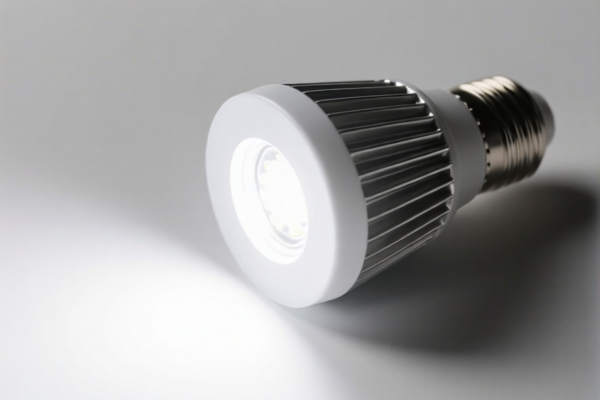
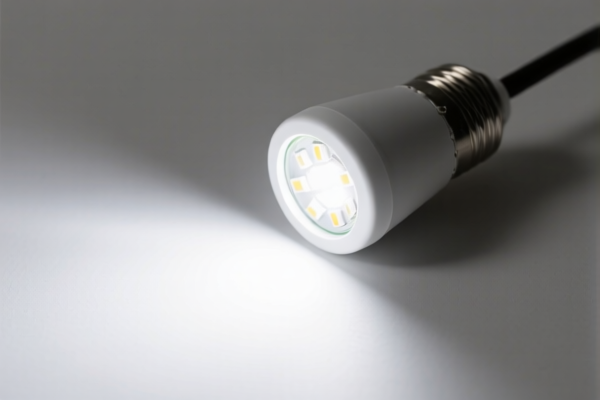
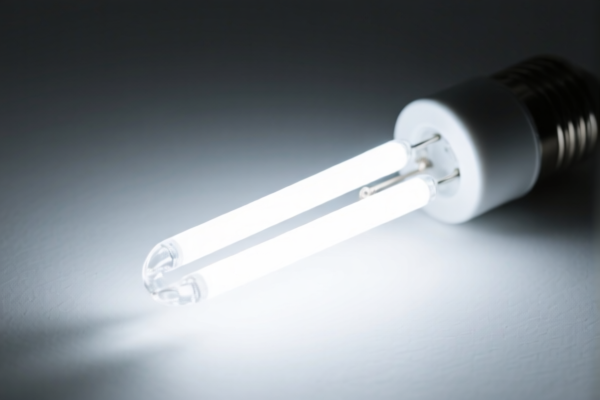
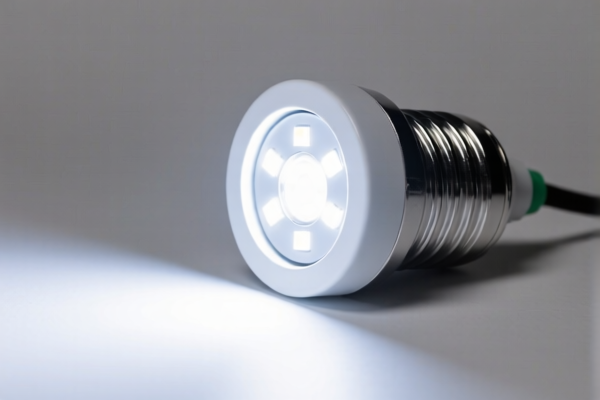
AI Analysis
💡 LED Mood Lights (Ambient Lighting Solutions)
🌐 HS Code Reference & Customs Clearance Guide | 2026 Latest Tariff Analysis | Professional-Level Strategy
📌 I. Product Definition & Classification: Do You Really Understand "Mood Lights"?
LED Mood Lights are specialized lighting devices designed primarily for atmospheric ambiance rather than general illumination. In international trade, they are often scrutinized under two main categories:
1. Signaling/Visual Signal Apparatus: Devices that serve as indicators or signals, utilizing LEDs as the core material.
2. Lighting Fixtures: Articles specifically designed for LED light sources, intended for ambient lighting purposes.
⚠️ Key Distinction Point:
- If the product functions primarily as an indicator or signal device (e.g., status lights, decorative signaling) → It may fall under 8531 or 8543.
- If the product functions primarily as general lighting/ambient illumination with a complete housing → It is more likely classified under 9405.
📦 II. HS Code Classification Details (2026 Latest Tariff Authority Comparison)
| HS Code | Product Description | Application Scenario | Material/Function Focus |
|---|---|---|---|
8531.20.00.40 |
Electric sound or visual sign apparatus (other than those of heading 85.12, 85.30 or 85.31) | LED status indicators, decorative signaling units | LEDs as visual signal components |
8531.80.90.51 |
Other electric visual signaling apparatus | Ambient lighting units functioning as visual signals | LEDs/Electronic components for ambiance |
8543.70.71.00 |
Electrical machines and apparatus, having individual functions, not specified or included elsewhere | Standalone electronic lighting devices with specific functions | Independent functional electronic lighting |
9405.42.60.00 |
Electric lighting fittings and light fittings, including searchlights and spotlights... | LED lighting fixtures made of base metals | Metal components, general LED illumination |
9405.42.84.10 |
Electric lighting fittings for LED lamps | Specialized LED lighting fixtures | Specifically designed for LED light sources |
🔍 Key Reminder:
- Products classified under 8531 are treated as "Signaling/Visual Devices" rather than traditional lamps.
- Products classified under 9405 are treated as "Lighting Fixtures".
- The presence of specific materials (e.g., base metals) and the primary function (signal vs. illumination) determine the correct code.
💰 III. 2026 Latest Tariff Rate Details (Including Surcharges & Policy Add-ons)
✅ Applicable Country: United States (US)
✅ Origin: China (CN)
✅ Effective Date: From 2025-11-10 onwards
🎯 1. 8531.20.00.40 – Electric Visual Sign Apparatus (LED-based)
| Item | Details |
|---|---|
| Base Duty Rate | 0.0% |
| USITC Section 301 Surcharge | +25.0% |
| Section 122 IEEPA Surcharge | +10.0% |
| Total Effective Rate | 35.0% |
| Tax Calculation | CIF Value × 35.0% |
| De Minimis Eligibility | ❌ Not Eligible |
| Legal Basis Path | USITC:8531.20.00.40 → Section 301: 25% → IEEPA Sec 122: 10% |
📌 Explanation:
- This code falls under "Signaling Apparatus."
- Despite a 0% base duty, the 35% total effective rate is significant due to trade remedies.
- No de minimis exemption applies; full duties must be paid.
🎯 2. 8531.80.90.51 – Other Electric Visual Signaling Apparatus
| Item | Details |
|---|---|
| Base Duty Rate | 0.0% |
| USITC Section 301 Surcharge | +7.5% |
| Section 122 IEEPA Surcharge | +10.0% |
| Total Effective Rate | 17.5% |
| Tax Calculation | CIF Value × 17.5% |
| De Minimis Eligibility | ❌ Not Eligible |
| Legal Basis Path | USITC:8531.80.90.51 → Section 301: 7.5% → IEEPA Sec 122: 10% |
📌 Note:
- This is the most cost-effective classification among the signaling options.
- Suitable for LED mood lights that are technically categorized as "visual signals" rather than pure lighting fixtures.
- The lower 301 surcharge (7.5%) compared to 25% makes this a strategic choice if product specs allow.
🎯 3. 8543.70.71.00 – Electrical Machines/Apparatus with Individual Functions
| Item | Details |
|---|---|
| Base Duty Rate | 2.0% |
| USITC Section 301 Surcharge | +25.0% |
| Section 122 IEEPA Surcharge | +10.0% |
| Total Effective Rate | 37.0% |
| Tax Calculation | CIF Value × 37.0% |
| De Minimis Eligibility | ❌ Not Eligible |
| Legal Basis Path | USITC:8543.70.71.00 → Section 301: 25% → IEEPA Sec 122: 10% |
📌 Explanation:
- Classified as a standalone electronic device with a specific function.
- Higher total cost due to the 2.0% base duty plus full surcharges.
- Only consider if the product's technical specifications strongly align with "electrical apparatus" rather than lighting or signaling.
🎯 4. 9405.42.60.00 – Electric Lighting Fittings (Base Metal)
| Item | Details |
|---|---|
| Base Duty Rate | 6.0% |
| USITC Section 301 Surcharge | +25.0% |
| Section 122 IEEPA Surcharge | +10.0% |
| Total Effective Rate | 41.0% |
| Tax Calculation | CIF Value × 41.0% |
| De Minimis Eligibility | ❌ Not Eligible |
| Legal Basis Path | USITC:9405.42.60.00 → Section 301: 25% → IEEPA Sec 122: 10% |
📌 Warning:
- This classification assumes the product contains base metal components.
- The highest total rate (41%) among the options.
- Avoid unless the product is undeniably a standard lighting fixture with significant metal construction.
🎯 5. 9405.42.84.10 – Electric Lighting Fittings for LED Lamps
| Item | Details |
|---|---|
| Base Duty Rate | 3.9% |
| USITC Section 301 Surcharge | +25.0% |
| Section 122 IEEPA Surcharge | +10.0% |
| Total Effective Rate | 38.9% |
| Tax Calculation | CIF Value × 38.9% |
| De Minimis Eligibility | ❌ Not Eligible |
| Legal Basis Path | USITC:9405.42.84.10 → Section 301: 25% → IEEPA Sec 122: 10% |
📌 Note:
- Specifically for products designed for LED light sources.
- Slightly lower base duty (3.9%) than standard fittings (6.0%), but still incurs full surcharges.
- Total rate is 38.9%, making it less favorable than8531.80.90.51.
🛠️ IV. Customs Clearance Practical Advice (Battle-Tested Pitfall Guide)
✅ 1. Required Documentation Checklist (Non-Negotiable)
| Document | Required | Notes |
|---|---|---|
| ✅ Product Specification Sheet | ✔️ | Must detail LED type, power, function (signal vs. light) |
| ✅ Circuit/Structure Diagram | ✔️ | Critical to prove if it’s a "signal apparatus" (8531) or "lighting fixture" (9405) |
| ✅ Product Photos (with label) | ✔️ | Clear view of model, brand, input/output specs |
| ✅ Third-Party Test Report | ✔️ | FCC, CE, RoHS, UL (if applicable) |
| ✅ Commercial Invoice | ✔️ | Must explicitly state "LED Mood Light" or "Visual Signaling Device" |
| ✅ Certificate of Origin (CO) | ✔️ | Required for origin verification; no preferential rate for China-US |
| ✅ Packing List | ✔️ | Detail contents to avoid "missing parts" flags |
✅ 2. Declaration Strategy (Key Mantra)
🔥 "Function determines code, material affects base, surcharges are fixed!"
| Scenario | Correct Declaration | Incorrect Action |
|---|---|---|
| LED light used for ambiance/signaling | 8531.80.90.51 (17.5%) |
Misdeclare as Lighting (9405) → ~39-41% |
| Standalone electronic lighting device | 8543.70.71.00 (37.0%) |
Vague description → Audit risk |
| Metal-bodied LED fixture | 9405.42.60.00 (41.0%) |
Hide metal content → Fraud penalty |
| LED-specific fixture | 9405.42.84.10 (38.9%) |
Generic "light" description → Delay |
💡 Strategic Insight:
-8531.80.90.51(17.5%) is the optimal classification for many LED mood lights if they can be justified as "visual signaling apparatus" or "indicating devices" rather than general lighting.
- Always provide technical diagrams to support the "signal/indicator" function argument.
✅ 3. Special Case Handling
| Situation | Handling Advice |
|---|---|
| OEM Custom Mood Lights | Provide client specs + design drawings to prove unique function; avoid generic descriptions |
| Lights with Remote Control | Still classify based on primary function (signal vs. light); remote does not change HS code |
| Integrated Power Supply | If integral, declare as whole unit; do not split into "LED bulb" + "power adapter" |
| Product with Base Metal Components | If >50% value is metal, 9405 may be forced; otherwise, argue for 8531 |
🌍 V. Global Market Comparison (2026 Latest)
| Country/Region | Recommended HS Code | Effective Tariff (China Origin) | Certification Required | Notes |
|---|---|---|---|---|
| 🇺🇸 USA | 8531.80.90.51 |
17.5% (if signal) / 39%+ (if light) | FCC + RoHS | Critical: Code selection impacts cost by 20%+ |
| 🇨🇳 China | 8531.80.90.51 |
0-5% (varies) | CCC + RoHS | Lower duties domestically |
| 🇪🇺 EU | 8531.80.90.51 |
0-2.7% (if signal) | CE + RoHS | No Section 301/122 equivalent |
| 🇦🇺 Australia | 8531.80.90.51 |
5% | RCM | No major surcharges |
| 🇯🇵 Japan | 8531.80.90.51 |
0-5% | PSE | Favorable rates for electronic signs |
📌 Conclusion:
- USA is the only major market imposing severe surcharges (301 + 122).
- Classification as "Visual Signaling Apparatus" (8531.80.90.51) saves ~20%+ in duties compared to lighting fixtures (9405).
- For other markets, tariffs are significantly lower, but US entry requires precise classification.
📌 VI. Common Mistakes & Pitfalls (Lessons from Blood & Tears)
❌ Mistake 1: Declaring LED Mood Lights as "Lighting Fixtures" (9405) when they are actually "Visual Signals" (8531).
👉 Consequence: Paying 39-41% instead of 17.5%. Loss of 20%+ margin!
❌ Mistake 2: Using vague descriptions like "LED Light" on the invoice.
👉 Consequence: Customs may choose the highest-rated code or flag for inspection, causing delays and storage fees.
❌ Mistake 3: Assuming de minimis applies.
👉 Consequence: No de minimis exemption for these codes under current US rules. Full duty payment is mandatory.
❌ Mistake 4: Ignoring material composition.
👉 Consequence: If base metal content is high, customs may reclassify to 9405.42.60.00 (41%). Always disclose materials.
✅ Correct Approach:
"LED Ambient Visual Signaling Device, Model XYZ, FCC Certified, for Decorative Indicating Purposes"
🎯 VII. Conclusion: Precise Classification Saves Money!
🎯 Remember the Mantra:
🔹 "Signal under 8531 (17.5%), Light under 9405 (39%+)!
🔹 "No de minimis, no discounts – declare accurately!"
🔹 "One wrong code costs you 20% profit!"
📌 Pro Tip:
- If your product can be technically defined as a visual signaling device (even for ambiance), use 8531.80.90.51.
- Always provide technical documentation to support the "signaling" function.
- Apply for an Advance Ruling with US CBP if unsure.
📣 Take Action Now:
📞 Consult a professional customs broker.
📄 Submit product specs + diagrams for pre-classification.
🚀 Ensure smooth clearance, maximize profit, and avoid surprise duties!
✨ Professional clearance starts with precise classification!
💼 Every cent counts – get it right the first time!
Customer Reviews
About HS Code Classification
The Harmonized System (HS) is an internationally standardized nomenclature developed by the World Customs Organization (WCO) to classify traded products. Over 200 countries use the HS system as the basis for customs tariffs, trade statistics, and import/export regulations.
Each HS code follows a hierarchical structure:
- Chapter (2 digits) — Broad category of goods (e.g., Chapter 84: Machinery and Mechanical Appliances)
- Heading (4 digits) — More specific grouping within the chapter
- Subheading (6 digits) — Internationally standardized breakdown, used by all WCO member countries
- National subdivisions (8-10 digits) — Country-specific extensions for further classification, such as US HTSUS 10-digit codes
Correct HS code classification is essential for smooth customs clearance, accurate duty payment, and compliance with trade regulations. Misclassification can lead to customs delays, overpayment of duties, or penalties.
When importing from CN to US, the applicable tariff rates may include:
- Most-Favored-Nation (MFN) rate — The standard duty rate applied to WTO members
- General rate — Applied to countries without trade agreements
- Trade remedy duties — Additional tariffs such as Section 301 (anti-dumping), Section 232 (national security), or countervailing duties
The information provided on this page is for reference purposes only. For official classification, please consult with your local customs authority or a licensed customs broker.