Macadamia Oil
CN → US| HS Code | Tariff Rate | Origin | Destination | Doc |
|---|---|---|---|---|
| 1515902100 | 17.5% | CN | US | Official Doc |
| 1515908190 | 20.7% | CN | US | Official Doc |
Product Images
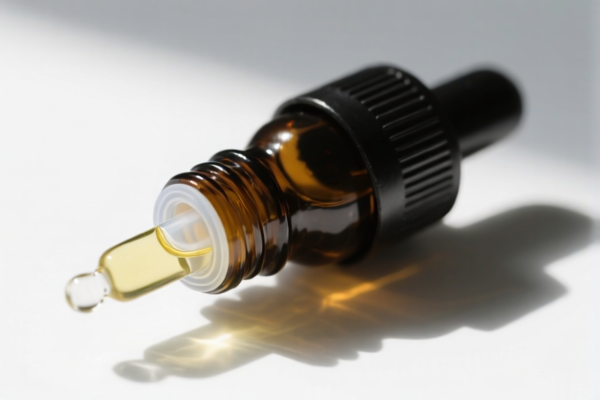

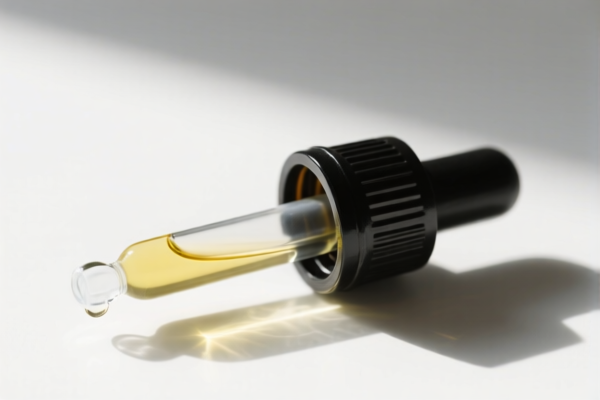
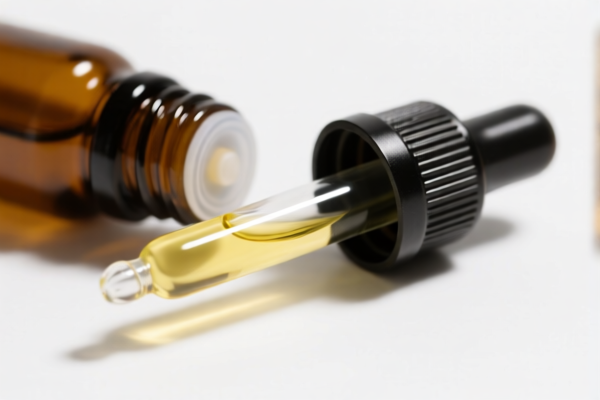
AI Analysis
🥜 Macadamia Oil (Macadamia Ternifolia Seed Oil)
🌐 HS Code Reference & Customs Clearance Guide | 2026 Latest Tariff Analysis | Professional Clearance Strategy 📌 I. Product Definition & Classification: What Exactly is "Macadamia Oil"?
Macadamia oil, extracted from the nuts of the Macadamia integrifolia or Macadamia ternifolia tree, is a high-value vegetable oil known for its stability and high monounsaturated fat content. In international trade, it is strictly categorized under Chapter 15 (Animal or Vegetable Fats and Oils).
The critical distinction lies in the specific HS Code subheading, which depends on whether it is classified specifically as "Nut oil" or falls under the broader "Other vegetable oils" category. For standard Macadamia oil, it is typically classified under "Nut oils".
⚠️ Key Classification Point: - Macadamia Oil is legally defined as a Nut oil in many tariff schedules. - If classified as a generic "Other fixed vegetable oil," the tariff implications differ significantly. - Raw vs. Refined: Both raw and refined oils fall under the same HS codes in this dataset, as "chemically modified" is the exclusion criterion, not the refinement level.
📦 II. HS Code Classification Details (2026 Latest Tariff Authority)
Based on the provided data, there are two potential HS Codes depending on the precise statistical sub-categorization of "Nut Oil" vs. "Other Other."
| HS Code | Product Description | Applicable Scenario | Tax Rate |
|---|---|---|---|
| 1515.90.21.00 | Other fixed vegetable or microbial fats and oils: Other: Nut oils | Standard Macadamia Oil (Classified explicitly as a nut oil) | 7.5% |
| 1515.90.81.90 | Other fixed vegetable or microbial fats and oils: Other: Other Other | Alternative classification if not explicitly listed under "Nut oils" in specific statistical breaks | 10.7% |
🔍 Critical Note: - HS Code
1515.90.21.00is the primary target for Macadamia oil as it is botanically and commercially considered a Nut oil. - HS Code1515.90.81.90is a residual category ("Other Other"). Using this code when "Nut oil" applies may lead to a higher tax rate (10.7% vs 7.5%). - Do NOT confuse with almond oil or other nuts if local customs has a specific list. However, based on the provided data, "Nut oils" is the distinct category for Macadamia.
💰 III. 2026 Latest Tariff Rate Breakdown (Detailed Tax Clauses)
✅ Applicable Country: United States (US)
✅ Origin: China (CN) (Assumed based on "Additional Tariff" context in data)
✅ Effective Time: 2025-2026 Period
🎯 1. HS Code 1515.90.21.00 — Macadamia Oil (Nut Oil Category)
| Item | Content |
|---|---|
| Base Tariff (MFN) | 0.0% (Duty-Free for most vegetable oils) |
| Additional Tariff (Section 301/China) | +7.5% |
| Total Tax Rate | 7.5% |
| Tax Calculation | CIF Value × 7.5% |
| De Minimis Exemption | ❌ Not Applicable (Section 321 de minimis does not apply to goods subject to Section 301 tariffs if value exceeds threshold, but note: Section 301 tariffs apply regardless of de minimis for many categories, check current CBP enforcement. Note: The data implies a direct total tax of 7.5%). |
| Legal Basis Path | HTSUS: 1515.90.21.00 → Section 301 List 4C (if applicable) |
📌 Explanation: - The Base Tariff is 0%, meaning Macadamia oil is generally duty-free under normal trade relations. - The 7.5% Additional Tariff is the key cost driver, likely stemming from U.S. trade measures against Chinese-origin goods (Section 301). - Total Landed Cost Impact: 7.5% of the CIF value is paid solely in customs duties.
🎯 2. HS Code 1515.90.81.90 — Other Vegetable Oils (Misclassification Risk)
| Item | Content |
|---|---|
| Base Tariff | 3.2% |
| Additional Tariff | +7.5% |
| Total Tax Rate | 10.7% |
| Tax Calculation | CIF Value × 10.7% |
| Comparison | 3.2% HIGHER than the correct "Nut Oil" classification |
| Legal Basis Path | HTSUS: 1515.90.81.90 → Section 301 |
📌 Warning: - Misclassifying Macadamia oil as "Other Other" instead of "Nut Oil" results in an unnecessary 3.2% increase in the base tariff. - Always provide Botanical Name (Macadamia integrifolia) and Nut Classification in documentation to justify
1515.90.21.00.
🛠️ IV. Customs Clearance Practical Advice (Actionable Strategy)
✅ 1. Essential Documentation Checklist
| Document | Required | Purpose |
|---|---|---|
| Commercial Invoice | ✔️ | Must specify: "Macadamia Oil," "Botanical Name: Macadamia integrifolia," "HS Code: 1515.90.21.00" |
| Packing List | ✔️ | Net/Gross weight, volume of oil, container type |
| Certificate of Origin (CO) | ✔️ | Critical to prove origin. If not China, may avoid the 7.5% additional tariff. |
| Product Specification Sheet | ✔️ | Confirm it is not chemically modified (only physical extraction/refining) |
| Bill of Lading (B/L) | ✔️ | Ensure description matches invoice exactly |
| FDA Prior Notice | ✔️ | Required for food/cosmetic ingredients entering the US |
✅ 2. Declaration Tips (Key Mnemonic)
🔥 "Nut First, Botanical Name, Avoid 'Other' Trap, 7.5% is the Cap!"
| Scenario | Correct Declaration | Risk if Wrong |
|---|---|---|
| Pure Macadamia Oil | 1515.90.21.00 (Nut Oil) |
Tax jumps to 10.7% if misclassified as "Other Other" |
| Blended Oil (Macadamia + Jojoba) | Must declare each component or use the dominant ingredient code | Complex customs hold, potential reclassification |
| Chemically Modified Oil | Different HS Code (e.g., 1518.00) | Not applicable here as data specifies "not chemically modified" |
| Origin: Non-China | 1515.90.21.00 with Valid FTA Certificate |
0% Total Tax if from Australia/NZ under specific FTAs |
✅ 3. Special Circumstances
| Situation | Advice |
|---|---|
| Origin: Australia | Macadamia nuts are native to Australia. If shipped from Australia, check for FTA benefits. The 7.5% additional tariff likely applies only to Chinese-origin goods. Australian origin may qualify for 0% additional tariff. |
| Refined vs. Crude | Both are covered under 1515.90. Ensure documentation states "Refined" or "Crude" accurately, as some cosmetic clients prefer "Refined." |
| Cosmetic vs. Food Grade | Clearly state intended use. If cosmetic, ensure FDA compliance for labeling. If food, ensure USDA/FDA approval for import. |
🌍 V. Global Market Comparison (2026 Snapshot)
| Country | HS Code | Tariff Rate | Notes |
|---|---|---|---|
| 🇺🇸 USA (China Origin) | 1515.90.21.00 |
7.5% | 0% Base + 7.5% Additional |
| 🇺🇸 USA (Australia Origin) | 1515.90.21.00 |
0% | Likely FTA benefit or no additional tariffs |
| 🇪🇺 EU | 1515.90 |
0% - 7.5% | Varies by origin; often 0% for bulk oils |
| 🇨🇳 China (Import) | 1515.90.21.00 |
10% - 15% | Import duties into China can be high |
📌 Conclusion: - USA: The 7.5% additional tariff is the main cost for Chinese-origin Macadamia oil. - Strategy: If possible, source from Australia to avoid the additional tariff entirely. - Classification: Always use 1515.90.21.00 ("Nut oils") to minimize base tariff.
📌 VI. Common Errors & Pitfalls (Lessons Learned)
❌ Error 1: Misclassifying as 1515.90.81.90 ("Other Other")
👉 Consequence: Pay 10.7% instead of 7.5%. Waste of 3.2% on every shipment.
❌ Error 2: Ignoring Origin 👉 Consequence: If from China, pay 7.5% additional. If from Australia, pay 0% additional. Always declare exact country of origin.
❌ Error 3: Vague Description "Vegetable Oil" 👉 Consequence: Customs may flag for inspection, delay clearance, or misclassify. Use "Macadamia Oil (Nut Oil)".
❌ Error 4: Claiming "Chemically Modified" 👉 Consequence: If actually refined, do NOT say "chemically modified." Refined is physical. Chemical modification changes the chemical nature (e.g., hydrogenation), which falls under different HS codes.
✅ Correct Approach:
"Macadamia Oil, Refined, Food Grade, Botanical Name: Macadamia integrifolia, HS Code: 1515.90.21.00, Origin: [Country]"
🎯 VII. Conclusion: Precision in Classification Saves Money!
🎯 Key Takeaway:
🔹 Use HS Code
1515.90.21.00to classify Macadamia Oil as a Nut Oil. 🔹 Base Tariff: 0%. Additional Tariff: 7.5% (for China origin). 🔹 Total: 7.5%. Do not use1515.90.81.90which costs 10.7%. 🔹 Check Origin: If from Australia, you may pay 0% total duties.
📌 Pro Tip: If your supplier is in Australia, ensure the Certificate of Origin clearly states Australia to avoid the 7.5% additional tariff under U.S. trade rules. For Chinese-origin oil, the 7.5% is unavoidable under current tariffs.
📣 Immediate Action:
📞 Confirm HS Code 1515.90.21.00 with your customs broker. 📄 Verify Certificate of Origin to optimize tariff rates. 🚀 Clearance is smoother when classification is precise!
✨ Professional Customs Clearance Starts with Accurate HS Codes! 💼 Save 3.2% per shipment by choosing the right "Nut Oil" classification!
Customer Reviews
About HS Code Classification
The Harmonized System (HS) is an internationally standardized nomenclature developed by the World Customs Organization (WCO) to classify traded products. Over 200 countries use the HS system as the basis for customs tariffs, trade statistics, and import/export regulations.
Each HS code follows a hierarchical structure:
- Chapter (2 digits) — Broad category of goods (e.g., Chapter 84: Machinery and Mechanical Appliances)
- Heading (4 digits) — More specific grouping within the chapter
- Subheading (6 digits) — Internationally standardized breakdown, used by all WCO member countries
- National subdivisions (8-10 digits) — Country-specific extensions for further classification, such as US HTSUS 10-digit codes
Correct HS code classification is essential for smooth customs clearance, accurate duty payment, and compliance with trade regulations. Misclassification can lead to customs delays, overpayment of duties, or penalties.
When importing from CN to US, the applicable tariff rates may include:
- Most-Favored-Nation (MFN) rate — The standard duty rate applied to WTO members
- General rate — Applied to countries without trade agreements
- Trade remedy duties — Additional tariffs such as Section 301 (anti-dumping), Section 232 (national security), or countervailing duties
The information provided on this page is for reference purposes only. For official classification, please consult with your local customs authority or a licensed customs broker.