Macadamia nut oil
CN → US| HS Code | Tariff Rate | Origin | Destination | Doc |
|---|---|---|---|---|
| 1507904040 | 36.6% | CN | US | Official Doc |
| 1507100000 | 36.6% | CN | US | Official Doc |
| 1202429040 | 141.8% | CN | US | Official Doc |
| 1202418040 | 173.8% | CN | US | Official Doc |
| 1515902100 | 17.5% | CN | US | Official Doc |
| 1515908190 | 20.7% | CN | US | Official Doc |
Product Images
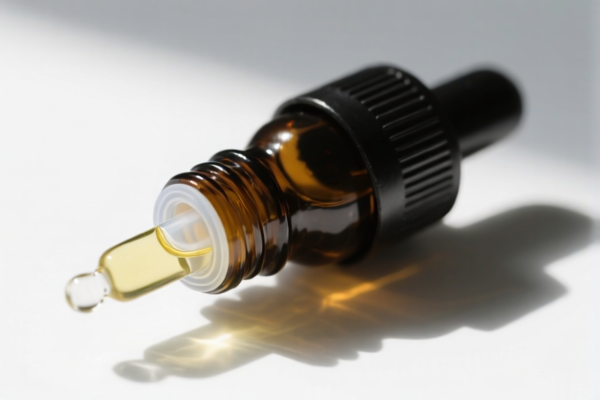

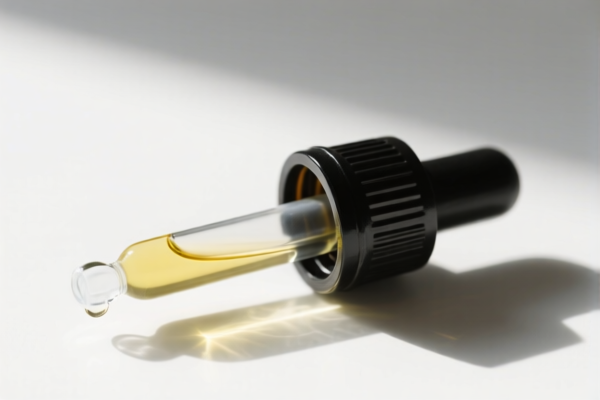
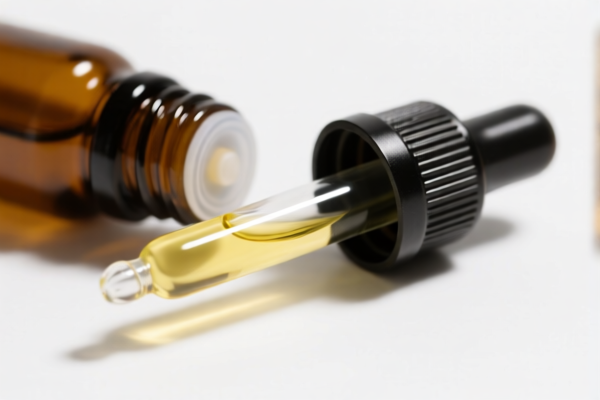
AI Analysis
🥜 Macadamia Nut Oil (High-Value Edible Oil & Cosmeceutical Ingredient)
🌐 HS Code Reference & Customs Clearance Guide | 2026 Latest Tariff Analysis | Professional Strategy
📌 I. Product Definition & Classification: What Exactly Is "Macadamia Nut Oil"?
Macadamia nut oil is a premium vegetable oil extracted from the nuts of the Macadamia integrifolia tree. In international trade, it is NOT classified as a standard "nut" (like peanuts or almonds) but rather as a "Nut Oil" under the category of "Other fixed vegetable or microbial fats and oils."
Key Distinctions: * Raw vs. Processed: Whether crude, refined, bleached, or deodorized, the primary classification depends on it being an oil extracted from nuts, not the nut meat itself. * "Other" Category: Since HS codes often group specific oils (like olive, palm, soybean) separately, Macadamia oil falls under the residual category of "Other: Nut oils" or "Other: Other."
⚠️ Critical Classification Point:
- If the product is pure Macadamia Nut Oil (whether refined or crude): It belongs to HS 1515.90.21.00 ("Nut oils").
- If it is a blend or a different type of fixed vegetable oil not specifically listed: It may fall under HS 1515.90.81.90 ("Other Other").
- Do NOT classify as Peanut (1202) or Soybean (1507) oils.
📦 II. HS Code Classification Details (2026 Latest Tariff Authority)
Based on the provided data, here are the relevant HS Codes for Macadamia Nut Oil and related vegetable fats/oils:
| HS Code | Product Description | Application to Macadamia Oil |
|---|---|---|
1515.90.21.00 |
Other fixed vegetable or microbial fats and oils... Other: Nut oils | ✅ Primary Classification. Macadamia is a nut. This code captures the oil extracted from nuts. |
1515.90.81.90 |
Other fixed vegetable or microbial fats and oils... Other: Other Other | ⚠️ Alternative. Used if the specific "Nut oil" sub-heading is contested or if it's a complex blend. |
1507.90.40.40 |
Soybean oil and its fractions... Other (fully refined...) | ❌ Incorrect. Only for Soybean Oil. |
1507.10.00.00 |
Soybean oil and its fractions... Crude oil | ❌ Incorrect. Only for Soybean Oil. |
1202.42.90.40 |
Peanuts (ground-nuts)... Shelled... Other Other | ❌ Incorrect. Only for Raw/Processed Peanuts (the nut meat), not the oil. |
1202.41.80.40 |
Peanuts (ground-nuts)... In shell... Other Other | ❌ Incorrect. Only for Raw Peanuts in shell. |
🔍 重点提醒:
- Macadamia oil is strictly an "Oil" (Chapter 15), not a "Nut" (Chapter 12).
- The most accurate code is1515.90.21.00because Macadamia is botanically and commercially treated as a nut oil.
💰 III. 2026 Latest Tariff Rate Breakdown (Including Surcharges & Policy Additions)
✅ Applicable Country: United States (US)
✅ Origin: China (CN)
✅ Effective Date: 2025 Nov 10 onwards (including subsequent imports)
🎯 1. 1515.90.21.00 —— Fixed Vegetable Oils: Nut Oils (e.g., Macadamia Oil)
| Item | Content |
|---|---|
| Base Tariff Rate | 0.0% (Ad Valorem) |
| Surtax / Additional Tariff | +7.5% |
| Total Tax Rate | 7.5% |
| Tax Calculation | CIF Value × 7.5% |
| Can De Minimis Apply? | ❌ No (Deny de minimis for this category under current trade policies) |
| Legal Basis Path | Base Tariff: 0.0% + Surtax: 7.5% → Total: 7.5% |
📌 Explanation:
- Unlike many agricultural products, Nut Oils have a 0% base tariff.
- However, an additional 7.5% surcharge applies (likely due to Section 301 or similar trade measures on specific vegetable oils/fats).
- Total Effective Rate: 7.5%. This is significantly lower than Soybean Oil (26.6%) or Other Vegetable Oils (10.7%).
🎯 2. 1515.90.81.90 —— Other Fixed Vegetable Oils: Other Other
| Item | Content |
|---|---|
| Base Tariff Rate | 3.2% |
| Surtax / Additional Tariff | +7.5% |
| Total Tax Rate | 10.7% |
| Tax Calculation | CIF Value × 10.7% |
| Can De Minimis Apply? | ❌ No |
| Legal Basis Path | Base Tariff: 3.2% + Surtax: 7.5% → Total: 10.7% |
📌 Note:
- If customs authorities do not accept1515.90.21.00(Nut Oils) and classify Macadamia oil as a generic "Other" oil, the rate jumps to 10.7%.
- Recommendation: Fight for1515.90.21.00to save 3.2% in tariffs.
❌ Incorrect Codes (High Tariff Traps)
| HS Code | Total Tax | Risk |
|---|---|---|
1507.90.40.40 (Soybean) |
26.6% | Huge Penalty. Wrong product class. |
1507.10.00.00 (Soybean) |
26.6% | Huge Penalty. Wrong product class. |
1202.42.90.40 (Peanut) |
0.0% | Misclassification. This is for the nut, not the oil. If you import oil under this code, you may be audited for duty evasion (since oil is a processed good). |
🛠️ IV. Customs Clearance Practical Advice (Battle-Tested Pitfall Guide)
✅ 1. Document Checklist (Non-Negotiable)
| Document | Required | Notes |
|---|---|---|
| ✅ Product Specification | ✔️ | Must clearly state "Macadamia Nut Oil," origin, purity, and processing method (refined/crude). |
| ✅ Certificate of Origin (CO) | ✔️ | To prove origin and apply any potential FTA benefits (if applicable). |
| ✅ Analysis Report (COA) | ✔️ | Chemical composition (oleic acid, linoleic acid content) to confirm it's not blended with cheaper oils. |
| ✅ Commercial Invoice | ✔️ | Value must match CIF. Description must match HS Code description exactly. |
| ✅ Packaging List | ✔️ | Net/Gross weight, container numbers. |
✅ 2. Declaration Tips (Key Mantra)
🔥 "Oil Not Nut, Code 1515, Nut Oil 21, 7.5% Total!"
| Scenario | Correct Declaration | Wrong Practice |
|---|---|---|
| Pure Macadamia Oil | 1515.90.21.00 (Nut Oils) |
Declaring as 1202 (Peanut) → Audit Risk |
| Refined vs. Crude | Both fall under 1515.90.21.00 |
Trying to use different codes for refining level → Confusion |
| Bulk Oil vs. Retail Bottles | Same HS Code | Declaring retail packaging as "bulk" → Valuation Issue |
✅ 3. Special Situations
| Situation | Handling Advice |
|---|---|
| Blended Oil | If Macadamia oil is blended with another vegetable oil, the classification may change to 1515.90.81.90 (10.7%) unless the blend is predominantly Macadamia and labeled as such. |
| Cosmetic Grade | If used for cosmetics, ensure the description highlights "Cosmetic Grade" but keep HS Code 1515.90.21.00. The usage doesn't change the chemical nature. |
| Organic Certification | Provide Organic Certificate. While it doesn't change the HS Code, it may help in valuation justification or meet buyer requirements. |
🌍 V. Global Market Comparison (2026 Latest)
| Country/Region | Recommended HS Code | Tariff (China Origin) | Certification | Notes |
|---|---|---|---|---|
| 🇺🇸 USA | 1515.90.21.00 |
7.5% | FDA | Best Rate. Avoid 1507 (26.6%). |
| 🇨🇳 China | 1515.90.21.00 |
~19.1% (Base) + Surtax | GB Standard | Import duty is higher in China. |
| 🇪🇺 EU | 1515.90.21.00 |
0% (If MFN) | CE / REACH | EU often has lower base tariffs on nut oils. |
| 🇯🇵 Japan | 1515.90.21.00 |
0% | JAS | Competitive market. |
📌 Conclusion:
- USA offers a 7.5% total rate for Nut Oils, which is moderate compared to Soybean (26.6%).
- EU and Japan are more tariff-friendly (often 0%) for nut oils.
- China imposes higher base tariffs (~19.1% + surcharges) for similar categories.
📌 VI. Common Mistakes & Pitfalls (Blood Lessons)
❌ Mistake 1: Declaring Macadamia Oil under HS 1202 (Peanuts) because it's a "nut."
👉 Consequence: 0% Tariff? Wrong! Oil is Chapter 15. Misclassification leads to penalties, back taxes, and delays.
❌ Mistake 2: Using HS 1507 (Soybean) because it's a "vegetable oil."
👉 Consequence: 26.6% Tariff. You overpay by 19.1% unnecessarily!
❌ Mistake 3: Ignoring the "Nut Oil" sub-heading.
👉 Consequence: Customs may default to "Other Other" (1515.90.81.90) → 10.7% Tariff. You lose 3.2% savings.
✅ Correct Practice:
"Macadamia Integrifolia Oil, Refined, Cosmetic Grade, 99% Purity, HS 1515.90.21.00"
🎯 VII. Conclusion: Professional Declaration Saves Money!
🎯 Remember the Mantra:
🔹 "Oil Not Nut, Code 1515"
🔹 "Nut Oil is 21, Seven Five Percent Total"
🔹 "Don't Use 1507, Save 19 Percent!"
📌 Pro Tip:
If your Macadamia oil is sourced from Australia or South Africa, check for Free Trade Agreement (FTA) benefits. Even if the US has a 7.5% surtax, origin documentation can sometimes reduce the base tariff component (though 0% base is already best).
📣 Immediate Action:
📞 Confirm with your customs broker that HS 1515.90.21.00 is accepted for Macadamia Oil.
🚀 Ensure your invoice clearly states "Nut Oil" to justify the 21 sub-heading.
✨ Professional clearance starts with accurate classification!
💼 Every 1% of tariff saved is pure profit!
Customer Reviews
About HS Code Classification
The Harmonized System (HS) is an internationally standardized nomenclature developed by the World Customs Organization (WCO) to classify traded products. Over 200 countries use the HS system as the basis for customs tariffs, trade statistics, and import/export regulations.
Each HS code follows a hierarchical structure:
- Chapter (2 digits) — Broad category of goods (e.g., Chapter 84: Machinery and Mechanical Appliances)
- Heading (4 digits) — More specific grouping within the chapter
- Subheading (6 digits) — Internationally standardized breakdown, used by all WCO member countries
- National subdivisions (8-10 digits) — Country-specific extensions for further classification, such as US HTSUS 10-digit codes
Correct HS code classification is essential for smooth customs clearance, accurate duty payment, and compliance with trade regulations. Misclassification can lead to customs delays, overpayment of duties, or penalties.
When importing from CN to US, the applicable tariff rates may include:
- Most-Favored-Nation (MFN) rate — The standard duty rate applied to WTO members
- General rate — Applied to countries without trade agreements
- Trade remedy duties — Additional tariffs such as Section 301 (anti-dumping), Section 232 (national security), or countervailing duties
The information provided on this page is for reference purposes only. For official classification, please consult with your local customs authority or a licensed customs broker.