Machine Cutting Blade
CN → US| HS Code | Tariff Rate | Origin | Destination | Doc |
|---|---|---|---|---|
| 8461504050 | 39.4% | CN | US | Official Doc |
| 8456500000 | 37.5% | CN | US | Official Doc |
| 8461508090 | 39.4% | CN | US | Official Doc |
Product Images
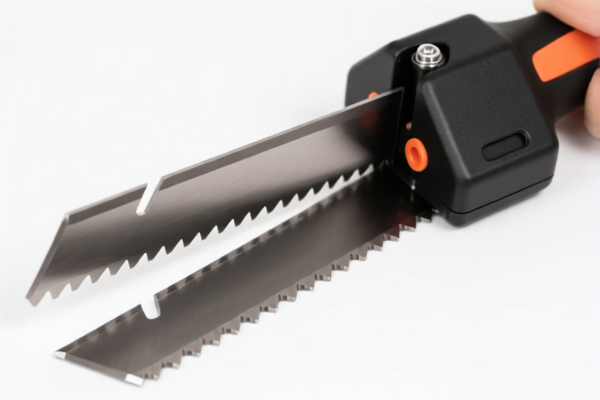
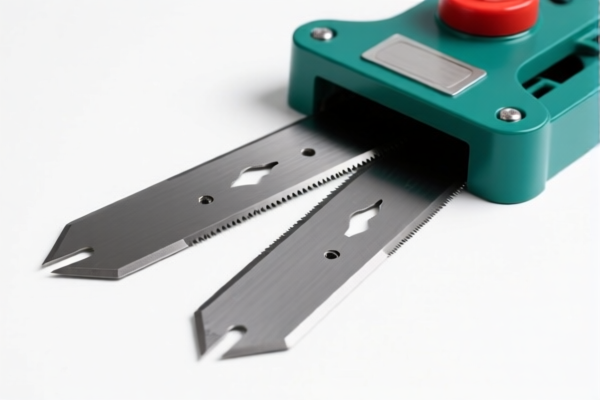
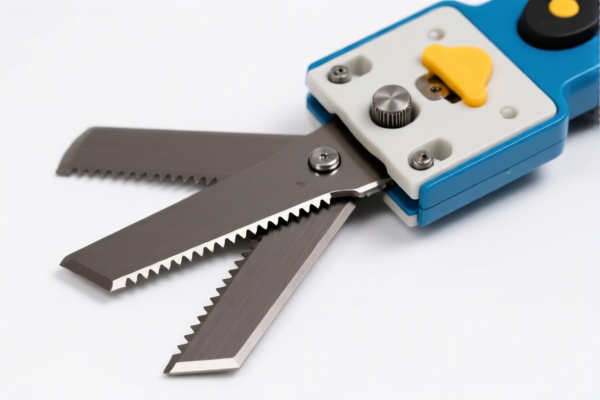
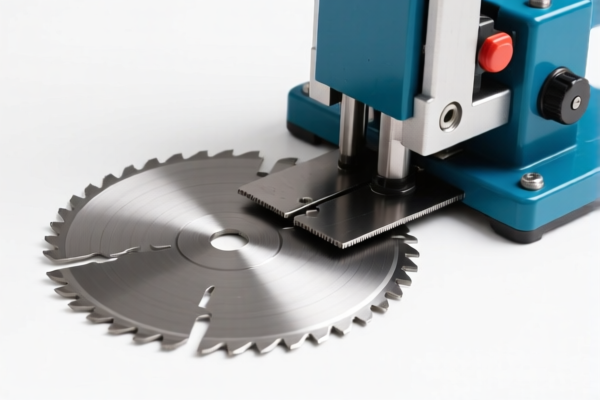
AI Analysis
🪚 Machine Cutting Blades (Saws, Shears & Cutting Tools)
🌐 HS Code Reference & Customs Clearance Guide | 2026 Latest Tariff Analysis | Professional Clearance Strategy
📌 I. Product Definition & Classification: Do You Really Know "Machine Cutting Blades"?
Machine Cutting Blades are industrial tools used for sawing, shearing, or cutting materials (primarily metals, wood, or plastics). In international trade, they are strictly categorized based on their function and mechanism.
For import into the United States, the most critical distinction is whether the blade is a standalone cutting tool (often classified under Chapter 82 or specific machinery parts) or part of a complete machine.
⚠️ Key Distinction for US Customs (CBP):
- If the item is a complete machine capable of sawing or cutting metal/wood by itself → It falls under Chapter 84 (Machinery).
- If the item is just a blade/insert intended for a machine → It might be classified differently, but the provided data focuses on the machinery aspect (8461/8456).
- Note: The data below specifically addresses "Cutting Machines" (HS 8461/8456), implying the goods are classified as the machine itself or a complete unit capable of sawing/cutting, rather than just a consumable blade.
📦 II. HS Code Classification Details (2026 Latest Tariff Authority Comparison)
Based on the provided data, the product is classified under three specific HS Codes. Here is the breakdown:
| HS Code | Product Description | Application/Mechanism | Total Tax Rate |
|---|---|---|---|
8461.50.40.50 |
Sawing/Cutting Machine for Metal | Matches usage for sawing (锯削) or cutting off (切断). Inferred as metal processing machinery. | 39.4% |
8456.50.00.00 |
Laser Beam Working Machine | Product name matches "Cutting Machine" in reference classification for laser cutting. Usage is fully matched. | 37.5% |
8461.50.80.90 |
Other Sawing/Cutting Machine | Belongs to the category of sawing or cutting machines. Inferred as metal cutting tool/machinery. | 39.4% |
🔍 Key Insight:
- 8461 Series: Refers to Sawing, Cutting, or Shearing Machines for metal. If your "blade" is part of a machine that cuts metal (e.g., a band saw, circular saw), this is the likely category.
- 8456 Series: Refers to Laser Beam Working Machines. If the "cutting blade" is actually a laser cutting head or the machine uses a laser beam (common in industrial metal cutting), this HS Code applies.
- Tax Difference: Laser cutting (8456) has a slightly lower base rate (2.5%) than mechanical sawing (8461, 4.4%), resulting in a total tax of 37.5% vs 39.4%.
💰 III. 2026 Latest Tariff Rate Breakdown (Including Additional Taxes & Policy Surcharges)
✅ Applicable Country: United States (US)
✅ Country of Origin: China (CN)
✅ Effective Date: 2025/2026 (Current Trade War Tariffs Apply)
🎯 1. 8461.50.40.50 & 8461.50.80.90 —— Sawing/Cutting Machines (Metal Processing)
| Item | Details |
|---|---|
| Base Tariff | 4.4% (Standard MFN Rate for Chapter 84 sawing machines) |
| Section 301 Surcharge | +25.0% (USITC Section 301 Tariff on Chinese Goods) |
| Section 122 Tariff | +10.0% (Specific surcharge cited in data, likely related to specific trade actions or 301 Phase adjustments) |
| Total Tariff Rate | 39.4% |
| Tax Calculation | CIF Value × 39.4% |
| De Minimis Exemption | ❌ Not Eligible (Section 301 goods are explicitly excluded from de minimis) |
| Legal Basis Path | HTSUS:8461.50 → Section 301 List 3/4 → 122 Clause Surcharge |
📌 Explanation:
- The 4.4% is the standard duty for metal sawing machines.
- The 25% is the core Section 301 tariff, which applies to most Chinese-origin industrial machinery.
- The 10% (122 Clause) is an additional layer of surcharge, pushing the total burden significantly higher.
- Result: A machine valued at $10,000 will incur $3,940 in duties.
🎯 2. 8456.50.00.00 —— Laser Beam Working Machine (Laser Cutting)
| Item | Details |
|---|---|
| Base Tariff | 2.5% (Standard MFN Rate for Laser Working Machines) |
| Section 301 Surcharge | +25.0% (USITC Section 301 Tariff on Chinese Goods) |
| Section 122 Tariff | +10.0% (Specific surcharge cited in data) |
| Total Tariff Rate | 37.5% |
| Tax Calculation | CIF Value × 37.5% |
| De Minimis Exemption | ❌ Not Eligible |
| Legal Basis Path | HTSUS:8456.50 → Section 301 List 3/4 → 122 Clause Surcharge |
📌 Note:
- Although slightly cheaper (37.5% vs 39.4%), this classification requires the machine to be a laser-based system.
- If your product is a mechanical saw blade or shear, do NOT use this code. Misclassification can lead to severe penalties.
- If it is a laser cutting machine, this is the optimal code for cost savings.
🛠️ IV. Customs Clearance Practical Advice (Battle-Tested Pitfall Guide)
✅ 1. Document Checklist (Non-Negotiable)
| Document | Required? | Purpose |
|---|---|---|
| ✅ Commercial Invoice | ✔️ | Must clearly state: "Machine Cutting Blade/Machine," Model No., and HS Code. |
| ✅ Product Specification Sheet | ✔️ | Detail the cutting mechanism: Laser? Sawing? Shearing? This determines 8456 vs 8461. |
| ✅ Photo of Machine/Blade | ✔️ | Show the brand, model, and any labels indicating origin (Made in China). |
| ✅ Declaration of Origin | ✔️ | Crucial for proving Chinese origin to apply 301 tariffs. |
| ✅ Import License | ✔️ | Some machinery may require additional regulatory approvals. |
✅ 2. Classification Strategy (Key Mantra)
🔥 "Mechanical Saw = 8461, Laser Cut = 8456, Blade Only = Check Chapter 82!"
| Scenario | Correct HS Code | Wrong Code | Consequence of Error |
|---|---|---|---|
| Mechanical Metal Saw (Band saw, circular saw) | 8461.50.40.50 or 8461.50.80.90 |
8456.50.00.00 |
Audit Risk: CBP may reclassify and charge 39.4% + penalties. |
| Laser Cutting Machine | 8456.50.00.00 |
8461.50.xxxx |
Overpayment: You pay 39.4% instead of 37.5%. Save 1.9% by being accurate. |
| Just a Saw Blade (No machine) | 8202/8203/8207 (Not in Data) | 8461.xxxx |
Severe Penalty: Machinery HS cannot be used for consumable blades. This is a major classification error. |
📌 CRITICAL WARNING:
The provided data assumes the item is classified as a machine (8461/8456). If you are importing only the blade (the consumable part), these HS Codes are INCORRECT.
- Standalone Blade: Look at Chapter 82 (Tools, implements, cutlery).
- Complete Machine: Use the codes provided above.
- Check your shipment: Is it a box with a motor and frame (Machine)? Or just a metal disc/strip (Blade)?
✅ 3. Special Case Handling
| Case | Handling Advice |
|---|---|
| OEM Custom Blades/Machines | Provide design drawings and customer order. Clarify if it's a "machine" or "part." |
| Laser vs. Mechanical | If it uses a beam of light (laser) to cut → 8456. If it uses physical contact (saw/sheet) → 8461. |
| High-Value Machinery | Consider Section 301 Exclusions. Check if this specific HS Code has an exclusion period (rare for machinery, but verify). |
| De Minimis (Section 321) | ❌ DO NOT USE. Section 301 goods from China are excluded from de minimis treatment. Do not ship via USPS/UPS小包 claiming <$800 exemption. |
🌍 V. Global Market Comparison (2026 Latest)
| Country/Region | Recommended HS Code | Tariff (China Origin) | Notes |
|---|---|---|---|
| 🇺🇸 USA | 8461.50.40.50 / 8456.50.00.00 |
37.5% - 39.4% | High tariffs due to Section 301 & 122. No de minimis. |
| 🇨🇳 China | 8461.50.40.50 / 8456.50.00.00 |
~4.4% - 13% | Import duty varies; no Section 301. |
| 🇪🇺 EU | 8461.50.40 / 8456.50.00 |
~4.5% - 14% | No Section 301. Standard MFN rates apply. |
| 🇬🇧 UK | 8461.50.40 / 8456.50.00 |
~4.5% - 14% | Post-Brexit tariff structure similar to EU. |
📌 Conclusion:
- USA is the most expensive market for these goods due to geopolitical tariffs.
- Cost Savings Opportunity: If possible, source machinery from Vietnam, Mexico, or Thailand to potentially avoid Section 301 tariffs (verify Rules of Origin).
📌 VI. Common Mistakes & Pitfalls (Blood & Tears Lessons)
❌ Mistake 1: Importing a Laser Machine under 8461 (Sawing)
👉 Result: CBP may reject the classification, leading to audits. Also, you pay 39.4% instead of 37.5%.
❌ Mistake 2: Calling a Consumable Blade a "Machine Cutting Blade" and using 8461
👉 Result: Heavy Penalty. A blade is not a machine. Use Chapter 82 codes. Misclassification = Fraud risk.
❌ Mistake 3: Assuming De Minimis ($800) applies
👉 Result: Seizure. Section 301 goods from China are explicitly excluded. If you ship a $500 blade via courier claiming de minimis, it will be detained and taxed.
❌ Mistake 4: Ignoring the 122 Clause
👉 Result: Underestimating costs. The 10% surcharge is often overlooked. Budget for ~39% total tax, not just 25% or 4.4%.
✅ Correct Action:
"Laser Cutting Machine, 1000W, Metal, Model XYZ, Made in China, HS 8456.50.00.00"
OR
"Metal Sawing Machine, Hydraulic, Model ABC, Made in China, HS 8461.50.40.50"
🎯 VII. Conclusion: Professional Declaration Saves Money!
🎯 Remember the Mantra:
🔹 "Laser is 37.5%, Mechanical is 39.4%, Blade is NOT a Machine!"
🔹 "Section 301 applies to ALL, No De Minimis for China!"
🔹 "Check the mechanism: Beam? Contact? Choose wisely!"
📌 Pro Tip:
- If your product is a laser cutting head or laser machine, use 8456.50.00.00 to save 1.9% in tariffs.
- If it is a band saw or shear, use 8461.50.40.50.
- Always verify if the item is a "part" or a "complete good." Parts often have different duties.
📣 Immediate Action:
📞 Contact your customs broker with photos and specs.
📝 Get an Advance Ruling if unsure about 8461 vs 8456.
🚀 Budget 39% tax for US imports to avoid cash flow surprises!
✨ Professional Clearance Starts with Accurate Classification!
💼 Your profit margin depends on the HS Code!
Customer Reviews
About HS Code Classification
The Harmonized System (HS) is an internationally standardized nomenclature developed by the World Customs Organization (WCO) to classify traded products. Over 200 countries use the HS system as the basis for customs tariffs, trade statistics, and import/export regulations.
Each HS code follows a hierarchical structure:
- Chapter (2 digits) — Broad category of goods (e.g., Chapter 84: Machinery and Mechanical Appliances)
- Heading (4 digits) — More specific grouping within the chapter
- Subheading (6 digits) — Internationally standardized breakdown, used by all WCO member countries
- National subdivisions (8-10 digits) — Country-specific extensions for further classification, such as US HTSUS 10-digit codes
Correct HS code classification is essential for smooth customs clearance, accurate duty payment, and compliance with trade regulations. Misclassification can lead to customs delays, overpayment of duties, or penalties.
When importing from CN to US, the applicable tariff rates may include:
- Most-Favored-Nation (MFN) rate — The standard duty rate applied to WTO members
- General rate — Applied to countries without trade agreements
- Trade remedy duties — Additional tariffs such as Section 301 (anti-dumping), Section 232 (national security), or countervailing duties
The information provided on this page is for reference purposes only. For official classification, please consult with your local customs authority or a licensed customs broker.