Machine Parts of Chapter 8430 or 8431
CN → US| HS Code | Tariff Rate | Origin | Destination | Doc |
|---|---|---|---|---|
| 8431438020 | 35.0% | CN | US | Official Doc |
| 8431438040 | 35.0% | CN | US | Official Doc |
| 8433905045 | 35.0% | CN | US | Official Doc |
| 8431438040 | 35.0% | CN | US | Official Doc |
| 8433905025 | 35.0% | CN | US | Official Doc |
Product Images
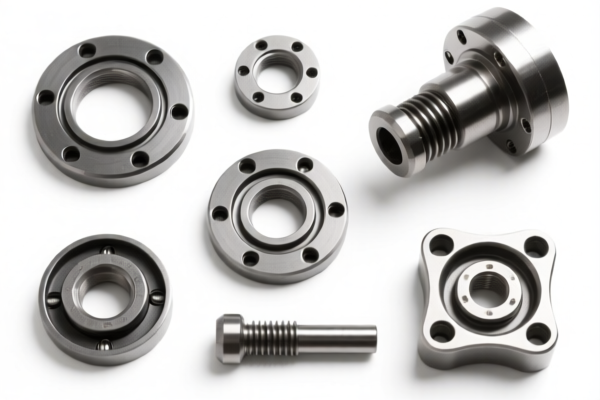
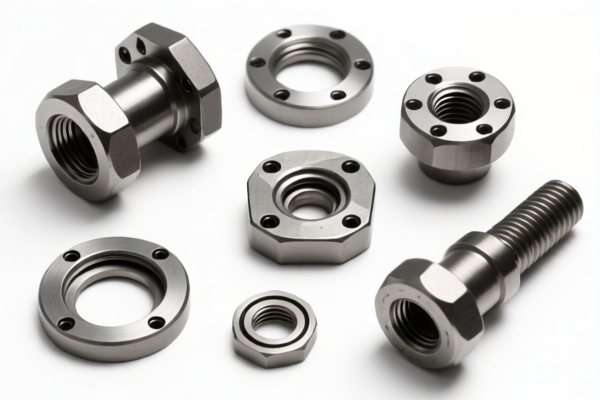
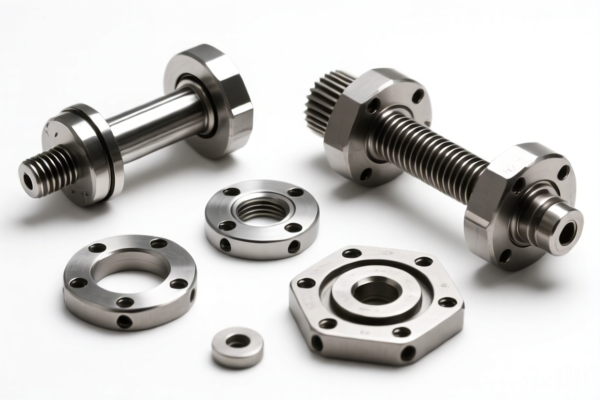
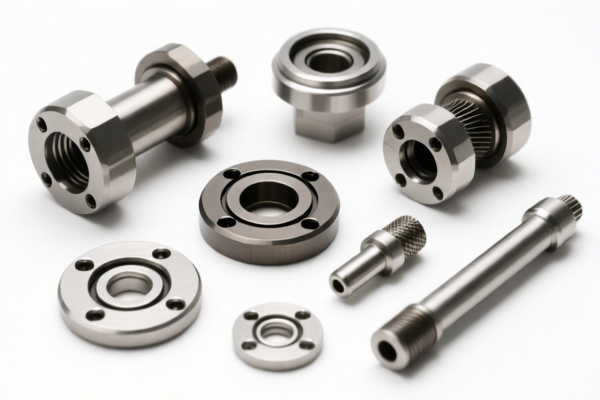
AI Analysis
⚙️ Machine Parts of Chapter 8430 or 8431
🌐 HS Code Reference & Customs Clearance Guide | 2026 Latest Tariff Analysis | Professional Strategy
📌 I. Product Definition & Classification: What Exactly Are These Parts?
Parts falling under Chapter 8430 (Self-propelled earth-moving machinery) and Chapter 8431 (Parts suitable for use solely or principally with the machinery of heading 84.25 to 84.30, etc.) are critical components for heavy industrial machinery, including earth-movers, pile-drivers, and boring machinery.
In international trade, these parts are classified into two main categories based on their specific application and structural integration:
Specific Mechanism Parts (e.g., Hydraulic System Components):
Components designed specifically for the hydraulic or mechanical systems of Heading 84.30/84.31 machines (e.g., hydraulic cylinders, piston rods, specialized gearboxes). These often fall under 8431.43.
General/Other Parts:
Miscellaneous components that do not fit specific hydraulic or structural subheadings but are still exclusively used for 8430/8431 machinery. These are often grouped under 8433.90 (Other parts) or remaining 8431.43 slots depending on the specific sub-description.
⚠️ Key Distinction:
- If the part is explicitly listed under specific functional subheadings (like hydraulic parts), it takes precedence.
- If it is a general structural or miscellaneous part, it falls into the "Other" categories under 8433 or 8431.
- Material Conflict Check: These codes assume no conflict with specific material restrictions (e.g., no special metal restrictions mentioned in the source data).
📦 II. HS Code Classification Details (2026 Latest Tariff Mapping)
| HS Code | Product Description | Applicable Machinery | Key Characteristics | Source Data Summary |
|---|---|---|---|---|
8431.43.80.20 |
Parts for 8430/8431 Machinery | Self-propelled earth-moving, pile-drivers, etc. | General parts category; no material conflict. | "Applicable to 8430 or 8431 mechanical parts, belongs to general parts category, no material conflict." |
8431.43.80.40 |
Parts for 8430/8431 Machinery | Self-propelled earth-moving, pile-drivers, etc. | Usage is consistent with 8430/8431; no material conflict. | "Applicable to 8430 or 8431 mechanical parts, usage consistent, no material conflict." |
8433.90.50.45 |
Other Parts for 8430/8431 Machinery | Earth-moving & related machinery | Classified under "Other Parts"; no material or usage conflict. | "Parts for 8430 or 8431 machinery, falls into other parts category, no material or usage conflict." |
8433.90.50.25 |
Other Parts for 8430/8431 Machinery | Earth-moving & related machinery | Falls under "Other" category; fits default part matching rules. | "Parts for 8430 or 8431 machinery, belongs to other category, fits default part matching rules." |
8431.43.80.40 |
Parts for 8430/8431 Machinery | Self-propelled earth-moving, pile-drivers, etc. | Attributes and usage perfectly match 8430/8431; no material conflict. | "Parts under 8430 or 8431, attributes and usage fully consistent, no material conflict." |
🔍 Important Note:
- All listed HS codes share the same total tariff rate due to identical underlying tax structures in the source data.
- The distinction between8431.43and8433.90lies in the specific sub-heading for "parts" within Chapter 84.8431.43often refers to specific functional parts, while8433.90is a catch-all for "other" parts in the context of agricultural/earth-moving machinery headings.
- Ensure your product description explicitly states "Parts for use solely with machinery of heading 8430 or 8431" to justify the classification.
💰 III. 2026 Latest Tariff Rate Breakdown (Including Surtaxes & Policy Add-ons)
✅ Applicable Country: United States (US)
✅ Origin: China (CN)
✅ Effective Date: Current rates apply based on existing trade measures.
All the HS codes listed above (8431.43.80.20, 8431.43.80.40, 8433.90.50.45, 8433.90.50.25) carry the same tax structure according to the provided data.
🎯 Uniform Tax Structure for All Listed HS Codes
| Item | Content |
|---|---|
| Base Tariff Rate | 0.0% (ad valorem) |
| USITC Additional Tariff (Section 301) | +25.0% |
| IEEPA 122-Clause Tariff | +10.0% |
| Total Effective Tax Rate | 35.0% |
| Tax Calculation | CIF Value × 35% |
| De Minimis Exemption Eligibility | ❌ Not Eligible (High tariff rate usually disqualifies from Section 321 de minimis benefits) |
| Legal Basis Path | USITC:8431/8433 → Section 301: 25% → IEEPA: 10% |
📌 Explanation:
- "Base Tariff 0%": The standard MFN (Most Favored Nation) tariff for these mechanical parts is zero.
- "Section 301 Tariff 25%": Imposed on Chinese goods under Trade Act Section 301.
- "122-Clause Tariff 10%": Refers to additional tariffs imposed under specific IEEPA (International Emergency Economic Powers Act) provisions or similar trade remedy measures targeting Chinese machinery parts.
- Total 35%: This is a significant cost factor. Importers must budget for a 35% duty on top of the CIF value.
🛠️ IV. Customs Clearance Practical Advice (Pitfall Avoidance Guide)
✅ 1. Required Documentation Checklist (Must-Have)
| Document | Required? | Description |
|---|---|---|
| ✅ Product Specification Sheet | ✔️ | Must clearly state: "Part for [Specific Machine Model] under HTS 8430/8431". |
| ✅ Technical Diagrams/Manuals | ✔️ | Proves the part is exclusively used for 8430/8431 machinery, not general industrial use. |
| ✅ Commercial Invoice | ✔️ | Value must be accurate; HS code must be specified. |
| ✅ Packing List | ✔️ | Details quantities and weights. |
| ✅ Certificate of Origin (CO) | ✔️ | Essential for confirming China origin and applying surcharges. |
| ✅ Third-Party Test Reports | Optional | If required by specific agency (e.g., EPA for engines, though less common for parts). |
✅ 2. Declaration Tips (Key Mnemonics)
🔥 "Specify Usage, Link to 8430/8431, Avoid General Categories!"
| Scenario | Correct Declaration | Wrong Approach |
|---|---|---|
| Specific Hydraulic Part | Use 8431.43.80.xxxx |
Declaring as "General Machinery Part" → Risk of misclassification. |
| Miscellaneous Bracket/Mount | Use 8433.90.50.xxxx if appropriate |
Declaring as "Steel Structure" → Wrong Chapter 73. |
| Universal Bolt/Nut | Do Not Use These HS Codes | Declaring as "8431 Part" → Customs will reject; use Chapter 73 or 8483. |
| Mixed Shipment | Separate lines for each HS code | Bundling under one code → Delay in clearance and potential penalties. |
✅ 3. Special Handling Cases
| Case | Handling Advice |
|---|---|
| OEM Custom Parts | Provide original equipment manufacturer (OEM) drawings and part numbers to prove exclusive use for 8430/8431 machines. |
| Used Parts | Ensure parts are clean and free of hazardous materials (oil, residues). Some ports have strict environmental checks. |
| Kit Assemblies | If sold as a "kit," declare each component under its correct HS code. Do not lump them into one code. |
| Origin Change | If parts are assembled in a third country (e.g., Vietnam) with substantial transformation, they may qualify for a different origin. However, with China-origin parts, the 35% tariff applies regardless of final assembly if substantial transformation rules are not met. |
🌍 V. Global Market Comparison (2026 Snapshot)
| Country/Region | Recommended HS Code | Base Tariff | Surtax (China) | Total Effective Rate | Notes |
|---|---|---|---|---|---|
| 🇺🇸 United States | 8431.43.xxxx / 8433.90.xxxx |
0% | +35% (25% + 10%) | 35% | High barrier due to Section 301 & IEEPA. |
| 🇨🇳 China | 8431.43 / 8433.90 |
~5-10% | N/A | ~5-10% | Lower duty for domestic trade. |
| 🇪🇺 European Union | 8431.43 / 8433.90 |
~0-3% | No Surtax | ~0-3% | No similar 301 tariffs. |
| 🇯🇵 Japan | 8431.43 / 8433.90 |
~0-5% | No Surtax | ~0-5% | Favorable trade terms. |
| 🇦🇺 Australia | 8431.43 / 8433.90 |
~5% | No Surtax | ~5% | Lower tariffs than US. |
📌 Conclusion:
- The United States imposes a 35% total duty on these parts due to specific trade measures.
- Other major markets (EU, Japan, Australia) have significantly lower tariffs (0-5%), making them more cost-effective for Chinese-origin machinery parts.
- Importers to the US must factor in the 35% cost or explore supply chain diversification (e.g., third-country assembly) to mitigate duty risks.
📌 VI. Common Mistakes & Pitfall Avoidance (Lessons Learned)
❌ Mistake 1: Declaring "General Machinery Parts" without specifying "for 8430/8431"
👉 Consequence: Customs may reject the classification and assign a higher default rate or require additional proof, causing delays.
❌ Mistake 2: Confusing 8431 (Parts for 84.25-84.30) with 8433 (Parts for 84.32-84.33)
👉 Consequence: Misclassification. 8433 is for agricultural machinery parts (e.g., harvesters), while 8431 is for earth-moving machinery (e.g., excavators). 35% applies to both in this dataset, but the legal basis differs.
❌ Mistake 3: Ignoring the "122-Clause" 10% surcharge
👉 Consequence: Underestimating landed costs. Budgeting for only 25% (Section 301) will lead to unexpected payment at customs.
❌ Mistake 4: Failing to provide technical documentation
👉 Consequence: Customs may classify the item under a "General" heading with higher base tariffs or different surtax rules.
✅ Best Practice:
Always include a detailed technical description on the invoice and packing list:
"Part Name: Hydraulic Cylinder Rod for Excavator Model XYZ. Intended Use: Exclusively for Machinery under HTS 8430/8431."
🎯 VII. Conclusion: Precision in Classification Saves Money!
🎯 Key Takeaways:
🔹 "35% is the number": Total duty for China-origin parts under these HS codes is 35% (0% base + 25% Section 301 + 10% IEEPA).
🔹 "Be Specific": Clearly link parts to 8430/8431 to avoid misclassification.
🔹 "Document Everything": Technical specs and origin proof are critical for smooth clearance.
📌 Pro Tip:
If you are importing large volumes, consider Advance Rulings from US Customs to confirm the HS code and duty liability before shipment. This reduces the risk of unexpected costs or delays.
📣 Immediate Action:
📞 Consult a licensed customs broker to verify the specific HS code for your exact part.
📄 Prepare technical documentation in advance.
💰 Budget for 35% duty if shipping to the US from China.
✨ Smart Logistics, Lower Costs, Smoother Clearance!
💼 Every detail counts in international trade compliance!
Customer Reviews
About HS Code Classification
The Harmonized System (HS) is an internationally standardized nomenclature developed by the World Customs Organization (WCO) to classify traded products. Over 200 countries use the HS system as the basis for customs tariffs, trade statistics, and import/export regulations.
Each HS code follows a hierarchical structure:
- Chapter (2 digits) — Broad category of goods (e.g., Chapter 84: Machinery and Mechanical Appliances)
- Heading (4 digits) — More specific grouping within the chapter
- Subheading (6 digits) — Internationally standardized breakdown, used by all WCO member countries
- National subdivisions (8-10 digits) — Country-specific extensions for further classification, such as US HTSUS 10-digit codes
Correct HS code classification is essential for smooth customs clearance, accurate duty payment, and compliance with trade regulations. Misclassification can lead to customs delays, overpayment of duties, or penalties.
When importing from CN to US, the applicable tariff rates may include:
- Most-Favored-Nation (MFN) rate — The standard duty rate applied to WTO members
- General rate — Applied to countries without trade agreements
- Trade remedy duties — Additional tariffs such as Section 301 (anti-dumping), Section 232 (national security), or countervailing duties
The information provided on this page is for reference purposes only. For official classification, please consult with your local customs authority or a licensed customs broker.