Machine Tool Cutting Tools and Inserts
CN → US| HS Code | Tariff Rate | Origin | Destination | Doc |
|---|---|---|---|---|
| 8207903080 | 40.0% | CN | US | Official Doc |
| 8207903085 | 40.0% | CN | US | Official Doc |
| 8207703040 | 40.0% | CN | US | Official Doc |
| 8466100110 | 38.9% | CN | US | Official Doc |
| 8466100130 | 38.9% | CN | US | Official Doc |
Product Images
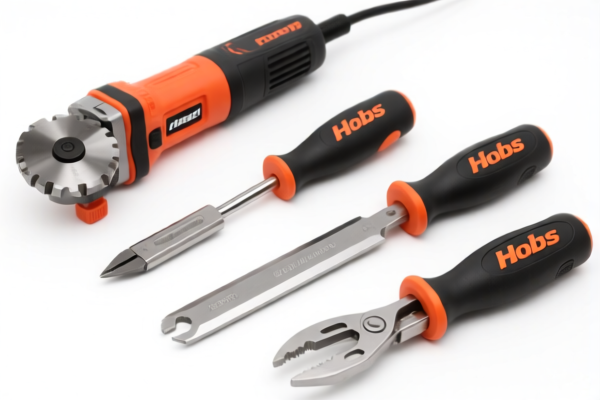
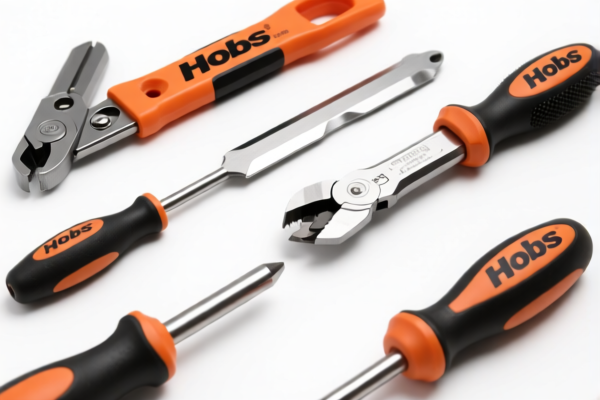
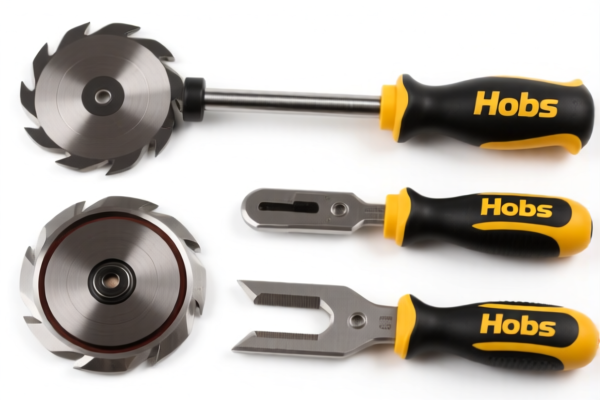
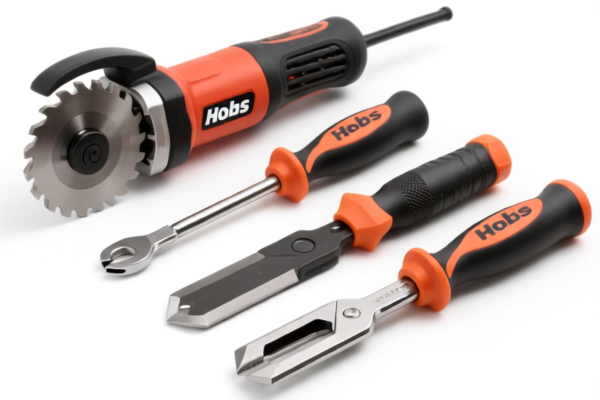
AI Analysis
🛠️ Machine Tool Cutting Tools & Inserts (切削刀具及刀片)
🌐 HS Code Reference & Customs Clearance Guide | 2026 Latest Tariff Analysis | Professional Entry Strategy
📌 I. Product Definition & Classification: What Are "Cutting Tools"?
Machine Tool Cutting Tools and Inserts are precision-engineered components used to remove material from a workpiece to achieve a desired shape, size, and surface finish. They are critical in CNC machining, lathes, mills, and drilling operations.
In international trade, they are generally classified into two categories:
1. Finished Cutting Tools (e.g., End Mills, Drill Bits, Turning Inserts with Holders):
These are complete tools ready for use. They are typically classified under Chapter 82 (Tools, Implements, Cutlery...). The specific subheading depends on the material (e.g., cemented tungsten carbide, high-speed steel) and the type of tool.
2. Tool Parts & Attachments (e.g., Tool Holders, Tapered Arbors, Collets):
These are components that hold the cutting tool or attach it to the machine tool. They fall under Chapter 84 (Machinery and Mechanical Appliances). Specifically, they are often classified as "Parts and Accessories" of machine tools.
⚠️ Key Distinction Point:
- If the item is the actual cutting element (the bit or blade itself) → Likely Chapter 82 (HS Code starting with8207).
- If the item is the holder or adapter that holds the cutting element → Likely Chapter 84 (HS Code starting with8466).
- ⚠️ Crucial Note for US Imports: Many of these items are subject to Section 301 tariffs and Section 122 tariffs, significantly increasing the duty rate.
📦 II. HS Code Classification Details (2026 Latest Tariff Reference)
Based on the provided data, here are the specific HS Codes and their logical reasoning for classification:
| HS Code | Summary / Classification Logic | Total Tax Rate | Tax Breakdown |
|---|---|---|---|
8207.90.30.80 |
Cutting Tools (Alloy Based) Matches the use of cutting tools. Based on the "catch-all" category principle, it infers the inclusion of alloy elements. |
40.0% | Base Duty: 5.0% Section 301: 25.0% Section 122: 10% |
8207.90.30.85 |
Cutting Tools (Blade Form) Matches the use of cutting tools. Infers classification under "Other" based on blade morphology. |
40.0% | Base Duty: 5.0% Section 301: 25.0% Section 122: 10% |
8207.70.30.40 |
Machine Tool Cutting Tools (Catch-All) Matches the category of cutting tools for machine tools. A "catch-all" category with no material conflict. |
40.0% | Base Duty: 5.0% Section 301: 25.0% Section 122: 10% |
8466.10.01.10 |
Tool Holders / Attachments The tool head corresponds to the tool holder. Classified as "Parts and Accessories" for machine tools. |
38.9% | Base Duty: 3.9% Section 301: 25.0% Section 122: 10% |
8466.10.01.30 |
Tool Holders / Parts (High Consistency) Tool heads and parts are highly consistent with the purpose and form of tool holders. |
38.9% | Base Duty: 3.9% Section 301: 25.0% Section 122: 10% |
🔍 Detailed Analysis of Tax Components:
- Base Duty (3.9% - 5.0%): The standard Most Favored Nation (MFN) or general duty rate for tools/parts.
- Section 301 Tariff (25.0%): A significant additional tariff imposed on Chinese goods under the Trade Promotion Authority Act. Applies to almost all metalworking tools.
- Section 122 Tariff (10%): An additional tariff under Section 122 of the Trade Expansion Act, often applied to items deemed to affect national security or economic stability.
- Total Impact:
- For Cutting Tools (8207...): Total = 40%.
- For Tool Parts (8466...): Total = 38.9%.
💰 III. Customs Clearance Practical Advice (Avoiding Pitfalls)
✅ 1. Documentation Checklist (Non-Negotiable)
| Document | Required? | Purpose |
|---|---|---|
| ✅ Product Specification Sheet | ✔️ | Must detail material (e.g., Tungsten Carbide, HSS), coating, and exact dimensions. Crucial for distinguishing between 8207 (Cutting Tool) and 8466 (Holder). |
| ✅ Technical Drawings | ✔️ | Shows if the item is the cutting edge itself or the holder. If the item is just a steel block with a slot for a blade, it’s a Holder (8466), not a Tool (8207). |
| ✅ Commercial Invoice | ✔️ | Clearly state: "CNC Carbide Insert" or "Tool Holder for Milling Machine." Avoid vague terms like "Metal Part." |
| ✅ Packing List | ✔️ | Separate line items if shipping tools and holders together. Do not lump them under one HS Code if they differ. |
| ✅ Country of Origin Certificate | ✔️ | Essential for verifying Section 301 and Section 122 applicability. If not from China, these additional tariffs may not apply (check FTAs). |
✅ 2. Declaration Strategy (Key Tips)
🔥 "Identify Function, Separate Parts, Declare Precisely!"
| Scenario | Correct Declaration | Incorrect Declaration | Consequence |
|---|---|---|---|
| Carbide Insert (The Blade) | 8207.90.30.80 or 8207.90.30.85 |
Misclassified as "Machine Part" | Higher scrutiny, potential penalty for misclassification. |
| Tool Holder (The Grip) | 8466.10.01.10 or 8466.10.01.30 |
Misclassified as "Cutting Tool" | Slight tax difference (38.9% vs 40%), but more importantly, wrong data for customs. |
| Complete Tool (Holder + Insert) | Declare Separately | Combine into one line item | High Risk! Customs may reject or audit. Declare insert under 8207 and holder under 8466. |
| Vague Name ("Metal Cutter") | ❌ Never use | "Metal Cutter" | Delayed clearance, possible seizure for lack of proper classification. |
✅ 3. Special Considerations for US Imports
- Section 122 Applicability: This 10% tariff is specific. Ensure your HS code is correct because some "parts" might be exempt if they are not "mechanical appliances" but simple metal parts. However,
8466is specifically for "Parts and Accessories of Machine Tools," making it susceptible. - Material Composition: For
8207codes, the presence of tungsten carbide or high-speed steel is key. If the tool is made of ceramic or cubic boron nitride (CBN), the classification might differ. - Kitting: If you sell a "Tool Kit" containing a holder and inserts, customs may require separate valuation for each component to apply the correct tax rate. Do not bundle them into a single "Tool" value.
🌍 IV. Global Market Comparison (2026 Overview)
| Market | Recommended HS Code | Total Tariff (China Origin) | Notes |
|---|---|---|---|
| 🇺🇸 USA | 8207.90.30.80 / 8466.10.01.10 |
38.9% - 40.0% | High tariffs due to Sec 301 & Sec 122. |
| 🇨🇳 China | 8207.90.30.80 / 8466.10.01.10 |
5.0% / 3.9% | No additional Section 301/122 tariffs. |
| 🇪🇺 EU | 8207.90 / 8466.10 |
~3.9% - 5.0% | No Section 301 equivalents, but check VAT. |
| 🇮🇳 India | 8207.90 / 8466.10 |
~7.5% - 10% | BCD (Basic Customs Duty) + SWS. |
📌 Conclusion:
- The USA is the most challenging market for Chinese-origin cutting tools due to the 38.9%-40% total duty.
- EU and India offer significantly lower tariff barriers, but consider local content requirements and VAT.
- Strategy: For US imports, consider Third-Country Sourcing (e.g., Vietnam, Mexico) if possible to mitigate Section 301/122 tariffs, or invest in duty drawback programs if eligible.
📌 V. Common Mistakes & Pitfalls (Learn from Others)
❌ Mistake 1: Calling an Insert a "Tool Holder" to get a lower base tax.
👉 Consequence: Customs will reclassify it to 8207, add penalties, and charge 40% instead of 38.9%. The difference is small, but the compliance risk is high.
❌ Mistake 2: Combining Holders and Inserts into one HS Code.
👉 Consequence: Customs may reject the entry because they have different tax treatments and regulatory histories. Always separate.
❌ Mistake 3: Ignoring Section 122.
👉 Consequence: If you only budget for Section 301 (25%), you will be unprepared for the additional 10%. Total cost must include 35%+ additional duties on top of base duty.
❌ Mistake 4: Vague Description: "Cutting Parts."
👉 Consequence: Customs will ask for Technical Data Sheets. If not provided, shipment is delayed.
✅ Correct Practice:
"Carbide Insert, CNH4 Grade, for Turning, Model XYZ" →
8207.90.30.80
"Steel Tool Holder, ER32 Collet, Model ABC" →8466.10.01.10
🎯 VI. Final Recommendations: Smart Clearing, Cost Control
🎯 Key Takeaway:
🔹 "Cutting Edge = 8207 (40%); Holder = 8466 (38.9%)."
🔹 "Separate Line Items. Never Bundle."
🔹 "Budget for 40% Total Duty on US Imports."
📌 Pro Tip:
If you are a large importer, consider applying for an Admitral Ruling or Binding Tariff Information (BTI) in your destination country to get official confirmation of your HS Code classification before shipping. This protects you from retrospective duty changes.
📣 Immediate Action:
📞 Verify Material Composition: Is it carbide? Steel? Ceramic?
📄 Prepare Tech Specs: Drawings showing cutting edge vs. holder.
📉 Calculate Landed Cost: Include 40% duty for US imports.
🚀 Optimize Supply Chain: Explore non-China origins for US-bound goods if volume is high.
✨ Precision Classification Saves Money!
💼 Your Profit Margin Depends on Accurate HS Codes!
Customer Reviews
About HS Code Classification
The Harmonized System (HS) is an internationally standardized nomenclature developed by the World Customs Organization (WCO) to classify traded products. Over 200 countries use the HS system as the basis for customs tariffs, trade statistics, and import/export regulations.
Each HS code follows a hierarchical structure:
- Chapter (2 digits) — Broad category of goods (e.g., Chapter 84: Machinery and Mechanical Appliances)
- Heading (4 digits) — More specific grouping within the chapter
- Subheading (6 digits) — Internationally standardized breakdown, used by all WCO member countries
- National subdivisions (8-10 digits) — Country-specific extensions for further classification, such as US HTSUS 10-digit codes
Correct HS code classification is essential for smooth customs clearance, accurate duty payment, and compliance with trade regulations. Misclassification can lead to customs delays, overpayment of duties, or penalties.
When importing from CN to US, the applicable tariff rates may include:
- Most-Favored-Nation (MFN) rate — The standard duty rate applied to WTO members
- General rate — Applied to countries without trade agreements
- Trade remedy duties — Additional tariffs such as Section 301 (anti-dumping), Section 232 (national security), or countervailing duties
The information provided on this page is for reference purposes only. For official classification, please consult with your local customs authority or a licensed customs broker.