Machine Tool for Working Metal
CN → US| HS Code | Tariff Rate | Origin | Destination | Doc |
|---|---|---|---|---|
| 8462908060 | 39.4% | CN | US | Official Doc |
| 8458110030 | 39.4% | CN | US | Official Doc |
| 8461508090 | 39.4% | CN | US | Official Doc |
| 8462190055 | 39.4% | CN | US | Official Doc |
| 8461208090 | 39.4% | CN | US | Official Doc |
Product Images
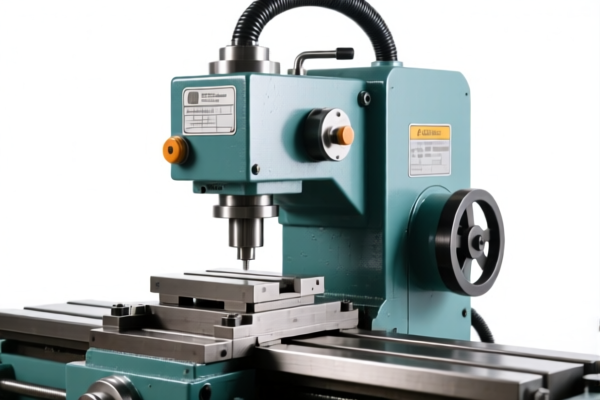
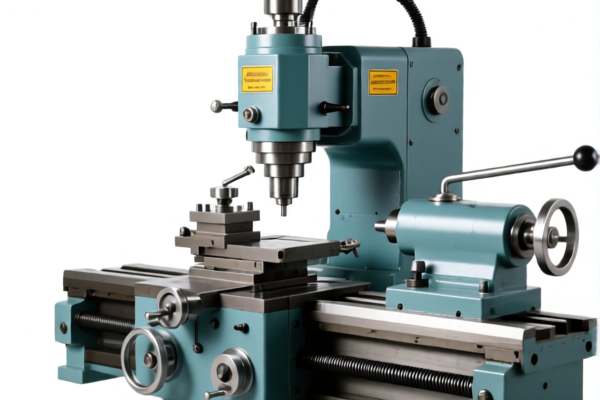
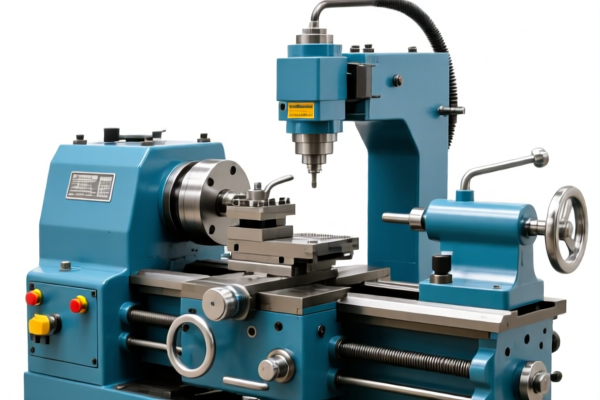
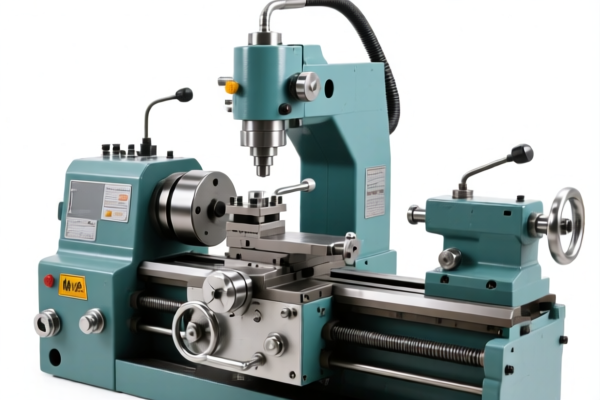
AI Analysis
🏭 Machine Tools for Working Metal (Metalworking Machinery)
🌐 HS Code Reference & Customs Clearance Guide | 2026 Latest Tariff Analysis | Professional Strategy for High-Tariff Zones
📌 I. Product Definition: What Exactly Are "Machine Tools for Working Metal"?
Machine tools for working metal are power-driven machines used to shape, cut, drill, or finish metal components. In international trade, the classification hinges on the specific working process (turning, milling, grinding, etc.) and the machine's structure.
Key Distinction: * Turning Lathes (Turning Metal): Used for cylindrical parts. Falls under 8458. * Milling/Grinding/Shaping: Used for flat surfaces, contours, or precision finishing. Falls under 8461. * Presses/Bending/Sawing: General metalworking actions. Falls under 8462.
⚠️ Critical Classification Rule:
- If the machine is primarily a Lathe (rotating workpiece against stationary tool) → 8458
- If the machine performs Milling, Grinding, or Planing → 8461
- If the machine performs Pressing, Bending, Shearing, or Sawing → 8462
- Misclassification leads to significant tariff discrepancies and customs delays.
📦 II. HS Code Classification Details (2026 Latest Tariff Authority Comparison)
Based on the provided data, the following HS Codes are identified as potential classifications for "Machine Tool for Working Metal." All listed codes share the same tax structure in this specific dataset.
| HS Code | Product Description | Matching Logic (Based on Provided Data) |
|---|---|---|
8462.90.80.60 |
Other Machine Tools for Working Metal (Miscellaneous) | "Metal" matches material attribute; "Machine" matches equipment form. No conflict. |
8458.11.00.30 |
Numerically Controlled (CNC) Lathes | High match with "Metal Cutting Lathe" in material (metal) and usage (cutting). |
8461.50.80.90 |
Grinding Machines | High consistency in material (metal) and usage (processing/grinding). |
8462.19.00.55 |
Other Presses/Bending Machines | Exact match with the broad category "Machine Tools for Working Metal." |
8461.20.80.90 |
Milling Machines | Explicitly contains "Metal"; usage falls under "Milling/Cutting." No conflict in "Other" category. |
🔍 Key Reminder:
- 8458 is for Lathes. If your machine shapes metal by rotating it, this is your likely code.
- 8461 is for Milling/Grinding. If it shapes metal by moving the tool across a stationary workpiece, look here.
- 8462 covers a broader range including Presses, Benders, and Shears. If the machine crushes, bends, or cuts sheet metal, this is the category.
- All codes above indicate a "High Match" with no material/usage conflicts.
💰 III. 2026 Latest Tariff Rate Breakdown (Including Surcharges & Policy Add-ons)
✅ Applicable Country: United States (US)
✅ Origin: China (CN)
✅ Effective Date: Ongoing (Based on current trade policies)
🎯 Universal Tax Structure for Listed Metalworking Machines
All five HS Codes listed in the data share the identical tariff structure:
| Item | Content |
|---|---|
| Base Tariff Rate | 4.4% (Ad Valorem) |
| Section 301 Surcharge | +25.0% (Retaliatory tariffs on Chinese goods) |
| Section 122 Tariff | +10.0% (Specific statutory surcharge for certain metalworking machinery) |
| Total Effective Tax Rate | 39.4% |
| Tax Calculation | CIF Value × 39.4% |
| De Minimis Eligibility | ❌ NOT Eligible (Deny de minimis) |
| Legal Basis Path | USITC:84xx.xxxx.xxxx.xx → Section 301: Footnote → Section 122: Statutory |
📌 Detailed Explanation:
- "Base Tariff 4.4%": The standard Most Favored Nation (MFN) duty rate for most machine tools under Chapter 84.
- "Section 301 Tariff 25%": Imposed by US Trade Representative (USTR) on goods from China, targeting industrial machinery.
- "Section 122 Tariff 10%": A specific surcharge applied to certain imports of steel and aluminum products and related machinery to protect domestic industries.
- Combined Total (39.4%): This is a very high effective duty rate. Importers must factor this into their landed cost calculations immediately.
- No De Minimis: Items under $800 cannot be cleared tax-free; full duties apply.
🛠️ IV. Customs Clearance Practical Advice (Battle-Tested Pitfall Avoidance)
✅ 1. Required Documentation Checklist (Non-Negotiable)
| Document | Must Provide? | Notes |
|---|---|---|
| ✅ Product Specifications | ✔️ | Must detail weight, power, dimensions, and exact working method (e.g., "Lathe," "Milling"). |
| ✅ Technical Drawings | ✔️ | Crucial for determining if the machine is a Lathe (8458) vs. Mill (8461). |
| ✅ Commercial Invoice | ✔️ | Must clearly state "Machine Tool for Working Metal" and the specific type. |
| ✅ Country of Origin Cert | ✔️ | Confirm China origin to assess 25% + 10% surcharges. |
| ✅ Packing List | ✔️ | Detail all accessories, tools, and software. |
| ✅ Safety Certifications | ✔️ | OSHA, CE, or UL compliance docs may be requested. |
✅ 2. Declaration Tips (Critical Keywords)
🔥 "Be Specific, Avoid Generic Terms!"
| Scenario | Correct Declaration | Wrong Declaration |
|---|---|---|
| CNC Lathe | "CNC Lathe for Metal Working" → 8458.11.00.30 | "Metal Machine" → Risk of misclassification |
| Milling Machine | "Vertical Milling Machine for Metal" → 8461.20.80.90 | "Metal Tool" → High risk of audit |
| Press Brake | "Hydraulic Press Brake for Sheet Metal" → 8462.19.00.55 | "Machine" → Vague, leads to delays |
| Grinder | "Surface Grinder for Metal" → 8461.50.80.90 | "Polisher" → May fall under wrong chapter |
📌 Warning:
- Using generic terms like "Industrial Machine" or "Metal Tool" without specifying the working process (turning, milling, pressing) will likely result in customs flagging the shipment for manual inspection, causing delays and potential reclassification penalties.
✅ 3. Special Scenarios
| Scenario | Handling Advice |
|---|---|
| Used Machinery | Provide maintenance records and age proof. Some codes have different rates for new/used, but surcharges usually still apply. |
| Partial Assembly | Ship as complete units if possible. Partial kits may be classified as "parts" (higher duty rates or different codes). |
| Software Included | Declare software separately if possible, but note that embedded software in machinery is usually bundled with the machine's HS code. |
| Origin Shift | If the machine is assembled in a third country (e.g., Vietnam) using Chinese components, verify "Substantial Transformation" rules to potentially avoid Section 301 tariffs. |
🌍 V. Global Market Comparison (2026 Snapshot)
| Region | Recommended HS Code | Base Duty | Surcharge | Total Est. Rate | Key Requirement |
|---|---|---|---|---|---|
| 🇺🇸 USA | 8458/8461/8462 |
4.4% | 35% (25%+10%) | 39.4% | Strict Section 301/122 enforcement |
| 🇨🇳 China | 8458/8461/8462 |
4-7% | None | ~5-7% | Standard import procedures |
| 🇪🇺 EU | 8458/8461/8462 |
0-3% | None | ~0-3% | CE Marking required |
| 🇬🇧 UK | 8458/8461/8462 |
0-4% | None | ~0-4% | Post-Brexit UKGLP compliance |
| 🇯🇵 Japan | 8458/8461/8462 |
0-2% | None | ~0-2% | JIS Standards compliance |
📌 Conclusion:
- The US market is the most challenging due to the 39.4% effective rate.
- Europe, Japan, and domestic China offer significantly lower costs, making them more attractive for final assembly if supply chain flexibility allows.
📌 VI. Common Mistakes & Pitfalls (Lessons Learned)
❌ Mistake 1: Declaring a Lathe as a generic "Machine Tool"
👉 Consequence: Customs may assign a default higher rate or demand detailed specs, causing 2-4 week delays.
❌ Mistake 2: Ignoring Section 122 Tariffs
👉 Consequence: Underpayment of 10% on certain machinery, leading to penalties and back-taxes upon audit.
❌ Mistake 3: Failing to distinguish between CNC and Non-CNC
👉 Consequence: 8458.11 (CNC) and 8458.91 (Non-CNC) may have different sub-requirements. Mislabeling can trigger audits.
❌ Mistake 4: Assuming "De Minimis" applies
👉 Consequence: Since de minimis is denied, even small sample shipments incur the full 39.4% duty. Budget accordingly!
✅ Best Practice:
"Use precise technical descriptions: 'CNC Horizontal Lathe for Steel Turning,' not just 'Metal Machine.'"
🎯 VII. Conclusion: Precision in Classification Saves Money
🎯 Key Takeaways:
🔹 "39.4% is the US Reality" – Factor this into your pricing strategy.
🔹 "Be Specific in Description" – Lathe vs. Mill vs. Press matters.
🔹 "No De Minimis" – Plan for full duty payments on all shipments.
🔹 "Documentation is King" – Technical drawings and precise specs prevent delays.
📌 Pro Tip:
If you are importing significant volumes, consider applying for an HTS Exclusion (if eligible) or restructuring your supply chain to source from non-China origins to mitigate the 25% Section 301 tariff.
📣 Immediate Action Plan:
📞 Contact a Licensed Customs Broker
📄 Provide Detailed Technical Specs
🧮 Calculate Landed Cost with 39.4% Duty
🚀 Ensure Smooth and Compliant Clearance!
✨ Professional clearance starts with precise classification!
💼 Every percentage point of duty impacts your bottom line!
Customer Reviews
About HS Code Classification
The Harmonized System (HS) is an internationally standardized nomenclature developed by the World Customs Organization (WCO) to classify traded products. Over 200 countries use the HS system as the basis for customs tariffs, trade statistics, and import/export regulations.
Each HS code follows a hierarchical structure:
- Chapter (2 digits) — Broad category of goods (e.g., Chapter 84: Machinery and Mechanical Appliances)
- Heading (4 digits) — More specific grouping within the chapter
- Subheading (6 digits) — Internationally standardized breakdown, used by all WCO member countries
- National subdivisions (8-10 digits) — Country-specific extensions for further classification, such as US HTSUS 10-digit codes
Correct HS code classification is essential for smooth customs clearance, accurate duty payment, and compliance with trade regulations. Misclassification can lead to customs delays, overpayment of duties, or penalties.
When importing from CN to US, the applicable tariff rates may include:
- Most-Favored-Nation (MFN) rate — The standard duty rate applied to WTO members
- General rate — Applied to countries without trade agreements
- Trade remedy duties — Additional tariffs such as Section 301 (anti-dumping), Section 232 (national security), or countervailing duties
The information provided on this page is for reference purposes only. For official classification, please consult with your local customs authority or a licensed customs broker.