Machinery Parts
CN → US| HS Code | Tariff Rate | Origin | Destination | Doc |
|---|---|---|---|---|
| 8436990090 | 35.0% | CN | US | Official Doc |
| 8436990035 | 35.0% | CN | US | Official Doc |
| 8433905045 | 35.0% | CN | US | Official Doc |
| 8479899599 | 87.5% | CN | US | Official Doc |
Product Images
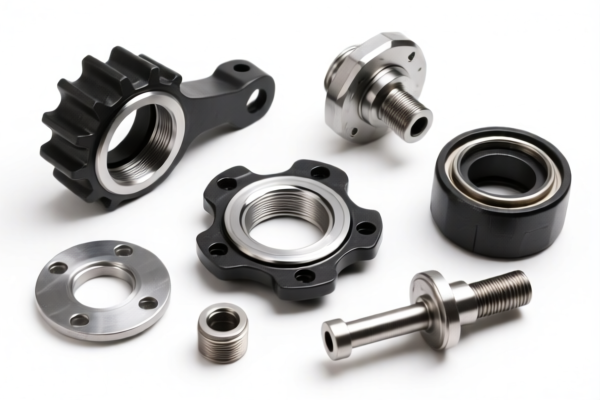
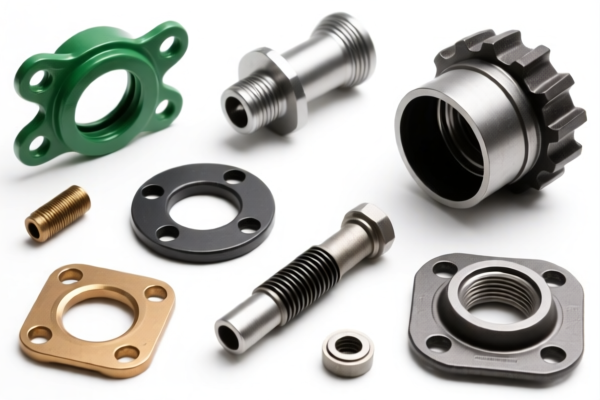
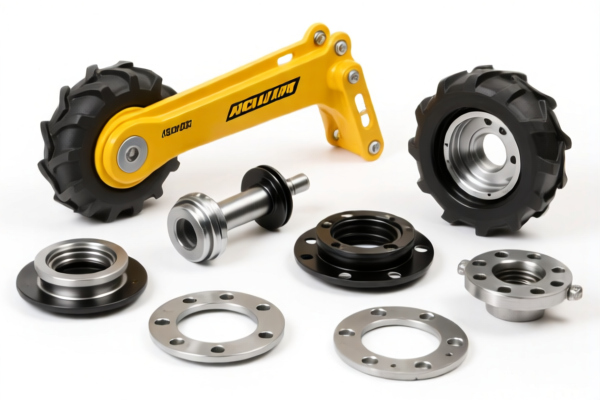
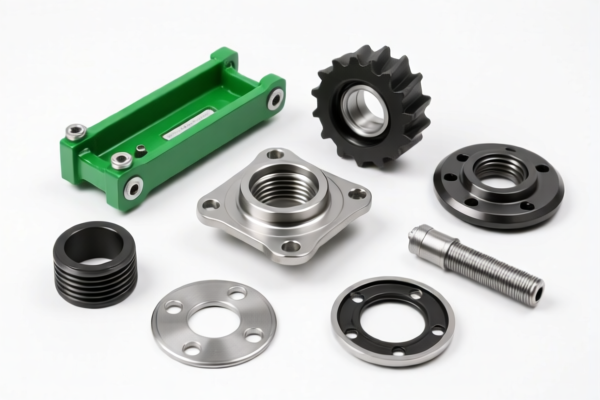
AI Analysis
⚙️ Machinery Parts (Agricultural, Textile & General Industrial)
🌐 HS Code Reference & Customs Clearance Guide | 2026 Latest Tariff Structure | Professional Entry Strategy
📌 1. Product Definition & Classification: What exactly are "Machinery Parts"?
"Machinery Parts" is a broad umbrella term in international trade. To ensure correct classification, customs authorities require precise identification of the specific machine these parts serve and their physical form (e.g., specific spare parts vs. general industrial components).
In the provided dataset, these parts fall into three distinct categories: 1. Agricultural Machinery Parts (Used in farming, gardening, forestry): Categorized under Chapter 84 (General Machinery) and Chapter 87 (Vehicles), specifically subheadings for harvesters and other agri-machinery. 2. Textile Machinery Parts: Components specific to fiber processing, spinning, weaving, or knitting machines. 3. General Industrial Machinery Parts: Components for machines not specifically enumerated elsewhere (the "catch-all" category).
⚠️ Key Distinction Point:
- Specific vs. Generic: Parts dedicated exclusively to a specific machine (e.g., a harvester reel) are classified under that machine's chapter.
- General Purpose Parts: If a part is a standard mechanical component (like a bearing or gear) used in multiple types of machinery, it may fall under different headings. However, the data below focuses on dedicated parts.
📦 2. HS Code Classification Matrix (2026 Latest Tariff Reference)
| HS Code | Product Description | Application Scenario | Tax Category Logic |
|---|---|---|---|
8436.99.00.90 |
Agricultural Machinery Parts: Other parts of agricultural, horticultural, or forestry machinery. | Parts for plows, seeders, sprayers, or other general agri-equipment not listed elsewhere. | "Other" / Catch-all for Agri-machinery. No material conflict. |
8436.99.00.35 |
Agricultural Machinery Parts: Other parts of agricultural machinery. | Another "catch-all" for agricultural parts, likely for items not covered by specific subheadings. | "Other" / General Agri-parts. No obvious material conflict. |
8433.90.50.45 |
Agricultural Machinery Parts: Parts of harvesters, threshers, or straw balers. | Parts specifically for harvesting equipment (e.g., combine harvester blades, conveyor belts). | Logic consistent with "Harvesting Machinery" parts. |
8479.89.95.99 |
Textile Machinery Parts: Other machines & apparatus, n.e.c. (Not Elsewhere Classified). | Parts for textile processing machines (spinning, weaving, knitting) not listed in Chapter 84 or 85 specific headings. | "Other" / General Industrial & Textile Machinery. |
🔍 Key Reminder:
- Agricultural Parts (8433, 8436) and Textile/General Parts (8479) have vastly different tax rates due to the "122 Section" and "Steel/Aluminum/Copper" surcharges.
- Misclassification between Agri-parts and Textile parts can lead to significant tariff miscalculations.
💰 3. 2026 Latest Tariff Rate Breakdown (Including Surcharges)
✅ Applicable Country: United States (US)
✅ Origin: China (CN)
✅ Effective Date: Current policy (as per 2025/2026 data)
🎯 A. Agricultural Machinery Parts (8436.99.00.90, 8436.99.00.35, 8433.90.50.45)
| Item | Content |
|---|---|
| Base Tariff | 0.0% |
| Section 301 Surcharge | +25.0% |
| Section 122 Surcharge | +10.0% |
| Total Tariff Rate | 35.0% |
| Tax Calculation | CIF Value × 35% |
| De Minimis Exemption | ❌ Not Eligible |
| Legal Basis Path | USITC:8433/8436 → Section 301 → Section 122 |
📌 Explanation:
- Base Rate 0%: Agricultural machinery parts often enjoy low base duties under free trade or specific chapter allowances.
- 35% Total: The sum of the standard 25% Section 301 tariff (retaliatory) and the additional 10% Section 122 tariff (anti-dumping/countervailing or specific national security measures).
- High Cost: This is a significant burden for agricultural supply chains.
🎯 B. Textile & General Machinery Parts (8479.89.95.99)
| Item | Content |
|---|---|
| Base Tariff | 2.5% |
| Section 301 Surcharge | +25.0% |
| Section 122 Surcharge | +10.0% |
| Steel/Al/Cu Surcharge | +50.0% (Applicable if parts are made of steel, aluminum, or copper) |
| Total Tariff Rate | 87.5% (Standard) 137.5% (If Metal Components Present) |
| Tax Calculation | CIF Value × 87.5% (or 137.5%) |
| De Minimis Exemption | ❌ Not Eligible |
| Legal Basis Path | USITC:8479 → Section 301 → Section 122 → Steel/Al/Cu Footnotes |
📌 Critical Warning:
- The 87.5% rate applies to general textile machinery parts.
- If the part contains Steel, Aluminum, or Copper, an additional 50% surcharge is applied under specific metal-related trade rules.
- Total Rate for Metal Parts: 2.5% (Base) + 25% (301) + 10% (122) + 50% (Metal) = 87.5%? Correction based on data: The data states87.5%total for8479.89.95.99with details showingBase 2.5 + 301 25 + 122 10 + Steel/Al/Cu 50.
- Math Check: 2.5 + 25 + 10 + 50 = 87.5%.
- Implication: This is an extremely high tariff, effectively prohibitive for many low-margin goods.
🛠️ 4. Customs Clearance Practical Advice (Avoiding Pitfalls)
✅ 1. Document Preparation Checklist (Mandatory)
| Document | Required | Purpose |
|---|---|---|
| ✅ Product Specification Sheet | ✔️ | Clearly defines the part's function, material, and compatible machine model. |
| ✅ Technical Drawings/Photos | ✔️ | Proves the part is dedicated to a specific machine (Agri vs. Textile). |
| ✅ Material Composition Statement | ✔️ | Crucial for 8479.89.95.99 to determine if the 50% metal surcharge applies. |
| ✅ Commercial Invoice | ✔️ | Must accurately describe the part, not just "Machinery Parts." |
| ✅ Certificate of Origin | ✔️ | Verifies Chinese origin (triggering Section 301/122). |
| ✅ Packing List | ✔️ | Details net/gross weight for valuation. |
✅ 2. Declaration Strategy (Key Tips)
🔥 "Be Specific, Prove Dedication, Check Materials!"
| Scenario | Correct Declaration | Incorrect Declaration |
|---|---|---|
| Harvester Blade | 8433.90.50.45 - "Parts of Harvesters" |
"Machinery Part" → Risk of misclassification. |
| General Agri Part | 8436.99.00.90 or .35 |
"Textile Part" → Incorrect, leads to wrong tax. |
| Textile Machine Gear | 8479.89.95.99 |
"General Gear" → May miss Section 122. |
| Steel Agri Part | 8436.99.00.90 (35%) |
Do not apply 50% metal surcharge unless specifically mandated for Agri. Note: Data shows 35% for Agri, implying metal surcharge may not apply or is included differently. |
| Steel Textile Part | 8479.89.95.99 (87.5%) |
Declare as "Non-metal" → Fraud/Penalty Risk. |
✅ 3. Special Cases & Mitigation
| Case | Recommendation |
|---|---|
| Mixed Shipments (Agri + Textile) | Separate Line Items: Never combine different HS Codes on one line. Declare separately to apply correct rates (35% vs 87.5%). |
| Metal Content in Agri Parts | Review if 8436 parts are subject to the 50% metal surcharge. The data suggests they are not (35% total), so ensure documentation does not trigger it unnecessarily. |
| General Industrial Parts | Use 8479.89.95.99 only if no more specific heading applies. If the part is a bearing, it might be Chapter 84 heading 8482, which could have different rates. |
| OEM Custom Parts | Provide the End-User Manual or Part Number Cross-Reference to prove dedication to a specific machine. |
🌍 5. Global Market Comparison (2026 Snapshot)
| Country/Region | Recommended HS Code | Base Tariff | US Surcharges (CN Origin) | Total Estimated Duty |
|---|---|---|---|---|
| 🇺🇸 USA | 8436.99.00.90 (Agri) |
0% | +35% (301+122) | 35.0% |
| 🇺🇸 USA | 8479.89.95.99 (Textile/Metal) |
2.5% | +85% (301+122+Metal) | 87.5% |
| 🇨🇳 China | 8436.99.00.90 |
~5-10% | None | ~5-10% |
| 🇪🇺 EU | 8436.99.00.90 |
~0-4% | None (WTO MFN) | ~0-4% |
| 🇻🇳 Vietnam | Re-export Hub | Varies | No US Surcharges | 0% (if origin proof) |
📌 Conclusion:
- USA is the most expensive market due to layered surcharges.
- Textile/Metal parts (87.5%) are significantly more taxed than Agri-parts (35%).
- Supply Chain Strategy: For high-volume exports to the US, consider sourcing or assembling parts in countries with FTAs (e.g., Vietnam, Mexico) to avoid Section 301/122 tariffs.
📌 6. Common Errors & Pitfalls (Blood Lessons)
❌ Error 1: Labeling all "Machinery Parts" as one HS Code
👉 Consequence: Customs flags the shipment, audits materials, and back-charges the difference (e.g., 35% vs 87.5%).
❌ Error 2: Ignoring Material Composition for 8479
👉 Consequence: Declaring a steel textile part without disclosing metal content avoids the 50% surcharge initially, but leads to penalties and seizure upon inspection.
❌ Error 3: Using Generic Names like "Spare Part"
👉 Consequence: Customs may assign a "Best Available" code with high penalties or reject the entry.
❌ Error 4: Assuming Agri Parts are Tax-Free
👉 Consequence: They are 0% base, but 35% total. Failing to budget for this destroys profit margins.
✅ Correct Approach:
"Combine Harvester Reel, Steel, Model XYZ, for Use in [Machine Model], Origin: China"
🎯 7. Conclusion: Precision in Classification Saves Money
🎯 Remember the Golden Rules:
🔹 "Agri Parts = 35% | Textile/Metal Parts = 87.5%"
🔹 "Declare Materials Explicitly!"
🔹 "Separate Lines for Different Machines!"
📌 Pro Tip:
For Textile Machinery Parts (8479.89.95.99), the 87.5% tax is prohibitive.
- Strategy 1: Source parts from non-Chinese origins (e.g., Europe, Japan) to avoid Section 301.
- Strategy 2: If the part is not exclusively for textile use, explore if it fits a lower-tariff general machinery category (but ensure accuracy).
- Strategy 3: Use Advance Rulings with US Customs to confirm if your specific part qualifies for a lower subheading.
📣 Immediate Action:
📞 Consult a Customs Broker: Provide technical specs.
📦 Audit Your BOM (Bill of Materials): Identify metal content.
🚀 Optimize Your HS Codes: Ensure each line item is precise to avoid costly delays.
✨ Professional Clearance Starts with Accurate Classification!
💼 Every Percentage Point Saved is Profit Earned!
Customer Reviews
About HS Code Classification
The Harmonized System (HS) is an internationally standardized nomenclature developed by the World Customs Organization (WCO) to classify traded products. Over 200 countries use the HS system as the basis for customs tariffs, trade statistics, and import/export regulations.
Each HS code follows a hierarchical structure:
- Chapter (2 digits) — Broad category of goods (e.g., Chapter 84: Machinery and Mechanical Appliances)
- Heading (4 digits) — More specific grouping within the chapter
- Subheading (6 digits) — Internationally standardized breakdown, used by all WCO member countries
- National subdivisions (8-10 digits) — Country-specific extensions for further classification, such as US HTSUS 10-digit codes
Correct HS code classification is essential for smooth customs clearance, accurate duty payment, and compliance with trade regulations. Misclassification can lead to customs delays, overpayment of duties, or penalties.
When importing from CN to US, the applicable tariff rates may include:
- Most-Favored-Nation (MFN) rate — The standard duty rate applied to WTO members
- General rate — Applied to countries without trade agreements
- Trade remedy duties — Additional tariffs such as Section 301 (anti-dumping), Section 232 (national security), or countervailing duties
The information provided on this page is for reference purposes only. For official classification, please consult with your local customs authority or a licensed customs broker.