Machinery and Machine Parts
CN → US| HS Code | Tariff Rate | Origin | Destination | Doc |
|---|---|---|---|---|
| 8487100080 | 35.0% | CN | US | Official Doc |
| 8487900080 | 88.9% | CN | US | Official Doc |
| 8548000000 | 35.0% | CN | US | Official Doc |
| 8484900000 | 37.5% | CN | US | Official Doc |
| 8431100090 | 35.0% | CN | US | Official Doc |
Product Images
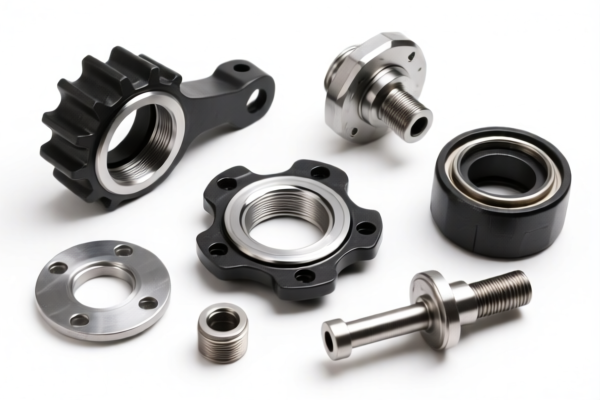
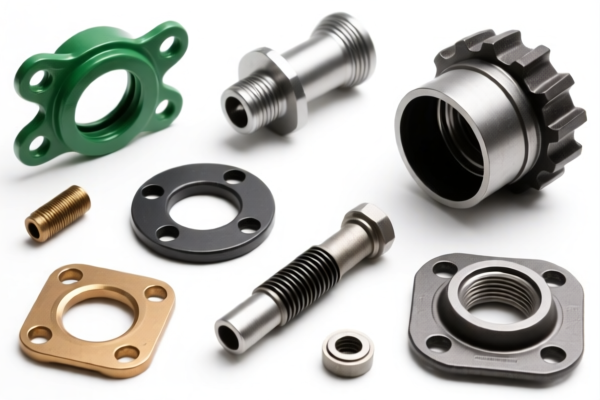
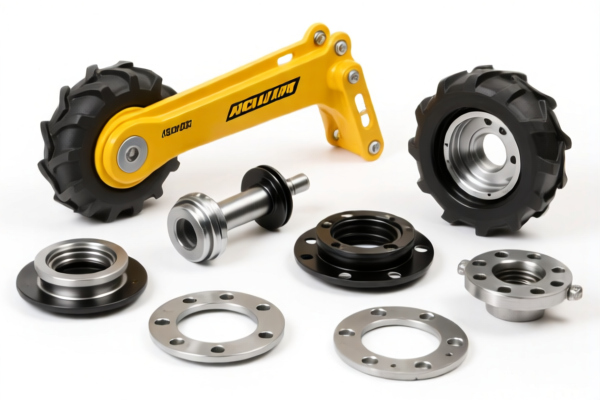
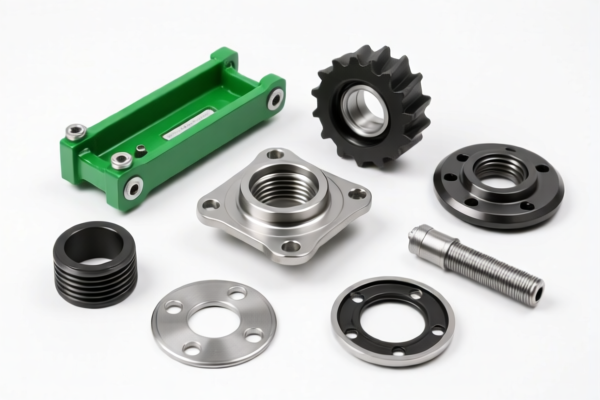
AI Analysis
🏭 Machinery & Machine Parts: The Ultimate HS Code Clearance Guide (2026)
🌐 HS Code Reference & Customs Clearance Strategy | 2026 Latest Tariff Analysis | Professional Clearance Protocol
📌 I. Product Definition & Classification: Do You Really Understand "Machinery Parts"?
Machinery and machine parts are the backbone of global manufacturing, covering everything from industrial robotics to automotive components. In international trade, this category is notoriously complex because it spans multiple chapters (84, 85, 87, etc.). However, based on the provided data, we focus on mechanical and electrical components subject to specific US trade restrictions.
Key Distinction in Classification:
- Specific Machine Parts: Components designed for a specific machine (e.g., excavator parts, CNC machine parts).
- General Machine Parts: Generic components (gears, springs, bearings, seals) that fit multiple machines.
- Electrical/Electronic Parts: Components that control or power machinery but are not mechanical in nature.
⚠️ Critical Note on Material Conflicts:
The provided data highlights a "No obvious material conflict" for most categories, BUT note that HS Code 8487.90.00.80 explicitly mentions "Steel, Aluminum, Copper products", triggering an additional 50% tariff. This is a critical red flag for metal-intensive parts.
📦 II. HS Code Classification Details (Based on Provided Data)
| HS Code | Product Description | Category Scope | Material/Type Note |
|---|---|---|---|
8487.10.00.80 |
Parts of machinery and mechanical appliances, not specified elsewhere | Other mechanical parts | No obvious material conflict; generic mechanical parts |
8487.90.00.80 |
Parts of machinery and mechanical appliances, not specified elsewhere | Other general mechanical parts | ⚠️ High Risk: Steel, Aluminum, Copper products attract +50% tariff |
8548.00.00.00 |
Electrical parts, not specified elsewhere | Electrical/Electronic parts | No obvious material conflict; electronic components |
8484.90.00.00 |
Gaskets and similar joints of metal sheeting combined with other material or of two or more layers of metal | Gaskets & Joints | Mechanical joint components |
8431.10.00.90 |
Parts suitable for use solely or principally with machinery of heading 8431 (e.g., earth-moving machinery) | Parts for specific machinery (Ch. 8431) | No obvious material conflict; specialized mechanical parts |
🔍 Key Insight:
- 8487.10.00.80 and 8431.10.00.90 are classified as "Other Mechanical Parts" with no specific material restrictions mentioned, resulting in lower base tariffs.
- 8487.90.00.80 is the "trap" category. If your part is made of steel, aluminum, or copper, it falls under a 50% additional tariff due to material-specific trade measures.
- 8548.00.00.00 is the catch-all for electrical parts not covered elsewhere.
💰 III. 2026 Latest Tariff Rate Breakdown (Including Additional Duties)
✅ Applicable Country: United States (US)
✅ Country of Origin: China (CN) (Implied by "122-Clause Tariff" and "Section 301" context)
✅ Effective Date: Current as of 2026
🎯 1. 8487.10.00.80 – Other Mechanical Parts
| Item | Content |
|---|---|
| Base Tariff | 0.0% |
| Section 301 Tariff | +25.0% |
| Section 122 Tariff | +10.0% |
| Total Tariff | 35.0% |
| Tax Calculation | CIF Value × 35% |
| Legal Basis Path | Base (0%) + Sec 301 (25%) + Sec 122 (10%) |
📌 Explanation:
- This is a "clean" mechanical part category with no material-based additional duties.
- Total burden is 35%, driven entirely by trade remedies (Sec 301 & 122).
🎯 2. 8487.90.00.80 – General Mechanical Parts (Steel/Aluminum/Copper Alert!)
| Item | Content |
|---|---|
| Base Tariff | 3.9% |
| Section 301 Tariff | +25.0% |
| Section 122 Tariff | +10.0% |
| Steel/Aluminum/Copper Surcharge | +50.0% |
| Total Tariff | 88.9% |
| Tax Calculation | CIF Value × 88.9% |
| Legal Basis Path | Base (3.9%) + Sec 301 (25%) + Sec 122 (10%) + Material Surcharge (50%) |
📌 Warning:
- This is a catastrophic rate for metal parts.
- If your part is made of steel, aluminum, or copper, you will pay 88.9%.
- Avoid this HS Code if possible; consider if the part can be classified under8487.10.00.80(if it’s a specific machine part) or8431.10.00.90.
🎯 3. 8548.00.00.00 – Electrical Parts
| Item | Content |
|---|---|
| Base Tariff | 0.0% |
| Section 301 Tariff | +25.0% |
| Section 122 Tariff | +10.0% |
| Total Tariff | 35.0% |
| Tax Calculation | CIF Value × 35% |
| Legal Basis Path | Base (0%) + Sec 301 (25%) + Sec 122 (10%) |
📌 Note:
- Electrical parts are taxed at 35%, same as general mechanical parts, but with a 0% base rate.
🎯 4. 8484.90.00.00 – Gaskets and Joints
| Item | Content |
|---|---|
| Base Tariff | 2.5% |
| Section 301 Tariff | +25.0% |
| Section 122 Tariff | +10.0% |
| Total Tariff | 37.5% |
| Tax Calculation | CIF Value × 37.5% |
| Legal Basis Path | Base (2.5%) + Sec 301 (25%) + Sec 122 (10%) |
📌 Note:
- Gaskets have a slightly higher base rate (2.5%) due to their material composition (metal sheeting).
🎯 5. 8431.10.00.90 – Parts for Machinery of Heading 8431
| Item | Content |
|---|---|
| Base Tariff | 0.0% |
| Section 301 Tariff | +25.0% |
| Section 122 Tariff | +10.0% |
| Total Tariff | 35.0% |
| Tax Calculation | CIF Value × 35% |
| Legal Basis Path | Base (0%) + Sec 301 (25%) + Sec 122 (10%) |
📌 Note:
- This is a specialized category for parts used in machinery under HS 8431 (e.g., earth-moving machinery).
- If your part is exclusively for such machinery, this code may offer the best compliance path.
🛠️ IV. Customs Clearance Practical Advice (Battle-Tested Tips)
✅ 1. Documentation Checklist (Non-Negotiable)
| Document | Required | Purpose |
|---|---|---|
| ✅ Detailed Part Specification | ✔️ | Include dimensions, material, and function. Crucial for avoiding 8487.90.00.80 if it’s metal. |
| ✅ Material Certificate | ✔️ | Prove if the part is NOT steel/aluminum/copper to avoid the 50% surcharge. |
| ✅ Machine Compatibility Statement | ✔️ | For 8431.10.00.90, prove it’s exclusively for HS 8431 machinery. |
| ✅ Commercial Invoice | ✔️ | Clearly state "Parts for Machinery" and HS Code. |
| ✅ Packing List | ✔️ | Separate mechanical and electrical parts if bundled. |
| ✅ Third-Party Test Report | ✔️ | If claiming it’s an electrical part (8548), provide circuit diagrams. |
✅ 2. Strategic HS Code Selection (Save Money!)
🔥 “Material Check First, Function Second, Code Last!”
| Scenario | Recommended HS Code | Tariff | Why? |
|---|---|---|---|
| Generic mechanical part (non-metal specific) | 8487.10.00.80 |
35% | Lower base rate, no material surcharge. |
| Steel/Aluminum/Copper Part | AVOID 8487.90.00.80 if possible |
88.9% | Avoid this unless no other option exists. |
| Electrical component | 8548.00.00.00 |
35% | Standard rate for electrical parts. |
| Gasket/Joint | 8484.90.00.00 |
37.5% | Specific category for joints. |
| Part for Earth-Moving Machinery | 8431.10.00.90 |
35% | Specialized, but lower risk if correctly applied. |
✅ 3. Special Considerations
| Situation | Handling Advice |
|---|---|
| Mixed Materials | If a part is steel, aluminum, and copper, it triggers the 50% surcharge in 8487.90.00.80. Try to classify as 8487.10.00.80 if it’s a specific machine part. |
| Electrical + Mechanical | If a part has both electrical and mechanical functions, classify based on principal function. If it’s primarily electrical, use 8548. |
| Gaskets with Metal Layers | Always use 8484.90.00.00. Do not classify as general mechanical parts. |
| Parts for Specific Machinery | Use 8431.10.00.90 if exclusively for HS 8431 machinery. This avoids the "general parts" trap. |
🌍 V. Global Clearance Comparison (2026)
| Country/Region | Recommended HS Code | Tariff (China Origin) | Key Requirement |
|---|---|---|---|
| 🇺🇸 USA | Varies (See Above) | 35%–88.9% | Strict material declaration for 8487.90.00.80 |
| 🇨🇳 China | Varies | 5%–10% | CCC Certification for electrical parts |
| 🇪🇺 EU | Varies | 0%–5% | CE Marking for electrical parts |
| 🇯🇵 Japan | Varies | 0%–5% | PSE Marking for electrical parts |
📌 Conclusion:
- USA is the most complex market for machinery parts due to Section 301 and Section 122 tariffs.
- Metal parts are heavily penalized (88.9%).
- Electrical parts are moderately taxed (35%).
- Specific machine parts (like8431.10.00.90) offer a compliance advantage if correctly applied.
📌 VI. Common Mistakes & Pitfalls (Lessons Learned)
❌ Mistake 1: Classifying a steel gear as 8487.10.00.80 instead of 8487.90.00.80
👉 Consequence: If misclassified, customs may reclassify it, leading to back taxes + penalties. If correctly classified as 8487.90.00.80, the tariff is 88.9%.
❌ Mistake 2: Combining electrical and mechanical parts without clear principal function
👉 Consequence: Customs may select the higher tariff category. Always declare the principal function.
❌ Mistake 3: Failing to provide material certificates for metal parts
👉 Consequence: Customs may assume the part is steel/aluminum/copper and apply the 50% surcharge.
❌ Mistake 4: Using "Gasket" as a generic term for any seal
👉 Consequence: Must use 8484.90.00.00 for metal-layer gaskets. Misclassification leads to incorrect tax calculation.
✅ Correct Approach:
“Mechanical Part for Excavator, Made of Alloy Steel, Model XYZ, Compliant with ISO 9001”
🎯 VII. Conclusion: Precision in Classification Saves Millions!
🎯 Remember the Mantra:
🔹 “Check Material First, Function Second, Code Last!”
🔹 “Steel/Aluminum/Copper = 88.9% Avoid!”
🔹 “Electrical = 35%, Mechanical = 35%, Gaskets = 37.5%”
📌 Pro Tip:
If your parts are originally from Vietnam, Mexico, Thailand, or Malaysia, you may qualify for IEEPA Exemptions, reducing tariffs to 0%–5%.
Consider Advanced Rulings (Pro Rata) to pre-approve HS Codes with US Customs.
📣 Immediate Action:
📞 Consult a Professional Customs Broker + Provide Detailed Part Specs + Apply for HS Code Advance Ruling
🚀 Ensure your machinery parts clear customs smoothly, efficiently, and cost-effectively!
✨ Professional Clearance Starts with Accurate Classification!
💼 Every Percentage Point Saved is Pure Profit!
Customer Reviews
About HS Code Classification
The Harmonized System (HS) is an internationally standardized nomenclature developed by the World Customs Organization (WCO) to classify traded products. Over 200 countries use the HS system as the basis for customs tariffs, trade statistics, and import/export regulations.
Each HS code follows a hierarchical structure:
- Chapter (2 digits) — Broad category of goods (e.g., Chapter 84: Machinery and Mechanical Appliances)
- Heading (4 digits) — More specific grouping within the chapter
- Subheading (6 digits) — Internationally standardized breakdown, used by all WCO member countries
- National subdivisions (8-10 digits) — Country-specific extensions for further classification, such as US HTSUS 10-digit codes
Correct HS code classification is essential for smooth customs clearance, accurate duty payment, and compliance with trade regulations. Misclassification can lead to customs delays, overpayment of duties, or penalties.
When importing from CN to US, the applicable tariff rates may include:
- Most-Favored-Nation (MFN) rate — The standard duty rate applied to WTO members
- General rate — Applied to countries without trade agreements
- Trade remedy duties — Additional tariffs such as Section 301 (anti-dumping), Section 232 (national security), or countervailing duties
The information provided on this page is for reference purposes only. For official classification, please consult with your local customs authority or a licensed customs broker.