Machinery for cleaning, washing, drying, or packaging
CN → US| HS Code | Tariff Rate | Origin | Destination | Doc |
|---|---|---|---|---|
| 8451909010 | 38.5% | CN | US | Official Doc |
| 8451800000 | 38.5% | CN | US | Official Doc |
| 8450200080 | 18.5% | CN | US | Official Doc |
| 8422200000 | 35.0% | CN | US | Official Doc |
| 8451210010 | 38.4% | CN | US | Official Doc |
Product Images
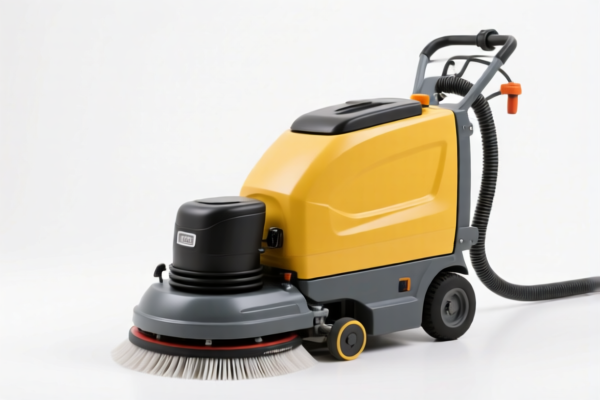
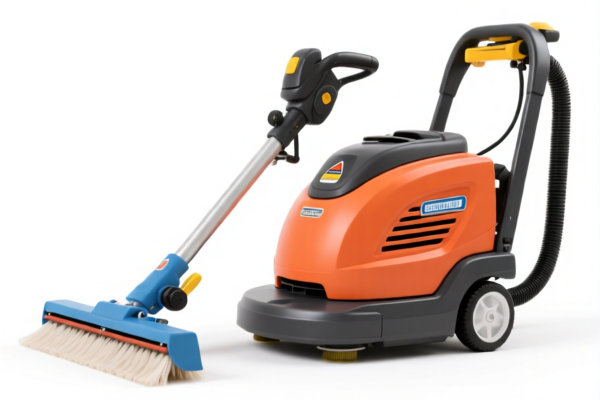
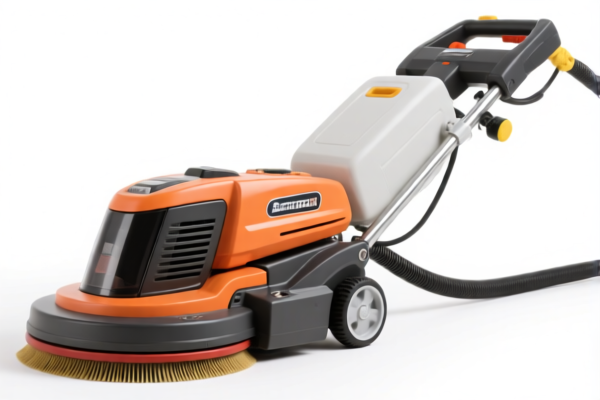
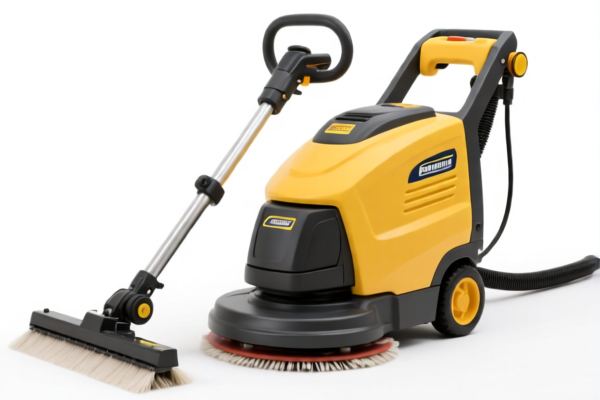
AI Analysis
🧼 Industrial Machinery for Cleaning, Washing, Drying, or Packaging
🌐 HS Code Reference & Customs Clearance Guide | 2026 Latest Tariff Analysis | Professional Entry Strategy 📌 I. Product Definition & Classification: Do You Know "Machinery"?
In international trade, "Machinery for cleaning, washing, drying, or packaging" is a broad category governed primarily by Chapter 84 of the Harmonized System. These are not household appliances but industrial-grade equipment used in manufacturing, processing, and textile industries.
The classification hinges on specific function and application sector: * Laundry & Textile Machinery: For washing/drying fabrics, textiles, or general garments. * General Cleaning & Finishing Machinery: For industrial washing, bleaching, dyeing, ironing, or pressing. * Bottle/Container Cleaning Machinery: Specific machines for cleaning bottles, cans, or other containers.
⚠️ Key Distinction Point:
- If it is a general-purpose washer/dryer for textiles or industrial parts → 8451 or 8450.
- If it is specifically for cleaning bottles/containers → 8422.
- If it includes washing AND drying in a single domestic unit → 8450 (but industrial dual-function may still fall under 8451 depending on design).
📦 II. HS Code Classification Details (2026 Latest Tariff Authority Match)
Based on the provided data, here are the only applicable HS Codes and their corresponding tax structures. Do not deviate from these codes for clearance purposes.
| HS Code | Product Description (Summary) | Application Scenario | Total Tax Rate (CN Origin) | Tax Breakdown |
|---|---|---|---|---|
8451.90.90.10 |
Parts/Accessories for washing, cleaning, drying, ironing, bleaching, dyeing, finishing, or cutting machines | General Industrial Laundry/Textile Processing Equipment | 38.5% | Base: 3.5% Add-on: 25.0% (Sec 301) 122 Clause: 10% |
8451.80.00.00 |
Machinery for washing, cleaning, drying, ironing, bleaching, dyeing, etc. | General Textile/Industrial Finishing Machines | 38.5% | Base: 3.5% Add-on: 25.0% (Sec 301) 122 Clause: 10% |
8450.20.00.80 |
Household or laundry machines containing both washing and drying functions | Combined Washer-Dryer Units (Note: Likely industrial or heavy-duty) | 18.5% | Base: 1.0% Add-on: 7.5% (Sec 301) 122 Clause: 10% |
8422.20.00.00 |
Machines for cleaning or drying bottles or other containers | Bottle/Can Container Cleaners | 35.0% | Base: 0.0% Add-on: 25.0% (Sec 301) 122 Clause: 10% |
8451.21.00.10 |
Textile washing, cleaning, or drying machines | Specific Textile Industry Washers/Dryers | 38.4% | Base: 3.4% Add-on: 25.0% (Sec 301) 122 Clause: 10% |
🔍 Critical Reminder:
- All listed HS Codes include a "122 Clause Tariff" of 10% and a Section 301 Add-on Tariff ranging from 7.5% to 25.0%, depending on the specific function.
- Base tariffs vary (0% to 3.5%).
- No de minimis exemption applies for these industrial categories under the provided data.
💰 III. 2026 Latest Tariff Rate Explanation (Detailed Breakdown)
✅ Applicable Country: USA (US)
✅ Origin: China (CN)
✅ Effective Date: 2025/2026 Period (Current Policy)
🎯 1. 8451.90.90.10 & 8451.80.00.00 —— General Industrial Cleaning & Finishing Machinery
Total Rate: 38.5%
| Item | Detail |
|---|---|
| Base Tariff | 3.5% (ad valorem) |
| Section 301 Add-on | 25.0% (High tariff for industrial machinery) |
| 122 Clause Tariff | 10.0% (Specific trade remedy) |
| Total Effective Rate | 38.5% |
| Calculation | CIF Value × 38.5% |
| Legal Basis | HTSUS 8451.90.90.10 / 8451.80.00.00 + 19 CFR Footnotes |
📌 Explanation:
- These codes cover broad industrial laundry, dyeing, and finishing lines.
- The 25% Section 301 tariff is the dominant cost driver.
- 122 Clause adds another 10%, making these among the most expensive categories for Chinese-origin machinery.
🎯 2. 8450.20.00.80 —— Combined Washing & Drying Machines
Total Rate: 18.5%
| Item | Detail |
|---|---|
| Base Tariff | 1.0% |
| Section 301 Add-on | 7.5% (Lower than general machinery) |
| 122 Clause Tariff | 10.0% |
| Total Effective Rate | 18.5% |
| Calculation | CIF Value × 18.5% |
| Legal Basis | HTSUS 8450.20.00.80 |
📌 Explanation:
- This is a significant cost saver if your machine is a combined washer-dryer.
- The Section 301 rate is only 7.5% instead of 25%.
- Condition: Must explicitly contain both washing and drying functions in one unit.
🎯 3. 8422.20.00.00 —— Bottle/Container Cleaning Machinery
Total Rate: 35.0%
| Item | Detail |
|---|---|
| Base Tariff | 0.0% |
| Section 301 Add-on | 25.0% |
| 122 Clause Tariff | 10.0% |
| Total Effective Rate | 35.0% |
| Calculation | CIF Value × 35.0% |
| Legal Basis | HTSUS 8422.20.00.00 |
📌 Explanation:
- Zero base tariff, but 25% Section 301 still applies.
- Ideal for food/beverage packaging lines (e.g., rinsing bottles before filling).
🎯 4. 8451.21.00.10 —— Textile-Specific Washing/Drying
Total Rate: 38.4%
| Item | Detail |
|---|---|
| Base Tariff | 3.4% |
| Section 301 Add-on | 25.0% |
| 122 Clause Tariff | 10.0% |
| Total Effective Rate | 38.4% |
| Calculation | CIF Value × 38.4% |
| Legal Basis | HTSUS 8451.21.00.10 |
📌 Explanation:
- Specific to textile industry (e.g., denim washing, fabric drying).
- Nearly identical cost to general industrial machines (38.5%).
🛠️ IV. Customs Clearance Practical Advice (Action Plan)
✅ 1. Essential Documentation Checklist
| Document | Required | Purpose |
|---|---|---|
| Commercial Invoice | ✔️ | Must clearly state: "Machinery for washing/drying [specific material]" |
| Packing List | ✔️ | Detail dimensions, weight, and components |
| Product Technical Specs | ✔️ | Crucial: Specify if it’s "washing only," "drying only," "combined," or "bottle cleaning" |
| Photos & Labeling | ✔️ | Show nameplate, model, and voltage/frequency |
| Origin Certificate | ✔️ | To confirm CN origin for accurate tariff calculation |
| Section 301 Exclusion Proof | ❓ | If applicable, provide exclusion number (though unlikely for these codes) |
✅ 2. Classification Strategy (Key Mnemonic)
🔥 "Washer-Dryer Combined = 18.5%, Bottle Cleaner = 35%, General Laundry = 38.5%!"
| Scenario | Correct HS Code | Tariff | Risk if Misclassified |
|---|---|---|---|
| Machine washes only textiles | 8451.80.00.00 |
38.5% | Overpay if misclassified as 8450.20 (if it doesn’t dry) |
| Machine dries only textiles | 8451.80.00.00 |
38.5% | Underpay if misclassified as 8450 (which requires washing+drying) |
| Machine does both wash & dry | 8450.20.00.80 |
18.5% | SAVE 20% by ensuring dual-function design |
| Machine cleans bottles | 8422.20.00.00 |
35.0% | High risk if declared as "general washing machine" |
| Parts for above machines | 8451.90.90.10 |
38.5% | Parts must be identified as such; not the main unit |
✅ 3. Special Considerations
| Case | Recommendation |
|---|---|
| Dual-Function Machines | Design/declare as 8450.20.00.80 to save ~20% in tariffs. Ensure both functions are integrated. |
| Bottle Cleaners | Clearly specify "for bottles/containers" in description. Avoid generic "washing machine" terms. |
| Textile vs. General | If used in textile mills, use 8451.21.00.10. If for hotels/general laundries, use 8451.80.00.00. Both are ~38.5%. |
| Parts vs. Whole | If importing spare parts, declare as 8451.90.90.10. Do not hide parts inside the main machine description. |
🌍 V. Global Comparison (2026 Insight)
| Market | HS Code Trend | Tariff Implication |
|---|---|---|
| 🇺🇸 USA | Strict Section 301 application | High Cost: 18.5% – 38.5% |
| 🇨🇳 China | Standard MFN rates | Lower base rates, no 301/122 |
| 🇪🇺 EU | HTS Chapter 84 equivalent | No Section 301; lower overall duty |
| 🇬🇧 UK | Post-Brexit Tariff | Similar to EU; no US-style add-ons |
📌 Conclusion:
- The USA imposes the highest tariffs due to Section 301 and 122 Clause.
- Strategy: Maximize use of 8450.20.00.80 (Combined Wash/Dry) to reduce rate from 38.5% to 18.5%.
📌 VI. Common Mistakes & Pitfalls
❌ Mistake 1: Calling a "Bottle Cleaner" a "Washing Machine"
👉 Result: Misclassification → Potential duty underpayment penalty + delay.
❌ Mistake 2: Claiming "Washer-Dryer" for a single-function washer
👉 Result: Customs audit → Re-classified to 8451.80 (38.5%) + penalties.
❌ Mistake 3: Ignoring the "122 Clause" in cost calculation
👉 Result: Underestimating landed cost by 10% across all categories.
✅ Correct Approach:
"Industrial Washer-Dryer Combo, for Linen Processing, Model ABC, Voltage 380V" →
8450.20.00.80
"Bottle Rinsing Machine, for Beverage Industry" →8422.20.00.00
🎯 VII. Conclusion: Optimize for Cost Efficiency
🎯 Remember:
🔹 "Combined Wash-Dry = 18.5% (Best Option)"
🔹 "Bottle Cleaner = 35%"
🔹 "General Laundry = 38.5% (Highest Cost)"
📌 Pro Tip:
If your machine can be designed or marketed as a combined washing and drying unit, you can save up to 20% in tariffs. Consult with a customs broker to ensure the technical specs support 8450.20.00.80.
📣 Immediate Action:
📞 Verify machine function → Select correct HS Code → Calculate landed cost with 122 Clause → Prepare precise commercial invoice.
✨ Precision Classification = Maximum Savings
💼 Don’t let tariff complexity drain your profit margins!
Customer Reviews
About HS Code Classification
The Harmonized System (HS) is an internationally standardized nomenclature developed by the World Customs Organization (WCO) to classify traded products. Over 200 countries use the HS system as the basis for customs tariffs, trade statistics, and import/export regulations.
Each HS code follows a hierarchical structure:
- Chapter (2 digits) — Broad category of goods (e.g., Chapter 84: Machinery and Mechanical Appliances)
- Heading (4 digits) — More specific grouping within the chapter
- Subheading (6 digits) — Internationally standardized breakdown, used by all WCO member countries
- National subdivisions (8-10 digits) — Country-specific extensions for further classification, such as US HTSUS 10-digit codes
Correct HS code classification is essential for smooth customs clearance, accurate duty payment, and compliance with trade regulations. Misclassification can lead to customs delays, overpayment of duties, or penalties.
When importing from CN to US, the applicable tariff rates may include:
- Most-Favored-Nation (MFN) rate — The standard duty rate applied to WTO members
- General rate — Applied to countries without trade agreements
- Trade remedy duties — Additional tariffs such as Section 301 (anti-dumping), Section 232 (national security), or countervailing duties
The information provided on this page is for reference purposes only. For official classification, please consult with your local customs authority or a licensed customs broker.