Machinery for cutting or processing paper, cardboard, or similar materials
CN → US| HS Code | Tariff Rate | Origin | Destination | Doc |
|---|---|---|---|---|
| 8439100090 | 35.0% | CN | US | Official Doc |
| 8439100010 | 35.0% | CN | US | Official Doc |
| 4823901000 | 35.0% | CN | US | Official Doc |
| 4823908000 | 35.0% | CN | US | Official Doc |
| 8441900000 | 35.0% | CN | US | Official Doc |
Product Images
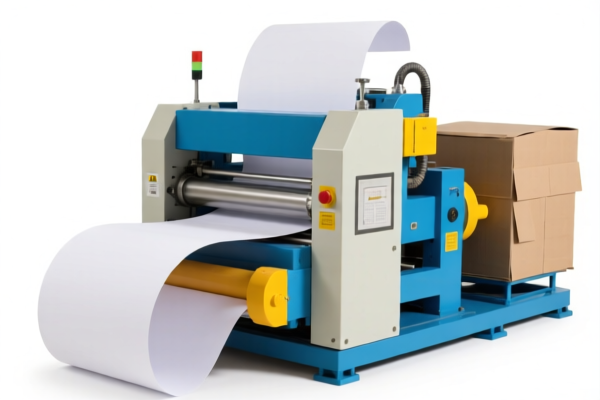
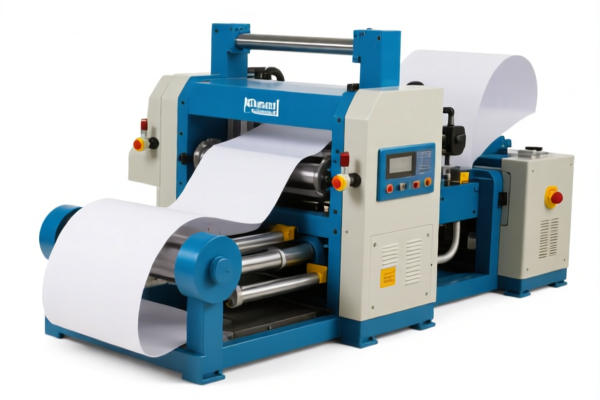
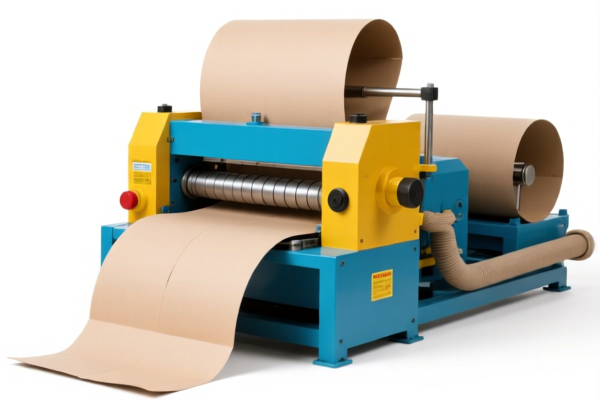
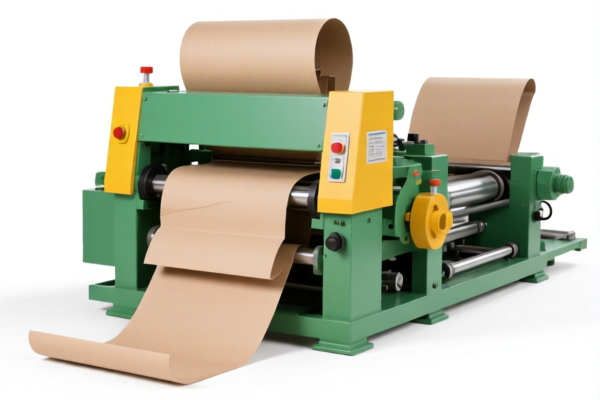
AI Analysis
📄 Machinery for Cutting or Processing Paper/Cardboard (The Paper Industry Cluster)
🌐 HS Code Reference & Customs Clearance Guide | 2026 Latest Tariff Analysis | Professional Level Clearance Strategy
📌 I. Product Definition and Classification: Do You Truly Understand "Paper Machinery"?
Machinery for processing paper, cardboard, or fiber materials is the backbone of the packaging and printing industry. In international trade, these items are not a single monolith but are strictly divided based on their function (making vs. finishing) and the material state (pulp vs. finished paper).
Key Distinction Logic: * Primary Processing (Pulp/Making): Machines that turn raw fibers into paper sheets or pulp → Classified under Chapter 84 (8439 series). * Secondary Processing (Cutting/Shaping): Machines that take finished paper/cardboard sheets and cut, fold, or sort them → Classified under Chapter 84 (8441) or Chapter 48 (Finished Goods).
⚠️ Critical Classification Point:
- If the machine manufactures the paper pulp or forms the paper web → 8439.
- If the machine cuts/sorts already-formed paper/cardboard → 8441.90.
- If the item is just the paper/cardboard itself (cut to size), it falls under 4823.
- All items in this dataset attract a total duty of 35.0% due to US-China trade restrictions.
📦 II. HS Code Classification Details (2026 Latest Authoritative Mapping)
| HS Code | Product Description | Applicable Scenario | Key Identification Feature |
|---|---|---|---|
8439.10.00.90 |
Machines for making or finishing pulp, paper, or paperboard | General paper mill machinery (refiners, beaters, finishing presses) | Used in the production line of paper pulp/mills. |
8439.10.00.10 |
Machinery for the manufacture of cellulose material pulps | Pulp mill equipment (pulpers, digesters, cleaners) | Specifically for cellulose/pulp preparation, not final paper. |
4823.90.10.00 |
Paper and paperboard, cut to size or shape (General) | Finished paper products (e.g., A4 sheets, envelopes, napkins) | Not machinery. It is the product itself. |
4823.90.80.00 |
Paper and paperboard, cut to size or shape (Other) | Specialized cut paper for industrial base materials | Not machinery. Used for specific industrial paper bases. |
8441.90.00.00 |
Other machinery for cutting or sorting paper or paperboard | Paper converters (guillotines, cutters, sorters, folder-glueers) | Used on finished paper/cardboard for cutting, folding, or sorting. |
🔍 Key Reminder:
- 8439 vs. 8441: The crucial difference is whether the machine creates the substrate (8439) or manipulates the already created substrate (8441).
- 4823 Series: These are finished goods, not machinery. Do not confuse "machines that cut" (8441) with "paper that is cut" (4823).
💰 III. 2026 Latest Tariff Rate Breakdown (Including Surtaxes & Policy Add-ons)
✅ Applicable Country: United States (US)
✅ Origin: China (CN)
✅ Effective Date: Ongoing (Includes Section 301 & IEEPA surcharges)
🎯 1. Machinery: 8439.10.00.90 & 8439.10.00.10
(Machines for making pulp/paper)
| Item | Content |
|---|---|
| Base Rate (MFN) | 0.0% |
| Section 301 Surtax | +25.0% (Standard 301 tariff on Chinese machinery) |
| IEEPA Surtax (Section 122) | +10.0% (Additional duty on Chinese goods under IEEPA) |
| Total Duty Rate | 35.0% |
| Calculation Basis | CIF Value × 35% |
| De Minimis Exemption | ❌ Not Eligible (deny_de_minimis) |
| Legal Basis Path | USITC:8439.10.00.xx → FOOTNOTE:301 → IEEPA:9903.01.24 |
📌 Explanation:
- Although the base MFN rate is 0%, the 35% total burden is heavy.
- The 25% comes from the USTR Section 301 list (Chapter 84 machinery).
- The 10% is an additional layer under IEEPA authorities.
- No de minimis exemption applies; even small shipments are fully taxable.
🎯 2. Machinery: 8441.90.00.00
(Machines for cutting/sorting paper/cardboard)
| Item | Content |
|---|---|
| Base Rate (MFN) | 0.0% |
| Section 301 Surtax | +25.0% |
| IEEPA Surtax (Section 122) | +10.0% |
| Total Duty Rate | 35.0% |
| Calculation Basis | CIF Value × 35% |
| De Minimis Exemption | ❌ Not Eligible (deny_de_minimis) |
| Legal Basis Path | USITC:8441.90.00.00 → FOOTNOTE:301 → IEEPA:9903.01.24 |
📌 Note:
- Same tax structure as 8439.
- Even if the machine is a simple guillotine cutter, if it’s classified as 8441, it faces the same 35% hit.
🎯 3. Finished Goods: 4823.90.10.00 & 4823.90.80.00
(Cut Paper/Cardboard - NOT Machinery)
| Item | Content |
|---|---|
| Base Rate (MFN) | 0.0% |
| Section 301 Surtax | +25.0% |
| IEEPA Surtax (Section 122) | +10.0% |
| Total Duty Rate | 35.0% |
| Calculation Basis | CIF Value × 35% |
| De Minimis Exemption | ❌ Not Eligible (deny_de_minimis) |
| Legal Basis Path | USITC:4823.90.xx.00 → FOOTNOTE:301 → IEEPA:9903.01.24 |
📌 Warning:
- Even though these are finished paper products, they are NOT exempt from machinery-like surtaxes if they fall under the targeted HS codes.
- Importers often mistakenly believe "paper" has lower duties, but in this specific 10-digit classification, it is 35%.
🛠️ IV. Customs Clearance Practical Advice (Combat Pitfall Guide)
✅ 1. Documentation Checklist (Non-Negotiable)
| Document | Must Provide | Purpose |
|---|---|---|
| ✅ Technical Manual | ✔️ | To prove if the machine is for pulp making (8439) or paper cutting (8441). |
| ✅ Product Photos | ✔️ | Show control panels, rollers, cutting blades, and intake/output trays. |
| ✅ Commercial Invoice | ✔️ | Must explicitly state "Machinery for [Specific Function]" or "Paper Product". |
| ✅ Packing List | ✔️ | List all accessories (blades, motors) as part of the main HS code, not separately. |
| ✅ Country of Origin Cert. | ✔️ | Required for surtax verification. |
| ✅ FCC/CE Certificates | ✔️ | If the machine has electronic controls, compliance may be requested. |
✅ 2. Declaration Tips (Key Mantra)
🔥 "Function Defines Code, Not Just Name. 35% is the Floor, Don't Guess!"
| Scenario | Correct Declaration | Incorrect Action | Consequence |
|---|---|---|---|
| Paper Mill Refiner | 8439.10.00.90 |
Declare as "Industrial Equipment" (Generic) | Potential misclassification audit, penalties. |
| Guillotine Paper Cutter | 8441.90.00.00 |
Declare as "Table/Desk" (Chapter 94) | Misclassification Penalty + Back Duties. |
| Pre-cut A4 Paper | 4823.90.10.00 |
Declare as "Raw Paper Rolls" | Wrong HS Code, delays, re-inspection. |
| Machine + Spares | Bundle into main HS | Split spare blades into "Parts" | Higher Effective Rate or seizure if parts are classified differently. |
✅ 3. Special Circumstances Handling
| Situation | Handling Advice |
|---|---|
| Hybrid Machines (e.g., machine that forms AND cuts) | Typically classified under the primary function (8439). Provide detailed workflow diagrams. |
| Used Machinery | Must provide proof of prior use, age, and condition. US Customs may request additional safety certifications. |
| Small Sample Machines | No de minimis. Even a $500 sample cutter incurs $175 duty. Factor this into cost. |
| Origin Shift | If components are 50%+ from Vietnam/Mexico, apply for Free Trade Agreement benefits. However, Chinese value-added content still triggers IEEPA if not fully substituted. |
🌍 V. Global Market Comparison (2026 Latest)
| Country/Region | Recommended HS Code | Duty Rate (China Origin) | Certification Req. | Notes |
|---|---|---|---|---|
| 🇺🇸 USA | 8439/8441/4823 |
35.0% | FCC (if electronic) | High Barrier: 301 + IEEPA surcharges apply. |
| 🇨🇳 China | 8439/8441/4823 |
0% - 5% (Varies) | CCC (if applicable) | No surtaxes. Favorable for domestic production. |
| 🇪🇺 EU | 8439/8441/4823 |
0% - 4% | CE, REACH | No Section 301 or IEEPA equivalents. Lower Duty. |
| 🇯🇵 Japan | 8439/8441/4823 |
0% - 3% | PSE (if electronic) | No punitive surtaxes. |
| 🇲🇽 Mexico | 8439/8441/4823 |
0% (if USMCA rules met) | NOM | Strategic Alternative: Assembly in Mexico to bypass US surtaxes. |
📌 Conclusion:
- USA is the most expensive market for this category due to 35% effective duty.
- EU/Asia markets are significantly cheaper.
- Supply Chain Shift: Many exporters are moving final assembly to Mexico or Southeast Asia to avoid the 301/IEEPA tariffs.
📌 VI. Common Errors & Pitfall Guide (Lessons Learned)
❌ Error 1: Declaring "Paper Cutting Machine" as 8477.80 (Machinery for rubber/plastics)
👉 Consequence: Wrong HS code. Customs will reject, leading to delays and 35%+ penalties.
❌ Error 2: Assuming "Paper Products" (4823) are exempt from surtaxes because they are consumer goods
👉 Consequence: 35% duty applies. Many paper products are targeted under Section 301.
❌ Error 3: Splitting "Machine + Blade" into two invoices to avoid thresholds
👉 Consequence: Anti-circumvention investigation. The entire shipment may be seized.
❌ Error 4: Using generic descriptions like "Industrial Equipment" on the Commercial Invoice
👉 Consequence: CBP Request for Information (RFI). Delays of 2-4 weeks while customs determines the correct HTSUS.
✅ Correct Practice:
"Paper Pulp Refining Machine, Model XYZ, Used for Cellulose Processing, 8439.10.00.90"
OR
"Automatic Paper Guillotine Cutter, 2023 Model, For Finished Paper, 8441.90.00.00"
🎯 VII. Conclusion: Precision in Classification Saves Money!
🎯 Remember the Mantra:
🔹 "Machinery vs. Product: Know the Difference."
🔹 "35% is the Truth: Base 0% + 301 25% + IEEPA 10%."
🔹 "No De Minimis: Every Dollar is Taxed."
📌 Pro Tip:
If you are exporting machinery to the US:
1. Apply for an Advance Ruling from US CBP to confirm the HS code.
2. Consider third-country assembly (e.g., Vietnam, Mexico) to mitigate the 301/IEEPA impact.
3. For finished paper goods, evaluate if alternative markets (EU/ASEAN) offer better margins due to lower tariffs.
📣 Act Now:
📞 Contact a licensed Customs Broker + Provide Tech Specs + Verify Origin Rules
🚀 Ensure Smooth Clearance, Avoid Penalties, and Protect Your Margins!
✨ Professional Classification Starts Here!
💼 Every Percent of Duty Saved is Pure Profit!
Customer Reviews
About HS Code Classification
The Harmonized System (HS) is an internationally standardized nomenclature developed by the World Customs Organization (WCO) to classify traded products. Over 200 countries use the HS system as the basis for customs tariffs, trade statistics, and import/export regulations.
Each HS code follows a hierarchical structure:
- Chapter (2 digits) — Broad category of goods (e.g., Chapter 84: Machinery and Mechanical Appliances)
- Heading (4 digits) — More specific grouping within the chapter
- Subheading (6 digits) — Internationally standardized breakdown, used by all WCO member countries
- National subdivisions (8-10 digits) — Country-specific extensions for further classification, such as US HTSUS 10-digit codes
Correct HS code classification is essential for smooth customs clearance, accurate duty payment, and compliance with trade regulations. Misclassification can lead to customs delays, overpayment of duties, or penalties.
When importing from CN to US, the applicable tariff rates may include:
- Most-Favored-Nation (MFN) rate — The standard duty rate applied to WTO members
- General rate — Applied to countries without trade agreements
- Trade remedy duties — Additional tariffs such as Section 301 (anti-dumping), Section 232 (national security), or countervailing duties
The information provided on this page is for reference purposes only. For official classification, please consult with your local customs authority or a licensed customs broker.