Machinery for manufacturing felt or non woven fabric
CN → US| HS Code | Tariff Rate | Origin | Destination | Doc |
|---|---|---|---|---|
| 8479820080 | 35.0% | CN | US | Official Doc |
| 8448399000 | 17.5% | CN | US | Official Doc |
| 8449001000 | 20.1% | CN | US | Official Doc |
| 8449005000 | 17.5% | CN | US | Official Doc |
Product Images
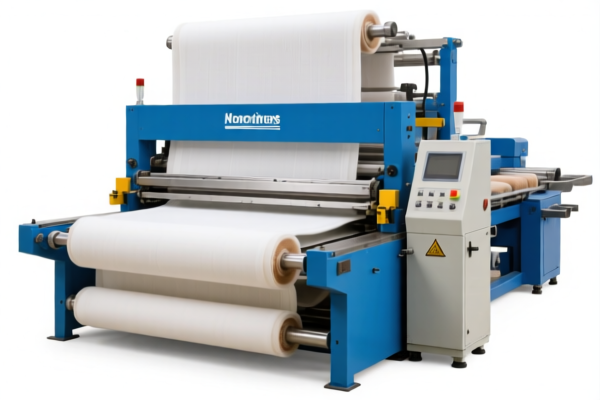
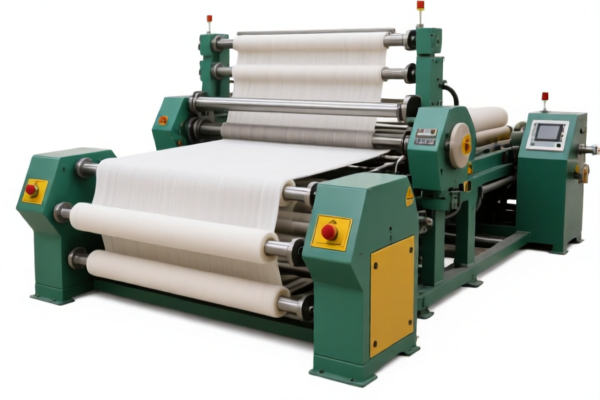
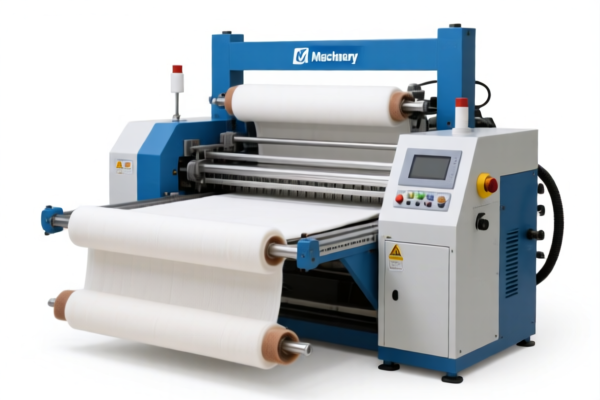
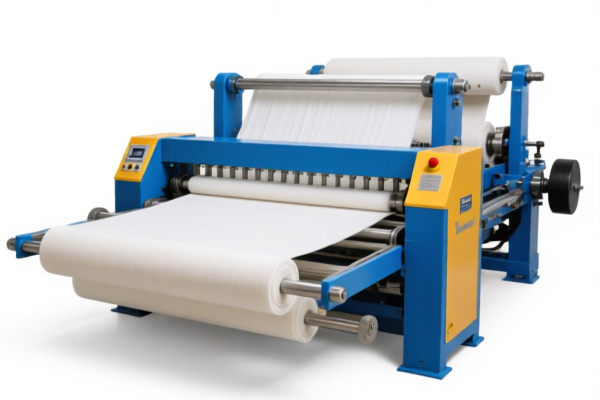
AI Analysis
🏭 Machinery for Manufacturing Felt or Non-Woven Fabric
🌐 HS Code Reference & Customs Clearance Guide | 2026 Latest Tariff Analysis | Professional Clearance Strategy
📌 I. Product Definition & Classification: Understanding "Non-Woven Machinery"
Machinery for manufacturing felt or non-woven fabric is a critical category in industrial textile production. These machines transform raw fibers (polypropylene, polyester, nylon, etc.) into continuous web structures through mechanical, thermal, or chemical bonding processes.
In international trade, these machines are classified based on their functional specificity and technical scope:
1. General-Purpose Physical Processing Machinery
- Machinery used for general physical processing of fibers/mats, often categorized under generic mechanical headings.
- Typically subject to broader tariff structures.
2. Specific Textile Machinery & Auxiliary Parts
- Machinery specifically designed for the manufacture or finishing of non-wovens or felts.
- Classified under precise textile machinery headings (Chapter 84).
- Often subject to different duty rates based on specificity and origin.
⚠️ Key Distinction Point:
- If the machine is a general-purpose mechanical device for physical processing → May fall under 8479.
- If the machine is specifically designed for textile/non-woven manufacturing → Falls under 8448 or 8449.
- Crucial: Misclassification can lead to significant duty differences (e.g., 35% vs. 17.5% vs. 20.1%).
📦 II. HS Code Classification Details (2026 Latest Tariff Authority Comparison)
| HS Code | Product Description | Application Scenario | Specificity Level | Total Duty Rate (CN Origin) |
|---|---|---|---|---|
8479.82.00.80 |
Machinery for manufacturing felt or non-woven fabric, falling under general physical processing machinery | General-purpose mechanical equipment for fiber matting | ⭐ Low (Generic) | 35.0% |
8448.39.90.00 |
Auxiliary parts for textile machinery, including those for non-wovens/felts | Auxiliary components for textile manufacturing lines | ⭐⭐ Medium (Auxiliary) | 17.5% |
8449.00.10.00 |
Machinery for manufacturing or finishing felt or non-woven fabric (general category) | Core manufacturing lines for non-wovens/felts | ⭐⭐⭐ High (Specific) | 20.1% |
8449.00.50.00 |
Machinery for manufacturing or finishing felt or non-woven fabric (sheet/shape-specific) | Specialized equipment for sheet/shape forming | ⭐⭐⭐ High (Specific) | 17.5% |
🔍 Key Reminder:
- 8479.82.00.80 carries the highest duty (35%) because it is classified as "general-purpose" machinery. Avoid this if your machine has specific textile applications.
- 8448.39.90.00 and 8449.00.50.00 offer lower duties (17.5%) for auxiliary parts and specific sheet/shape machinery.
- 8449.00.10.00 has a moderate duty (20.1%) for general non-woven manufacturing machinery.
- Precision in description is critical: Use terms like "non-woven fabric manufacturing line" instead of "general fiber processing machine."
💰 III. 2026 Latest Tariff Rate Breakdown (Including Additional Duties & Policy Surcharges)
✅ Applicable Country: United States (US)
✅ Country of Origin: China (CN)
✅ Effective Date: From 2025-11-10 onwards (including subsequent imports)
🎯 1. 8479.82.00.80 —— General Physical Processing Machinery for Felt/Non-Wovens
| Item | Detail |
|---|---|
| Base Duty Rate | 0.0% (ad valorem) |
| USITC Additional Duty (Section 301) | +25.0% |
| IEEPA Additional Duty | +10.0% |
| Total Duty Rate | 35.0% |
| Tax Calculation | CIF Value × 35% |
| De Minimis Exemption Eligible? | ❌ No (deny_de_minimis) |
| Legal Basis Path | USITC:8479.82.00.80 → Footnote:301 → IEEPA:9903.01.24 |
📌 Explanation:
- The 25% Section 301 duty applies to most Chinese-origin machinery classified under 8479.
- The 10% IEEPA duty is a separate surcharge on Chinese goods.
- Total 35% is the highest among the four codes. Avoid this classification if your machinery has specific textile functions.
🎯 2. 8448.39.90.00 —— Auxiliary Parts for Textile Machinery (Non-Woven/Felt)
| Item | Detail |
|---|---|
| Base Duty Rate | 0.0% |
| USITC Additional Duty (Section 301) | +7.5% |
| IEEPA Additional Duty | +10.0% |
| Total Duty Rate | 17.5% |
| Tax Calculation | CIF Value × 17.5% |
| De Minimis Exemption Eligible? | ❌ No (deny_de_minimis) |
| Legal Basis Path | USITC:8448.39.90.00 → Footnote:301 → IEEPA:9903.01.24 |
📌 Note:
- This code applies to auxiliary parts (e.g., rollers, cutters, guides) specifically used in non-woven/felt production lines.
- Total 17.5% is significantly lower than 35%. Ensure your shipment consists of parts/components, not complete machines.
🎯 3. 8449.00.10.00 —— General Machinery for Manufacturing/Finishing Non-Wovens/Felts
| Item | Detail |
|---|---|
| Base Duty Rate | 2.6% |
| USITC Additional Duty (Section 301) | +7.5% |
| IEEPA Additional Duty | +10.0% |
| Total Duty Rate | 20.1% |
| Tax Calculation | CIF Value × 20.1% |
| De Minimis Exemption Eligible? | ❌ No (deny_de_minimis) |
| Legal Basis Path | USITC:8449.00.10.00 → Footnote:301 → IEEPA:9903.01.24 |
📌 Note:
- This code covers core manufacturing machinery for non-wovens/felts (e.g., carding machines, needle punchers, hydroentanglement machines).
- Base duty is 2.6% (unlike 0% for other codes), but the additional duties are only 7.5% + 10%, totaling 20.1%.
- Ideal for complete production lines or major components.
🎯 4. 8449.00.50.00 —— Machinery for Sheet/Shape-Specific Non-Woven/Felt Manufacturing
| Item | Detail |
|---|---|
| Base Duty Rate | 0.0% |
| USITC Additional Duty (Section 301) | +7.5% |
| IEEPA Additional Duty | +10.0% |
| Total Duty Rate | 17.5% |
| Tax Calculation | CIF Value × 17.5% |
| De Minimis Exemption Eligible? | ❌ No (deny_de_minimis) |
| Legal Basis Path | USITC:8449.00.50.00 → Footnote:301 → IEEPA:9903.01.24 |
📌 Note:
- This code is for specialized machinery that produces felt or non-woven in specific sheets or shapes (e.g., geotextiles, automotive felts).
- Total 17.5% is the same as auxiliary parts. Ensure your machine’s purpose is clearly defined as sheet/shape-specific.
🛠️ IV. Customs Clearance Practical Advice (Battle-Tested Pitfall Avoidance)
✅ 1. Document Checklist (All Required)
| Document | Required | Notes |
|---|---|---|
| ✅ Technical Specification Sheet | ✔️ | Must detail machine function, capacity, power, and intended use (felt/non-woven). |
| ✅ Flowchart/Diagram | ✔️ | Show how fibers are transformed into non-woven/felt. Prove it’s not "general" machinery. |
| ✅ Product Photos (With Nameplate) | ✔️ | Clear view of model, brand, input/output specs, and any branding. |
| ✅ Third-Party Certification | ✔️ | CE, UL, OSHA (if applicable). Demonstrates safety and compliance. |
| ✅ Commercial Invoice | ✔️ | Must state: "Machinery for manufacturing non-woven fabric / felt." Avoid vague terms like "fiber processing equipment." |
| ✅ Packing List | ✔️ | Clearly separate machines from spare parts. Do not mix auxiliary parts with main units. |
| ✅ Certificate of Origin (CO) | ✔️ | Required for origin verification. If non-China, may qualify for lower duties. |
✅ 2. Declaration Tips (Key Mnemonic)
🔥 "Specificity is King, General is Costly!"
| Scenario | Correct Declaration | Wrong Action |
|---|---|---|
| Complete Non-Woven Production Line | 8449.00.10.00 (20.1%) |
Misclassifying as 8479.82.00.80 → 35% |
| Auxiliary Parts (Rollers, Cutters) | 8448.39.90.00 (17.5%) |
Declaring as "Machinery" → 20.1% or 35% |
| Specialized Sheet-Forming Machine | 8449.00.50.00 (17.5%) |
Declaring as "General Machinery" → 35% |
| Mixed Shipment (Machine + Parts) | Split Declaration | Bundling together → Higher duty on entire shipment |
✅ 3. Special Circumstances Handling
| Scenario | Handling Advice |
|---|---|
| OEM Custom Machinery | Provide client order + design drawings. Avoid generic descriptions. |
| Machine with Multiple Functions | Declare based on primary function. If non-woven/felt is primary, use 8449. |
| Parts Shipped Separately | Ensure each part is clearly described as "Auxiliary Part for Textile Machinery." |
| Used/Refurbished Machinery | Provide proof of origin, age, and condition. May require additional inspections. |
🌍 V. Global Market Clearance Comparison (2026 Latest)
| Country/Region | Recommended HS Code | Duty Rate | Certification Requirements | Notes |
|---|---|---|---|---|
| 🇺🇸 United States | 8449.00.10.00 / 8449.00.50.00 |
20.1% / 17.5% (CN Origin) | CE, UL, OSHA | Avoid 8479 (35%) |
| 🇨🇳 China | 8449.00.10.00 |
5.0% (Base) + Local Taxes | CCC (if applicable) | No Section 301/IEEPA |
| 🇪🇺 European Union | 8449.00.10.00 |
0-3% (if CE Compliant) | CE, RoHS, REACH | No additional surcharges |
| 🇦🇺 Australia | 8449.00.10.00 |
5.0% | RCM, CE | No extra duties |
| 🇯🇵 Japan | 8449.00.10.00 |
0% (Free Trade Agreement) | PSE, JIS | Check FTA eligibility |
📌 Conclusion:
- US has the highest duties due to Section 301 and IEEPA.
- EU, Japan, and Australia offer lower or zero duties for compliant machinery.
- China origin triggers the highest surcharges. Consider origin switching or partial assembly in third countries to reduce costs.
📌 VI. Common Errors & Pitfall Avoidance (Blood & Tears Lessons)
❌ Error 1: Declaring "Non-Woven Machinery" as "General Physical Processing Machinery" (8479.82.00.80)
👉 Consequence: Duty jumps from 17.5-20.1% to 35% → Extra cost of 15-17.5%!
❌ Error 2: Mixing auxiliary parts with main machinery in one HS code
👉 Consequence: Parts may be taxed at machinery rates → Overpayment!
❌ Error 3: Using vague descriptions like "Fiber Processing Machine"
👉 Consequence: Customs may default to 8479 (35%) due to lack of specificity → Audit Risk!
❌ Error 4: Not providing technical diagrams for non-woven machinery
👉 Consequence: Customs may reject classification as "specific textile machinery" → Delay or Return!
✅ Correct Practice:
"Needle Punch Non-Woven Fabric Manufacturing Machine, Model XYZ, 2000mm Width, 500kg/hr Capacity, CE Certified, For Geotextile Production"
🎯 VII. Conclusion: Precise Classification Saves Money!
🎯 Key Takeaway:
🔹 "Specificity is Profitable: General = 35%, Specific = 17.5-20.1%"
🔹 "HS Code Determines Tax: A Small Shift Saves 15%+"
🔹 "Documentation is Key: Diagrams + Specs = Clearance Speed"
📌 Pro Tip:
If your machinery is assembled or sourced from Vietnam, Mexico, Thailand, or Malaysia, you may qualify for IEEPA Exemptions or FTA Benefits, reducing duties to 0-5%.
Apply for Advance Rulings before shipment to lock in lower duty rates.
📣 Call to Action:
📞 Contact Professional Customs Broker + Provide Product Diagrams + Apply for HS Code Advance Ruling
🚀 Ensure Smooth Clearance, Maximize Profit, and Stay Compliant!
✨ Professional Clearance Starts with Accurate Classification!
💼 Every Percent of Duty Saved is Pure Profit!
Customer Reviews
About HS Code Classification
The Harmonized System (HS) is an internationally standardized nomenclature developed by the World Customs Organization (WCO) to classify traded products. Over 200 countries use the HS system as the basis for customs tariffs, trade statistics, and import/export regulations.
Each HS code follows a hierarchical structure:
- Chapter (2 digits) — Broad category of goods (e.g., Chapter 84: Machinery and Mechanical Appliances)
- Heading (4 digits) — More specific grouping within the chapter
- Subheading (6 digits) — Internationally standardized breakdown, used by all WCO member countries
- National subdivisions (8-10 digits) — Country-specific extensions for further classification, such as US HTSUS 10-digit codes
Correct HS code classification is essential for smooth customs clearance, accurate duty payment, and compliance with trade regulations. Misclassification can lead to customs delays, overpayment of duties, or penalties.
When importing from CN to US, the applicable tariff rates may include:
- Most-Favored-Nation (MFN) rate — The standard duty rate applied to WTO members
- General rate — Applied to countries without trade agreements
- Trade remedy duties — Additional tariffs such as Section 301 (anti-dumping), Section 232 (national security), or countervailing duties
The information provided on this page is for reference purposes only. For official classification, please consult with your local customs authority or a licensed customs broker.