Machinery for preparing or processing pulp, paper, or paperboard
CN → US| HS Code | Tariff Rate | Origin | Destination | Doc |
|---|---|---|---|---|
| 8439100010 | 35.0% | CN | US | Official Doc |
| 8439200010 | 35.0% | CN | US | Official Doc |
Product Images
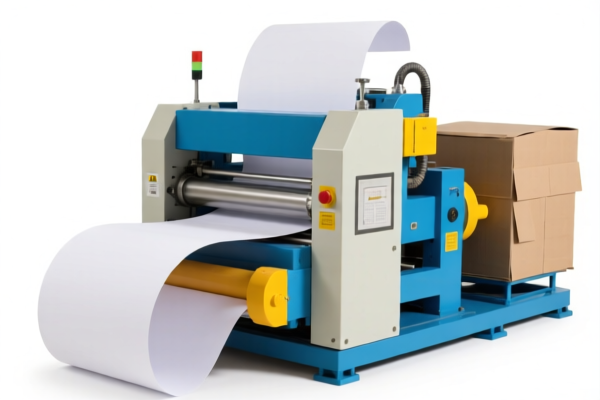
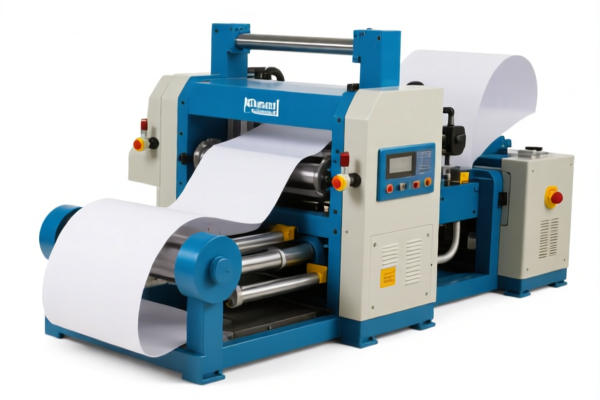
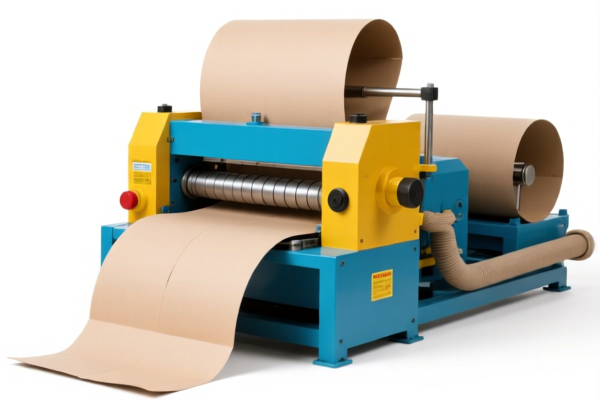
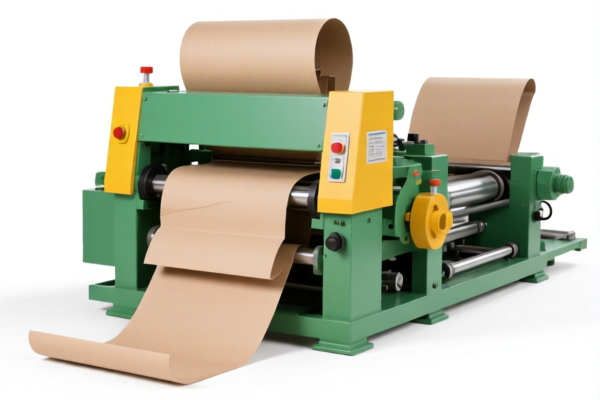
AI Analysis
🏭 Heavy Industry: Machinery for Pulp, Paper, or Paperboard Preparation & Processing
🌐 HS Code Reference & Customs Clearance Guide | 2026 Latest Tariff Analysis | Professional Clearance Strategy
📌 I. Product Definition & Classification: What Exactly Are We Talking About?
In international trade, machinery used in the paper and pulp industry is strictly defined under Heading 8439. This category covers industrial equipment designed to create pulp from fibrous cellulosic materials or to manufacture and finish paper/paperboard.
It is crucial to distinguish between Pulp Making Machinery and Paper Making Machinery, as they fall under different sub-headings with potentially different tariff treatments (though in this specific dataset, both share the same tax structure).
⚠️ Key Distinction:
- Pulp Making: Equipment that breaks down raw fibers (wood, straw, etc.) into pulp.
- Paper/Paperboard Making: Equipment that forms, presses, dries, and finishes the pulp into sheets or rolls.
- Exclusion: Machinery of heading 8419 (thermal processing machines) is explicitly excluded.
📦 II. HS Code Classification Details (Authoritative 2026 Tariff Alignment)
Based on the provided data, there are two primary HS Codes for this product category. Both are critical for accurate declaration.
| HS Code | Product Description | Application Scenario | Key Identification Feature |
|---|---|---|---|
8439.10.00.10 |
Machinery for making pulp of fibrous cellulosic material | Pulp digesters, refiners, beaters, screening machines | Processes raw fibers → Pulp slurry |
8439.20.00.10 |
Machinery for making paper or paperboard | Paper machines, cylinder machines, finishing equipment | Processes pulp slurry → Paper rolls/sheets |
🔍 Important Note:
- Both codes are classified as New equipment.
- Parts of these machines also fall under this heading, but the primary classification is based on the main machine function.
- Do not confuse with general industrial mixing or grinding equipment; if the primary purpose is paper/pulp production, it must be classified under 8439.
💰 III. 2026 Latest Tariff Rate Breakdown (Detailed Tax Clause Explanation)
✅ Applicable Context: Based on the provided tax data
✅ Tax Structure: Base Tariff + Additional Tariff
✅ Total Tax Rate: 25.0% for both HS Codes
🎯 1. 8439.10.00.10 – Machinery for Making Pulp
| Item | Detail |
|---|---|
| Description | Machinery for making pulp of fibrous cellulosic material (New) |
| Base Tariff | 0.0% |
| Additional Tariff | 25.0% |
| Total Tax Rate | 25.0% |
| Tax Calculation | CIF Value × 25.0% |
| Tax Detail Source | "基础关税: 0.0%, 加征关税: 25.0%" |
📌 Explanation:
- The Base Tariff is 0%, indicating that standard import duties on pulp-making machinery are waived or non-existent in this specific trade context.
- The 25% Additional Tariff is the dominant cost factor. This likely represents a specific trade remedy, retaliatory tariff, or special additional duty applicable to this industrial category.
- Total Burden: The importer pays exactly 25% of the CIF value as tax.
🎯 2. 8439.20.00.10 – Machinery for Making Paper or Paperboard
| Item | Detail |
|---|---|
| Description | Machinery for making paper or paperboard (New) |
| Base Tariff | 0.0% |
| Additional Tariff | 25.0% |
| Total Tax Rate | 25.0% |
| Tax Calculation | CIF Value × 25.0% |
| Tax Detail Source | "基础关税: 0.0%, 加征关税: 25.0%" |
📌 Explanation:
- Identical tax structure to pulp machinery.
- The 0% base rate may reflect the importance of this equipment for industrial infrastructure.
- However, the 25% surcharge significantly impacts the landed cost. Importers must factor this into their CAPEX budget.
- Total Burden: The importer pays exactly 25% of the CIF value as tax.
🛠️ IV. Practical Customs Clearance Advice (Expert Pitfall Avoidance)
✅ 1. Essential Documentation Checklist (Mandatory)
| Document | Must Provide | Description |
|---|---|---|
| ✅ Detailed Technical Specification | ✔️ | Must clearly state: Function (Pulp vs. Paper), Raw Material Input, Output Product, Capacity (tons/day), Power Requirements. |
| ✅ Machine Photos & Serial Plate | ✔️ | Clear images of the machine nameplate showing Model, Serial No., Manufacturer, and Year of Manufacture. |
| ✅ Commercial Invoice | ✔️ | Must explicitly describe the item as "Machinery for Making Pulp" or "Machinery for Making Paper," not generic "Industrial Equipment." |
| ✅ Packing List | ✔️ | Itemized list including parts, accessories, and spare parts. Ensure parts are not shipped separately to avoid reclassification issues. |
| ✅ Certificate of Origin | ✔️ | To verify eligibility for any potential preferential treatments (if applicable outside this dataset). |
| ✅ End-Use Declaration | ✔️ | Confirm the machine is for manufacturing paper/pulp, not for other processes (e.g., food processing). |
✅ 2. Classification Strategy (Critical Tips)
🔥 "Function Dictates Code: Pulp is 10, Paper is 20. Don't Guess!"
| Scenario | Correct Declaration | Incorrect Declaration | Consequence |
|---|---|---|---|
| Refiner for wood chips | 8439.10.00.10 (Pulp) |
8439.20.00.10 (Paper) |
Risk of customs audit, delay, or penalty for misclassification. |
| Paper Machine (Fourdrinier) | 8439.20.00.10 (Paper) |
8439.10.00.10 (Pulp) |
Incorrect tax calculation, though rate is same here, code accuracy is vital for statistics. |
| Used Machinery | ❌ Not Covered | N/A | The provided data specifies "New" machinery. Used machinery may have different HS codes or restrictions. |
| Parts for Machines | Check Specific Part | Assume Main Machine | Parts may have separate codes; consult detailed tariff schedule for spare parts. |
✅ 3. Special Considerations
- New vs. Used: The dataset explicitly lists "New" machinery. If importing used equipment, the HS code may remain the same, but additional documentation (condition report, age proof) is often required, and tax implications may differ.
- Parts & Accessories: If importing spare parts separately, ensure they are specifically identified as parts for HS 8439 machinery. General mechanical parts might fall under different headings.
- Integration: If the machine is part of a larger production line, declare the main machine and its essential components together to ensure correct classification under 8439.
🌍 V. Global Market Comparison (Contextual Note)
| Market | Typical HS Code | Base Tariff | Additional Duties | Notes |
|---|---|---|---|---|
| United States | 8439.10.00 / 8439.20.00 |
Varies by FTA | 25% (as per provided data) | High additional tariff applies. |
| European Union | 8439.10 / 8439.20 |
Typically 0-4.5% | Generally None | Lower baseline duties, but verify specific national rules. |
| China | 8439.10 / 8439.20 |
Typically 0-5% | Generally None | Competitive import duties for industrial machinery. |
📌 Conclusion:
- The 25% total tax rate is a significant cost driver, primarily due to the additional tariff.
- Ensure the HS Code is precise (10 vs. 20) to avoid customs queries.
- For New machinery only, as per the provided data.
📌 VI. Common Mistakes & How to Avoid Them (Lessons Learned)
❌ Mistake 1: Describing the item as "Industrial Mill" or "Paper Plant"
👉 Consequence: Customs may not identify the specific function → Delay in clearance.
✅ Fix: Use exact terms: "Pulp Refining Machine" or "Paper Making Machine."
❌ Mistake 2: Ignoring the "New" Condition Specification
👉 Consequence: If the machine is used, it may not qualify for the specified code/tax structure.
✅ Fix: Verify the machine's age and provide a declaration of "New Condition" with proof.
❌ Mistake 3: Confusing Pulp and Paper Machinery
👉 Consequence: While the tax rate is the same in this dataset, misclassification is still a compliance violation.
✅ Fix: Clearly distinguish the primary function. If the machine does both, consult with a customs broker for the predominant use.
🎯 VII. Final Advice: Professional Declaration Saves Money
🎯 Remember:
🔹 "Pulp is 8439.10, Paper is 8439.20. Both at 25%."
🔹 "Be Specific: 'Machinery for Making Pulp' is not enough; add 'Fibrous Cellulosic Material'."
🔹 "Check Condition: 'New' is specified. Used machines may differ."
📌 Pro Tip:
- For large capital investments, consider applying for an Advance Ruling from customs authorities to confirm the HS Code and tax liability before shipping.
- Ensure all technical documents are in English (or the language of the destination country) to facilitate quick clearance.
📣 Take Action Now:
📞 Engage a licensed customs broker.
📄 Prepare complete technical specs and photos.
🚀 Ensure smooth, compliant, and cost-effective clearance for your paper industry machinery!
✨ Precision in Classification, Profitability in Trade!
💼 Your Industrial Equipment Deserves the Right Code!
Customer Reviews
About HS Code Classification
The Harmonized System (HS) is an internationally standardized nomenclature developed by the World Customs Organization (WCO) to classify traded products. Over 200 countries use the HS system as the basis for customs tariffs, trade statistics, and import/export regulations.
Each HS code follows a hierarchical structure:
- Chapter (2 digits) — Broad category of goods (e.g., Chapter 84: Machinery and Mechanical Appliances)
- Heading (4 digits) — More specific grouping within the chapter
- Subheading (6 digits) — Internationally standardized breakdown, used by all WCO member countries
- National subdivisions (8-10 digits) — Country-specific extensions for further classification, such as US HTSUS 10-digit codes
Correct HS code classification is essential for smooth customs clearance, accurate duty payment, and compliance with trade regulations. Misclassification can lead to customs delays, overpayment of duties, or penalties.
When importing from CN to US, the applicable tariff rates may include:
- Most-Favored-Nation (MFN) rate — The standard duty rate applied to WTO members
- General rate — Applied to countries without trade agreements
- Trade remedy duties — Additional tariffs such as Section 301 (anti-dumping), Section 232 (national security), or countervailing duties
The information provided on this page is for reference purposes only. For official classification, please consult with your local customs authority or a licensed customs broker.