Magazine Files Holder
CN → US| HS Code | Tariff Rate | Origin | Destination | Doc |
|---|---|---|---|---|
| 3926100000 | 15.3% | CN | US | Official Doc |
| 3926908700 | 40.3% | CN | US | Official Doc |
| 7326908688 | 87.9% | CN | US | Official Doc |
| 7326190080 | 87.9% | CN | US | Official Doc |
| 4820300040 | 35.0% | CN | US | Official Doc |
| 4820300020 | 35.0% | CN | US | Official Doc |
Product Images
AI Analysis
📂 Magazine File Holder / Document Organizer
🌐 HS Code Reference & Customs Clearance Guide | 2026 Latest Tariff Analysis | Professional Entry Strategy
📌 1. Product Definition & Classification: Do You Really Know a "File Holder"?
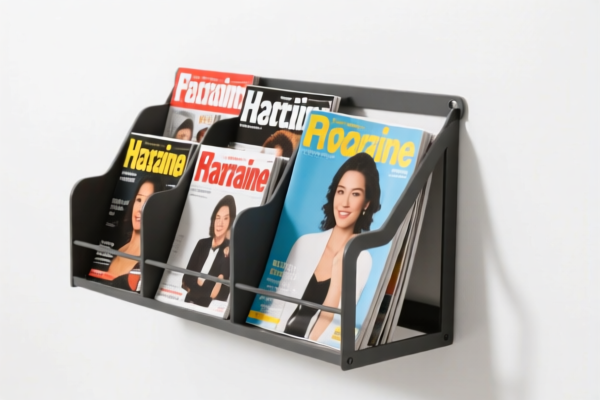
A "Magazine File Holder" is a general term for storage devices designed to organize documents, magazines, files, or office supplies. In international trade, classification depends heavily on the material and specific structure of the product. Misclassification can lead to significant tariff discrepancies, especially with current US trade policies on Chinese imports.
⚠️ Key Distinction:
- If made of Paper/Paperboard: Falls under Office Supplies (Ch 48).
- If made of Plastics: Falls under Plastic Articles (Ch 39).
- If made of Metal: Falls under Iron/Steel Articles (Ch 73).
- Crucial Note: Some plastic holders with tabs/rolls are classified differently than simple looseleaf binders.
📦 2. HS Code Classification Details (2026 Latest Tariff Authority Comparison)
| HS Code | Product Description | Applicable Scenario | Material |
|---|---|---|---|
4820.30.00.40 |
Registers, account books... Binders (other than book covers), folders and file covers Other | Standard paper/board magazine files, generic file organizers | Paper/Paperboard |
4820.30.00.20 |
Registers... Looseleaf binders | Binders specifically designed for looseleaf papers, often with rings | Paper/Paperboard |
3926.10.00.00 |
Other articles of plastics... Office or school supplies | Plastic magazine racks, desk organizers, generic plastic file holders | Plastic |
3926.90.87.00 |
Other articles of plastics... Flexible plastic document binders with tabs, rolled or flat | Soft plastic sleeves, flexible document binders with tabs | Plastic |
7326.90.86.88 |
Other articles of iron or steel: Other Other Other | Metal magazine racks, steel file holders, industrial organizers | Metal |
7326.19.00.80 |
Other articles of iron or steel: Forged or stamped, but not further worked | Stamped metal document trays or holders | Metal |
🔍 Important Reminder:
- Plastic "Looseleaf" vs. "Flexible Tabs": If it is a looseleaf binder (usually rigid rings), it may fall under4820if paper, but plastic looseleaf binders generally fall under3926.10unless they are specifically "flexible... with tabs," which goes to3926.90.87.
- Metal vs. Plastic: Metal file holders attract significantly higher tariffs due to Section 301 and Steel/Aluminum tariffs. Always verify material composition.
💰 3. 2026 Latest Tariff Rate Breakdown (Including Additional Taxes & Policy Surcharges)
✅ Applicable Country: United States (US)
✅ Origin: China (CN)
✅ Effective Date: From 2025/2026 (Current US Trade Policy)
🎯 1. 4820.30.00.40 & 4820.30.00.20 —— Paper/Paperboard Binders & File Covers
| Item | Details |
|---|---|
| Base Duty | 0.0% (ad valorem) |
| Section 301 Surcharge | +25.0% |
| Total Duty Rate | 25.0% |
| Tax Calculation | CIF Value × 25% |
| De Minimis Exemption | ❌ Not Applicable (Deny De Minimis for China-origin goods under this code) |
| Legal Basis | HTSUS 4820.30 + USITC Footnote 9903 |
📌 Explanation:
- Paper file holders have a low base rate, but the 25% Section 301 tariff applies fully.
- This is the most common classification for standard paper-based magazine files.
🎯 2. 3926.10.00.00 —— Plastic Office/ school Supplies
| Item | Details |
|---|---|
| Base Duty | 5.3% |
| Section 301 Surcharge | 0.0% |
| Total Duty Rate | 5.3% |
| Tax Calculation | CIF Value × 5.3% |
| De Minimis Exemption | ❌ Not Applicable |
| Legal Basis | HTSUS 3926.10 |
📌 Explanation:
- Significant Cost Advantage: Compared to metal or certain other plastic classifications, this code has a much lower total duty.
- Ensure the product is defined strictly as "Office or school supplies" and not a generic "article of plastic."
🎯 3. 3926.90.87.00 —— Flexible Plastic Document Binders with Tabs
| Item | Details |
|---|---|
| Base Duty | 0.0% |
| Section 301 Surcharge | 0.0% |
| Total Duty Rate | 0.0% |
| Tax Calculation | CIF Value × 0% |
| De Minimis Exemption | ❌ Not Applicable |
| Legal Basis | HTSUS 3926.90.87 |
📌 Explanation:
- Best Rate for Plastic: If the product is a flexible document binder (e.g., soft plastic sleeves, rolled/flat with tabs), it may qualify for 0% duty.
- Critical: Must be "flexible" and have "tabs." Rigid plastic binders do not qualify for this 0% rate.
🎯 4. 7326.90.86.88 & 7326.19.00.80 —— Metal (Iron/Steel) Articles
| Item | Details |
|---|---|
| Base Duty | 2.9% |
| Section 301 Surcharge | +25.0% |
| Steel/Aluminum Tariff (Sec 232) | +50% (Specific for Steel/Aluminum products) |
| Total Duty Rate | 77.9% |
| Tax Calculation | CIF Value × 77.9% |
| De Minimis Exemption | ❌ Not Applicable |
| Legal Basis | HTSUS 7326 + USITC Footnote 9903.88.01 + Sec 232 |
📌 Explanation:
- Extremely High Cost: Metal file holders are subject to both Section 301 (25%) and Section 232 (50% for steel/aluminum).
- Total Rate: 77.9%. This makes metal office organizers very expensive to import into the US from China.
- Warning: Do not misclassify metal items as plastic to avoid these tariffs; customs audits are frequent.
🛠️ 4. Customs Clearance Practical Advice (Pitfall Avoidance Guide)
✅ 1. Preparation Checklist (Required Documents)
| Document | Must Provide | Notes |
|---|---|---|
| ✅ Product Specification Sheet | ✔️ | Detail material (PP, PET, Steel, Paper), dimensions, and capacity. |
| ✅ Product Photos | ✔️ | Clear images showing structure: Is it rigid or flexible? Does it have tabs? |
| ✅ Commercial Invoice | ✔️ | Must clearly state "Magazine File Holder" and material. |
| ✅ Packing List | ✔️ | Weight and dimensions for volume calculation. |
| ✅ Material Certificate | ✔️ | Especially for metal/plastic, to prove origin and composition. |
| ✅ Declaration of Non-Steel/Aluminum | ✔️ | If claiming non-metal codes, provide proof it is not steel/aluminum. |
✅ 2. Declaration Tips (Key Mantras)
🔥 “Material Dictates Code, Flexibility Determines Rate, Metal Costs Big!”
| Scenario | Correct HS Code | Incorrect Practice | Consequence |
|---|---|---|---|
| Rigid Plastic Binders | 3926.10.00.00 (5.3%) |
Misclassify as 3926.90.87 (0%) |
Audit risk, penalty for underpayment |
| Flexible Plastic Sleeves | 3926.90.87.00 (0%) |
Misclassify as 3926.10 (5.3%) |
Overpayment of 5.3% duty |
| Paper/Paperboard Files | 4820.30.00.40 (25%) |
Misclassify as Plastic | Severe penalty, possible fraud charges |
| Metal Racks/Holders | 7326... (77.9%) |
Misclassify as Plastic/Paper | Devastating financial loss, seizure of goods |
✅ 3. Special Handling Cases
| Situation | Recommendation |
|---|---|
| Mixed Material (e.g., Metal Frame + Plastic Tray) | Generally classified by the principal character or essential material. Often still Metal if the frame is structural. |
| Set of Files | If sold as a set, classify based on the component that gives the set its essential character. |
| Origin Non-China | If sourced from Vietnam/Malaysia, you may avoid Section 301 taxes. Verify Free Trade Agreement (FTA) eligibility. |
| "Looseleaf" vs. "File Cover" | Ensure accurate description. "Looseleaf" implies rings/binding mechanism; "File Cover" is simpler. Different subheadings may apply. |
🌍 5. Global Market Comparison (2026 Outlook)
| Country/Region | Recommended HS Code | Estimated Duty (China Origin) | Key Certifications | Notes |
|---|---|---|---|---|
| 🇺🇸 USA | 3926.10 or 7326 |
5.3% to 77.9% | None specific | Highly tariff-sensitive. Material choice is critical. |
| 🇨🇳 China | 4820.30 |
5% - 10% | CCC (if applicable) | Lower duty for office supplies. |
| 🇪🇺 EU | 4820.30 |
0% - 1.7% | CE (if applicable) | Generally lower tariffs for paper/plastic office goods. |
| 🇬🇧 UK | 4820.30 |
0% - 4% | UKCA | Post-Brexit rules apply; check UK Tariff. |
| 🇦🇺 Australia | 4820.30 |
5% | RCM | Moderate duty rates. |
📌 Conclusion:
- The USA is the most challenging market due to Section 301 and Section 232 tariffs.
- Plastic flexible binders (3926.90.87.00) offer a 0% duty advantage in the US, making them highly competitive.
- Metal holders are prohibitively expensive (77.9%) unless sourced from non-China origins with FTAs.
📌 6. Common Errors & Pitfalls (Lessons Learned)
❌ Mistake 1: Classifying Metal file holders as Plastic to save on tariffs.
👉 Consequence: Customs audit, back payment of ~72% duty, fines, and potential blacklisting.
❌ Mistake 2: Calling all plastic binders "Flexible Document Binders" to get 0% duty.
👉 Consequence: If the binder is rigid or lacks tabs, it should be 3926.10 (5.3%). Misdeclaration leads to underpayment penalties.
❌ Mistake 3: Ignoring Section 232 Steel/Aluminum Tariffs for metal office products.
👉 Consequence: Paying only 2.9% base duty instead of 77.9%. Massive financial loss.
✅ Correct Approach:
"Plastic Magazine File Holder, Flexible, with Tabs, for Office Use" →
3926.90.87.00(0%)
"Steel Magazine Rack, Stamped, Office Organizer" →7326.90.86.88(77.9%)
🎯 7. Conclusion: Smart Classification Saves Money!
🎯 Remember the Mantra:
🔹 "Plastic Flexible = 0%, Plastic Rigid = 5.3%, Paper = 25%, Metal = 77.9%!"
🔹 "Material is King, Tabs Matter, Metal is Expensive!"
📌 Pro Tip:
- If you are importing into the US, prioritize Plastic Flexible Binders (3926.90.87.00) or Plastic Office Supplies (3926.10.00.00) to minimize tariffs.
- Avoid Metal unless you have a specific market need, due to the 77.9% rate.
- Always apply for an Advance Ruling from US Customs (CBP) if unsure about the material structure or classification.
📣 Take Action Now:
📞 Consult a Customs Broker + Provide Product Photos + Verify Material Composition
🚀 Clear Customs Smoothly, Maximize Profits, Minimize Risks!
✨ Professional Clearance Starts with Precise Classification!
💼 Every Dollar Saved on Duty is Pure Profit!
Customer Reviews
About HS Code Classification
The Harmonized System (HS) is an internationally standardized nomenclature developed by the World Customs Organization (WCO) to classify traded products. Over 200 countries use the HS system as the basis for customs tariffs, trade statistics, and import/export regulations.
Each HS code follows a hierarchical structure:
- Chapter (2 digits) — Broad category of goods (e.g., Chapter 84: Machinery and Mechanical Appliances)
- Heading (4 digits) — More specific grouping within the chapter
- Subheading (6 digits) — Internationally standardized breakdown, used by all WCO member countries
- National subdivisions (8-10 digits) — Country-specific extensions for further classification, such as US HTSUS 10-digit codes
Correct HS code classification is essential for smooth customs clearance, accurate duty payment, and compliance with trade regulations. Misclassification can lead to customs delays, overpayment of duties, or penalties.
When importing from CN to US, the applicable tariff rates may include:
- Most-Favored-Nation (MFN) rate — The standard duty rate applied to WTO members
- General rate — Applied to countries without trade agreements
- Trade remedy duties — Additional tariffs such as Section 301 (anti-dumping), Section 232 (national security), or countervailing duties
The information provided on this page is for reference purposes only. For official classification, please consult with your local customs authority or a licensed customs broker.