Magnesia based Refractory Concrete
CN → US| HS Code | Tariff Rate | Origin | Destination | Doc |
|---|---|---|---|---|
| 6902901010 | 35.0% | CN | US | Official Doc |
| 6810110070 | 38.2% | CN | US | Official Doc |
| 3816001000 | 35.0% | CN | US | Official Doc |
| 3816002050 | 38.0% | CN | US | Official Doc |
| 6902905010 | 35.0% | CN | US | Official Doc |
Product Images
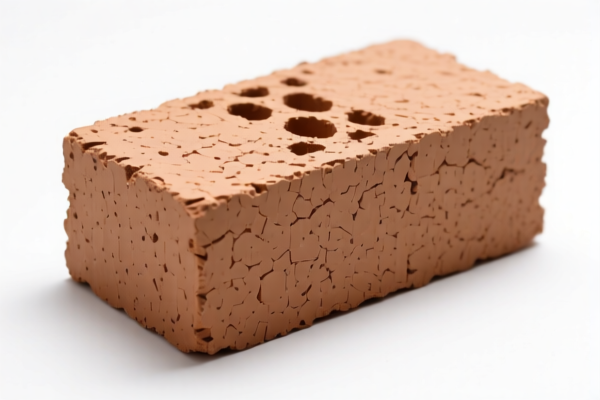
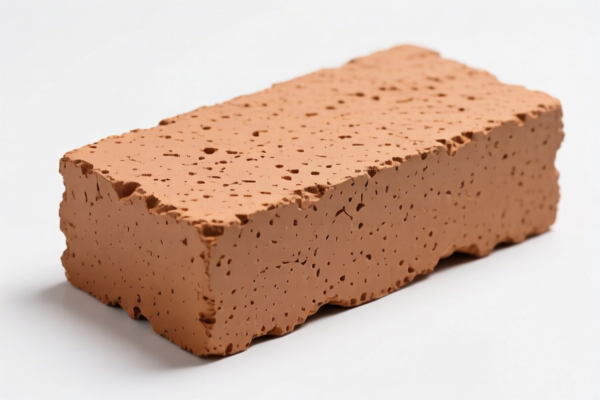
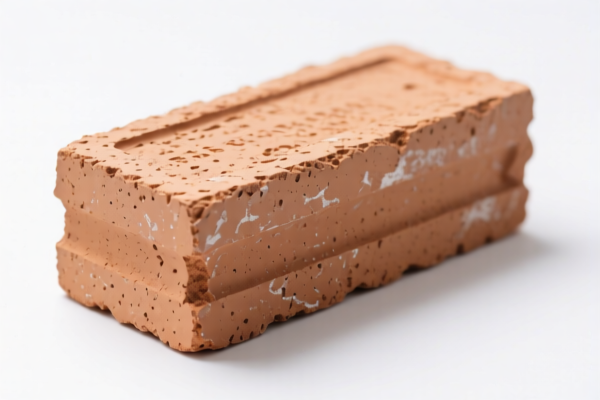
AI Analysis
🔥 Magnesia-Based Refractory Concrete (Based on Mixture of Magnesite and Refractory Concrete)
🌐 HS Code Reference & Customs Clearance Guide | 2026 Latest Tariff Analysis | Professional Strategy for US Imports
📌 I. Product Definition & Classification: What is "Magnesia-Based Refractory Concrete"?
Magnesia-based refractory concrete is a high-performance inorganic non-metallic material used in high-temperature industrial applications. It is composed of magnesia (MgO) as the primary binder, mixed with refractory aggregates and concrete additives.
Key Characteristics: 1. High Refractoriness: Can withstand extreme temperatures (often exceeding 1500°C). 2. Alkali-Resistant: Specifically designed to resist basic slags and chemical corrosion. 3. Concrete Form: Unlike firebricks (fired shapes), this material is often supplied as a dry mix to be cast or troweled, or as pre-cast blocks, falling under the logic of "refractory construction goods."
⚠️ Critical Distinction for Classification:
- If the product is classified primarily by its form and use as a refractory construction good → Chapter 69.
- If classified by its material composition (concrete-like) → Chapter 68.
- If classified by its special functional properties (refractory additives not meeting Chapter 69/68 specifics) → Chapter 38.
📦 II. HS Code Classification Details (2026 Authoritative Reference)
| HS Code | Product Description | Summary & Logic | Total Tax Rate |
|---|---|---|---|
6902.90.10.10 |
Other refractory bricks, blocks, tiles and similar refractory construction goods of magnesia | Logic: Based on form and use, inferred as refractory materials. Fits the logic of "other refractory construction goods" under Chapter 69. | 35.0% |
6810.11.00.70 |
Artificial stone articles of cement, concrete or artificial stone | Logic: Material is concrete-like. Fits the material requirements of cement/concrete products. Form is considered construction blocks. | 38.2% |
3816.00.10.00 |
Preparations and products, including slag, dust and ash of other kinds, for greasing, descaling or cleaning purposes; chemical products and preparations for surface treating... | Logic: The product name fits the material attribute of "concrete and similar products" and the use is refractory. | 35.0% |
3816.00.20.50 |
Refractory preparations of cements, gypsum, asbestos, micaceous clay or of similar substances... | Logic: "Refractory" corresponds to the characteristic; "Concrete" corresponds to "concrete and similar products" in this category. | 38.0% |
6902.90.50.10 |
Other refractory bricks, blocks, tiles and similar refractory construction goods of other refractory materials | Logic: Refractory attribute matches the use. Concrete is an inorganic material, inferred to contain clay/siliceous earth components. | 35.0% |
🔍 Key Insight:
- Chapter 69 (6902.xxxx) is generally the most accurate for refractory construction goods.
- Chapter 68 (6810.11) is a fallback if customs views it strictly as "concrete articles."
- Chapter 38 (3816.00) is less common but possible if the product is viewed as a specific "refractory preparation" rather than a construction good.
💰 III. 2026 Latest Tariff Rate Breakdown (Including Additional Taxes & Policy Surcharges)
✅ Applicable Country: United States (US)
✅ Origin: China (CN)
✅ Effective Date: From November 10, 2025 (including subsequent imports)
🎯 1. 6902.90.10.10 & 6902.90.50.10 —— Refractory Construction Goods (Chapter 69)
| Item | Content |
|---|---|
| Base Duty | 0.0% (ad valorem) |
| USITC Surcharge (Section 301) | +25.0% |
| IEEPA Surcharge (Section 122/Other) | +10.0% |
| Total Tax Rate | 35.0% |
| Tax Calculation | CIF Value × 35% |
| De Minimis Exemption | ❌ Not Eligible (deny_de_minimis) |
| Legal Basis Path | IEEPA:9903.01.25 → IEEPA:9903.01.24 → USITC:6902.90.10.10 → FOOTNOTE:9903.88.01 |
📌 Explanation:
- Base Duty 0%: Refractory materials often have low base duties under US Harmonized Tariff Schedule.
- 25% Surcharge: Applied under Section 301 of the Trade Act.
- 10% IEEPA Surcharge: Additional levy on Chinese-origin goods.
- Total 35%: This is the standard high tariff for these HS codes.
🎯 2. 6810.11.00.70 —— Concrete/Artificial Stone Articles (Chapter 68)
| Item | Content |
|---|---|
| Base Duty | 3.2% |
| USITC Surcharge (Section 301) | +25.0% |
| IEEPA Surcharge (Section 122/Other) | +10.0% |
| Total Tax Rate | 38.2% |
| Tax Calculation | CIF Value × 38.2% |
| De Minimis Exemption | ❌ Not Eligible |
| Legal Basis Path | IEEPA:9901.25 → IEEPA:9903.01.24 → USITC:6810.11.00.70 → FOOTNOTE:9903.88.01 |
📌 Note:
- This classification has a higher total rate (38.2%) due to the 3.2% base duty.
- Only use this if the product is clearly a "concrete article" and not a "refractory construction good."
🎯 3. 3816.00.10.00 & 3816.00.20.50 —— Refractory Preparations (Chapter 38)
| Item | Content |
|---|---|
| Base Duty | 0.0% (3816.00.10.00) or 3.0% (3816.00.20.50) |
| USITC Surcharge (Section 301) | +25.0% |
| IEEPA Surcharge (Section 122/Other) | +10.0% |
| Total Tax Rate | 35.0% or 38.0% |
| Tax Calculation | CIF Value × Rate |
| De Minimis Exemption | ❌ Not Eligible |
📌 Note:
-3816.00.10.00: Total 35.0% (Base 0%).
-3816.00.20.50: Total 38.0% (Base 3%).
- This chapter is less common for bulk concrete but may apply if the product is a specialized "preparation."
🛠️ IV. Customs Clearance Practical Advice (Real-World Pitfall Guide)
✅ 1. Documentation Checklist (Essential)
| Document | Required | Explanation |
|---|---|---|
| ✅ Product Specification Sheet | ✔️ | Must specify: Magnesium Oxide (MgO) content, refractoriness temperature, aggregate type. |
| ✅ Composition Analysis | ✔️ | Detailed breakdown of binders and aggregates to support "Refractory" vs. "Concrete" classification. |
| ✅ Product Photos | ✔️ | Clear images showing the form (powder, blocks, pre-cast) and packaging. |
| ✅ Commercial Invoice | ✔️ | Must clearly state "Magnesia Based Refractory Concrete" and the intended high-temperature use. |
| ✅ Certificate of Origin | ✔️ | Proof of Chinese origin to apply accurate tariffs. |
| ✅ HS Code Ruling (if available) | ✔️ | Previous CBP rulings support your classification. |
✅ 2. Declaration Tips (Key Mantras)
🔥 "State Use, Specify MgO, Avoid 'Building Material' Ambiguity!"
| Scenario | Correct Declaration | Wrong Practice |
|---|---|---|
| Refractory Concrete (Castable) | 6902.90.10.10 or 6902.90.50.10 Description: "Refractory Castable Concrete, MgO-based, High Temp" |
Misdeclare as "Cement" → 38.2% + penalties |
| Refractory Blocks | 6902.90.10.10 Description: "Magnesia Refractory Blocks" |
Misdeclare as "Construction Brick" → Higher base duty |
| Specialized Refractory Mix | 3816.00.10.00 Description: "Refractory Preparation for Industrial Kilns" |
Vague description → Customs detention |
✅ 3. Special Cases
| Situation | Handling Advice |
|---|---|
| Mixed Use (Industrial vs. Building) | If used for industrial furnaces, emphasize Refractory (Ch 69). If for general building foundations, it might fall under Concrete (Ch 68). |
| Pre-cast vs. Dry Mix | Dry mixes are often classified under 6902 if intended for casting into refractory shapes. Pre-cast blocks are clearly 6902. |
| High MgO Content (>80%) | Strongly supports 6902.90.10.10 (Magnesia-based). |
🌍 V. Global Market Comparison (2026 Latest)
| Country/Region | Recommended HS Code | Total Tax Rate (China Origin) | Certification | Remarks |
|---|---|---|---|---|
| 🇺🇸 USA | 6902.90.10.10 |
35.0% | None specific | High tariffs due to Section 301 & IEEPA |
| 🇨🇳 China | 6902.90.10.10 |
~5-10% (Import Duty) | GB Standards | No additional US-style surcharges |
| 🇪🇺 EU | 6902.90.10 |
3-5% | CE (if applicable) | No major surcharges |
| 🇮🇳 India | 6902.90.10 |
~10-15% | BIS | Check anti-dumping duties |
📌 Conclusion:
- USA has the highest total tariff (35-38%) due to multiple surcharges.
- European and Asian markets are significantly cheaper.
- Strategy: If importing to the US, ensure precise classification to avoid overpayment. Consider Section 301 Exclusions if applicable (check current lists).
📌 VI. Common Errors & Pitfalls (Lessons Learned)
❌ Error 1: Misclassifying as "Cement" (3801.10.00.00)
👉 Consequence: Cement has different duties. If misclassified, customs may assess higher base duty or reject the entry.
❌ Error 2: Using vague terms like "Building Material"
👉 Consequence: Customs will classify based on the most restrictive category, likely 6810.11.00.70 (38.2%).
❌ Error 3: Failing to specify MgO Content
👉 Consequence: Customs may doubt the "Refractory" claim, leading to classification under general concrete (6810.11) or other (6902.90.50) with potential disputes.
✅ Correct Practice:
"Magnesia-Based Refractory Castable Concrete, MgO Content > 80%, Refractoriness > 1500°C, for Industrial Furnace Lining"
🎯 VII. Conclusion: Professional Classification Saves Costs!
🎯 Remember the Mantra:
🔹 "Refractory Use + MgO Base = 6902.90.10.10 (35%)"
🔹 "Concrete Form + No Refractory Proof = 6810.11.00.70 (38.2%)"
🔹 "Total Tax = Base + 25% (Sec 301) + 10% (IEEPA)"
📌 Pro Tip:
- If your product is excluded from Section 301 tariffs (check USTR exclusion lists), your rate could drop to 10%.
- Always request a Pre-Ruling from CBP if the classification is ambiguous.
- Ensure your commercial invoice explicitly states "Refractory" and "Magnesia-Based" to support your HS code claim.
📣 Immediate Action:
📞 Contact a licensed customs broker.
📄 Provide technical data sheets (MgO %, Temp Rating).
🚀 Ensure smooth customs clearance and cost optimization!
✨ Professional Customs Clearance Starts with Precise Classification!
💼 Every percentage point matters in high-tariff environments!
Customer Reviews
About HS Code Classification
The Harmonized System (HS) is an internationally standardized nomenclature developed by the World Customs Organization (WCO) to classify traded products. Over 200 countries use the HS system as the basis for customs tariffs, trade statistics, and import/export regulations.
Each HS code follows a hierarchical structure:
- Chapter (2 digits) — Broad category of goods (e.g., Chapter 84: Machinery and Mechanical Appliances)
- Heading (4 digits) — More specific grouping within the chapter
- Subheading (6 digits) — Internationally standardized breakdown, used by all WCO member countries
- National subdivisions (8-10 digits) — Country-specific extensions for further classification, such as US HTSUS 10-digit codes
Correct HS code classification is essential for smooth customs clearance, accurate duty payment, and compliance with trade regulations. Misclassification can lead to customs delays, overpayment of duties, or penalties.
When importing from CN to US, the applicable tariff rates may include:
- Most-Favored-Nation (MFN) rate — The standard duty rate applied to WTO members
- General rate — Applied to countries without trade agreements
- Trade remedy duties — Additional tariffs such as Section 301 (anti-dumping), Section 232 (national security), or countervailing duties
The information provided on this page is for reference purposes only. For official classification, please consult with your local customs authority or a licensed customs broker.