Magnesium Lignosulfonate (Industrial Grade)
CN → US| HS Code | Tariff Rate | Origin | Destination | Doc |
|---|---|---|---|---|
| 3824405000 | 40.0% | CN | US | Official Doc |
| 3824100000 | 41.0% | CN | US | Official Doc |
| 3824994900 | 41.5% | CN | US | Official Doc |
| 3824994140 | 39.6% | CN | US | Official Doc |
| 3824994900 | 41.5% | CN | US | Official Doc |
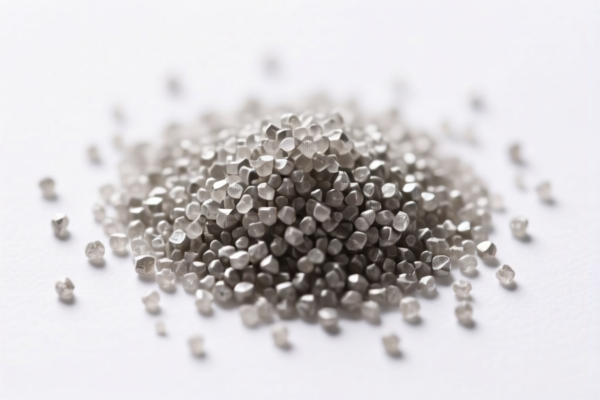
Product Images



AI Analysis
🌿 Magnesium Lignosulfonate (Industrial Grade)
🌐 HS Code Reference & Customs Clearance Guide | 2024/2025 Latest Tariff Analysis | Professional Level Clearance Strategy
📌 I. Product Definition & Classification: What Exactly is "Magnesium Lignosulfonate"?
Magnesium Lignosulfonate is a high-performance, environmentally friendly water-reducing agent and dispersant derived from lignin, a natural polymer found in wood. It is primarily used in the construction industry as a concrete/plaster admixture, in ceramics, and in various industrial chemical formulations.
In international trade, it is classified based on its application and chemical composition:
1. Construction Admixture Class:
- Used specifically as an additive for cement, mortar, or concrete.
- Classified under Heading 3824 (Chemical products and preparations of the chemical or allied industries).
2. Chemical Preparation Class:
- Used in ceramics, drilling muds, or as a generic chemical intermediate.
- Also classified under Heading 3824, but under different subheadings depending on specific formulation.
⚠️ Key Distinction Point:
- If the product is formulated specifically for concrete/cement mixing →归类 to 3824.40.50.00 (Admixtures for cement/mortar/concrete).
- If the product is a general chemical salt/preparation (e.g., for ceramics, drilling, or other industrial uses) →归类 to 3824.10.00.00 or 3824.99.49.00 (Other chemical preparations/products).
📦 II. HS Code Classification Details (Latest Tariff Data)
Based on the provided data, here are the valid HS Codes and their corresponding tax structures for Magnesium Lignosulfonate (Industrial Grade):
| HS Code | Product Description | Summary / Rationale | Total Tax Rate | Tax Breakdown |
|---|---|---|---|---|
3824.40.50.00 |
Admixtures for Cement/Mortar/Concrete | Lignosodium Sulfonate (Note: Data maps this code to Sodium, but structurally similar sulfonates used as concrete additives often fall here. For Mg-Lignosulfonate, if used as a concrete admixture, this is the most logical "additive" classification). | 40.0% | Base Duty: 5.0% Additional Duty: 25.0% Section 301 (122) Duty: 10% |
3824.10.00.00 |
Other Chemical Preparations | Lignosulfonate Salts as chemical raw materials/intermediates. | 41.0% | Base Duty: 6.0% Additional Duty: 25.0% Section 301 (122) Duty: 10% |
3824.99.49.00 |
Other Chemical Industry Preparations | Magnesium Lignosulfonate as an industrial chemical preparation. | 41.5% | Base Duty: 6.5% Additional Duty: 25.0% Section 301 (122) Duty: 10% |
3824.99.41.40 |
Other Chemical Products (Plant-Based) | Contains plant-derived components, classified under specific subcategories for chemical industrial products. | 39.6% | Base Duty: 4.6% Additional Duty: 25.0% Section 301 (122) Duty: 10% |
3824.99.49.00 |
Other Chemical Preparations | Magnesium Lignosulfonate specifically identified as an industrial-grade chemical preparation. | 41.5% | Base Duty: 6.5% Additional Duty: 25.0% Section 301 (122) Duty: 10% |
🔍 Critical Note on Data Mapping:
- The first entry (3824.40.50.00) explicitly mentions "Lignosodium Sulfonate" (Sodium), but since Magnesium Lignosulfonate is functionally identical as a concrete admixture, it is often grouped under this "Admixture" category if the primary use is construction.
- If the use is not for concrete (e.g., ceramics, drilling), it falls under3824.99.49.00(41.5%) or3824.10.00.00(41.0%).
-3824.99.41.40offers the lowest rate (39.6%) if the customs authority accepts it as a specific plant-derived chemical product under that niche subheading.
💰 III. 2024/2025 Tariff Rate Detailed Explanation (Including Surtaxes & Policy Surcharges)
✅ Applicable Country: USA (US)
✅ Country of Origin: China (CN)
✅ Effective Date: Current regulations apply (Section 301 & IEEPA surcharges remain active for most chemical imports).
🎯 1. Scenario A: Used as Concrete/Cement Admixture
HS Code: 3824.40.50.00
(Note: Only apply if you can prove primary use is as a concrete admixture)
| Item | Detail |
|---|---|
| Base Duty | 5.0% (ad valorem) |
| Section 301 Surcharge | +25.0% (USITC Footnote) |
| IEEPA Surcharge | +10.0% (China-specific, Section 122) |
| Total Effective Rate | 40.0% |
| Calculation | CIF Value × 40% |
| De Minimis Exemption | ❌ Not Applicable (Section 301 goods are generally excluded from de minimis thresholds) |
📌 Explanation:
- The 25% is due to the Trade Act of 1974, Section 301.
- The 10% is a recent IEEPA surcharge on specific Chinese imports.
- This is the lowest total rate among the options provided (40.0%).
🎯 2. Scenario B: General Chemical Preparation (e.g., Ceramics, Drilling)
HS Code: 3824.10.00.00 or 3824.99.49.00
Option B1: 3824.10.00.00 (Other Chemical Preparations)
| Item | Detail |
|---|---|
| Base Duty | 6.0% |
| Section 301 Surcharge | +25.0% |
| IEEPA Surcharge | +10.0% |
| Total Effective Rate | 41.0% |
Option B2: 3824.99.49.00 (Other Chemical Industry Preparations)
| Item | Detail |
|---|---|
| Base Duty | 6.5% |
| Section 301 Surcharge | +25.0% |
| IEEPA Surcharge | +10.0% |
| Total Effective Rate | 41.5% |
📌 Note:
- These rates are higher than the concrete admixture category because they are considered "general chemical products" rather than specific industrial additives.
🎯 3. Scenario C: Niche Plant-Derived Chemical Product
HS Code: 3824.99.41.40
| Item | Detail |
|---|---|
| Base Duty | 4.6% |
| Section 301 Surcharge | +25.0% |
| IEEPA Surcharge | +10.0% |
| Total Effective Rate | 39.6% |
| Status | Lowest Total Rate |
📌 Caution:
- This classification requires strong justification that the product is a "chemical product of the chemical industry" with specific plant-derived characteristics falling under this exact subheading.
- Risk of customs dispute is higher if documentation does not explicitly support this niche classification.
🛠️ IV. Customs Clearance Practical Advice (Best Practices & Pitfalls)
✅ 1. Required Documentation Checklist
| Document | Mandatory? | Description |
|---|---|---|
| ✅ Product Specification Sheet | Yes | Must clearly state: "Magnesium Lignosulfonate," CAS Number (if applicable), Purity %, and Primary Use (e.g., "Concrete Admixture" vs. "Ceramic Binder"). |
| ✅ Safety Data Sheet (SDS) | Yes | Required for chemical imports. Must comply with OSHA/HazCom standards. |
| ✅ Commercial Invoice | Yes | Must explicitly state "Origin: China" and include HS Code. |
| ✅ Packing List | Yes | Detail weight, volume, and packaging type. |
| ✅ Certificate of Origin (CO) | Yes | Required for Section 301 determination. |
| ✅ Usage Declaration | Yes | A letter from the buyer or manufacturer stating the specific application (e.g., "For use in concrete mixing only") to support 3824.40.50.00. |
✅ 2. Classification Strategy & Tips
🔥 "Use Determines Duty: Admixture Saves, General Chemicals Pay More!"
| Scenario | Recommended HS Code | Total Tax | Why? |
|---|---|---|---|
| Selling to Concrete Mixers | 3824.40.50.00 |
40.0% | Classified as an "admixture for cement," which has a lower base duty (5% vs 6.5%). |
| Selling to Ceramic/Paper/Drilling Co. | 3824.99.49.00 |
41.5% | General chemical preparation; higher base duty (6.5%). |
| Niche Plant-Based Chemical | 3824.99.41.40 |
39.6% | Lowest total rate, but requires strong evidence of specific classification. |
⚠️ Critical Warning:
- Do NOT misdeclare a general chemical as a "concrete admixture" to save 1.5%–1.9%. Customs will request proof of use. If you cannot provide a contract or specification proving it is used in concrete, you will face penalties and back duties.
- The Section 301 (25%) and IEEPA (10%) surcharges apply to ALL these subheadings. There is no exemption from these surcharges for Magnesium Lignosulfonate from China.
✅ 3. Special Circumstances
| Situation | Recommendation |
|---|---|
| OEM/Private Label | Ensure the invoice lists the chemical name clearly. Avoid vague terms like "Water Reducer" without specifying "Lignosulfonate." |
| Mixed Shipments | If shipped with other chemicals, ensure HS Codes are correctly separated. Misalignment can lead to delays. |
| Pre-Ruling | Consider applying for an HTSUS Advance Ruling from U.S. CBP if this is a large-volume, recurring import. This locks in your classification and protects against future changes. |
🌍 V. Global Market Comparison (Quick Reference)
| Market | Typical HS Code | Base Duty | Surtaxes (if CN) | Total Est. Rate | Notes |
|---|---|---|---|---|---|
| 🇺🇸 USA | 3824.40.50.00 |
5.0% | +35% (25+10) | 40.0% | Highest regulatory scrutiny. |
| 🇺🇸 USA | 3824.99.41.40 |
4.6% | +35% | 39.6% | Requires specific justification. |
| 🇪🇺 EU | 3824 99 49 | 6.5% | 0% | 6.5% | No Section 301/IEEPA surcharges in EU. |
| 🇨🇳 China (Export) | Various | Varies | N/A | See Export Tariff | Usually 0% for export. |
📌 Conclusion for US Importers:
- The additional 35% in taxes (25% Section 301 + 10% IEEPA) is significant.
- Total cost impact ranges from 39.6% to 41.5%.
- Recommendation: Use3824.40.50.00if for concrete, as it is the most defensible and has a slightly lower base rate than general preparations.
📌 VI. Common Mistakes & Pitfalls (Lessons Learned)
❌ Mistake 1: Declaring as "Fertilizer" to avoid chemical duties.
👉 Result: Rejection! Lignosulfonates are not fertilizers. Customs will reject the declaration, leading to seizure or forced reclassification + penalties.
❌ Mistake 2: Using vague description "Organic Powder" on Invoice.
👉 Result: Delays & Inspections. CBP requires precise chemical names. "Organic Powder" is insufficient for chemical imports.
❌ Mistake 3: Ignoring the IEEPA 10% Surcharge.
👉 Result: Underpayment. Many importers only budget for the 25% Section 301 duty, forgetting the 10% IEEPA surcharge, leading to sudden cost overruns.
✅ Correct Practice:
"Magnesium Lignosulfonate, Industrial Grade, CAS No. [Insert], for Use as Concrete Admixture, HS 3824.40.50.00"
🎯 VII. Conclusion: Optimize Costs with Precision
🎯 Key Takeaway:
🔹 "Concrete Admixture = 40.0% | General Chemical = 41.5% | Plant-Niche = 39.6% (Risky)"
🔹 "Section 301 + IEEPA = 35% Extra. Plan for it!"
📌 Action Plan:
1. Confirm End-Use: Is it for concrete or other industries?
2. Select HS Code:
- Concrete → 3824.40.50.00 (40.0%)
- Other → 3824.99.49.00 (41.5%)
3. Prepare Docs: SDS, Spec Sheet, Invoice with precise description.
4. Calculate Landed Cost: CIF Value × (1 + Total Tax Rate).
📣 Pro Tip:
If you are importing large volumes, apply for a Pre-Ruling from U.S. Customs and Border Protection (CBP) to lock in the HS Code and avoid unexpected audits.
✨ Smart Classification, Smarter Profits!
💼 Every percentage point matters in chemical imports!
Customer Reviews
About HS Code Classification
The Harmonized System (HS) is an internationally standardized nomenclature developed by the World Customs Organization (WCO) to classify traded products. Over 200 countries use the HS system as the basis for customs tariffs, trade statistics, and import/export regulations.
Each HS code follows a hierarchical structure:
- Chapter (2 digits) — Broad category of goods (e.g., Chapter 84: Machinery and Mechanical Appliances)
- Heading (4 digits) — More specific grouping within the chapter
- Subheading (6 digits) — Internationally standardized breakdown, used by all WCO member countries
- National subdivisions (8-10 digits) — Country-specific extensions for further classification, such as US HTSUS 10-digit codes
Correct HS code classification is essential for smooth customs clearance, accurate duty payment, and compliance with trade regulations. Misclassification can lead to customs delays, overpayment of duties, or penalties.
When importing from CN to US, the applicable tariff rates may include:
- Most-Favored-Nation (MFN) rate — The standard duty rate applied to WTO members
- General rate — Applied to countries without trade agreements
- Trade remedy duties — Additional tariffs such as Section 301 (anti-dumping), Section 232 (national security), or countervailing duties
The information provided on this page is for reference purposes only. For official classification, please consult with your local customs authority or a licensed customs broker.