Magnetic Eyelashes
CN → US| HS Code | Tariff Rate | Origin | Destination | Doc |
|---|---|---|---|---|
| 3304200000 | 35.0% | CN | US | Official Doc |
| 3304995000 | 35.0% | CN | US | Official Doc |
| 6704110000 | 17.5% | CN | US | Official Doc |
| 6704190000 | 17.5% | CN | US | Official Doc |
Product Images
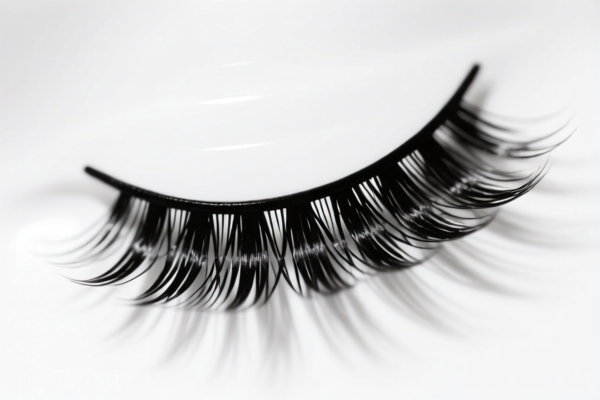
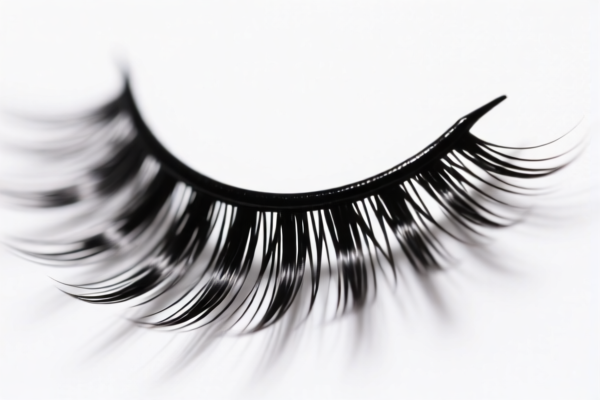
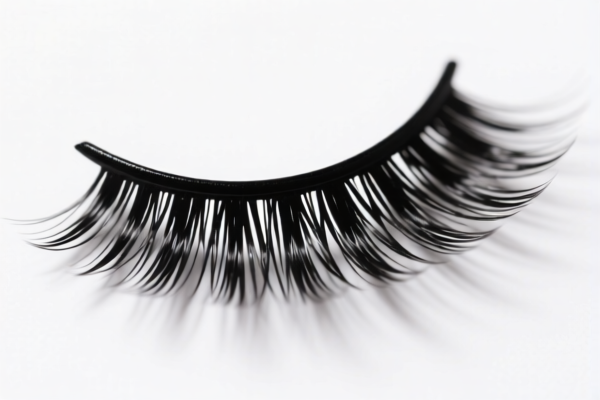

AI Analysis
🧿 Magnetic Eyelashes: The Ultimate HS Code & Tariff Breakdown | 2026 Customs Clearance Guide
🌐 HS Code Reference & Clearance Guide | 2026 Latest Tariff Analysis | Professional Compliance Strategy
📌 I. Product Definition & Classification: What Exactly Are "Magnetic Eyelashes"?
Magnetic eyelashes are cosmetic accessories designed to enhance the appearance of natural eyelashes. Unlike traditional glue-on lashes, they utilize small embedded magnets (usually arranged in pairs on the lash band and a separate eyeliner strip) to secure them to the eye without adhesive.
In international trade, classification depends heavily on material composition and intended use: 1. Cosmetic Use: If marketed primarily as a beauty aid (applying makeup), they fall under Chapter 33 (Essential Oils and Resins; Perfumery, Cosmetics and Toilet Preparations). 2. Hair/Accessory Use: If classified by material (synthetic hair/fibers) and not strictly as a "preparation," they may fall under Chapter 67 (Articles of Hair; Prepared Horsehair) or Chapter 61/62 (Articles of Apparel/Accessories).
⚠️ Critical Distinction:
- If the product is marketed as a "Cosmetic/Toilet Preparation" (e.g., "False Eyelashes for Cosmetic Use") → Chapter 33.
- If the product is marketed as "Artificial Hair/Fibers" (focusing on the material, e.g., synthetic fur) → Chapter 67.
- Note: The data provided shows two distinct classification paths with significantly different tax implications. This is a common point of contention in customs audits.
📦 II. HS Code Classification Details (2026 Authoritative Comparison)
| HS Code | Product Description | Classification Logic | Material/Usage Focus |
|---|---|---|---|
3304.20.00.00 |
Beauty or Make-up Preparations, including Eye Makeup | Cosmetic Classification | Defined as "Eye Cosmetics." Used for beautification via makeup application. |
3304.99.50.00 |
Other Beauty or Make-up Preparations | Cosmetic Classification | Fits under "General Beauty/Cosmetic Preparations." No material conflict if defined as a beauty aid. |
6704.11.00.00 |
Wigs, False Hair, etc., of Human Hair | Material Classification | Specifically lists "False Eyelashes." Assumes material is human hair (less common for standard magnetic lashes, but possible). |
6704.19.00.00 |
Wigs, False Hair, etc., Other Materials | Material Classification | Assumes synthetic/textile materials (common for magnetic lashes). Classified as "False Hair" rather than "Cosmetic Prep." |
🔍 Key Insight:
- HS 3304 treats the item as a cosmetic product (like lipstick or mascara).
- HS 6704 treats the item as a textile/hair accessory.
- Customs Risk: Misclassifying a cosmetic product as a textile (or vice versa) can lead to severe penalties. Most modern magnetic lashes (synthetic) are increasingly classified under 3304 if marketed strictly as makeup, but 6704 is still widely used for generic "false eyelashes" regardless of marketing, due to the explicit mention in Chapter 67.
💰 III. 2026 Tariff Rate Breakdown (Detailed Tax Clauses)
✅ Applicable Country: United States (US)
✅ Origin: China (CN)
✅ Effective Date: Tariffs apply to imports post-2025/2026 trade policies (Section 301 & IEEPA).
🎯 1. Cosmetic Classification (3304.20.00.00 & 3304.99.50.00)
These codes are treated as beauty/cosmetic preparations.
| Item | Detail |
|---|---|
| Base Tariff | 0.0% (Most cosmetics have 0% base duty) |
| Section 301 Tariff | +25.0% (Added by USITC Footnote 9903.88.01 for Chinese goods) |
| IEEPA Surcharge | +10.0% (122 Clause: Additional tariff on Chinese imports, effective Nov 10, 2025) |
| Total Tax Rate | 35.0% |
| De Minimis Exemption | ❌ Denied (deny_de_minimis). Section 301 and IEEPA tariffs do not apply to de minimis ($800) shipments. |
| Legal Basis Path | IEEPA:9903.01.25 → IEEPA:9903.01.24 → USITC:3304.xx.xx → FOOTNOTE:9903.88.01 |
📌 Explanation:
- Even though the base duty is 0%, the 25% Section 301 tariff and 10% IEEPA tariff stack up.
- Total Cost Impact: For every $1,000 of merchandise, you pay $350 in tariffs.
- Crucial: This applies to both B2B and B2C (de minimis) shipments if the goods are from China. Do not rely on de minimis exemptions for these HS codes.
🎯 2. Hair/Accessory Classification (6704.11.00.00 & 6704.19.00.00)
These codes are treated as false hair/accessories.
| Item | Detail |
|---|---|
| Base Tariff | 0.0% (False hair often has 0% base duty) |
| Section 301 Tariff | +7.5% (Lower Section 301 rate for certain hair/artificial hair products) |
| IEEPA Surcharge | +10.0% (122 Clause: Additional tariff on Chinese imports) |
| Total Tax Rate | 17.5% |
| De Minimis Exemption | ❌ Denied (deny_de_minimis). Same as above, tariffs apply to all shipments. |
| Legal Basis Path | IEEPA:9901.25 → IEEPA:9903.01.24 → USITC:6704.xx.xx → FOOTNOTE:9903.88.01 |
📌 Explanation:
- The Section 301 tariff is significantly lower (7.5% vs 25%) for hair-related items compared to cosmetics.
- Total Cost Impact: For every $1,000 of merchandise, you pay $175 in tariffs.
- Savings: Classifying under 6704 saves 17.5% in tariffs compared to 3304.
🛠️ IV. Customs Clearance Operational Advice (Practical Pitfall Avoidance)
✅ 1. Document Preparation Checklist (Non-Negotiable)
| Document | Mandatory? | Notes |
|---|---|---|
| ✅ Product Specs | ✔️ | Must specify: Magnetic, False Eyelashes, Material (Human vs. Synthetic), Length, Quantity. |
| ✅ Product Photos | ✔️ | Show the magnets clearly. Show packaging. If cosmetic packaging (e.g., compact case), lean toward 3304. If plain/sachet, lean toward 6704. |
| ✅ Commercial Invoice | ✔️ | Use precise description: "Magnetic False Eyelashes, Synthetic Fibers, No Adhesive" or "Cosmetic Eye Makeup: Magnetic Lashes." |
| ✅ Material Declaration | ✔️ | Crucial for 6704. Must state: "100% Synthetic Fiber" or "Human Hair." |
| ✅ Origin Certificate | ✔️ | Confirm CN origin to apply correct tariffs. |
✅ 2. Classification Strategy (Key Mnemonic)
🔥 “Cosmetic Pack = 35%, Plain Pack = 17.5% — Choose Wisely!”
| Scenario | Recommended HS Code | Tax Rate | Reasoning |
|---|---|---|---|
| Packaged as Makeup (Compact, branded, retail box like mascara) | 3304.20.00.00 |
35.0% | Customs views as "Make-up Preparation." |
| Generic/Sachet Pack (Plain plastic, bulk, or labeled "False Hair") | 6704.19.00.00 |
17.5% | Customs views as "Artificial Hair." |
| Human Hair Lashes | 6704.11.00.00 |
17.5% | Explicitly listed as "False Eyelashes" of human hair. |
📌 Strategic Tip:
If your product is synthetic (most magnetic lashes are), and packaging is not explicitly cosmetic (e.g., not in a makeup palette), try to classify under 6704.19.00.00 to save 17.5% in tariffs. However, be prepared to justify this with material data. If the product is marketed strictly as a cosmetic (e.g., "Beauty Tool," "Eye Makeup"), customs may force 3304.
✅ 3. Special Cases & Risk Management
| Situation | Action |
|---|---|
| De Minimis Shipments (<$800) | ⚠️ BOTH HS Codes are subject to tariffs! Do not assume free entry. IEEPA and Section 301 deny de minimis exemptions. |
| Mixed Materials | If lashes have synthetic fibers but human hair tips, declare the predominant material. Synthetic → 6704.19. |
| OEM/White Label | Provide supplier declarations stating the intended use (Cosmetic vs. Hair Accessory) and material composition. |
| Customs Audit | If audited on 6704, provide photos showing the product is "false hair" not "liquid/cream cosmetic." |
🌍 V. Global Market Comparison (2026 Overview)
| Market | Recommended HS Code | Tariff (China Origin) | Notes |
|---|---|---|---|
| 🇺🇸 USA | 3304.20.00.00 or 6704.19.00.00 |
35% or 17.5% | High tariffs due to Section 301 + IEEPA. |
| 🇨🇳 China | 3304.20.00.00 |
~5-10% | No US-style surcharges. |
| 🇪🇺 EU | 3307.90.98 or 6704.19 |
0-6% | Generally lower tariffs, no US-style extra levies. |
| 🇬🇧 UK | 3304.20.00.00 |
0-6% | Post-Brexit rules apply, generally favorable. |
| 🇦🇺 Australia | 3304.20.00.00 |
5% | No significant surcharges. |
📌 Conclusion:
The US market is the most challenging due to the 35% vs 17.5% tariff split. Other markets offer significant savings.
📌 VI. Common Mistakes & Pitfalls (Lessons Learned)
❌ Mistake 1: Assuming De Minimis ($800) applies to Magnetic Lashes from China.
👉 Consequence: Package seized or taxed retroactively. IEEPA/301 tariffs deny de minimis exemption.
❌ Mistake 2: Declaring "Eyelashes" without specifying material.
👉 Consequence: Customs assigns highest dutiable rate (often 35%) by default.
❌ Mistake 3: Using "Cosmetic" description for a 6704 product.
👉 Consequence: Unnecessary payment of 35% instead of 17.5%.
❌ Mistake 4: Classifying as "Textile" (Chapter 61/62) without basis.
👉 Consequence: Rejection by customs. False eyelashes have specific headings in 33 and 67.
✅ Correct Declaration Example:
"Magnetic False Eyelashes, Synthetic Fiber, Packaged in Plastic Sachet, No Adhesive Included, HS 6704.19.00.00"
🎯 VII. Conclusion: Professional Clearance, Cost Savings!
🎯 Remember the Formula:
🔹 "Cosmetic Packaging = 35% Tax"
🔹 "Generic/Packaging = 17.5% Tax"
🔹 "De Minimis? STILL TAXED!"
🔹 "Human Hair = 17.5%, Synthetic = 17.5% or 35% (depending on classification)"
📌 Pro Tip:
If you are shipping small batches for testing, consider diverting non-US markets (EU, UK, Asia) where tariffs are lower. For US shipments, optimize packaging to avoid cosmetic classification if possible, and always declare material accurately.
📣 Immediate Action:
📞 Consult a Customs Broker for pre-classification ruling.
📸 Provide Clear Product Photos (Magnets visible, packaging type clear).
📄 Prepare Material Certificates (Synthetic vs. Human Hair).
🚀 Clear Customs Smoothly, Save 17.5% on Tariffs, Maximize Profit!
✨ Professional Classification Starts with Accuracy!
💼 Every Percent Saved is Pure Profit!
Customer Reviews
About HS Code Classification
The Harmonized System (HS) is an internationally standardized nomenclature developed by the World Customs Organization (WCO) to classify traded products. Over 200 countries use the HS system as the basis for customs tariffs, trade statistics, and import/export regulations.
Each HS code follows a hierarchical structure:
- Chapter (2 digits) — Broad category of goods (e.g., Chapter 84: Machinery and Mechanical Appliances)
- Heading (4 digits) — More specific grouping within the chapter
- Subheading (6 digits) — Internationally standardized breakdown, used by all WCO member countries
- National subdivisions (8-10 digits) — Country-specific extensions for further classification, such as US HTSUS 10-digit codes
Correct HS code classification is essential for smooth customs clearance, accurate duty payment, and compliance with trade regulations. Misclassification can lead to customs delays, overpayment of duties, or penalties.
When importing from CN to US, the applicable tariff rates may include:
- Most-Favored-Nation (MFN) rate — The standard duty rate applied to WTO members
- General rate — Applied to countries without trade agreements
- Trade remedy duties — Additional tariffs such as Section 301 (anti-dumping), Section 232 (national security), or countervailing duties
The information provided on this page is for reference purposes only. For official classification, please consult with your local customs authority or a licensed customs broker.