Magnetic Window Screen with Polyester Mesh
CN → US| HS Code | Tariff Rate | Origin | Destination | Doc |
|---|---|---|---|---|
| 5407510040 | 49.9% | CN | US | Official Doc |
| 5407510020 | 49.9% | CN | US | Official Doc |
| 5603120070 | 35.0% | CN | US | Official Doc |
| 5603110070 | 35.0% | CN | US | Official Doc |
Product Images
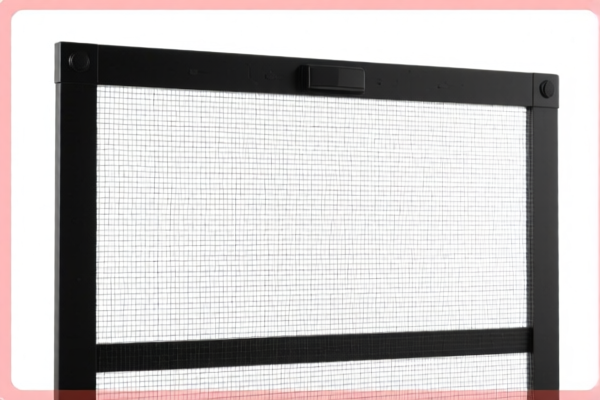
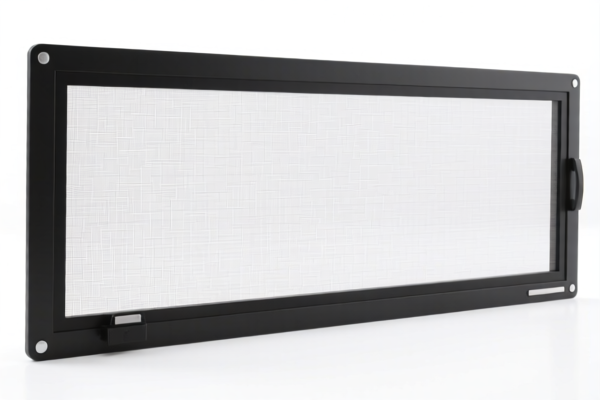
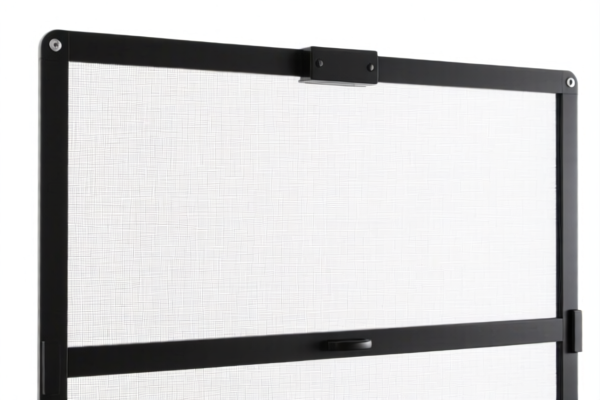
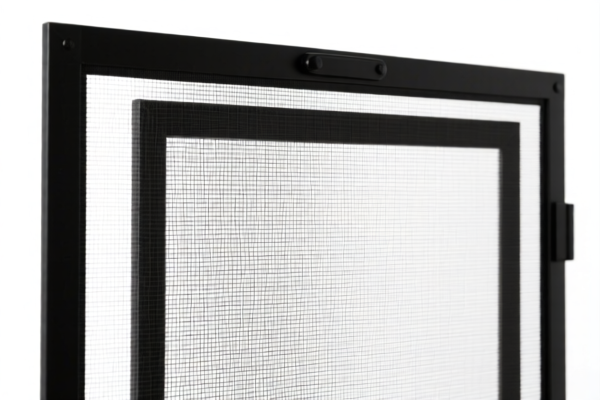
AI Analysis
🪟 Magnetic Window Screen with Polyester Mesh: Global Trade & Tax Master Guide (2026 Edition)
🌐 HS Code Decoded | US Tariff & Classification Strategy | Professional Importer's Toolkit
📌 What is this product?
The Magnetic Window Screen is a functional home accessory designed to keep insects out while allowing airflow. Its core composition is a Polyester Mesh (Synthetic Textile) held in place by magnets.
Crucial Classification Dilemma:
In international trade, this product sits on the border between "Woven Fabrics" (Window Screens) and "Non-Woven Fabrics" depending on the manufacturing process. The HS Code determines whether you face a 49.9% or 35.0% tariff burden.
📦 1. HS Code Classification Analysis (Based on Material & Form)
Based on the provided data, the product falls into two primary classification scenarios depending on the specific manufacturing technique (Woven vs. Non-Woven).
Scenario A: The "Fabric/Window Screen" Classification (Higher Risk)
Most common if the mesh is tightly woven or knitted.
- 🏷️ HS Codes:
5407.51.00.40/5407.51.00.20 - 🧵 Material Logic: Matches Polyester Fiber (Synthetic) + Window Screen Form (Textile/Woven).
- 🔍 Classification Summary:
- For 5407.51.00.40: Classified under the "Other" category for synthetic textile window screens.
- For 5407.51.00.20: Classified based on No Material Conflict logic; fits the polyester/window screen profile.
- ⚠️ Why this code? These codes fall under Chapter 54 (Synthetic Filaments) and are treated as traditional woven or knitted fabrics.
Scenario B: The "Non-Woven Fabric" Classification (Lower Risk)
Possible if the mesh is a fused, needle-punched, or bonded synthetic fiber sheet.
- 🏷️ HS Codes:
5603.12.00.70/5603.11.00.70 - 🧵 Material Logic: Matches Artificial/Synthetic Long Filaments (Polyester) + Non-Woven Form.
- 🔍 Classification Summary:
- For 5603.12.00.70: Fits the "Non-Woven Articles" category (Artificial Filaments).
- For 5603.11.00.70: Fits the "Non-Woven Fabrics" category (Polyester Fiber/Window Screen).
- ✅ Why this code? These codes fall under Chapter 56 (Batting, Wadding, and Non-Wovens), often yielding a lower base tariff if the product is strictly defined as a non-woven sheet.
💰 2. 2026 Tariff & Tax Rate Deep Dive (US Market)
⚠️ CRITICAL WARNING: This product is subject to Multiple Layers of US Tariffs due to its origin (China) and material composition.
🚨 Scenario A: Textile/Woven Route (5407.51.00.40 / 5407.51.00.20)
Total Duty: 49.9%
| Tax Component | Rate | Legal Basis | Explanation |
|---|---|---|---|
| Base Tariff | 14.9% | General MFN | Standard duty for synthetic textile window screens. |
| Section 301 (Add-on) | 25.0% | USITC / 122 Clause | Section 301 punitive tariff on Chinese textiles. |
| Section 122 (Add-on) | 10.0% | 122 Clause | Additional surcharge for specific textile/footwear categories. |
| 💥 TOTAL | 49.9% | Pay almost 50% of the product value in tax! |
🚨 Scenario B: Non-Woven Route (5603.12.00.70 / 5603.11.00.70)
Total Duty: 35.0%
| Tax Component | Rate | Legal Basis | Explanation |
|---|---|---|---|
| Base Tariff | 0.0% | General MFN | Duty-Free base entry for this specific non-woven sub-category. |
| Section 301 (Add-on) | 25.0% | USITC / 122 Clause | Section 301 punitive tariff applies regardless of base rate. |
| Section 122 (Add-on) | 10.0% | 122 Clause | Additional surcharge applies. |
| 💥 TOTAL | 35.0% | Save ~15% compared to the woven route. |
🛠️ 3. Professional Customs Clearance Strategy
✅ Step 1: Determine Your Manufacturing Process (The "Decider")
To claim the lower 35.0% rate, you MUST prove the mesh is Non-Woven. * Woven/Knitted: Interlaced threads. -> Must use 5407 codes (49.9% tax). * Non-Woven: Fibers bonded/fused/needle-punched without weaving. -> Can use 5603 codes (35.0% tax). * Action: Provide a technical dossier to Customs explaining the lamination or bonding process used to create the mesh.
✅ Step 2: Required Documentation
| Document | Purpose | Note |
|---|---|---|
| Technical Datasheet | Proves material (Polyester) and form (Window Screen). | Must explicitly state "Non-Woven" if claiming 5603. |
| Process Flow Chart | Shows how the screen is made. | Crucial for distinguishing Woven vs. Non-Woven. |
| Commercial Invoice | Must clearly state "Magnetic Window Screen". | Avoid vague terms like "Textile Product". |
| Material Certificates | Confirms 100% Polyester. | Required to justify Section 5407 vs 5603. |
✅ Step 3: Labeling & Declaration
- HS Code Precision: Do not list "Textile" only. List the specific Polyester content and Non-Woven nature (if applicable).
- Origin Marking: Clearly mark "Made in China" to avoid Section 301/122 disputes.
🚀 4. Strategic Recommendations for Importers
🔥 Cost Optimization Hack
"If your manufacturing allows, switch from Woven to Non-Woven!" * Savings: 14.9% (The difference between 49.9% and 35.0%). * Impact: If you import $100,000 worth of screens, you save $14,900 in taxes simply by adjusting the HS Code classification based on production method.
⚠️ Risk Mitigation
- The "122 Clause" Trap: Even with a 0% base tariff (5603 series), the 10% and 25% add-ons make this a high-cost import. There are no de minimis exemptions for these specific codes.
- Audits: Customs may audit the physical mesh. If they find it is actually woven, they will reclassify it to 5407 and charge the 49.9% rate + back taxes + penalties.
📝 Declaration Tip
Incorrect: "Window Screen, Textile, Made in China" Correct: "Magnetic Window Screen, Polyester Non-Woven Mesh, HS 5603.11.00.70, Subject to Section 301 & 122 Tariffs."
🌍 5. Final Verdict: Which Code to Choose?
| Criteria | Choose 5407 (Woven) |
Choose 5603 (Non-Woven) |
|---|---|---|
| Total Tax | 49.9% | 35.0% |
| Base Tariff | 14.9% | 0.0% |
| Product Type | Tightly woven/Knitted mesh | Bonded/Needle-punched mesh |
| Best For | High-end, heavy-duty screens | Standard, lightweight screens |
| Recommendation | Only if the product is physically woven. | Preferred if manufacturing allows non-woven tech. |
📣 Pro Tip: Always request a Pre-Ruling from CBP before shipping your first container. If you declare the wrong code, the 15% tax difference is the least of your worries; the penalty for misclassification can be much higher!
✨ Smart Shipping = Precise Classification = Maximized Profit! 🚢💰
Customer Reviews
About HS Code Classification
The Harmonized System (HS) is an internationally standardized nomenclature developed by the World Customs Organization (WCO) to classify traded products. Over 200 countries use the HS system as the basis for customs tariffs, trade statistics, and import/export regulations.
Each HS code follows a hierarchical structure:
- Chapter (2 digits) — Broad category of goods (e.g., Chapter 84: Machinery and Mechanical Appliances)
- Heading (4 digits) — More specific grouping within the chapter
- Subheading (6 digits) — Internationally standardized breakdown, used by all WCO member countries
- National subdivisions (8-10 digits) — Country-specific extensions for further classification, such as US HTSUS 10-digit codes
Correct HS code classification is essential for smooth customs clearance, accurate duty payment, and compliance with trade regulations. Misclassification can lead to customs delays, overpayment of duties, or penalties.
When importing from CN to US, the applicable tariff rates may include:
- Most-Favored-Nation (MFN) rate — The standard duty rate applied to WTO members
- General rate — Applied to countries without trade agreements
- Trade remedy duties — Additional tariffs such as Section 301 (anti-dumping), Section 232 (national security), or countervailing duties
The information provided on this page is for reference purposes only. For official classification, please consult with your local customs authority or a licensed customs broker.