Mahogany Structural Beam
CN → US| HS Code | Tariff Rate | Origin | Destination | Doc |
|---|---|---|---|---|
| 4407210000 | 35.0% | CN | US | Official Doc |
| 4407290206 | 35.0% | CN | US | Official Doc |
Product Images
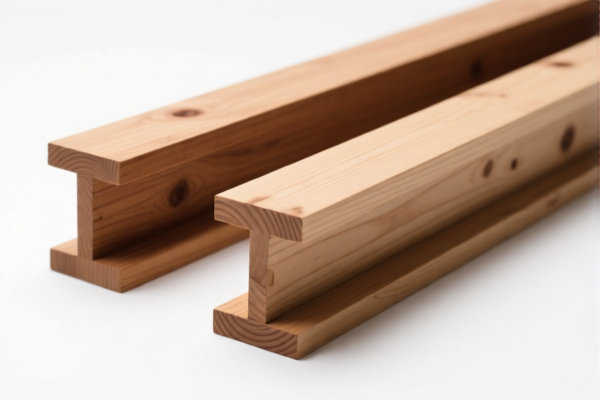
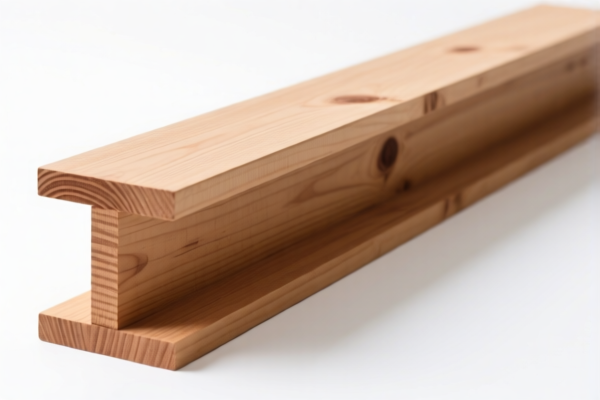
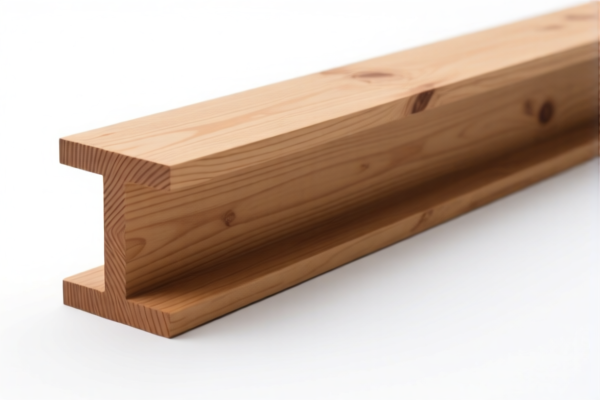
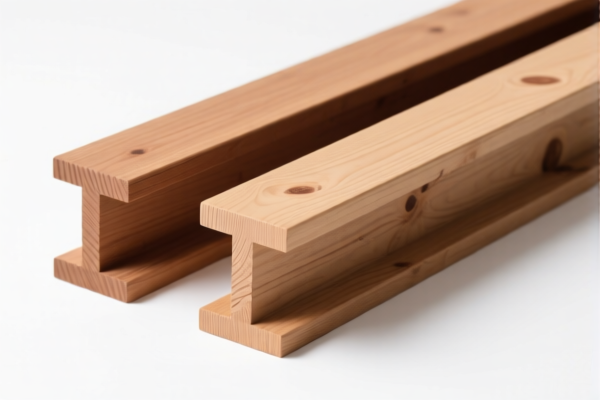
AI Analysis
🪵 Mahogany Structural Beam (Solid Wood Lumber)
🌐 HS Code Reference & Customs Clearance Guide | 2026 Latest Tariff Analysis | Professional Compliance Strategy 📌 1. Product Definition: What Exactly Is a "Mahogany Structural Beam"?
A "Mahogany Structural Beam" refers to timber that has been processed to specific dimensions for load-bearing construction, joinery, or furniture making. In international trade, not all mahogany is treated equally. The classification depends strictly on the botanical species, which determines whether it is classified as "True Mahogany" (Swietenia spp.) or "African Mahogany" (Khaya spp.), both of which fall under Tropical Wood.
⚠️ Key Distinction Point: - True Mahogany: Derived from the genus Swietenia. This is the premium, legally protected category with its own specific HS subheading. - African Mahogany: Derived from the genus Khaya (also known as Acajou d'Afrique). Although marketed as "mahogany," it is botanically distinct and has a separate HS subheading. - Processing Level: The goods must be sawn, chipped lengthwise, sliced, or peeled, with a thickness exceeding 6 mm. If it is planed, sanded, or end-jointed, it still falls under this heading (Chapter 44).
📦 2. HS Code Classification Details (2026 Latest Tariff Authority Cross-Reference)
| HS Code | Product Description | Key Botanical Source | Processing Status |
|---|---|---|---|
4407.21.00.00 |
Wood sawn or chipped lengthwise... of tropical wood: Mahogany (Swietenia spp.) | Swietenia (True Mahogany) | Sawn, sliced, peeled, planed, sanded, or end-jointed; Thickness > 6mm |
4407.29.02.06 |
Wood sawn or chipped lengthwise... of tropical wood: Other Acajou d'Afrique (Khaya spp.), also known as African Mahogany | Khaya (African Mahogany) | Sawn, sliced, peeled, planed, sanded, or end-jointed; Thickness > 6mm |
🔍 Critical Reminder: - Do NOT confuse Swietenia with Khaya. Customs officers frequently check botanical names. Misclassifying African Mahogany (Khaya) as True Mahogany (Swietenia) can lead to classification errors, even if the tax rate in this specific dataset is identical. - Thickness is Critical: If the wood is ≤ 6 mm, it likely falls under Chapter 44 heading 44.09 (Continuously formed along its entire length) or other veneer-related headings. These specific codes apply only to thickness > 6 mm. - "Structural Beam" is a Functional Term: Customs classifies by form and material, not function. Whether it is used for a beam, a floorboard, or a furniture leg, if it is >6mm thick sawn mahogany, it fits these codes.
💰 3. 2026 Latest Tariff Rate Details (Including Surcharges & Policy Add-ons)
✅ Applicable Country: United States (US) ✅ Origin: China (CN) [Note: Tariff rates below are based on the provided data structure for Chinese origin] ✅ Effective Time: Current applicable rates
🎯 1. 4407.21.00.00 —— True Mahogany (Swietenia spp.)
| Item | Content |
|---|---|
| Base Tariff | 0.0% (ad valorem) |
| Section 301 Additional Tariff | +25.0% |
| Total Tax Rate | 25.0% |
| Tax Calculation | CIF Value × 25% |
| De Minimis Exemption | ❌ Not Applicable (Section 301 goods generally do not qualify for de minimis duty-free entry under current enforcement) |
| Legal Basis Path | HTSUS: 4407.21.00 → Section 301 Footnote 9903.88.01 |
📌 Explanation: - While the Base Tariff for this wood product is 0%, it is subject to the Section 301 Additional Tariff of 25% for goods originating from China. - Note on CITES: Swietenia species are often listed in CITES Appendix II. Even if CITES permits are secured for export, the US Importer must ensure a valid CITES permit is presented at entry. Failure to do so results in seizure, regardless of tariff payments.
🎯 2. 4407.29.02.06 —— African Mahogany (Khaya spp.)
| Item | Content |
|---|---|
| Base Tariff | 0.0% (ad valorem) |
| Section 301 Additional Tariff | +25.0% |
| Total Tax Rate | 25.0% |
| Tax Calculation | CIF Value × 25% |
| De Minimis Exemption | ❌ Not Applicable |
| Legal Basis Path | HTSUS: 4407.29.02.06 → Section 301 Footnote 9903.88.01 |
📌 Note: - Despite being "Other" tropical wood, Khaya spp. (African Mahogany) shares the exact same 25% total tax rate as True Mahogany in this specific tariff schedule. - Botanical Verification is Key: Importers must provide scientific names (Khaya spp.) on the commercial invoice to ensure smooth clearance. General terms like "African Mahogany" without scientific naming may trigger additional scrutiny or delays.
🛠️ 4. Customs Clearance Practical Advice (Combat Pitfall Guide)
✅ 1. Documentation Checklist (No Exceptions)
| Document | Required | Explanation |
|---|---|---|
| ✅ Scientific Name | ✔️ | Must state Swietenia spp. OR Khaya spp. clearly. Common names alone are risky. |
| ✅ CITES Permit | ✔️ | Crucial for Swietenia. Verify if the specific Swietenia species (e.g., S. mahagoni, S. macrophylla) requires a permit. |
| ✅ Commercial Invoice | ✔️ | Must list HS Code, Net Weight, Gross Weight, and Country of Origin. |
| ✅ Packing List | ✔️ | Detail dimensions and thickness to prove >6mm. |
| ✅ Phytosanitary Certificate | ✔️ | Required to prove the wood is free from pests and fungi (ISPM 15 standard for packaging). |
| ✅ Processing Declaration | ✔️ | Confirm if planed, sanded, or end-jointed, as this affects the exact subheading verification. |
✅ 2. Declaration Tips (Critical Mantra)
🔥 "Name by Botany, Verify by Thickness, Check CITES for Swietenia!"
| Scenario | Correct Declaration | Wrong Practice |
|---|---|---|
| True Mahogany (Swietenia) | 4407.21.00.00 + CITES Permit |
Claiming "African Mahogany" → Classification Error |
| African Mahogany (Khaya) | 4407.29.02.06 |
Claiming "True Mahogany" → Potential Fraud/Scrutiny |
| Wood Thickness ≤ 6mm | Not these codes (Likely 44.09 or 44.11) | Using 44.07 codes → Rejection/Re-classification |
| Raw Logs | Not these codes (Likely 44.03) | Using 44.07 codes → Wrong Tariff/Regulations |
✅ 3. Special Situation Handling
| Situation | Handling Advice |
|---|---|
| CITES Endangered Species | Swietenia species are often CITES-listed. Ensure the Exporter has the CITES Export Permit. The Importer must file a CITES Entry Document with CBP. |
| Mixed Shipments | If a shipment contains both Swietenia and Khaya, they must be segregated and declared separately if their physical characteristics allow, or clearly documented to avoid misclassification penalties. |
| End-Jointed Lumber | If the "beam" is made of smaller pieces glued end-to-end, it still falls under 44.07, but ensure the glue type complies with CARB/EPA standards if entering the US market for indoor use. |
| Value Determination | Section 301 tariffs are calculated on the Transaction Value (CIF). Ensure no hidden fees are excluded from the dutiable value. |
🌍 5. Global Market Comparison (2026 Latest)
| Country/Region | Recommended HS Code | Tariff (China Origin) | Certification Requirement | Notes |
|---|---|---|---|---|
| 🇺🇸 USA | 4407.21.00.00 / 4407.29.02.06 |
25% (Total) | CITES + Phytosanitary | High scrutiny on Swietenia CITES compliance. |
| 🇨🇳 China | 4407.21 / 4407.29 |
Varies (Low/Medium) | None specific | Import duties for raw timber may differ; check current Chinese import tariffs. |
| 🇪🇺 EU | 4407.21 / 4407.29 |
0% - 4.5% | EUTR (Due Diligence) | EU Timber Regulation (EUTR) requires strict due diligence to prove legality. |
| 🇬🇧 UK | 4407.21 / 4407.29 |
0% - 4.5% | UKTR (Due Diligence) | Post-Brexit, UK has its own Timber Regulation. |
| 🇨🇦 Canada | 4407.21 / 4407.29 |
0% | Phytosanitary | Generally low duty, but strict pest control. |
📌 Conclusion: - USA: High tariff (25%) but straightforward classification. CITES is the biggest hurdle for Swietenia. - EU/UK: Lower tariffs but extremely high compliance burden regarding legal sourcing (Due Diligence). - China: Lower base tariffs, but check for any new environmental import policies.
📌 6. Common Errors & Pitfall Guide (Lessons Learned)
❌ Error 1: Using generic term "Mahogany" without scientific name 👉 Consequence: Customs may classify under "Other Wood" (higher duty or different regulations) or request excessive documentation → Delay.
❌ Error 2: Ignoring CITES for Swietenia 👉 Consequence: Seizure of goods and fines, even if duties are paid. CBP works closely with FWS (Fish and Wildlife Service).
❌ Error 3: Misidentifying Khaya as Swietenia 👉 Consequence: While tariffs are the same in this dataset, Swietenia often has stricter export controls in source countries. Mislabeling can lead to false export declaration issues.
❌ Error 4: Assuming all wood < 6mm fits here 👉 Consequence: Goods ≤ 6mm are often "Veneer Sheets" or "Continuously Formed Wood" (44.09). Wrong HS code → Audit risk.
✅ Correct Practice:
"Mahogany Lumber, Sawn, Planed, Thickness 50mm, Swietenia macrophylla, CITES Permit #XXXXXX, Origin: [Country]"
🎯 7. Conclusion: Professional Declaration Saves Money!
🎯 Remember the Mantra:
🔹 "Botany First: Swietenia vs. Khaya." 🔹 "CITES Check: If Swietenia, Permit is Mandatory." 🔹 "Thickness Check: Must be > 6mm for 44.07." 🔹 "Tariff Reality: 25% Total for China Origin in USA."
📌 Pro Tip:
If you are importing African Mahogany (Khaya), it is often NOT CITES-listed (check specific species), making clearance faster and cheaper than Swietenia. However, always verify the latest CITES appendices.
For USA imports, consider Advance Rulings if your shipment volume is high, to get binding confirmation from CBP on the HS Code and CITES status.
📣 Immediate Action:
📞 Contact a licensed Customs Broker specializing in timber. 📄 Gather CITES Permits (if Swietenia) and Phytosanitary Certificates. 🚀 Ensure your Commercial Invoice includes scientific names to avoid clearance delays.
✨ Professional clearance starts with accurate classification! 💼 Your timber shipment, compliant and cost-effective!
Customer Reviews
About HS Code Classification
The Harmonized System (HS) is an internationally standardized nomenclature developed by the World Customs Organization (WCO) to classify traded products. Over 200 countries use the HS system as the basis for customs tariffs, trade statistics, and import/export regulations.
Each HS code follows a hierarchical structure:
- Chapter (2 digits) — Broad category of goods (e.g., Chapter 84: Machinery and Mechanical Appliances)
- Heading (4 digits) — More specific grouping within the chapter
- Subheading (6 digits) — Internationally standardized breakdown, used by all WCO member countries
- National subdivisions (8-10 digits) — Country-specific extensions for further classification, such as US HTSUS 10-digit codes
Correct HS code classification is essential for smooth customs clearance, accurate duty payment, and compliance with trade regulations. Misclassification can lead to customs delays, overpayment of duties, or penalties.
When importing from CN to US, the applicable tariff rates may include:
- Most-Favored-Nation (MFN) rate — The standard duty rate applied to WTO members
- General rate — Applied to countries without trade agreements
- Trade remedy duties — Additional tariffs such as Section 301 (anti-dumping), Section 232 (national security), or countervailing duties
The information provided on this page is for reference purposes only. For official classification, please consult with your local customs authority or a licensed customs broker.