Makeup Storage Box
CN → US| HS Code | Tariff Rate | Origin | Destination | Doc |
|---|---|---|---|---|
| 3926901000 | 20.9% | CN | US | Official Doc |
| 3926909989 | 22.8% | CN | US | Official Doc |
| 4202929315 | 52.6% | CN | US | Official Doc |
| 4202926010 | 41.3% | CN | US | Official Doc |
| 4420908000 | 38.2% | CN | US | Official Doc |
Product Images
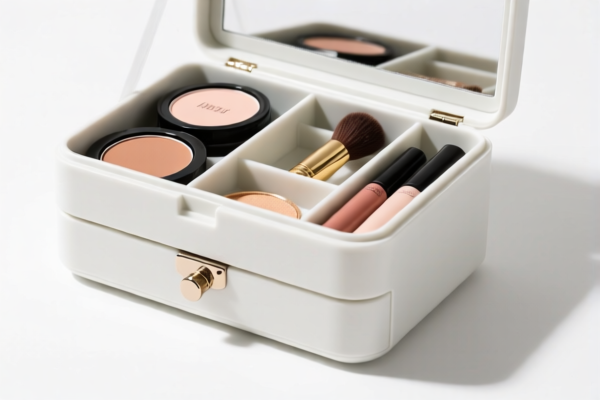
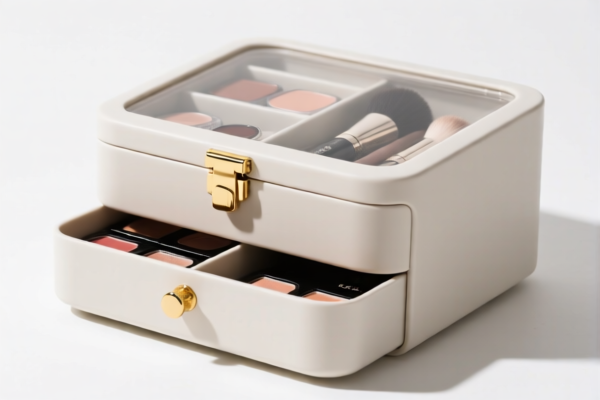
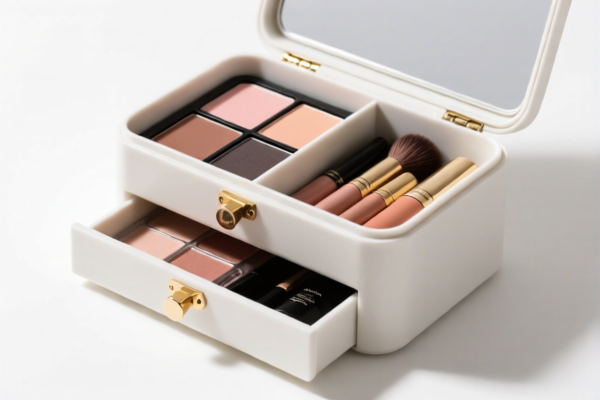
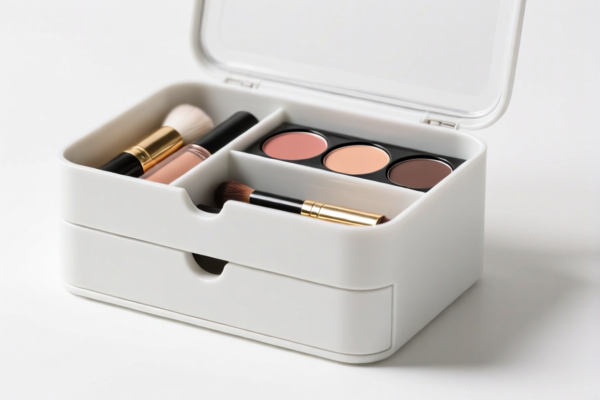
AI Analysis
🖄️ Makeup Storage Box (Cosmetic Organizers & Cases)
🌐 HS Code Reference & Clearance Guide | 2026 Latest Tariff Analysis | Professional Strategy
📌 1. Product Definition & Classification: What Exactly Is a "Makeup Storage Box"?
A "Makeup Storage Box" is a broad category encompassing containers designed to hold, organize, and protect cosmetics, skincare products, and accessories. In international trade, the classification depends heavily on the primary material and the specific nature of the container.
There are three main scenarios: 1. Plastic Containers: Standard plastic boxes, drawers, or trays for desktop organization. 2. Textile-Faced Containers: Bags or boxes with an outer surface of textile material (often velvet, fabric, or non-woven). 3. Jewelry-Style Cases: Rigid cases often used for high-end jewelry or premium makeup sets, which may be classified under jewelry cases regardless of whether they hold makeup. 4. Wooden Cases: Wooden boxes or trays, often used for luxury presentation.
⚠️ Key Distinction:
- If it’s a simple plastic tray/box → 3926.90.10.00
- If it’s a jewelry-style case (even if holding makeup) → 4202.92.60.10
- If it has a textile exterior → 4202.92.93.15
- If it’s wooden → 4420.90.80.00
📦 2. HS Code Classification Details (2026 Latest Tariff Alignment)
| HS Code | Product Description | Applicable Scenario | Material/Feature |
|---|---|---|---|
3926.90.10.00 |
Plastic storage boxes, classified as containers under other plastic products | Desktop organizers, plastic drawers, acrylic cases | ✅ Plastic |
3926.90.99.89 |
Other plastic articles, no clear shape or use conflict | Irregular plastic holders, complex composite plastic containers | ✅ Plastic (Generic) |
4202.92.93.15 |
Containers with outer surface of textile material | Fabric-covered boxes, velvet cosmetic bags, fabric-lined cases | ✅ Textile Exterior |
4202.92.60.10 |
Jewelry boxes and similar containers | Rigid cases often used for jewelry or premium makeup sets | ✅ Likely Plastic/Textile mix, classified as "Jewelry-style" |
4420.90.80.00 |
Wooden containers, fitting description of wooden boxes for jewelry/tableware | Wooden jewelry boxes, wooden cosmetic trunks | ✅ Wood |
🔍 Key Reminder:
- Jewelry-style cases (4202.92.60.10) often have higher tariffs due to their classification as "jewelry accessories," even if they store makeup.
- Textile exterior (4202.92.93.15) incurs the highest base duty because textile goods often face higher import duties in certain markets.
- Plastic (3926.90.10.00) is generally the most straightforward and often lower-cost classification for standard plastic organizers.
💰 3. 2026 Latest Tariff Rate Details (Including Surcharges & Policy Add-ons)
✅ Applicable Country: United States (US)
✅ Origin: China (CN)
✅ Effective Date: 2025/2026 (Current Import Regulations)
🎯 1. 3926.90.10.00 —— Plastic Storage Box
| Item | Content |
|---|---|
| Base Duty Rate | 3.4% |
| Section 301 Surcharge | 7.5% |
| Section 122 Tariff | 10% |
| Total Effective Tax | 20.9% |
| Tax Calculation | CIF Value × 20.9% |
| De Minimis Eligibility | ❌ Not Eligible (High duty rate exceeds typical de minimis thresholds for preferential treatment) |
| Legal Basis Path | Section 301: 7.5% → Section 122: 10% → USITC: 3926.90.10.00 |
📌 Explanation:
- This is the most common classification for standard plastic cosmetic organizers.
- The total tax burden is 20.9%, which is moderate compared to textile or jewelry-style cases.
- Strategy: This is often the preferred classification for mass-produced plastic boxes to keep costs predictable.
🎯 2. 3926.90.99.89 —— Other Plastic Articles
| Item | Content |
|---|---|
| Base Duty Rate | 5.3% |
| Section 301 Surcharge | 7.5% |
| Section 122 Tariff | 10% |
| Total Effective Tax | 22.8% |
| Tax Calculation | CIF Value × 22.8% |
| De Minimis Eligibility | ❌ Not Eligible |
| Legal Basis Path | Section 301: 7.5% → Section 122: 10% → USITC: 3926.90.99.89 |
📌 Note:
- This code is used for plastic containers that don’t fit the specific "storage box" description.
- Slightly higher base duty (5.3%) than3926.90.10.00, leading to a 22.8% total tax.
- Avoid this code if3926.90.10.00applies, as it is more specific and cheaper.
🎯 3. 4202.92.93.15 —— Textile-Outer Container
| Item | Content |
|---|---|
| Base Duty Rate | 17.6% |
| Section 301 Surcharge | 25.0% |
| Section 122 Tariff | 10% |
| Total Effective Tax | 52.6% |
| Tax Calculation | CIF Value × 52.6% |
| De Minimis Eligibility | ❌ Not Eligible |
| Legal Basis Path | Section 301: 25% → Section 122: 10% → USITC: 4202.92.93.15 |
📌 Critical Warning:
- This classification carries a very high tax burden of 52.6%.
- The 25% Section 301 surcharge on textile goods is punitive.
- Strategy: If possible, avoid classifying fabric-covered makeup boxes under this code unless unavoidable. Consider plastic alternatives.
🎯 4. 4202.92.60.10 —— Jewelry Boxes & Similar Containers
| Item | Content |
|---|---|
| Base Duty Rate | 6.3% |
| Section 301 Surcharge | 25.0% |
| Section 122 Tariff | 10% |
| Total Effective Tax | 41.3% |
| Tax Calculation | CIF Value × 41.3% |
| De Minimis Eligibility | ❌ Not Eligible |
| Legal Basis Path | Section 301: 25% → Section 122: 10% → USITC: 4202.92.60.10 |
📌 Explanation:
- Even if the box is made of plastic, if it’s designed as a "jewelry box" (rigid, compartmentalized, often with mirrors), it falls here.
- The 25% Section 301 surcharge applies, making the total 41.3%.
- Strategy: For cheap plastic makeup boxes, try to argue they are "containers" (3926.90.10.00) rather than "jewelry boxes" to save ~20% in tax.
🎯 5. 4420.90.80.00 —— Wooden Containers
| Item | Content |
|---|---|
| Base Duty Rate | 3.2% |
| Section 301 Surcharge | 25.0% |
| Section 122 Tariff | 10% |
| Total Effective Tax | 38.2% |
| Tax Calculation | CIF Value × 38.2% |
| De Minimis Eligibility | ❌ Not Eligible |
| Legal Basis Path | Section 301: 25% → Section 122: 10% → USITC: 4420.90.80.00 |
📌 Note:
- Wooden boxes have a low base duty (3.2%), but the 25% Section 301 surcharge dominates.
- Total tax is 38.2%.
- Strategy: Premium wooden boxes often justify this cost due to higher retail margins, but they are still significantly more expensive than plastic counterparts.
🛠️ 4. Practical Clearance Advice (Real-World Pitfall Guide)
✅ 1. Documentation Checklist (Do Not Miss)
| Document | Required? | Description |
|---|---|---|
| ✅ Product Specifications | ✔️ | Dimensions, material composition (e.g., "100% Polypropylene"), capacity |
| ✅ Product Photos | ✔️ | Clear images of the box, interior layout, and any branding |
| ✅ Material Declaration | ✔️ | Crucial for distinguishing between Plastic (3926) and Textile (4202) |
| ✅ Commercial Invoice | ✔️ | Clearly state "Plastic Makeup Organizer" or "Jewelry Box" based on HS Code |
| ✅ Packing List | ✔️ | Show unit count and gross weight |
✅ 2. Classification Strategy (Key Mnemonic)
🔥 “Material First, Form Second, Name Third!”
| Scenario | Correct HS Code | Why? |
|---|---|---|
| Standard Plastic Box | 3926.90.10.00 |
Lowest total tax (20.9%), specific to plastic containers |
| Fabric-Covered Box | 4202.92.93.15 |
Highest tax (52.6%) due to textile surcharge |
| Rigid "Jewelry-Style" Case | 4202.92.60.10 |
High tax (41.3%) due to 25% surcharge on jewelry accessories |
| Wooden Box | 4420.90.80.00 |
Moderate-high tax (38.2%) due to 25% surcharge |
📌 Critical Tip:
- If your product is a plastic box with a fabric insert, classify as Plastic (3926.90.10.00) if the plastic is the primary structure and material. Do not let the fabric lining push you to4202.92.93.15.
- If your product is a hard plastic case with compartments often sold as a "jewelry box," customs may classify it as4202.92.60.10. To avoid this, market it as a "cosmetic organizer" and provide evidence of its primary use for cosmetics, not jewelry.
✅ 3. Special Cases & Negotiation Tips
| Situation | Recommendation |
|---|---|
| OEM Custom Boxes | Provide design specs proving it’s a "container" not "jewelry case" |
| Mixed Materials | Declare the primary material (e.g., "Plastic with textile lining") to aim for 3926 |
| High-Value Luxury Boxes | Consider wooden or jewelry-style codes (4202.92.60.10 or 4420.90.80.00) if retail price justifies the higher tax |
| Small Quantities (De Minimis) | ❌ Note: Due to high duties (20%+), these goods do not qualify for low-value exemptions in most cases |
🌍 5. Global Market Comparison (2026 Latest)
| Country/Region | Recommended HS Code | Estimated Duty | Notes |
|---|---|---|---|
| 🇺🇸 United States | 3926.90.10.00 |
20.9% | Highest scrutiny on "jewelry-style" claims |
| 🇨🇳 China | 3926.90.10.00 |
5-6% | Lower duties, no Section 301/122 surcharges |
| 🇪🇺 EU | 3926.90.99 |
4-6% | No Section 301/122; VAT applies separately |
| 🇬🇧 UK | 3926.90.99 |
4-6% | Post-Brexit rules; similar to EU |
| 🇨🇦 Canada | 3926.90.99 |
5-6% | No Section 301; USMCA may apply for some origins |
📌 Conclusion:
- The US market is the most challenging due to Section 301 and 122 surcharges.
- Plastic (3926.90.10.00) is the most cost-effective classification for makeup storage.
- Textile and Jewelry-style codes should be avoided for standard cosmetic boxes due to punitive 25% surcharges.
📌 6. Common Mistakes & Pitfall Guide (Lessons Learned)
❌ Mistake 1: Calling a plastic box a "Jewelry Box" to make it sound premium
👉 Consequence: Customs classifies it as 4202.92.60.10 → 41.3% tax instead of 20.9%.
❌ Mistake 2: Using a fabric insert and declaring it as a "Textile Bag"
👉 Consequence: Customs sees the textile exterior and applies 4202.92.93.15 → 52.6% tax.
❌ Mistake 3: Not declaring material composition
👉 Consequence: Customs defaults to the highest duty category → Delays and penalties.
❌ Mistake 4: Assuming small makeup boxes are "De Minimis"
👉 Consequence: US customs often ignores de minimis for goods from China with high duty rates → Unexpected charges at border.
✅ Correct Practice:
“Plastic Cosmetic Organizer, Model XYZ, 100% PP, Clear, Stackable”
- Be specific about material and function.
- Avoid words like "Jewelry," "Precious," or "Velvet-lined" unless necessary.
🎯 7. Conclusion: Smart Classification, Lower Costs
🎯 Remember the Mnemonic:
🔹 “Plastic First, Tax at 21; Jewelry Style, Tax at 41; Textile Look, Tax at 52!”
🔹 “HS Code determines your profit margin, not just your product!”
📌 Pro Tip:
If your product is originating from Vietnam, Mexico, or Malaysia, you may apply for IEEPA Exemptions or USMCA Benefits, reducing duties to 0-5%.
Recommend Applying for Advance Ruling to lock in the correct HS Code and avoid surprises.
📣 Immediate Action:
📞 Contact a professional customs broker + Provide product images + Apply for HS Code Advance Ruling
🚀 Let your makeup storage boxes clear smoothly, efficiently, and profitably!
✨ Professional clearance starts with precise classification!
💼 Every cent of cost deserves to be calculated precisely!
Customer Reviews
About HS Code Classification
The Harmonized System (HS) is an internationally standardized nomenclature developed by the World Customs Organization (WCO) to classify traded products. Over 200 countries use the HS system as the basis for customs tariffs, trade statistics, and import/export regulations.
Each HS code follows a hierarchical structure:
- Chapter (2 digits) — Broad category of goods (e.g., Chapter 84: Machinery and Mechanical Appliances)
- Heading (4 digits) — More specific grouping within the chapter
- Subheading (6 digits) — Internationally standardized breakdown, used by all WCO member countries
- National subdivisions (8-10 digits) — Country-specific extensions for further classification, such as US HTSUS 10-digit codes
Correct HS code classification is essential for smooth customs clearance, accurate duty payment, and compliance with trade regulations. Misclassification can lead to customs delays, overpayment of duties, or penalties.
When importing from CN to US, the applicable tariff rates may include:
- Most-Favored-Nation (MFN) rate — The standard duty rate applied to WTO members
- General rate — Applied to countries without trade agreements
- Trade remedy duties — Additional tariffs such as Section 301 (anti-dumping), Section 232 (national security), or countervailing duties
The information provided on this page is for reference purposes only. For official classification, please consult with your local customs authority or a licensed customs broker.