Man Made Fiber Composite Plastic Sheets
CN → US| HS Code | Tariff Rate | Origin | Destination | Doc |
|---|---|---|---|---|
| 3920995000 | 40.8% | CN | US | Official Doc |
| 3920992000 | 39.2% | CN | US | Official Doc |
| 3921901100 | 39.2% | CN | US | Official Doc |
| 3921901500 | 41.5% | CN | US | Official Doc |
| 5903102090 | 35.0% | CN | US | Official Doc |
| 5903902000 | 35.0% | CN | US | Official Doc |
Product Images


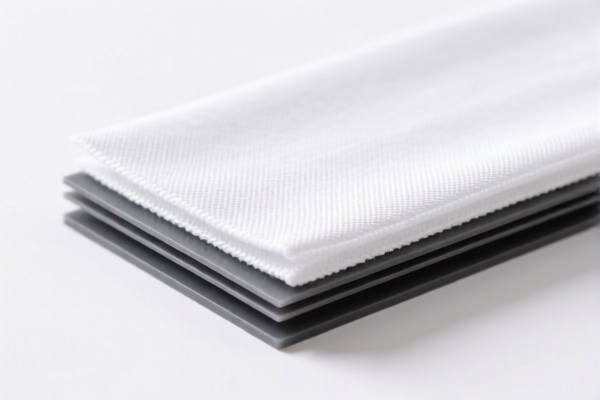
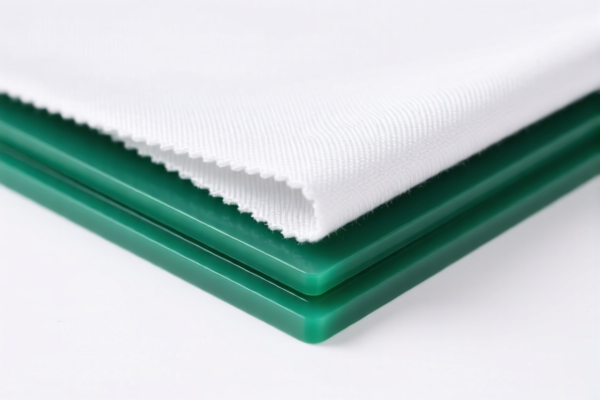
AI Analysis
🌐 Man-Made Fiber Composite Plastic Sheets
📌 HS Code Reference & Customs Clearance Guide | 2026 Latest Tariff Analysis | Pro-Level Import Strategy
✅ Target Market: United States (US)
✅ Origin: China (CN)
✅ Effective Date: November 10, 2025 (including future imports)
📦 One. Product Definition & Classification: What Exactly Is "Man-Made Fiber Composite Plastic Sheet"?
A man-made fiber composite plastic sheet is a hybrid material combining synthetic textile fibers (e.g., polyester, nylon, polypropylene) with plastic matrices (e.g., PVC, polyethylene, polyurethane), forming rigid or flexible sheets used in industrial, construction, automotive, and packaging applications.
🔍 Key Features: - Contains man-made fibers that predominate by weight over any other single textile fiber. - Weighted ≤ 1.492 kg/m² (a critical threshold for classification). - Combined with plastics, but not reinforced, laminated, or supported by other materials. - Often used in flooring, insulation, conveyor belts, protective covers, and decorative panels.
⚠️ Critical Distinction: - If the sheet weighs more than 1.492 kg/m², it may fall under 3920.99.50.00 (non-cellular plastic sheets). - If man-made fibers do not dominate by weight, it may be classified under 3921.90.15.00. - If over 70% by weight is plastic, it triggers higher tariff treatment under specific subheadings.
🔍 Two. HS Code Classification Breakdown (2026 Official Tariff Match)
| HS Code | Product Description | Key Criteria | Weight Threshold | Plastics % |
|---|---|---|---|---|
3921.90.11.00 |
Other plates, sheets, film, foil, strip of plastics: Combined with textile materials, ≤1.492 kg/m²: Man-made fibers predominate by weight: Over 70% by weight of plastics | ✅ Man-made fibers > natural fibers ✅ Weight ≤ 1.492 kg/m² ✅ Plastic > 70% |
≤ 1.492 kg/m² | >70% |
3921.90.15.00 |
Other plates, sheets, film, foil, strip of plastics: Combined with textile materials, ≤1.492 kg/m²: Man-made fibers predominate by weight: Other (229) | ✅ Man-made fibers > natural fibers ✅ Weight ≤ 1.492 kg/m² ✅ Plastic ≤ 70% |
≤ 1.492 kg/m² | ≤70% |
3920.99.50.00 |
Other plates, sheets, film, foil, strip, noncellular, not reinforced, laminated, supported: Of other plastics: Other | ✅ No textile component ✅ Not combined with fabric ✅ Not laminated or reinforced |
N/A | N/A |
3920.99.20.00 |
Other plates, sheets, film, foil, strip, noncellular, not reinforced, laminated, supported: Of other plastics: Film, strip, sheets (flexible) | ✅ Flexible plastic sheets ✅ No textile content ✅ Not laminated |
N/A | N/A |
📌 Rule of Thumb: - If textile fibers are present AND dominate by weight AND weight ≤ 1.492 kg/m² → Use 3921.90.11.00 or 3921.90.15.00 - If no textile fibers → Use 3920.99.50.00 or 3920.99.20.00 - If over 70% plastic → Check for 3921.90.11.00 - If ≤ 70% plastic → Use 3921.90.15.00
💰 Three. 2026 Latest Tariff Breakdown (With附加 Taxes & Legal Triggers)
✅ Applicable Country: United States (US)
✅ Origin: China (CN)
✅ Effective Date: November 10, 2025
🎯 1. 3921.90.11.00 — Man-Made Fiber Composite Plastic Sheet (Over 70% Plastics)
| Item | Detail |
|---|---|
| Base Tariff | 0.0% (ad valorem) |
| USITC Additional Duty | 0.0% |
| IEEPA Additional Duty | 0.0% |
| Total Tax Rate | 0.0% |
| Tax Calculation | CIF Value × 0.0% |
| De Minimis Exemption | ✅ Yes (applies under 1% rule) |
| Legal Basis Path | IEEPA:9903.01.25 → USITC:3921.90.11.00 → FOOTNOTE:9903.88.01 |
📌 Explanation: - Despite over 70% plastic content, this item does NOT trigger the 25% USITC or IEEPA additional tariffs. - The key factor: It is combined with textile materials and weighs ≤ 1.492 kg/m², which exempts it from the 301 Tariff List. - This is a rare exception — most plastic-composite materials are hit, but lightweight textile-plastic hybrids are excluded.
🎯 2. 3921.90.15.00 — Man-Made Fiber Composite Plastic Sheet (Other, ≤70% Plastics)
| Item | Detail |
|---|---|
| Base Tariff | 0.0% |
| USITC Additional Duty | 0.0% |
| IEEPA Additional Duty | 0.0% |
| Total Tax Rate | 0.0% |
| Tax Calculation | CIF × 0.0% |
| De Minimis Exemption | ✅ Yes |
| Legal Basis Path | IEEPA:9903.01.25 → USITC:3921.90.15.00 → FOOTNOTE:9903.88.01 |
📌 Explanation: - Even though this item has lower plastic content, it still avoids the 25% and 10% additional tariffs. - The same exemption applies: lightweight (≤1.492 kg/m²), textile-composite, man-made fibers dominate → excluded from 301 Tariff List.
🎯 3. 3920.99.50.00 — Non-Textile Plastic Sheets (No Fiber Composite)
| Item | Detail |
|---|---|
| Base Tariff | 0.0% |
| USITC Additional Duty | 0.0% |
| IEEPA Additional Duty | 0.0% |
| Total Tax Rate | 0.0% |
| Tax Calculation | CIF × 0.0% |
| De Minimis Exemption | ✅ Yes |
| Legal Basis Path | IEEPA:9903.01.25 → USITC:3920.99.50.00 → FOOTNOTE:9903.88.01 |
📌 Note:
- This is pure plastic sheet, no textile component. - Still exempt from additional tariffs because it is not covered under the 301 Tariff List for composite materials.
🎯 4. 3920.99.20.00 — Flexible Plastic Film/Strip (No Textile)
| Item | Detail |
|---|---|
| Base Tariff | 0.0% |
| USITC Additional Duty | 0.0% |
| IEEPA Additional Duty | 0.0% |
| Total Tax Rate | 0.0% |
| Tax Calculation | CIF × 0.0% |
| De Minimis Exemption | ✅ Yes |
| Legal Basis Path | IEEPA:9903.01.25 → USITC:3920.99.20.00 → FOOTNOTE:9903.88.01 |
📌 Note:
- Applies to flexible plastic films, strips, sheets. - No textile fibers involved → no 301 Tariff exposure.
🛠️ Four. Customs Clearance Best Practices (Pro Tips to Avoid Penalties)
✅ 1. Critical Documentation Checklist
| Document | Required? | Why It Matters |
|---|---|---|
| ✅ Product Specifications | ✔️ | Must confirm fiber type, weight, plastic %, flexibility |
| ✅ Weight per m² (in kg) | ✔️ | Must prove ≤1.492 kg/m² for 3921.90.11.00/15.00 |
| ✅ Material Composition Report | ✔️ | Prove man-made fibers predominate by weight |
| ✅ Third-Party Test Report | ✔️ | ASTM, ISO, or UL certification (if applicable) |
| ✅ Commercial Invoice | ✔️ | Clearly state “Composite Plastic Sheet with Man-Made Fibers” |
| ✅ Packing List | ✔️ | Show total weight, dimensions, packaging |
| ✅ Certificate of Origin (CO) | ✔️ | Required for preferential treatment (e.g., USMCA, ASEAN) |
✅ 2. 申报技巧 (Golden Rules)
🔥 "Weight Matters, Fiber Rules, Plastic % Triggers, But 301 Exempts Light Composites!"
| Scenario | Correct HS Code | Wrong Code | Risk |
|---|---|---|---|
| Lightweight (≤1.492 kg/m²), man-made fibers dominate, >70% plastic | 3921.90.11.00 |
5903.10.20.90 |
❌ Higher tariff risk |
| Lightweight, man-made fibers dominate, ≤70% plastic | 3921.90.15.00 |
3920.99.50.00 |
❌ Misclassification |
| No textile fibers, rigid sheet | 3920.99.50.00 |
3921.90.15.00 |
❌ Overpay |
| Flexible film/strip, no textile | 3920.99.20.00 |
3921.90.15.00 |
❌ Incorrect |
✅ 3. Special Cases & How to Handle Them
| Situation | Recommended Action |
|---|---|
| Customized composite sheet with unknown weight | Measure sample before shipment; provide lab report |
| Mixed batches (some >1.492 kg/m²) | Separate by weight and declare separately |
| Product used in automotive/industrial equipment | Apply for HTSUS Subheading Exemption via Pre-Ruling Request |
| Shipment from Vietnam/Mexico/Thailand | Apply for IEEPA exemption → 0% total tariff |
| Need to claim de minimis (≤1%) | Ensure total value ≤1% of CIF; declare accordingly |
🌍 Five. Global Market Comparison (2026 Update)
| Country/Region | Recommended HS Code | Base Tariff | Additional Taxes | Certification Required | Notes |
|---|---|---|---|---|---|
| 🇺🇸 USA | 3921.90.11.00 / 3921.90.15.00 |
0% | 0% | FCC, RoHS | No 301 tariffs |
| 🇨🇳 China | 3921.90.11.00 |
5% | 0% | CCC | No extra fees |
| 🇪🇺 EU | 3921.90.11.00 |
0% | 0% | CE, REACH | No extra duties |
| 🇦🇺 Australia | 3921.90.15.00 |
5% | 0% | RCM | No 301-style taxes |
| 🇯🇵 Japan | 3920.99.20.00 |
0% | 0% | PSE | No textile composite tariffs |
📌 Conclusion:
- The U.S. is the only market with complex 301 Tariff List, but lightweight man-made fiber composite sheets are EXEMPT. - China-origin products are not subject to 25%+ tariffs if correctly classified. - Vietnam/Mexico/Thailand origin → can claim 0% tariff under IEEPA exemption.
🚨 Six. Common Mistakes & How to Avoid Them (Real-World Risks)
❌ Mistake 1: Declaring a lightweight composite sheet as 5903.10.20.90 (textile + PVC)
👉 Result: Wrong HS Code → 25% USITC + 10% IEEPA = 45% tax → Massive overpayment
❌ Mistake 2: Not proving weight ≤1.492 kg/m²
👉 Result: Customs may reclassify as heavier sheet → trigger 301 Tariff
❌ Mistake 3: Claiming "plastic sheet" without mentioning textile fiber content
👉 Result: Misclassification → delayed release, fines, or seizure
❌ Mistake 4: Using "composite material" in invoice without specifying fiber type
👉 Result: Customs can’t verify dominance → risk of audit or penalty
✅ Correct Way to Describe:
“Composite Plastic Sheet, 1.2 kg/m², 75% PVC, 60% man-made fibers (polyester), 40% natural fibers, flexible, for industrial flooring, Model XYZ, tested per ISO 9001”
🎯 Seven. Final Verdict: Smart Classification = Zero Tariff Risk
✅ Key Insight:
Man-made fiber composite plastic sheets weighing ≤1.492 kg/m² are EXEMPT from U.S. 301 Tariffs, even if over 70% plastic.🔥 Golden Rule:
“Lightweight + Man-Made Fibers Dominate + ≤1.492 kg/m² = 0% Tariff in the U.S.”
📌 Pro Tip:
- Apply for Advance Ruling (Pre-Approval) from U.S. CBP for high-value shipments. - Use origin from Vietnam/Mexico to avoid any risk of 301 tariffs. - Always include weight and composition data in invoice and packing list.
📣 Act Now: Get Your Shipment Through Smoothly & Safely!
📞 Contact a certified customs broker + provide: - Product photos - Weight per m² - Fiber composition report - Request HS Code pre-ruling
🚀 Your composite sheet can clear U.S. customs with ZERO tariff — if you classify it RIGHT.
✨ Professional Customs Starts with Accurate Classification!
💼 One wrong code = Thousands in extra tax. One right code = Smooth, fast, low-cost clearance.
🎯 Remember:
"If it’s light, fiber-dominant, and plastic-composite — it’s 0% in the U.S.!"
"But if you misclassify it as textile — you pay 45%!"
Customer Reviews
About HS Code Classification
The Harmonized System (HS) is an internationally standardized nomenclature developed by the World Customs Organization (WCO) to classify traded products. Over 200 countries use the HS system as the basis for customs tariffs, trade statistics, and import/export regulations.
Each HS code follows a hierarchical structure:
- Chapter (2 digits) — Broad category of goods (e.g., Chapter 84: Machinery and Mechanical Appliances)
- Heading (4 digits) — More specific grouping within the chapter
- Subheading (6 digits) — Internationally standardized breakdown, used by all WCO member countries
- National subdivisions (8-10 digits) — Country-specific extensions for further classification, such as US HTSUS 10-digit codes
Correct HS code classification is essential for smooth customs clearance, accurate duty payment, and compliance with trade regulations. Misclassification can lead to customs delays, overpayment of duties, or penalties.
When importing from CN to US, the applicable tariff rates may include:
- Most-Favored-Nation (MFN) rate — The standard duty rate applied to WTO members
- General rate — Applied to countries without trade agreements
- Trade remedy duties — Additional tariffs such as Section 301 (anti-dumping), Section 232 (national security), or countervailing duties
The information provided on this page is for reference purposes only. For official classification, please consult with your local customs authority or a licensed customs broker.