Man made Fiber Fashion Travel Bags
CN → US| HS Code | Tariff Rate | Origin | Destination | Doc |
|---|---|---|---|---|
| 6305390000 | 25.9% | CN | US | Official Doc |
| 6305900000 | 23.7% | CN | US | Official Doc |
| 4202923131 | 52.6% | CN | US | Official Doc |
| 4202923120 | 52.6% | CN | US | Official Doc |
Product Images
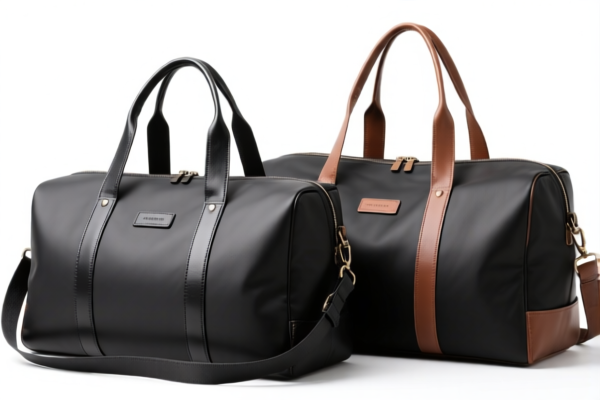
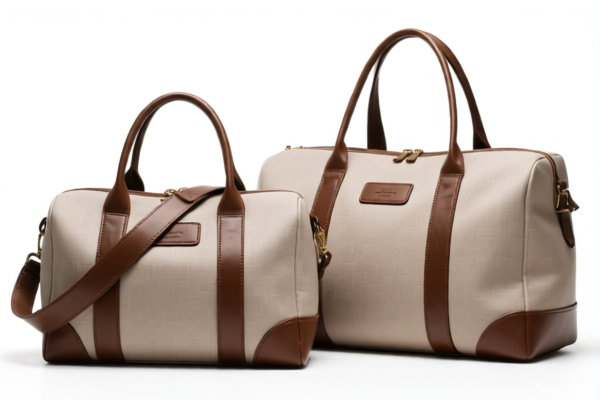
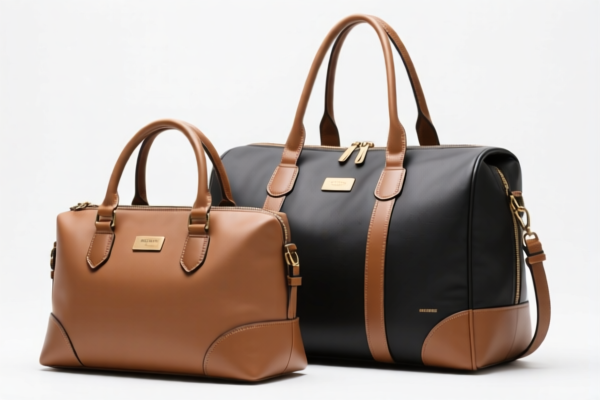
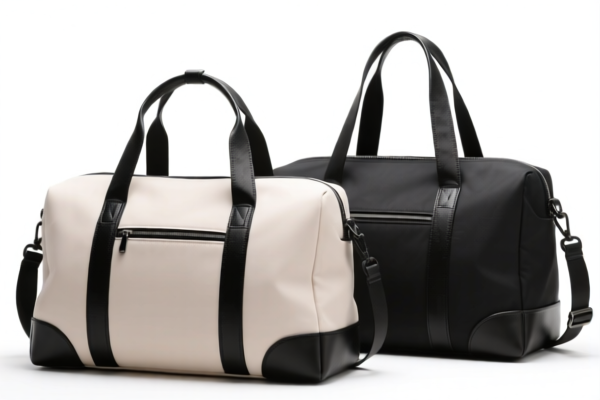
AI Analysis
👜 Man Made Fiber Fashion Travel Bags (Artificial Fiber Luggage)
🌐 HS Code Classification & Clearance Guide | 2026 Tax Regulations & Professional Strategy
📌 I. Product Definition: What Are "Man Made Fiber Fashion Travel Bags"?
"Man made fiber fashion travel bags" refer to luggage, suitcases, and travel accessories manufactured primarily from artificial textile materials (such as nylon, polyester, rayon, or acrylic) rather than natural fibers (cotton, wool) or leather. These products are designed for carrying personal belongings during travel, sports, or daily use.
In international trade, the critical distinction lies in: 1. Material Composition: Are they 100% synthetic/artificial fibers? 2. Function/Shape: Are they shaped like bags/trunks/satchels, or just generic textile containers?
⚠️ Key Classification Threshold:
- If the bag is specifically shaped for travel (with handles, zippers, internal structure) and made of man-made fiber textile, it typically falls under Chapter 42 (Articles of Leather; Saddle Harness and Travel Goods).
- If the bag is a generic textile sack or pouch without specific travel features, it may fall under Chapter 63 (Other Made Up Textile Articles).
📦 II. HS Code Classification Matrix (2026 Latest Tariff Data)
Based on the provided data, here are the precise classifications for "Man Made Fiber Fashion Travel Bags":
| HS Code | Product Description | Material & Form | Classification Logic |
|---|---|---|---|
4202.92.31.31 |
Man-made Fiber Travel Bag | Material: Artificial Fiber Use: Travel Bags |
Most Accurate: Fully matches the description of travel goods made of man-made fibers. |
4202.92.31.20 |
Man-made Fiber Travel/Sports Bag | Material: Artificial Fiber Use: Travel, Sports, Similar |
Highly Accurate: Covers travel, sports, and similar bags made of man-made fibers. |
6305.39.00.00 |
Man-made Fiber Bag (Other) | Material: Artificial Textile Form: Bag Category |
Alternative: For generic bags not specifically defined under Chapter 42 travel goods, or "other" subcategories. |
6305.90.00.00 |
Man-made Fiber Bag (Other Textile) | Material: Artificial Fiber Form: Bag |
Alternative: For bags made of other man-made textile materials not specified in 6305.39. |
🔍 Critical Distinction:
- Ch 42 (4202.xxxx) is preferred for dedicated travel luggage (suitcases, duffels, weekenders) because they are "articles of leather or plastic sheeting or of textile materials, specially shaped or cut for carrying personal items." - Ch 63 (6305.xxxx) is for textile sacks/pouches that do not meet the specific structural definition of Chapter 42 travel goods. - Risk: Misclassifying a "Travel Bag" as a generic "Textile Bag" (Ch 63) to avoid higher tariffs is a common audit risk.
💰 III. 2026 Tariff Rate Breakdown (Detailed Tax Analysis)
✅ Applicable Market: United States (US)
✅ Origin: China (CN) (Assumed based on "122 Clause" and tariff structures provided)
✅ Effective Date: 2026 Tariff Schedule
🎯 1. 4202.92.31.31 & 4202.92.31.20 — Dedicated Travel Bags
These codes represent the most accurate classification for fashion travel bags. However, they attract the highest tariffs due to trade restrictions.
| Component | Rate | Source/Clause |
|---|---|---|
| Base Duty | 17.6% | USITC General Rate |
| Section 301 Additional Duty | +25.0% | USITC Footnote (Trade War Tariffs) |
| Section 122 Additional Duty | +10.0% | Specific Import Restriction Clause |
| TOTAL EFFECTIVE RATE | 52.6% | Ad Valorem |
📌 Explanation:
- 17.6% Base: Standard MFN rate for travel goods of synthetic fibers.
- 25.301%: Retaliatory tariffs on Chinese goods under Section 301.
- 10% Clause 122: Additional duty for specific strategic or restricted goods.
- Total 52.6%: This is a very high cost. Importers must calculate if the margin can absorb this.
🎯 2. 6305.39.00.00 — Generic Man-made Fiber Bags
If the product is deemed a "generic bag" rather than a "travel good," the tariff is lower but still significant.
| Component | Rate | Source/Clause |
|---|---|---|
| Base Duty | 8.4% | USITC General Rate |
| Section 301 Additional Duty | +7.5% | USITC Footnote (Lower Tier 301) |
| Section 122 Additional Duty | +10.0% | Specific Import Restriction Clause |
| TOTAL EFFECTIVE RATE | 25.9% | Ad Valorem |
📌 Explanation:
- 8.4% Base: Lower base rate for generic textile bags.
- 7.5% 301: Lower tier of Section 301 tariffs (often for consumer goods not targeted by highest tariffs).
- 10% Clause 122: Still applies.
- Total 25.9%: Significant savings compared to 52.6%, but classification risk is high.
🎯 3. 6305.90.00.00 — Other Man-made Fiber Textile Bags
Similar to 6305.39, but for other unspecified textile materials.
| Component | Rate | Source/Clause |
|---|---|---|
| Base Duty | 6.2% | USITC General Rate |
| Section 301 Additional Duty | +7.5% | USITC Footnote |
| Section 122 Additional Duty | +10.0% | Specific Import Restriction Clause |
| TOTAL EFFECTIVE RATE | 23.7% | Ad Valorem |
📌 Explanation:
- 6.2% Base: Lowest base duty among the options.
- Total 23.7%: The lowest total tariff, but requires strong justification that the product is NOT a "travel good" (Chapter 42).
🛠️ IV. Customs Clearance Practical Advice
✅ 1. Documentation Checklist (Must-Haves)
| Document | Requirement | Purpose |
|---|---|---|
| Product Specifications | ✔️ Must list material composition (e.g., 100% Nylon, Polyester) | Determine Chapter 42 vs. 63 |
| Photos of Product | ✔️ Clear images of zippers, handles, interior lining, labels | Prove "Travel Bag" features (or lack thereof) |
| Commercial Invoice | ✔️ Describe as "Synthetic Fiber Travel Bag" or "Textile Carry-all" | Align with HS Code |
| Packing List | ✔️ Weight, dimensions, quantity | Verify CIF value |
| Material Test Report | ✔️ Third-party lab report confirming "Man-made Fiber" | Prevent misclassification of natural fibers |
| Country of Origin Certificate | ✔️ If not China, may reduce Section 301 duties | Avoid 7.5%-25% tariffs |
✅ 2. Strategic Classification Advice
🔥 "Don't Guess, Prove It!"
| Scenario | Recommended HS Code | Risk Level | Reason |
|---|---|---|---|
| High-End Luggage (Suitcases, Weekenders) | 4202.92.31.31 / 4202.92.31.20 |
Low (Compliant) | High tariff (52.6%) but legally accurate. Avoids audits. |
| Soft Side Bags (Duffles, Totes, Gym Bags) | 4202.92.31.31 |
Medium | Often borderline. If it has rigid structure, it's Ch 42. |
| Simple Pouches/Sacks (No handles, generic) | 6305.39.00.00 / 6305.90.00.00 |
High Risk | If used for travel, CBP may reclassify to Ch 42 → Back taxes + Penalties. |
⚠️ Warning:
- Do not arbitrarily choose6305codes to save 29% in tariffs. CBP auditors frequently challenge "Travel Bags" declared under Chapter 63.
- If the bag has zippers, reinforced handles, wheels, or specific travel branding, it is almost certainly a Chapter 42 product.
✅ 3. Cost Optimization Strategies
- Pre-Ruling Application:
- Apply for an Advance Ruling from CBP before shipment. Submit product samples/photos. Get a binding decision on whether it’s Ch 42 or Ch 63. This protects you from audits.
- Origin Diversification:
- If possible, source from Vietnam, Mexico, or Thailand.
- Benefit: Avoids Section 301 tariffs (25% or 7.5%).
- New Rate Example (Vietnam Origin):
4202.92.31.31: Base 17.6% + 0% 301 + 10% 122 = 27.6% (vs. 52.6% from China).- Savings: ~25% on the total duty rate!
- Bundle Components:
- If shipping unmade bags (fabric rolls) vs. finished bags, the classification changes completely. Ensure packaging matches the declared HS Code.
🌍 V. Global Market Comparison (2026)
| Market | Recommended HS Code | Est. Total Duty (China Origin) | Key Requirement |
|---|---|---|---|
| 🇺🇸 USA | 4202.92.31.31 |
52.6% | High 301 + 122 tariffs. |
| 🇨🇳 China | 4202.92.31.31 |
~10-15% | Import VAT + Consumption Tax. No trade tariffs. |
| 🇪🇺 EU | 4202.92.30 |
~12% | Standard MFN. No Section 301. |
| 🇬🇧 UK | 4202.92.30 |
~12% | Post-Brexit tariff alignment with EU. |
| 🇨🇦 Canada | 4202.92.30 |
~0-12% | Check CUSMA eligibility if non-origin. |
📌 Conclusion:
- The US market is the most expensive for Chinese-manufactured travel bags due to multiple layers of tariffs (Base + 301 + 122).
- European and Asian markets offer significantly lower duty burdens, but may have stricter environmental standards (e.g., REACH in EU).
📌 VI. Common Mistakes & Pitfalls
❌ Mistake 1: Declaring a "Leather-trimmed Travel Bag" as "Man-made Fiber"
👉 Result: If leather content > 10%, it may reclassify to 4202.11/12 (Leather). Duty rates change, and documentation mismatch occurs.
❌ Mistake 2: Using "6305" for a "Suitcase"
👉 Result: CBP Rejection. A suitcase with wheels and handle is definitively Chapter 42. Penalty: 4x duty value.
❌ Mistake 3: Ignoring "Clause 122"
👉 Result: Even if 301 tariff is avoided via origin, 10% Clause 122 may still apply. Always check current USITC footnotes.
✅ Best Practice:
"Be Honest, Be Specific."
- Describe product as: "Synthetic Fiber Soft-sided Travel Duffel Bag, Model XYZ, No Wheels."
- Choose HS Code based on actual design, not desired tax rate.
- Apply for Advance Ruling if unsure.
🎯 VII. Final Recommendation
For "Man Made Fiber Fashion Travel Bags":
-
If High-Volume/Low-Margin:
- Do NOT import from China to US unless you can absorb 52.6% duty.
- Solution: Source from Vietnam/Mexico to reduce duty to ~27.6%.
-
If Low-Volume/High-Margin (Luxury):
- Use HS Code
4202.92.31.31. - Accept the 52.6% duty as cost of doing business.
- Ensure all marketing materials match the "Travel Bag" description.
- Use HS Code
-
If Generic/Unbranded:
- Consider HS Code
6305.39.00.00ONLY if the product is truly a generic pouch/sack with NO travel-specific features (no rigid structure, no travel branding). - Risk: High audit probability. Only use if legally defensible.
- Consider HS Code
📌 Pro Tip:
📞 Consult a US Customs Broker before shipping. Provide them with photos and specs.
📦 Label Clearly: "Made in [Country]" to avoid origin disputes.
💰 Budget for 52.6% Duty if from China. It’s not a suggestion; it’s the law.
✨ Professional Clearance Starts with Accurate Classification!
💼 Don't let tax errors eat your profit margins. Get it right the first time.
Customer Reviews
About HS Code Classification
The Harmonized System (HS) is an internationally standardized nomenclature developed by the World Customs Organization (WCO) to classify traded products. Over 200 countries use the HS system as the basis for customs tariffs, trade statistics, and import/export regulations.
Each HS code follows a hierarchical structure:
- Chapter (2 digits) — Broad category of goods (e.g., Chapter 84: Machinery and Mechanical Appliances)
- Heading (4 digits) — More specific grouping within the chapter
- Subheading (6 digits) — Internationally standardized breakdown, used by all WCO member countries
- National subdivisions (8-10 digits) — Country-specific extensions for further classification, such as US HTSUS 10-digit codes
Correct HS code classification is essential for smooth customs clearance, accurate duty payment, and compliance with trade regulations. Misclassification can lead to customs delays, overpayment of duties, or penalties.
When importing from CN to US, the applicable tariff rates may include:
- Most-Favored-Nation (MFN) rate — The standard duty rate applied to WTO members
- General rate — Applied to countries without trade agreements
- Trade remedy duties — Additional tariffs such as Section 301 (anti-dumping), Section 232 (national security), or countervailing duties
The information provided on this page is for reference purposes only. For official classification, please consult with your local customs authority or a licensed customs broker.